
Night Sweats Smell Like Ammonia: What It Can Mean
By Kurt Tompkins, Bedfans USA. Reviewed November 2026.
Quick answer: Night sweats that smell like ammonia usually come from concentrated sweat (often from dehydration), a high protein or low carb diet, bacteria breaking down sweat on skin and fabric, or small amounts of urine on sleepwear or bedding. Kidney, liver, and urinary problems are less common causes. Drink enough fluids during the day, wash sheets often, cool the bed with airflow under the covers, and see a doctor if the smell is new, keeps coming back, or comes with other symptoms.
If your night sweats smell like ammonia, it is hard to ignore. Waking up damp is bad enough, and a sharp chemical odor adds a whole new layer of worry. Some causes are harmless and easy to fix. Others are worth bringing up with a doctor, especially if the smell is new or comes with other changes.
Why do night sweats smell like ammonia?
Fresh sweat has very little smell; odor comes from what is mixed into it and what grows on it. An ammonia smell often points to concentrated sweat, protein breakdown, or urine.
Your sweat glands release mostly water and salt, along with small amounts of waste products such as urea. When your body breaks down protein, it turns nitrogen waste into urea and gets rid of most of it through urine. When you are low on fluids or are burning protein for energy, that waste can be more concentrated, and bacteria on the skin and in fabric break it down into compounds that smell like ammonia.
At night, sweat sits on the skin and in the bedding for hours. Heavy covers trap heat and moisture, giving odor more time to build. Sometimes the smell is not sweat at all: a small amount of urine on sleepwear or sheets can smell strongly of ammonia by morning.
What are the common causes of ammonia smelling night sweats?
Dehydration, diet, intense exercise, urine leakage, and certain medications are the usual suspects. Most are not dramatic, but it helps to narrow them down.
- Dehydration: with less fluid, both sweat and urine become more concentrated and smell sharper.
- High protein or low carb eating: more protein can mean more nitrogen waste, and some people notice a chemical odor on very low carb diets.
- Hard evening workouts: intense exercise can raise body temperature for hours and make perspiration smell stronger.
- Urine leakage: even a small amount on underwear or bedding can smell like ammonia by morning.
- Stress: stress sweat comes from glands that release more protein and fat, which bacteria turn into stronger odor.
- Hormones: menopause, perimenopause, and pregnancy can bring heavier night sweats, so any odor stands out more.
- Medications and alcohol: some drugs increase sweating, and alcohol can warm you up and leave you dehydrated.
Can ammonia smelling sweat mean a health problem?
Sometimes, so pay attention to patterns. A one-time episode after a salty dinner or a hard workout is different from a smell that keeps coming back.
Your kidneys and liver handle most nitrogen waste. When either one is not working well, body odor can change, though that usually comes with other symptoms such as swelling, fatigue, or changes in urine. Urinary tract infections and incontinence can also be part of the picture. Night sweats themselves have many possible causes, including infections, medications, hormone changes, sleep apnea, and diabetes.
- Bring it up with a doctor if the smell keeps returning for more than a couple of weeks.
- Get checked promptly if you also have burning with urination, blood in your urine, side or back pain, or new leakage.
- Do not brush it off if you have fever, unexplained weight loss, or drenching sweats.
- Review your medications if the change started after a new prescription.
How can you tell if the smell is from sweat or urine?
Notice where the smell is strongest. Underarms, chest, neck, and scalp point to sweat; underwear, the center of the bed, or a mattress protector suggest urine.
For a few nights, wear fresh underwear and use a clean liner or pad, then see where the odor collects. Sweat odor usually improves a lot with a good wash routine; an ammonia smell that seems baked into sheets or a mattress pad may point to urine or to buildup that is not rinsing out.
How can you reduce ammonia smelling night sweats?
Hydrate during the day, adjust diet, keep fabrics fresh, and reduce sweating at night. Small changes often help within days.
- Hydrate earlier: drink enough water through the day, not just right before bed.
- Check dinner: very salty meals, alcohol, and very high protein dinners can make nights worse.
- Shower before bed: a quick rinse removes sweat residue and bacteria.
- Wash more often: change sheets and sleepwear more often during sweaty stretches; a fresh set of sheets each week is a good baseline.
- Track patterns: note when the smell shows up, what you ate and drank, and any new medications.
Can a bed fan help with night sweats and odor?
Less trapped heat and moisture under the covers often means less sweat, and less sweat gives odor less to work with. A bed fan targets the place where both build up.
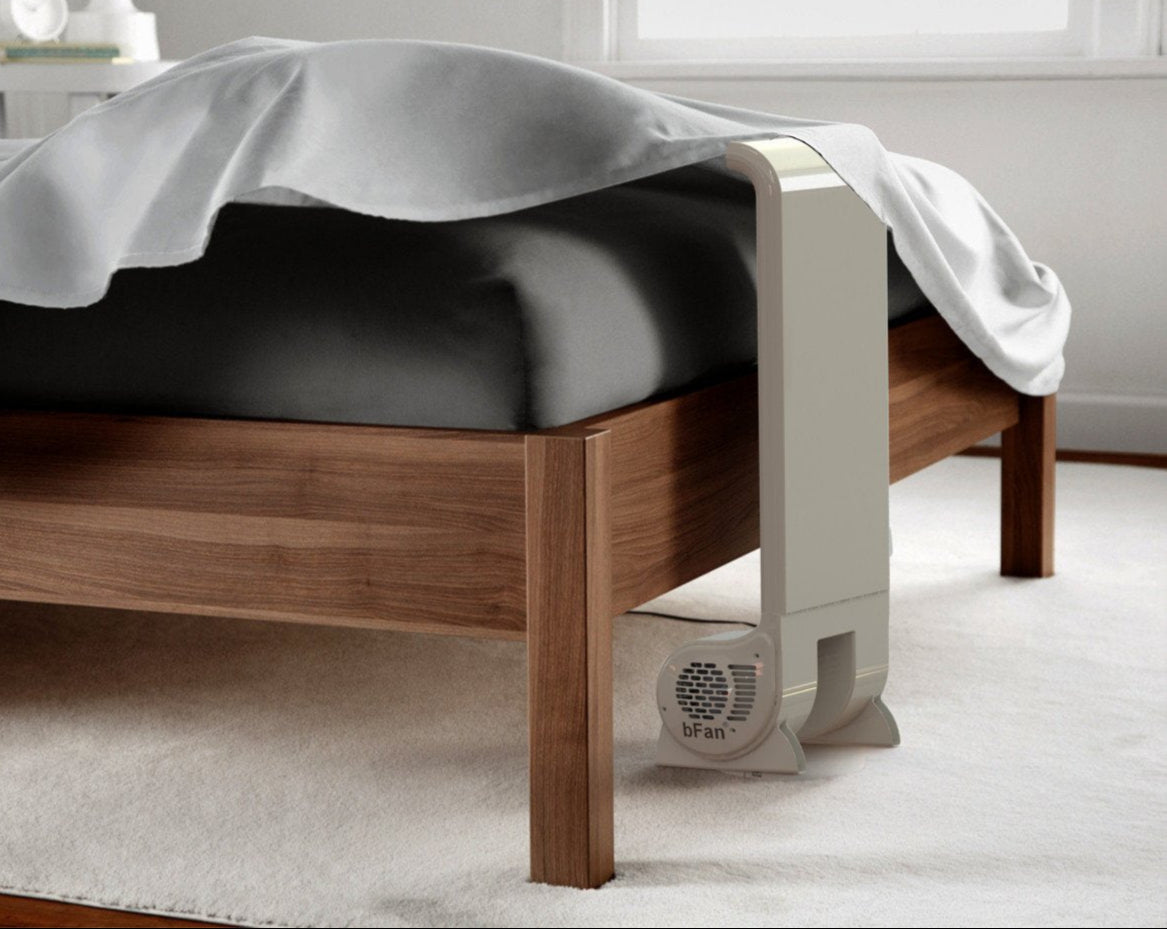
The bFan from Bedfans USA sits at the foot of the bed with its base centered under the mattress and sends room air under the covers and across your body. It does not make the air colder; it moves the air already in the room through the bed so heat and humidity flow away from you. Direct airflow helps stop sweat before it starts. It uses about 18 W on average, runs at about 28 to 32 dB at normal speed, and has a remote and sleep timer. At $204.95 list price, one bFan is less than half the price of a BedJet 3.
Pair it with tightly woven, higher thread count sheets so the airflow stays under the covers instead of escaping through the fabric. If your sweat smells sour instead, see night sweats that smell like vinegar.
Ready for better sleep?
Order the bFan from Bedfans USA and get a quiet cooling breeze under your covers, built in Texas by the company that invented the Bedfan.
Frequently Asked Questions
Is it normal for night sweats to smell like ammonia after a workout?
It can be. A hard workout late in the day can leave your body temperature higher for hours and leave you short on fluids, so the sweat you produce overnight is more concentrated and may smell sharper. If you also eat a lot of protein to recover, there is more nitrogen waste for your body to clear. Drink fluids steadily after training, shower before bed, and see if the smell fades once you are well hydrated. If it keeps happening on rest days too, the cause may be something else and is worth a closer look.
Can a keto or high protein diet make night sweats smell like ammonia?
Some people notice a chemical or ammonia smell when they cut carbs sharply or eat a lot of protein. When carbs are low, the body may break down more protein for energy, which produces more nitrogen waste, and keto diets can also shift body and breath odor. Being short on fluids makes it more noticeable. Increasing water, adding back some carbohydrates, or spreading protein more evenly through the day often helps. If you have kidney disease or diabetes, talk with your doctor before making big diet changes.
Why do my sheets smell like ammonia even after washing?
Sweat and urine residue can build up in sheets, mattress protectors, and pillows when they are washed at low temperatures or with too much detergent, which leaves a film that traps odor. Wash at the warmest setting the care label allows, use less detergent, add an extra rinse, and dry everything completely, because damp fabric gives bacteria more time to grow. Wash or replace the mattress protector, too. If the smell comes back quickly in the same spot every time, small amounts of urine may be part of the cause.
Does dehydration really change how sweat smells?
Yes, it can. When you are low on fluids, your body holds onto water, and the waste products that remain are more concentrated in both urine and sweat. Bacteria on your skin then have more to break down, which can make odor stronger and sharper. Dark urine, thirst, headaches, and feeling tired are other signs you need more fluids. Drink regularly through the day instead of all at once at night, which can also lead to more bathroom trips while you sleep.
When should I see a doctor about ammonia smelling sweat?
See a doctor if the smell keeps coming back for more than a couple of weeks, appears with no clear reason such as diet or hydration, or comes with other symptoms. Get checked promptly if you have pain or burning when you urinate, blood in your urine, side or back pain, swelling in your legs, fever, unexplained weight loss, or new leakage. Bring notes about when the smell happens, what you ate and drank, and any medications or supplements, since that helps a clinician find the cause faster.
Resources
- NHS: Night sweats: Lists common causes of night sweats and when to see a GP.
- NHS: Body odour: Explains what causes body odour and practical ways to reduce it.
- NHS: Dehydration: Covers the signs of dehydration and how to get enough fluids.
- MedlinePlus: Urinary incontinence: Explains types and causes of bladder leakage and treatment options.
- NHS: Urinary tract infections: Describes UTI symptoms and when to get medical help.
- NIDDK: Kidney disease: Explains what the kidneys do and the signs of kidney disease.
Share