
Chronic Night Sweats: Causes, Solutions, and How to Sleep Cool Again
If you’re reading this, you probably know the frustration of waking up drenched in sweat, sheets tangled, pillow soaked, and your sleep completely wrecked. Chronic night sweats aren’t just uncomfortable, they can leave you exhausted, cranky, and even worried about your health. Let’s sit down, grab a cup of coffee, and really talk about what’s going on, why it happens, and how you can finally get a cool, restful night’s sleep again.
What Are Chronic Night Sweats?
Chronic night sweats are more than just experiencing a warm night or mistakenly piling on heavy blankets, because we’re talking about repeated episodes when you wake up sweating through your pajamas and sheets, sometimes even needing to change clothes or bedding in the middle of the night. It’s disruptive, it’s embarrassing, and it can make you dread bedtime. Often, night sweats are just one of several nighttime symptoms that might point to underlying issues, so it’s important to watch out for any other changes you might be experiencing.
How Common Are Night Sweats?
You’re not alone, millions of people deal with night sweats, and while it’s more common as we age, it can hit anyone at any stage in life, because some studies suggest that up to 41 percent of people have experienced night sweats at some point, which means a lot of us are dealing with sweaty sheets.
What Causes Chronic Night Sweats?
There are many reasons you might be sweating buckets at night, and sometimes it’s a mix of factors, including fluctuations in hormones. Here are some of the most common culprits:
- Hormonal Changes: Hormonal shifts from menopause, perimenopause, pregnancy, and even andropause in men can mess with your body’s thermostat, making hot flashes and night sweats common.
- Medications: Certain antidepressants, diabetes medications, hormone therapies, and even some over-the-counter painkillers can trigger night sweats.
- Infections: Conditions like tuberculosis, HIV, and other infections can set off fevers and night sweats as your body fights off illness.
- Medical Conditions: Issues like hyperthyroidism, diabetes, anxiety disorders, and even some cancers such as lymphoma can be linked to night sweats.
- Lifestyle Factors: Spicy foods, alcohol, caffeine, and a hot bedroom can all contribute to extra sweating at night, and for those with GERD, dietary triggers not only worsen acid reflux but can also lead to additional nighttime symptoms, amplifying discomfort.
- Sleep Environment: Heavy blankets, memory foam mattresses, and poor airflow trap heat and can worsen the problem.
If your night sweats are new, severe, or accompanied by other symptoms such as weight loss, fever, or pronounced nighttime symptoms such as severe acid reflux from GERD, it’s always wise to talk with your doctor.
Why Night Sweats Wreck Your Sleep
It’s not just about the discomfort, because when you’re sweating at night your body is struggling to regulate its temperature. You might toss and turn, wake up several times, or even have trouble falling back asleep. Over time, this can lead to:
- Chronic Fatigue: Missing out on the deep, restorative sleep your body needs.
- Mood Changes: Lack of sleep can make you irritable, anxious, or even depressed.
- Weakened Immune System: Poor sleep leaves your body less able to fend off illness.
- Relationship Strain: If you share your bed, your partner might be losing sleep too.
The Science of Sleeping Cool
Your body temperature naturally drops as you fall asleep, and experts recommend keeping your bedroom between 60°F and 67°F for the best sleep. That room temperature is pretty cool, yet many of us keep our homes warmer, especially during the summer or when trying to save on energy bills.
When your room is too warm or your bedding traps heat, your body has to work harder to cool down, and that’s when the sweating starts. The trick is to help your body lose heat efficiently so you can drift off and stay asleep.
Simple Lifestyle Tweaks to Reduce Night Sweats
Before you dive into gadgets and gear, consider some easy changes you can make tonight:
- Keep It Cool: Set your thermostat to 60°F to 67°F if possible, use a fan or open a window for extra airflow.
- Choose the Right Bedding: Lightweight, breathable sheets with a tight weave help air flow across your body and carry away heat, with cotton, linen, or bamboo being great choices.
- Dress Light: Opt for moisture-wicking pajamas or even sleep in your birthday suit.
- Skip the Spicy Stuff: Avoid spicy foods, caffeine, and alcohol in the evening, especially if you have GERD, as these can trigger sweating and worsen nighttime symptoms related to acid reflux.
- Stay Hydrated: Drink plenty of water during the day, but try not to overdo it right before bed so you’re not up all night running to the bathroom.
- Shower Before Bed: A cool shower can lower your core temperature and help you relax.
When You Need More Than Lifestyle Changes
Sometimes, even with all the right habits in place, you’re still waking up sweaty, and that’s when it might be time to look at solutions specifically designed for hot sleepers.
Cooling Mattress Pads and Toppers
There are plenty of mattress pads available that claim to keep you cool, some use gel, some special fabrics, and some even involve water or air channels. They can help, but they don’t always address the key issue, which is airflow.
Air Conditioning and Fans
Turning up the air conditioning can help, but it’s often expensive and not always practical. A ceiling fan or box fan can circulate air, but they don’t always get under the covers where you need it most.
Bed Cooling Systems: Bedfan vs Bedjet
Getting cool air right under your sheets is crucial for a comfortable night’s sleep, and that’s where bed cooling systems come in.
The Bedfan (bFan): Simple, Effective, and Affordable
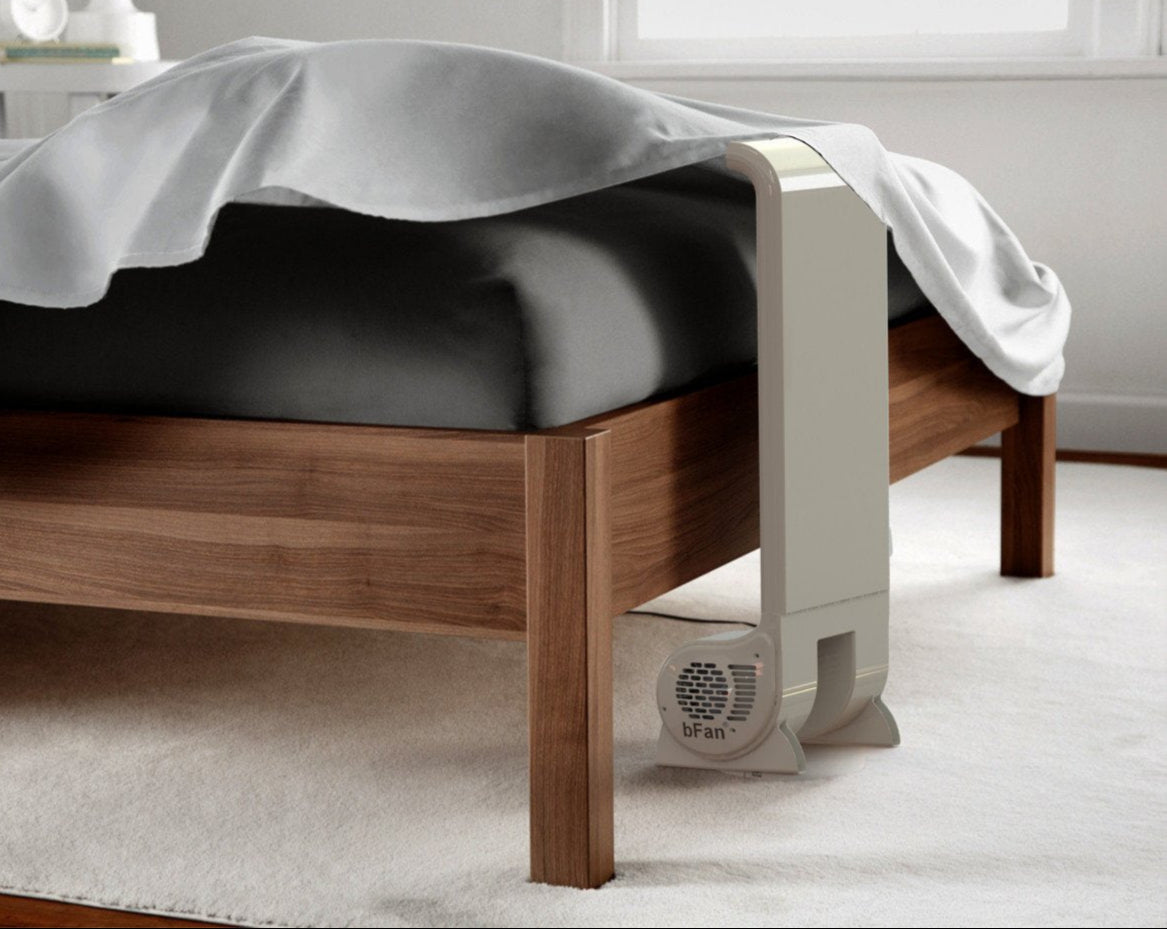
The bFan, also known as the Bedfan or bed fan, is a clever little device that sits at the foot of your bed and gently blows room-temperature air under your sheets. It’s quiet, because the Bedfan sound level is between 28db and 32db at normal operating speed, so it won’t interrupt your sleep. The bedfan uses only 18 watts on average, keeping your energy bill low.
Here’s why people love the Bedfan:
- Direct Airflow: It moves cool air directly where you need it, under the covers so you actually feel the difference.
- Dual-Zone Microclimate Control: It offers dual-zone microclimate control using two fans, letting you and your partner control your own side of the bed, so there’s no more fighting over the thermostat.
- Timer Controls: It offers timer controls to help you reach the recommended sleep and keep you comfortable all night.
- Energy Efficiency: Since it uses only 18 watts on average, you can run it every night without worrying about a high energy bill.
- Affordability: One Bedjet is more than twice the price of a single bedfan, and the dual-zone Bedjet setup is over a thousand dollars, so the Bedfan from www.bedfans-usa is a simple, affordable, and proven solution. The original bedfan came to market several years before Bedjet was even thought of, making it a trusted option for many.
The Bedjet: High-Tech, High Price
The Bedjet is another popular bed cooling system that also blows air under your sheets, but it comes loaded with a remote, a smartphone app, and even a heating option. It sounds cool, yet keep in mind:
- Price: The dual-zone Bedjet setup is over a thousand dollars, which is more than twice the price of two bedfans.
- Air Movement: Neither the Bedfan nor the Bedjet actually cool the air, they move the cool air that’s already in your room, so if your room is warm, you’re still getting warm air.
- Complexity: More features mean more setup, more maintenance, and more things that could potentially go wrong.
If you’re looking for a straightforward, effective, and affordable way to sleep cool, the Bedfan from www.bedfans-usa is hard to beat.
How to Get the Most Out of Your Bedfan
If you decide to try a Bedfan, here are some tips to help you maximize its benefits:
- Use Tight-Weave Sheets: Sheets with a tight weave allow air to flow smoothly across your body and carry away heat, so avoid loose or open-weave varieties.
- Position the Fan Correctly: Place the bed fan so that it directs air toward the middle or lower part of your bed, letting the air circulate around your body.
- Adjust the Speed: Start on a lower setting and increase as needed, because you want enough airflow to feel cool, but not so much that it becomes overwhelming.
- Set the Timer: Use the timer controls to run the fan for exactly as long as you need it, whether that’s all night or just long enough to fall asleep.
- Keep Your Room Cool: Remember that neither the Bedfan nor the Bedjet cools the air, they only use the cool air in the room to cool your bed, and sleep experts recommend keeping your bedroom between 60°F and 67°F. With a Bedfan, many people find they can often raise the room temperature by about 5°F and still sleep cool.
Real-Life Stories: How People Beat Night Sweats
Let’s hear from a few folks who have been there:
- Sarah, 52, Menopausal Hot Flashes: “I tried everything from cooling pillows to sleeping naked with the window open, and the Bedfan was the first thing that actually let me sleep through the night, and my husband loves it too since he can control his own side.”
- Mike, 38, Athlete: “I run hot even in the winter, and the Bedfan lets me keep the room a little warmer so my wife’s happy, but I still sleep cool. It’s a game-changer.”
- Linda, 65, Diabetes: “Night sweats were ruining my sleep, and my doctor said to keep the room cooler, but I hated the high energy bills. The Bedfan uses hardly any power, and I wake up dry and rested.”
When to See a Doctor
Most of the time, night sweats are just a nuisance, but sometimes they signal something more serious, so consult your doctor if:
- New Symptoms: You experience new symptoms such as fever, weight loss, or severe acid reflux from GERD, or persistent discomfort during menopause.
- Increased Severity: Your night sweats grow more severe or frequent, affecting your sleep and overall health.
- Health Concerns: You are simply worried about your health and need professional advice.
It’s always better to be safe and get checked out.
The Bottom Line: You Don’t Have to Suffer
Chronic night sweats can make you dread going to bed, but you don’t have to just live with it, because with the right combination of lifestyle tweaks, smart bedding choices, and a little help from a Bedfan from www.bedfans-usa you can finally get the cool, restful sleep you deserve.
Remember, sleep experts recommend keeping your bedroom between 60°F and 67°F for optimal sleep, and with a Bedfan many people find they can raise the room temperature by about 5°F and still sleep cool, saving money on energy bills while waking up refreshed.
If you’re tired of waking up in a puddle, give the Bedfan a try, because it’s simple, affordable, and it really works, and if you’re tempted by all the additional features, you can always check out the Bedjet, but keep in mind that the dual-zone Bedjet is over a thousand dollars and more than twice the price of two bedfans.
Here’s to cool nights, dry sheets, and waking up ready to take on the day, because you deserve it.
If you’re ready to stop sweating the small stuff, literally, check out the Bedfan at www.bedfans-usa. Your cool, comfortable nights are just a click away.
Frequently Asked Questions About Chronic Night Sweats and Sleeping Cool
What are the most common causes of chronic night sweats?
Chronic night sweats can be triggered by a range of factors, including hormonal changes like menopause, certain medications, infections, and underlying medical conditions such as hyperthyroidism or diabetes. Even lifestyle factors, like eating spicy foods or sleeping in a hot room, can play a role. If you’re experiencing persistent or severe night sweats, it’s a good idea to talk with your doctor to rule out any serious health issues.
How can I tell if my night sweats are a sign of something serious?
If your night sweats are accompanied by symptoms like unexplained weight loss, fever, or ongoing fatigue, you should reach out to your healthcare provider. These could be signs of an underlying infection or a more serious medical condition. Most night sweats are harmless, but it’s always better to get checked out if you’re concerned.
What steps can I take at home to reduce night sweats?
You can make several changes to your routine and sleep environment to help reduce night sweats. Keep your bedroom cool, ideally between 60°F and 67°F, and use breathable, tightly woven sheets. Avoid spicy foods, caffeine, and alcohol before bed, and try to keep stress levels in check. Using a bed fan, like the bFan, can also help move cool air under your sheets and keep you comfortable all night.
Can certain foods or drinks make night sweats worse?
Yes, foods and drinks that are spicy, caffeinated, or alcoholic can all increase your chances of sweating at night. These substances can raise your body temperature or stimulate your nervous system, making it harder for your body to stay cool while you sleep. Try limiting these in the evening to see if your night sweats improve.
What’s the best way to keep cool at night without running the air conditioner all night?
There are plenty of ways to stay cool without relying on expensive air conditioning. Use a fan to circulate air, keep your curtains closed during the day to block out heat, and choose lightweight, moisture-wicking bedding. A bed fan, like the Bedfan, is a great solution because it moves the cool air already in your room directly under your sheets, helping you sleep cooler and more comfortably.
How does a Bedfan compare to a Bedjet for cooling the bed?
Both the Bedfan and Bedjet move air under your sheets, but there are some key differences. The Bedfan is much more affordable, with a dual-zone setup costing less than half of what you’d pay for a dual-zone Bedjet, which is over a thousand dollars. The Bedfan is also quieter, more energy-efficient, and simpler to use. Neither device actually cools the air, but both help circulate the air in your room to keep you comfortable.
Are there any bedding materials that help prevent night sweats?
Absolutely, the right bedding can make a big difference. Look for sheets made from natural fibers like cotton, linen, or bamboo, and make sure they have a tight weave to help air flow across your body and carry away heat. Avoid heavy comforters or synthetic fabrics that can trap heat and moisture.
When should I see a doctor about my night sweats?
If your night sweats are persistent, drenching, or come with other symptoms like fever, weight loss, or unexplained pain, it’s time to see a doctor. These could be signs of an underlying health issue that needs medical attention. For most people, though, night sweats are manageable with some simple changes to your sleep environment and routine.
Can I use a Bedfan if I share a bed with a partner?
Yes, the Bedfan is designed with couples in mind. It offers dual-zone microclimate control, so each person can adjust their own side of the bed to their liking. This means you and your partner can both sleep comfortably, even if you have different temperature preferences.
How much energy does a Bedfan use compared to other cooling options?
The Bedfan is incredibly energy-efficient, using only about 18 watts on average. That’s less than most lightbulbs and far less than running an air conditioner all night. It’s a cost-effective way to stay cool and comfortable without driving up your energy bill.
Resources
- Mayo Clinic: Causes of Night Sweats This page covers a wide range of possible causes for night sweats, from medical conditions to lifestyle factors.
- Cleveland Clinic: Night Sweats Overview Here you’ll find a detailed explanation of night sweats, including symptoms, causes, and when to seek medical advice.
- Sleep Foundation: Night Sweats Explained This resource breaks down the science behind night sweats and offers practical tips for managing them.
- NHS: Night Sweats Information The NHS provides straightforward advice on what night sweats are, common triggers, and when to see a doctor.
- American Osteopathic Association: Night Sweats Tips This article shares helpful lifestyle changes and environmental adjustments to reduce night sweats.
- UnityPoint Health: When to Worry About Night Sweats Learn about warning signs that your night sweats might be related to a more serious health issue.
- Harvard Health: Tips for Sleeping Cool Harvard Health offers expert-backed advice on how to keep your bedroom cool and improve your sleep quality.
- National Sleep Foundation: Ideal Sleep Temperature This guide explains why sleep experts recommend keeping your bedroom between 60°F and 67°F for optimal rest.
If you’re looking for more ways to beat night sweats and sleep cool, consider trying a Bedfan from www.bedfans-usa. It’s a simple, affordable solution that can make a world of difference for hot sleepers.
Share