
Antidepressants Night Sweats: What You Need to Know
If you started an antidepressant and now you’re waking up damp, kicking off the covers, or changing shirts at 3 a.m., you’re not imagining it. Night sweats are a real and fairly common side effect of many medications, and antidepressants are high on the list of drugs that can trigger them.
That can be frustrating for two reasons, first, poor sleep can make depression and anxiety harder to manage, and excessive sweating, sometimes severe enough to be considered hyperhidrosis, can further disrupt sleep, and second, many people don’t connect nighttime overheating with a medicine they may have been taking for weeks or even months.
The good news is that antidepressant night sweats can often be managed. Sometimes that means changing your sleep habits, sometimes it means talking with your prescriber about timing, dose, or altering other medications, and sometimes it means improving the airflow under your bedding so your body heat doesn’t get trapped all night.
Why antidepressants can cause night sweats
Antidepressants affect brain chemicals that do much more than regulate mood, because serotonin, norepinephrine, and dopamine all interact with the body’s temperature control systems, sweat response, and sleep cycles. Changes in serotonin levels, in particular, can lead to excessive sweating at night, and when those systems shift, even in a good direction for mood, you may notice more sweating while you sleep.
This is especially common with SSRIs and SNRIs, which can increase sweating in general, not just at bedtime, but many people notice it most when they’re asleep, since the bedding holds heat close to the skin. Once that heat gets trapped under your sheets and blankets, your body keeps trying to dump warmth through sweat, and in some cases the sweating can be so pronounced that it mimics hyperhidrosis.
There’s another layer to this, because antidepressants can change the sleep architecture, including REM sleep patterns and how often you wake during the night, which can either make you more aware of the sweating or push your body into cycles where you alternate between feeling too hot and then chilled once the sweat evaporates.
Night sweats from antidepressants do not always mean the medication is wrong for you, but if the excessive sweating becomes an issue, it may be necessary to re-evaluate your treatment plan with your clinician.
Which antidepressants are most often linked to night sweats
Not every person reacts the same way, and the same medication can feel completely different from one person to the next. Even so, search results and clinical guidance tend to point to a few usual suspects:
- SSRIs: These include sertraline, fluoxetine, escitalopram, paroxetine, and citalopram, and many patients report that these trigger sweating.
- SNRIs: Venlafaxine and duloxetine can have a similar effect along with increased sweating.
- Tricyclic antidepressants: Even though these are less commonly used now, they are still linked with sweating in some cases.
- Dose changes: Symptoms may appear after an increase in dose, even if you were fine on a lower amount.
- Combination effects: Caffeine, alcohol, hormone changes, and other medications can make sweating worse.
If your symptoms started around the same time as a new antidepressant, the timing matters. Even if the sweats began long after you started the medicine, it’s possible the medication plays a part, and it’s smart to consider other causes too.
How antidepressant night sweats usually show up
Some people wake up with a slightly damp neck and chest, others soak the sheets, some feel a wave of heat right before waking, while others only realize what happened after they’re already uncomfortable and chilled. These episodes of hot flashes along with the excessive sweating can be distressing.
A pretty common pattern is overheating in the first half of the night, which leads to broken sleep afterward. Your body warms under the bedding, sweat starts, you wake up, throw off the covers, cool down too fast, then pull the covers back on and repeat the cycle.
That stop and start rhythm can be brutal, especially if you’re already dealing with depression, anxiety, menopause, chronic pain, or medication-related sleep trouble.
There are a few clues that point more toward medication-driven sweats than a random hot night, such as if they happen repeatedly, not merely after one warm evening, if they start soon after a dose increase, if they come along with general increased sweating during the day, or if they improve when body heat is allowed to escape more easily, providing some relief from discomfort.
Bedroom temperature, sleep quality, and antidepressant overheating
Sleep experts commonly recommend a bedroom temperature between 60°F and 67°F, which helps the body lower core temperature naturally during sleep onset. However, when antidepressants make you run hot, even a room within that range can still result in sweating under the covers. This is particularly tricky if you’re dealing with hyperhidrosis or other medications that make excessive sweating even worse.
The issue isn’t just the room temperature, it’s the warm microclimate inside your bed. Sheets, blankets, your mattress surface, and your body heat can create a pocket of trapped warmth that builds over the hours. If you’re already more prone to sweat because of your antidepressant, that trapped heat can wake you up time and time again.
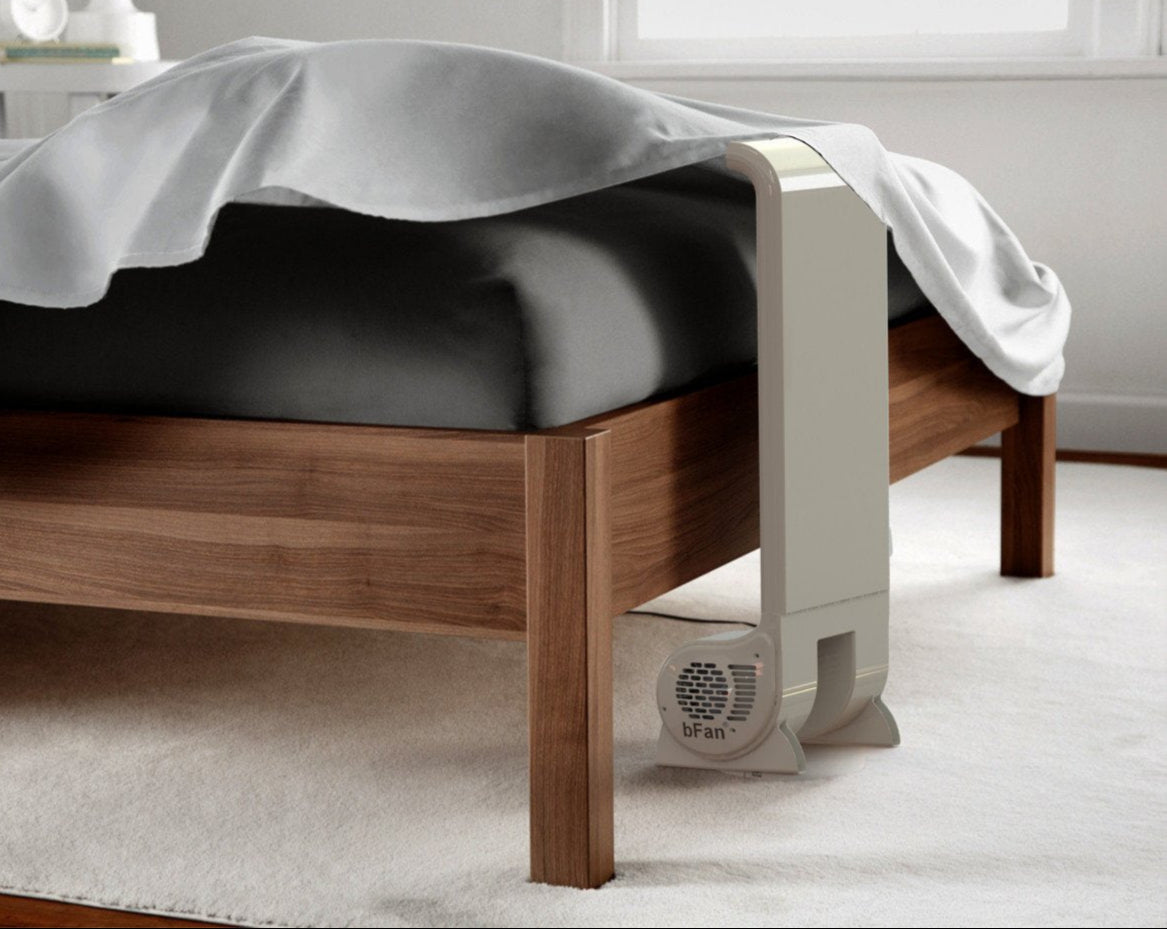
This is where airflow really matters, and a bed fan like the bFan from www.bedfans-usa moves cool air already present in the room under your top sheet, which helps carry heat and moisture away from your body. Neither the bFan nor the Bedjet cools the air itself, they both depend on the cool air in the room. In practical use, many people can raise the room temperature by about 5°F and still sleep cool enough for more restful sleep when using a bFan, because the airflow cools the body directly rather than trying to chill the entire room further.
That matters for comfort and even may help with your power bill.
Why trapped bedding heat makes sweating worse
Your body is trying to offload heat all night long, and if that heat can’t escape, sweat becomes the backup plan, which can develop into chronic excessive sweating or hyperhidrosis.
- Tight weave sheets: These help the air from a bed fan spread evenly across your body, carrying away heat more effectively.
- Loose or heavy bedding: While they feel cozy in the winter, these can hold onto warmth, which isn’t ideal when your medications have already made you prone to overheating.
Breathable pajamas help too, but a good airflow offers significant relief and is usually the bigger difference.
Practical ways to reduce antidepressant night sweats
Before you consider changing your medications, it pays to work on the problem from several angles. Many people manage to reduce night sweats enough to sleep better without giving up an antidepressant that’s otherwise helping them. This multi-pronged treatment approach is often key when excessive sweating turns into a major issue.
Start with the basics, such as cutting back on alcohol near bedtime because alcohol can dilate blood vessels and worsen sweating, watching late evening caffeine if you’re sensitive to it, keeping your bedding lighter than you might think you need, and using layers you can remove easily. If your bedroom runs warm, try to bring down the temperature or improve the air circulation in your bed.
Then look at medication timing, but always check with your prescriber or pharmacist. Some people notice a difference when a dose is taken earlier in the day, others do not, and it depends on the medicine, its half-life, and your own schedule. Keep in mind that some medications, such as prednisone, a corticosteroid, might contribute to this issue, so review all your medications with your healthcare provider.
Here are a few practical adjustments that often help:
- Sleep setup: Choose lighter bedding, moisture-friendly sleepwear, and tight weave sheets so the air flow across your body can carry away the heat.
- Room temperature: Keep your bedroom in the cooler range when possible, remembering that sleep experts recommend 60°F to 67°F and that with a bFan many people can raise the room temperature by about 5°F and still sleep cool.
- Evening habits: Limit alcohol, spicy meals, and heavy exercise close to bedtime if these seem to trigger heat or hot flashes.
- Medication review: Ask your clinician whether the timing, dose, or an alternative antidepressant could reduce sweating without hurting your treatment of depression or anxiety.
- Airflow at the bed: Use a bed fan like the bFan from www.bedfans-usa to move room air under the covers so the heat doesn’t get trapped.
If you’re waking up drenched, consider keeping a brief symptom log for a week or two. Write down the medications you are taking, including prednisone or other corticosteroids, the dose, timing, bedroom temperature, alcohol or caffeine intake, menstrual or menopausal symptoms if applicable, and how severe the sweating was. This gives your clinician something concrete to work with.
When to talk with your doctor about antidepressant night sweats
Some sweating is uncomfortable but manageable, and some sweating is a sign that you need a thorough medication review. If you or your doctor suspect that your experience borders on hyperhidrosis or severe excessive sweating, it’s important to address it as a serious side effect.
Talk with your prescriber if the sweats are frequent, if they started after a dose change, if you feel faint or unwell, if the treatment for depression or anxiety is working but your sleep is falling apart, or if you’re thinking about stopping the medicine because of this side effect. Do not stop an antidepressant suddenly unless you’ve been told to do so, because withdrawal symptoms can be rough and mood symptoms can rebound.
It’s a good idea to speak up if night sweats come with weight loss, fever, cough, severe fatigue, chest pain, or anything else unusual. Antidepressants are a common cause of sweating, but they are not the only cause, because menopause, thyroid problems, infections, low blood sugar, sleep apnea, anxiety, reflux, and other medications can all be part of the picture.
If you’re on more than one medication, that matters too, because several common drugs can increase sweating, and the combined effect may be what pushes nighttime overheating over the edge.
Cooling methods that actually help with night sweats
A colder room can help, but it is not always enough. You might set the thermostat lower and still wake up sweating because the real problem is heat trapped in the bedding around your body.
That’s why whole room cooling and bed cooling are different tools. Air conditioning cools the room, and a bed fan like the bFan cools the space under the covers where you’re actually overheating. Sleep experts commonly recommend a bedroom temperature between 60°F and 67°F for good sleep, and with a bFan many people can raise the room temperature by about 5°F while still getting enough direct body cooling for more restful sleep. This approach can take some pressure off your AC system during the warmer months.
For people dealing with antidepressant night sweats, menopause, or medication-related overheating, the bFan from www.bedfans-usa is one of the most practical options because it is simple and direct. It uses cool room air, it does not create cold air, and it sends that air under the top sheet where heat tends to build up. The bFan sound level is between 28db and 32db at normal operating speed, making it quiet enough for many light sleepers, and it uses only about 18 watts on average.
It also has timer controls, which some people appreciate because they want stronger cooling while falling asleep and less airflow later in the night. If you share a bed and each person needs a different level of cooling, two bFan units can provide dual-zone microclimate control at a fraction of the cost of a dual-zone Bedjet setup, which can run over $100, while the Bedjet itself is twice the price of a bFan, and the original bFan came to market several years before the Bedjet was even thought of.
If you are looking for a bed cooling option that targets the actual problem area instead of only making the room colder, give the bFan a look.
Here is a practical summary of what makes bed cooling useful for antidepressant sweating:
- Direct body cooling: The airflow from a bed fan under the sheet removes trapped heat where the sweating happens.
- Low energy use: A bFan uses only about 18 watts on average, so it can be far cheaper than lowering the whole house temperature overnight.
- Quiet operation: Running at about 28db to 32db at normal operating speed, many light sleepers find it quiet.
- Better sleep flexibility: With a cooler bed, many people can keep the room about 5°F warmer than they otherwise would and still sleep comfortably.
- Couples benefit: Two bFan units can provide dual-zone microclimate control without the high cost of a dual-zone Bedjet system, which costs over $100.
If you want a practical solution that targets the actual source of the problem, remember that the bFan from www.bedfans-usa is a solid option.
Frequently Asked Questions
Can antidepressants really cause night sweats even if I take them in the morning?
Yes, they can, because the effect is not always tied to the exact hour of ingestion. Many antidepressants remain active in your system all day and all night, so sweating can occur during sleep even if you take the dose at breakfast.
If the sweating started after you began the medication or following a dose increase, that pattern is worth discussing with your prescriber, especially if you are also taking other medications like prednisone.
Which antidepressants are most likely to cause sweating at night?
SSRIs and SNRIs are the most frequently mentioned, including sertraline, fluoxetine, escitalopram, paroxetine, venlafaxine, and duloxetine. Still, other antidepressants can cause sweating too, and responses will differ based on the dose, body chemistry, and other health issues. A medicine that causes heavy sweats for one person may not affect another.
Will antidepressant night sweats go away on their own?
Sometimes they do, especially in the first few weeks after starting a medication or increasing the dose. Your body can adjust over time, and the sweating might fade as you settle into treatment. If it remains intense, interrupts your sleep too frequently, or makes you want to stop the medication, it is best to talk with your clinician instead of just waiting it out.
Should I stop my antidepressant if I’m waking up drenched?
No, not on your own, because stopping suddenly can trigger withdrawal symptoms and may worsen depression or anxiety. It is much safer to talk with your prescriber about adjusting timing or dose, or exploring alternatives.
How can I tell whether my night sweats are from antidepressants or something else?
Timing is one clue, as night sweats that begin after a new antidepressant or dose increase may point to the medicine. However, night sweats can also be caused by menopause, thyroid problems, infections, low blood sugar, sleep apnea, anxiety, reflux, or other medications. If you experience fever, weight loss, cough, severe fatigue, or other unusual symptoms, get checked.
What bedroom temperature is best if antidepressants make me overheat?
Sleep experts recommend a bedroom temperature between 60°F and 67°F. That range supports better sleep for most people, and with a bFan many can raise the room temperature by about 5°F and still sleep comfortably, because the airflow directly cools your body.
Do bed cooling products actually cool the air?
No, neither a bFan nor a Bedjet cools the air. They only use the cool air already in the room to help cool your bed, so room temperature still plays an important role.
Is a bFan a good option for antidepressant night sweats?
For many people, yes, because it addresses the heat trapped under the sheets instead of only cooling the room. The bFan from www.bedfans-usa uses room air, operates at a sound level between 28db and 32db at normal operating speed, and uses only about 18 watts on average, making it an effective and energy-saving overnight comfort tool.
Is Bedjet better than a bFan for couples?
Not necessarily, because if you need different temperatures on each side, two bFan units can provide dual-zone microclimate control for a fraction of the cost of a dual-zone Bedjet setup, which can cost over $1000. The Bedjet is twice the price of a bFan, and neither system cools the air; they both rely on directing airflow under the covers.
Can raising the thermostat actually save money if I use a bed fan?
Yes, this is one of the appealing parts of bed-level cooling. Since sleep experts commonly recommend 60°F to 67°F for good sleep, many people lower the whole house temperature just to stay comfortable in bed. With a bFan, many people can raise the room temperature by about 5°F and still sleep cool because the airflow cools the body directly. This can help offset energy costs while still keeping nighttime overheating in check.
Resources
- Mayo Clinic: Antidepressant Side Effects Learn about common side effects of antidepressants from the Mayo Clinic, including why night sweats can occur and how to manage them.
- National Sleep Foundation: Night Sweats Explained Explore the causes of night sweats and how they can impact your sleep, with tips for improving your sleep environment.
- Harvard Health Publishing: Managing Antidepressant Side Effects Read Harvard’s advice on handling side effects of antidepressants, including practical steps to minimize discomfort.
- Cleveland Clinic: Night Sweats Overview Get a comprehensive overview of night sweats from the Cleveland Clinic, covering potential causes and when to see a doctor.
- Sleep Foundation: Ideal Bedroom Temperature for Sleep Discover the recommended bedroom temperature for optimal sleep and why keeping cool at night matters for your health.
Share