
Night Sweats and Back Pain: What the Combination Can Mean
By Kurt Tompkins, Bedfans USA. Updated November 2026.
Quick answer: Night sweats and back pain can happen together for simple reasons, such as a warm bed, poor sleep, or hormone changes, but sometimes they point to an infection, inflammation, or another condition that needs a doctor. If the pain is severe, keeps getting worse, or comes with fever, weight loss, or leg weakness, get medical advice promptly.
When you wake up soaked in sweat with an aching back, it is natural to wonder whether the two are connected. Sometimes they are. Sometimes they just happen at the same time, which can still wreck your sleep. The combination can mean anything from a hot bedroom and a strained muscle to something that deserves a faster medical check. The goal is not to panic. It is to notice the pattern, look at the whole picture, and know when to get help.
Why can night sweats and back pain show up together?
They can feed each other. Back pain makes you toss and turn, and a restless night traps heat under the covers.
Night sweats are usually described as sweating during sleep that soaks your sleepwear or bedding, even when the room is not especially hot. Back pain is just as broad: a dull ache in the lower back, a sharp pain between the shoulder blades, or stiffness that is worse when you first get up. If your back hurts you move more, and that traps heat. If you sweat through the night, your sleep gets lighter and more broken, which can lower your pain tolerance by morning. Other times both come from one cause, such as an infection, a medication, or a hormone shift.
What are the common causes of night sweats and back pain?
The most common explanations are everyday ones, but a few medical causes can tie the symptoms together.
The location of the pain helps. Lower back pain may point to muscle strain, disc problems, or kidney issues. Upper back pain often comes from muscle tension or posture. When sweating is added, doctors start asking different questions.
- Muscle strain and overheating: a warm room and trapped bedding heat can make an already sore back harder to settle.
- Hormone changes: menopause, perimenopause, pregnancy, and hormone therapy can trigger night sweats, while back pain may come with poor sleep or tense muscles.
- Medication side effects: some medications, including certain antidepressants, steroids, and pain medicines, can cause sweating at night.
- Infections: a kidney infection or a flu-like illness can cause both pain and sweats. The NHS lists a high temperature among the symptoms of a kidney infection.
- Inflammatory conditions: some autoimmune and inflammatory conditions cause morning stiffness, ongoing back pain, and sweats when they are active.
- Less common but serious causes: spinal infections, certain cancers, and other illnesses can show up with night sweats, back pain, fatigue, or unexplained weight loss.
Sometimes the answer is simple. If you sleep hot, keep heavy bedding, and have chronic back pain, the sweating may be more about your sleep setup. But if this is new, intense, or getting worse, take it seriously as a real symptom and get it checked.
What are the red flags with night sweats and back pain?
Timing and severity matter. One sweaty night after yard work is not the same as repeated drenching sweats with severe pain.
Pay closer attention, and talk to a doctor, if you notice any of these:
- Fever or chills, which can point toward infection.
- Unexplained weight loss or a lump or swelling in your back.
- Pain that keeps getting worse, that is worse at night, or that does not improve with rest.
- Numbness, tingling, or weakness in the legs, or shooting leg pain.
- A history of cancer, immune problems, or a recent infection, which lowers the bar for getting checked quickly.
The NHS says to call emergency services or go to the emergency room if back pain comes with pain, tingling, weakness, or numbness in both legs, a loss of feeling around the genitals or anus, or changes in bladder or bowel control. Do not wait to see if those pass.
How do doctors check night sweats and back pain?
They start with your story, then decide on tests. Expect questions about when it began, how often it happens, how bad the sweating is, where the pain sits, and what else is going on.
You may be asked about medications, recent infections, hormone changes, weight loss, fatigue, travel, and family history. Depending on your symptoms, the workup might include blood tests, urine tests, imaging, or a medication review. If a doctor suspects a kidney infection, inflammation, or a spinal problem, they may move quickly. If the pattern sounds more like hormone shifts, poor sleep, and mechanical back pain, the next steps may be simpler. Our guide on when to see a doctor for night sweats has more.
What sleep setup changes can help night sweats and back pain?
A cooler, better supported bed helps while you sort out the cause. These steps do not diagnose anything, but they can make tonight easier.
- Keep the bedroom comfortable: sleep experts suggest a cool, quiet, dark room.
- Use lighter top bedding: it cuts heat trapping without leaving your back exposed to a draft.
- Support your back: pillow height, mattress feel, and keeping your hips level matter as much as temperature.
- Choose tightly woven sheets: Bedfans USA recommends higher thread count, tightly woven sheets. A tighter weave keeps airflow from a bed fan under the covers instead of letting it escape through the fabric, the way a sail holds the wind and a loose net cannot.
- Keep a log: note pain, sweating, medications, meals, and room conditions.
If your back hurts, keeping the air moving under the top sheet can also help you stay in one comfortable position longer, rather than kicking covers off and waking up cold an hour later.
What bed cooling choices work for night sweats and back pain?
A bed fan is often more practical than lowering the air conditioner all night. It works on the warm pocket under your covers, where heat gets trapped around your body.
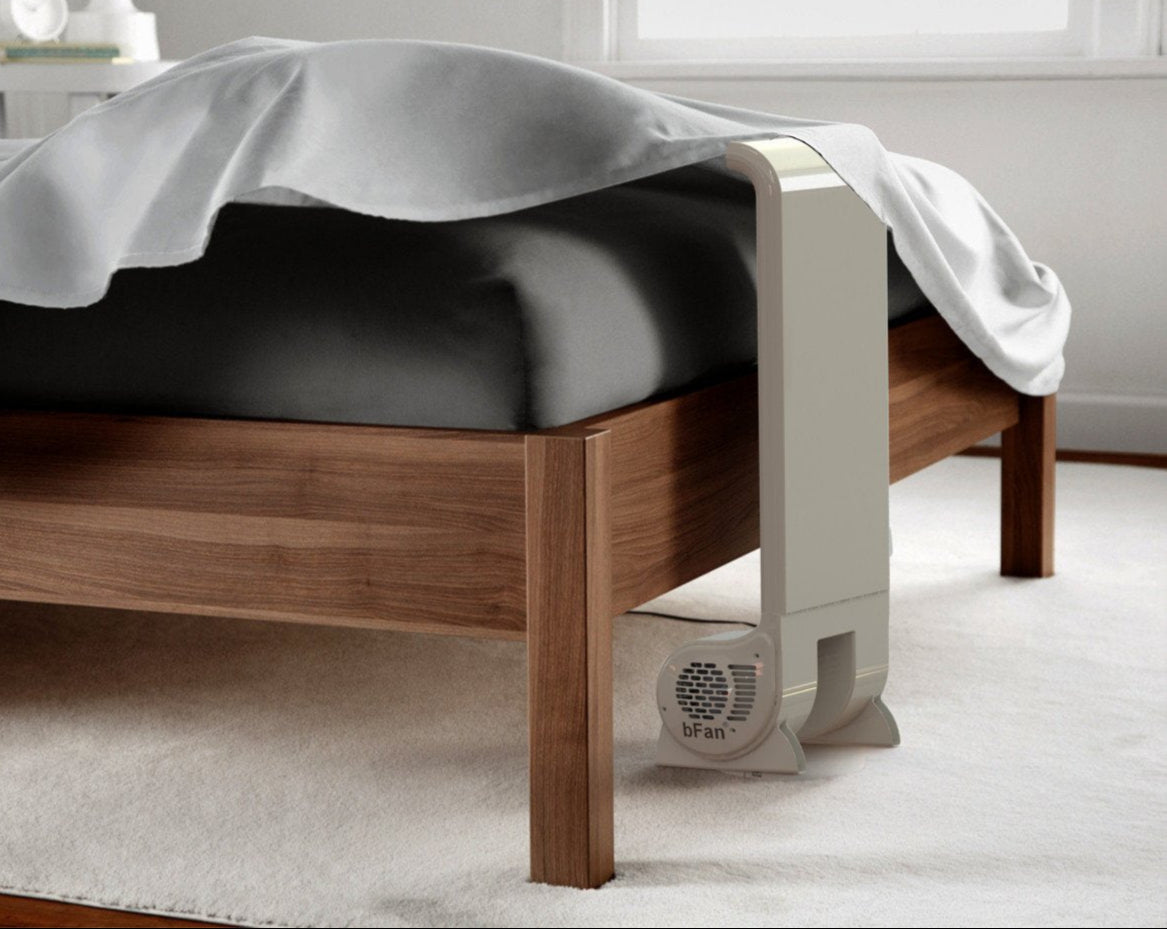
The bFan from Bedfans USA sits at the foot of the bed and sends a cooling breeze under your top bedding. It uses the air already in your room, as a BedJet does. Direct airflow helps stop sweat before it starts, and many customers tell Bedfans USA that they raise their thermostat a little and still sleep comfortably.
- Sound: about 28 to 32 dB at normal operating speed.
- Power: about 18 W on average and 24 W at maximum.
- Controls: a remote with speeds from 5 to 100 percent and a sleep timer.
- Fit: mattress heights from 19 to 38 inches. The base needs about 6.75 inches under the foot of the bed. If there is not enough clearance, the base can be turned around so it sits in front of the foot of the bed instead of underneath.
- Price: at its $204.95 list price, one bFan is less than half the price of a BedJet ($699 list), and two bFans for a couple are less than half the price of a dual-zone BedJet ($1,549 list).
The bFan is also HSA and FSA eligible. Bedfans USA offers a simple process to get a letter of medical necessity, so you can pay with your HSA or FSA card in one place. See the bFan HSA and FSA payment option. A bFan is a comfort product, not a medical device, and it will not diagnose or fix the cause of your pain.
What should you track if night sweats and back pain keep happening?
Write down what you notice for a week or two. A simple record makes the next step much clearer.
Note the time you wake up, how much you sweat, where the pain is, which medications you took, whether you drank alcohol, your room conditions, and any other symptoms such as fever, fatigue, numbness, or weight changes. You may see the sweating cluster around hormone shifts, medication changes, or warm nights. Or you may see a pattern that points toward infection, inflammation, or pain that is steadily getting worse. Either way, you will walk into the appointment with useful information.
Ready for better sleep?
Order the bFan from Bedfans USA and get a quiet cooling breeze under your covers, built in Texas by the company that invented the Bedfan.
Frequently Asked Questions
Can back pain itself cause night sweats?
Back pain by itself does not usually cause drenching night sweats, but it can make you restless, and restless sleep under heavy covers traps heat. When both symptoms are present, doctors look for a shared cause, such as an infection, inflammation, a medication side effect, or a hormone change. If you have severe back pain along with soaking sweats, fever, or weight loss, talk to a doctor soon rather than assuming it is the pain. If the pain is mild and the sweats match a warm room, a cooler setup may be all you need.
What causes night sweats and lower back pain at the same time?
Several things can. A kidney infection can cause lower back pain and fever with sweating. Hormone changes such as menopause can bring night sweats, while poor sleep and tense muscles add back pain. Some medications cause sweating and also change how you sleep. Less often, an infection of the spine or another illness is involved. Because the list is long, a doctor will ask about fever, urinary symptoms, weight change, and medications. Do not try to guess the cause from the symptoms alone, especially if the pain is new or severe.
When should I go to the emergency room for back pain and sweating?
Go to the emergency room or call emergency services if back pain comes with weakness, numbness, or tingling in both legs, a loss of feeling around the genitals or anus, or changes in bladder or bowel control. Seek urgent care too if severe back pain comes with a high fever, confusion, chest pain, or shortness of breath. Back pain after a serious accident also needs urgent attention. These signs can mean something that should not wait, so do not sit at home hoping that the sweating and pain will pass on their own.
Is spinal stenosis a reason for night sweats?
Spinal stenosis is a narrowing of the spaces in the spine that can press on nerves and cause back pain, leg pain, numbness, or weakness. Night sweats are not a typical symptom of spinal stenosis, so if you have both, a doctor will want to look at other possible causes, such as medications, hormones, or an infection. The pain from stenosis can still disrupt sleep, which can leave you restless and warm. See a doctor for a proper diagnosis, and use comfort measures like supportive bedding and airflow in the meantime.
Will a bed fan help if my back pain keeps me tossing and turning?
A bed fan will not ease the pain itself, but it can help you stay comfortable. When airflow keeps the bed from building up heat, you are less likely to kick off the covers, wake up sweaty, and spend the rest of the night shifting around. The bFan sends a cooling breeze under the top bedding from the foot of the bed, and direct airflow helps stop sweat before it starts. Pair it with good back support and ask your doctor about the pain, since comfort tools are not a substitute for care.
Resources
- NHS: Back pain: Self care tips and the symptoms that need urgent medical help.
- NIAMS: Back Pain: Explains types and causes of back pain and when to see a health care provider.
- MedlinePlus: Back Pain: NIH overview of back pain causes, diagnosis, and treatment.
- NHS: Kidney infection: Describes kidney infection symptoms, including a high temperature, and when to get help.
- MedlinePlus: Spinal Stenosis: Explains spinal stenosis symptoms and care.
- NHS: Night sweats: Lists common causes of night sweats and when to see a doctor.
Share