
Night Sweats Remedy: 5 Cooling Approaches Worth Trying
By Kurt Tompkins, Bedfans USA. Updated November 2026.
Quick answer: There is no single night sweats remedy that works for everyone, because night sweats have many causes. Five practical approaches are worth trying at home: a comfortable bedroom, airflow under the covers, breathable bedding and sleepwear, smarter evening habits, and a calmer wind down. If the sweats are heavy or frequent, see a doctor about the cause.
Waking up damp is exhausting. You peel off pajamas, flip the pillow, and lie awake wondering why it keeps happening. A good night sweats remedy starts with the basics you control tonight, then adds a conversation with your doctor if the pattern continues. This guide covers five cooling approaches worth trying, how to set them up, and when to get medical advice.
What counts as a real night sweats remedy?
A real remedy either lowers the heat building up in your bed or addresses what is triggering the sweating. Most home approaches do the first, and your doctor helps with the second.
Night sweats are usually described as sweating during sleep that soaks your sleepwear or bedding, even when the room is not especially warm. Common causes include menopause and hot flashes, medication side effects, anxiety and stress, infections, thyroid problems, and alcohol. Because the causes differ, home comfort steps and medical care work best together. Our guide to night sweats goes deeper on causes.
When should you see a doctor about night sweats?
See a doctor if night sweats are frequent, soak your bedding, or come with other symptoms. Home comfort steps are not a substitute for a diagnosis.
The NHS advises getting medical advice when night sweats come with symptoms such as a very high temperature, a cough or diarrhea, or weight loss for no reason. Tell your doctor about new medications, ongoing fatigue, or anything else that changed around the time the sweats started. Our page on when to see a doctor for night sweats lists more warning signs. Doctors can also talk with you about options for hot flashes, including hormone therapy such as estrogen when it is appropriate for you, so bring that question up if menopause may be involved.
What are the 5 cooling approaches worth trying?
Start with the bedroom, then the bed, then your habits. Each approach below is simple and can be combined with the others.
1. Make the bedroom comfortable. Sleep experts suggest a cool, quiet, dark room. Use lighter top bedding and avoid piling on layers you do not need. 2. Move air under the covers. A bed fan sends a cooling breeze under your top bedding so trapped heat moves out near your shoulders. 3. Use breathable, tightly woven bedding and sleepwear. Natural, breathable fabrics handle moisture better than heavy synthetics. 4. Adjust evening triggers. Alcohol, spicy food, late caffeine, and hard exercise right before bed can all bring on sweating for some people. 5. Wind down. Stress and anxiety can raise your body heat, so a calming routine helps.
How do you cool the bed itself, step by step?
Focus on the pocket of air between your body and the covers. That is where heat and humidity build up.
1. Check your layers. Swap a heavy comforter for a lighter one, and remove extra toppers that trap heat. 2. Choose the right sheets. Bedfans USA recommends higher thread count, tightly woven sheets. A tighter weave keeps the airflow under the covers instead of letting it escape through the fabric, the way a sail holds the wind and a loose net cannot. 3. Add airflow. Place a bed fan at the foot of the bed and tuck the top bedding at the foot and sides. 4. Start on a low speed. Raise it a step at a time until the bed feels comfortable.
Should you use a bed fan or adjust the whole room?
A bed fan targets the bed, so you do not have to chill the whole house. Adjusting the room helps too, but it is a bigger and more expensive change.
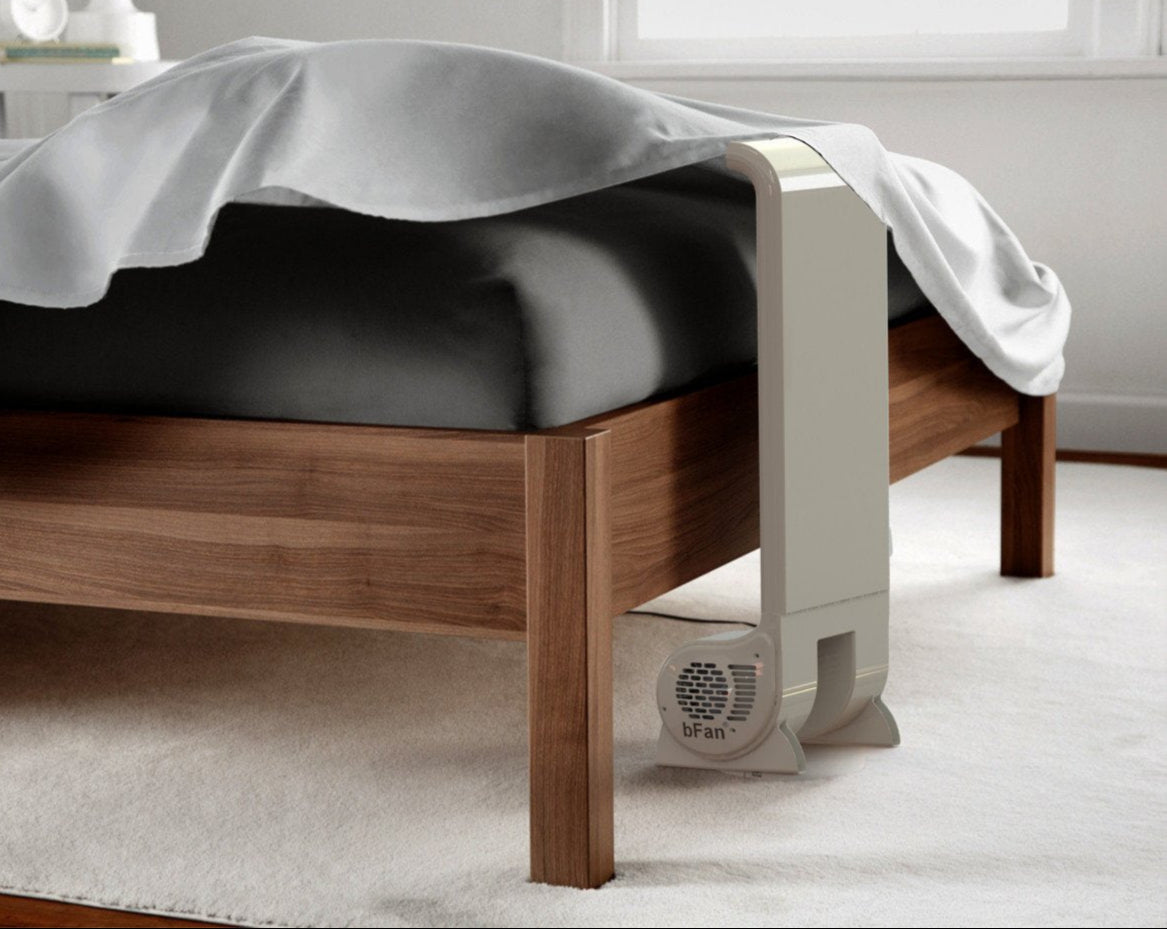
Lowering the thermostat all night costs more and may not suit a partner who runs cold. The bFan from Bedfans USA works on the bed itself. Direct airflow helps stop sweat before it starts, and many customers tell Bedfans USA that they raise their thermostat a little and still sleep comfortably. A room fan or ceiling fan moves air around the room, but it does less for the warm pocket under your blankets. See how the bFan works.
How do you set up airflow so it actually works?
Place the base at the foot of the bed, centered, and tuck the bedding in.
- Base: it sits under the foot of the bed and needs about 6.75 inches of clearance. If there is not enough clearance, the base can be turned around so it sits in front of the foot of the bed instead of underneath.
- Panel: the flat duct panel rises to mattress height, under the top bedding.
- Footboard: leave about 1.75 inches between the mattress and the footboard.
- Speed and timer: use the remote, from 5 to 100 percent, and the sleep timer if your sweats come early in the night.
- Sound: about 28 to 32 dB at normal operating speed, with about 18 W of power use on average.
Are menopause hot flashes and night sweats the same thing?
They are closely related. Night sweats are often hot flashes that happen during sleep.
During menopause and perimenopause, changing hormone levels can make the body's temperature control more sensitive, and a sudden wave of heat can trigger sweating. The National Institute on Aging explains menopause and common symptoms. Hot flashes can also happen during the day, and they have other causes besides menopause. If hot flashes are disrupting your sleep, talk to your doctor and keep airflow handy for the nights. Read more about hot flashes and sleep.
Is a bFan or a BedJet better for night sweats?
Both use room air, but the bFan is the less expensive way to get airflow under the covers. At list prices, one bFan ($204.95) is less than half the price of a BedJet ($699), and two bFans for a couple are less than half the price of a dual-zone BedJet ($1,549).
Neither product makes the air colder. The original Bedfan came to market years before the BedJet. The bFan is also HSA and FSA eligible. Bedfans USA offers a simple process to get a letter of medical necessity, so you can pay with your HSA or FSA card in one place. See the bFan HSA and FSA payment option.
How do you build a bedtime routine that reduces wake-ups?
A steady routine tells your body it is time to cool down and sleep. Small habits add up.
- Wind down for 30 minutes: dim the lights, put screens away, and try slow breathing or gentle stretching to settle stress and anxiety.
- Finish exercise earlier: hard workouts close to bedtime can leave you warm for hours.
- Watch late triggers: limit alcohol, spicy meals, and caffeine in the evening.
- Keep a log: note when sweats happen, what you ate, any medications, and how you slept. It helps your doctor spot patterns.
- Keep water nearby: sip some if you wake up, since sweating can leave you thirsty.
Which bedding materials help most, and which backfire?
Breathable, tightly woven natural fabrics usually help, and thick or plastic-like layers usually backfire.
Cotton percale and linen are breathable and handle moisture well. Heavy fleece, memory foam toppers, and thick synthetic comforters tend to trap heat. Moisture wicking sleepwear can help if you sweat a lot. Remember that loose, gauzy bedding lets airflow from a bed fan escape, so pair breathable fabrics with a tight weave. A bFan is a comfort product, not a medical device, and it is not a substitute for medical care.
Ready for better sleep?
Order the bFan from Bedfans USA and get a quiet cooling breeze under your covers, built in Texas by the company that invented the Bedfan.
Frequently Asked Questions
Which home remedies for night sweats are worth trying first?
There is no single best remedy, because night sweats have many causes, but a few home steps help most people feel better. Keep the bedroom comfortable, use lighter top bedding and tightly woven breathable sheets, and add airflow under the covers with a bed fan. Direct airflow helps stop sweat before it starts. Cut back on alcohol, spicy food, and late caffeine, and build a calm wind down routine. If your sweats are heavy or frequent, see a doctor to find the cause, because the right fix depends on whether hormones, medications, or illness are involved.
Does stress or anxiety bring on night sweats?
Yes. Stress and anxiety can raise your heart rate and body heat, and some people sweat at night when their mind is racing. Anxiety can also fragment sleep, which makes every warm moment feel worse. A relaxing evening routine, steady sleep times, and less late screen time may help, and a doctor or counselor can offer more support if anxiety is a regular problem. Comfort steps like lighter bedding and a bed fan can help you stay comfortable while you work on the underlying stress.
Does exercise help or hurt night sweats?
Regular exercise supports sleep and general health, but timing matters. A hard workout close to bedtime can leave your body warm for hours and make sweating more likely, so many people do their toughest sessions earlier in the day. A gentle walk or stretching in the evening is usually fine. If you notice a pattern between late exercise and sweaty nights, move your workout earlier for a week or two and see whether it helps. Talk to your doctor before making big changes if you have a medical condition.
Which medications can bring on night sweats?
Some do. Antidepressants, steroids, hormone therapies, blood pressure medicines, and certain pain medicines are among the drugs that can cause sweating during sleep. If the sweats began after you started or changed a medication, tell your prescriber and do not stop it on your own. Your doctor may adjust the dose, change the timing, or suggest another option. In the meantime, lighter bedding and airflow under the covers can help you stay comfortable. Our guide on medications that contribute to night sweats has more.
How long should I try home remedies before seeing a doctor?
If night sweats are new, heavy, or come with fever, weight loss, a lasting cough, or fatigue, see a doctor right away rather than waiting. If the sweats are mild and match an obvious trigger such as a warm room or heavy blankets, try home changes for a couple of weeks and keep a log. If you are still waking up damp, or the sweats are getting worse, book a visit. Frequent or heavy night sweats deserve a medical check, even when you are also using bedding and airflow to feel better.
Resources
- NHS: Night sweats: Lists common causes of night sweats and when to see a doctor.
- MedlinePlus: Sweating: Explains excessive sweating, its causes, and when to see a provider.
- National Institute on Aging: What Is Menopause?: Explains menopause and common symptoms such as hot flashes and sleep trouble.
- NHS: Symptoms of menopause and perimenopause: Lists hot flushes, night sweats, and other symptoms.
- Office on Women's Health: Menopause symptoms and relief: Covers hot flashes and ways to manage menopause symptoms.
- Sleep Foundation: The Best Temperature for Sleep: Explains how a cool bedroom supports sleep.
- MedlinePlus: Healthy Sleep: NIH information on healthy sleep habits.
Share