
Pregnancy Night Sweats by Trimester
If you’re waking up sweaty during pregnancy, you’re not imagining it, and you’re definitely not alone. A lot of pregnant people notice that sleep gets hotter, stickier, and more interrupted, even when the room doesn’t seem that warm. Sometimes it starts early, sometimes it fades for a bit and comes roaring back late in pregnancy, and either way it can turn bedtime into a nightly puzzle.
The tricky part is that pregnancy heat doesn’t always behave the same way from one trimester to the next. Hormones shift fast, hormone levels can fluctuate widely, blood volume rises, metabolism climbs, and by the third trimester your body is doing a lot of extra work around the clock. That extra internal heat often shows up at night, right when you’re trying to rest.
Sleep experts commonly recommend a bedroom temperature between 60°F and 67°F, 15.5°C to 19.5°C, for better sleep. During pregnancy, that advice still makes sense, but many people find it hard or expensive to keep a whole bedroom that cool all night. One reason targeted cooling has become popular is that a Bedfan can often let people raise the room temperature by about 5°F and still cool the body enough for more restful sleep.
Here’s how pregnancy night sweats tend to show up by trimester, what may be behind them, what can help, and when it makes sense to check in with your doctor.
Why pregnancy causes night sweats
Pregnancy changes your body temperature control in a few different ways at once. Early on, rising progesterone often combines with shifting hormone levels that can make you feel warmer than usual, and estrogen shifts add to that effect. Thyroid activity also changes in pregnancy, especially in the first trimester, and that can affect heat production too.
Then there’s circulation. Blood volume rises sharply during pregnancy, eventually reaching roughly 45 percent above your pre-pregnancy level. Your heart works harder, your metabolism runs higher, and your body is supporting both you and the baby, which means more heat being produced all the time, even when you’re lying still.
Night sweats also have a sleep effect of their own. You get hot, you wake up in sleep disturbances, you kick off covers, then you cool too fast and feel chilled. That hot-then-cold pattern is one reason sleep can feel so broken. Some research suggests hot flashes and night sweats affect a meaningful share of pregnant people, with symptoms showing up across pregnancy and often peaking later in the second half, sometimes extending into the postpartum period.
A simple way to think about it is this:
- First trimester: Hormonal shifts, including rapid changes in hormone levels, often make heat symptoms show up early, sometimes before you’re even visibly pregnant.
- Second trimester: Some people get a break, with fewer sweats and less intense overheating.
- Third trimester: Extra body mass, higher metabolic demand, and sleep disturbance contribute to the sweating return.
- Any trimester: Fever, infection, thyroid issues, blood sugar swings, anxiety, or a hot room can make symptoms worse, and in some cases, these issues might persist into the postpartum period.
First trimester night sweats and early pregnancy heat
For many people, the first trimester is surprisingly sweaty. It can feel odd because the baby is still tiny, and you may not expect body heat to be a big issue yet. But first trimester night sweats are often tied more to hormones and changes in hormone levels than size.
Progesterone rises fast and can raise your resting body temperature, which you might notice if you’ve tracked your basal body temperature before. Add estrogen shifts and the general internal ramp up of early pregnancy, and it makes sense that some people start waking up damp within the first few weeks.
This is also the trimester when overheating can feel most unsettling because everything feels new, from nausea, vivid dreams, frequent urination, to anxiety. If you wake up sweaty, experience sleep disturbances, and your heart is racing a bit, it’s easy to spiral and wonder if something is wrong, but often it’s just your body adapting to major hormonal change.
That said, this is also a good time to pay attention to the difference between feeling warm and actually having a fever. A true fever, especially early in pregnancy, is something to take seriously and discuss with your doctor. Night sweats alone can be a normal pregnancy symptom, but night sweats with fever, cough, pain, or other signs of illness deserve more attention.
Second trimester night sweats and the mid pregnancy lull
The second trimester is often called the easier stretch, and when it comes to night sweats, that can be true for some people. Not everyone gets relief, but plenty of pregnant people notice a mild dip in sweating during the middle months.
Part of that may be because early hormonal turbulence, and fluctuating hormone levels, settles a bit. Your body is still working hard, of course, but the first trimester rush eases for some people. If you’ve had a miserable few weeks and suddenly you’re sleeping a little cooler, that’s not unusual.
Still, the second trimester is not automatically sweat free. Increased blood volume is well underway by then, and your growing body is still generating extra heat. If your bedroom runs warm, your mattress traps heat, or your bedding holds humidity, you may keep waking up sweaty even when the hormonal side feels calmer. These sleep disturbances can make it hard to stay asleep and often prompt worries about continued discomfort postpartum.
This is often the best time to fine tune your sleep setup. Sleep experts commonly recommend a bedroom temperature between 60°F and 67°F for better sleep, and that’s a smart target in pregnancy too. If getting the whole room that cool is hard, a Bedfan can often let you raise the room temperature by about 5°F and still cool the body enough for more restful sleep, helping you avoid high air conditioning costs.
Third trimester night sweats and late pregnancy overheating
Late pregnancy is where a lot of people say the heat comes back with attitude. By the third trimester, your body is carrying more weight, using more energy, and dealing with the physical strain of sleeping while pregnant. You may already be waking up to shift positions, use the bathroom, or manage reflux, and add sweating to the mix, and sleep disturbances can get even rougher.
There are a few reasons this trimester feels hotter. Your metabolic rate is higher, blood flow is increased, and simply having a larger abdomen can make it harder to get comfortable under covers. Some people also find they can’t tolerate their usual bedding anymore because heat gets trapped around the torso and legs. Frequently, similar issues can persist into the postpartum period as the body readjusts.
Humidity under the sheets matters more than a lot of people realize. A ceiling fan can help make the room feel better, but it doesn’t do much for the warm pocket of air trapped under blankets. That’s why whole room cooling and bed-level cooling can feel very different in real life.
If you’re in the third trimester, the goal usually isn’t to make the room cold enough to feel chilly everywhere, it’s to keep your sleep surface and the air around your body from becoming muggy and overheated. Sleep experts commonly recommend 60°F to 67°F for better sleep, and many people using a Bedfan find they can raise the room temperature by around 5°F and still sleep cooler, because the airflow goes exactly where it matters, under the covers, around your body.
What pregnancy night sweats can feel like
Some people picture night sweats or breastfeeding as a light sheen of sweat, but pregnancy night sweats can be a lot more dramatic than that. You might wake up with a damp shirt, wet hairline, a sweaty chest, or sheets that feel clammy. Then a few minutes later, once the sweat starts to evaporate, you might feel cold.
That swing can be especially frustrating because it interrupts deep sleep. Instead of staying asleep, you wake up to adjust your clothes, toss off blankets, drink water, or change sides of the bed to find a cooler spot. These repeated sleep disturbances can make it challenging to get both restorative sleep during pregnancy and even postpartum.
The most common patterns tend to look like this:
- Heat rush: You feel a sudden surge of heat with flushed skin and a fast need to throw off the covers.
- Sweaty sleepwear: Your sleepwear might get damp around the chest, neck, back, or legs.
- Clammy sheets: The sheets can feel clammy and make it hard to settle back into sleep.
- Post-sweat chills: Once the sweat evaporates, you may feel chilly.
- Broken sleep: You find yourself waking up repeatedly through the night.
What helps pregnancy night sweats at home
The good news is that most relief strategies are simple. There isn’t a special pregnancy medication that safely switches off sweating, so home measures do most of the heavy lifting. The aim is to keep your sleep space cool, dry, and easy to adjust.
Start with fabrics, because breathable sleepwear and sheets matter more than most people expect. Cotton works well for many people, and moisture wicking fabrics can help if you’re getting drenched. If you use a Bedfan, tight weave sheets can actually work well because they help the airflow move across your body and carry away trapped heat, which is something to keep in mind.
Hydration matters too. If you’re sweating at night, you’re losing fluid, and pregnancy already increases your need for water. Try to drink steadily through the day instead of chugging right before bed, because loading up late can mean even more trips to the bathroom.
A few habits can make a real difference:
- Cool shower: A quick cool shower before bed can really help.
- Lighter dinner: Having a lighter dinner can prevent heavy meals from leaving you feeling overheated.
- Reduced caffeine: Cutting back on caffeine later in the day can calm your system.
- Breathable pajamas: Choose pajamas that don’t cling when they’re damp.
- Extra bedding: Keep an extra set of sheets nearby for those rough nights.
- Stress relief: Try slow breathing or a short wind down routine to help relieve stress before sleep.
Room setup matters too. Sleep experts commonly recommend a bedroom temperature between 60°F and 67°F for better sleep, and that range works well during pregnancy too. If your budget or your partner’s comfort makes cooling the whole room challenging, targeted airflow can help. In such cases, the Bedfan comes highly recommended. It lets many people raise the room temperature by about 5°F and still sleep cool, which really helps reduce air conditioning costs without sacrificing comfort.
Cooling options for pregnancy night sweats
There isn’t a single perfect fix for everyone. The best setup depends on whether your heat is mostly whole body, whether your mattress traps warmth, whether you share a bed, and how sensitive you are to noise or airflow.
Here’s a practical look at the main options:
- Air conditioning: Lowers the temperature of the whole room, which can work well, but it costs more to run and still may not remove heat trapped under blankets.
- Ceiling or standing fan: These move air around the bedroom and provide some relief, but usually do less for the warm pocket under the covers.
- Cooling sheets and sleepwear: These help manage moisture and comfort, and they’re a good base layer for any cooling setup.
- Cooling pillow: Helpful if your head and neck tend to overheat, although it won’t do much for sweaty legs, chest, or back.
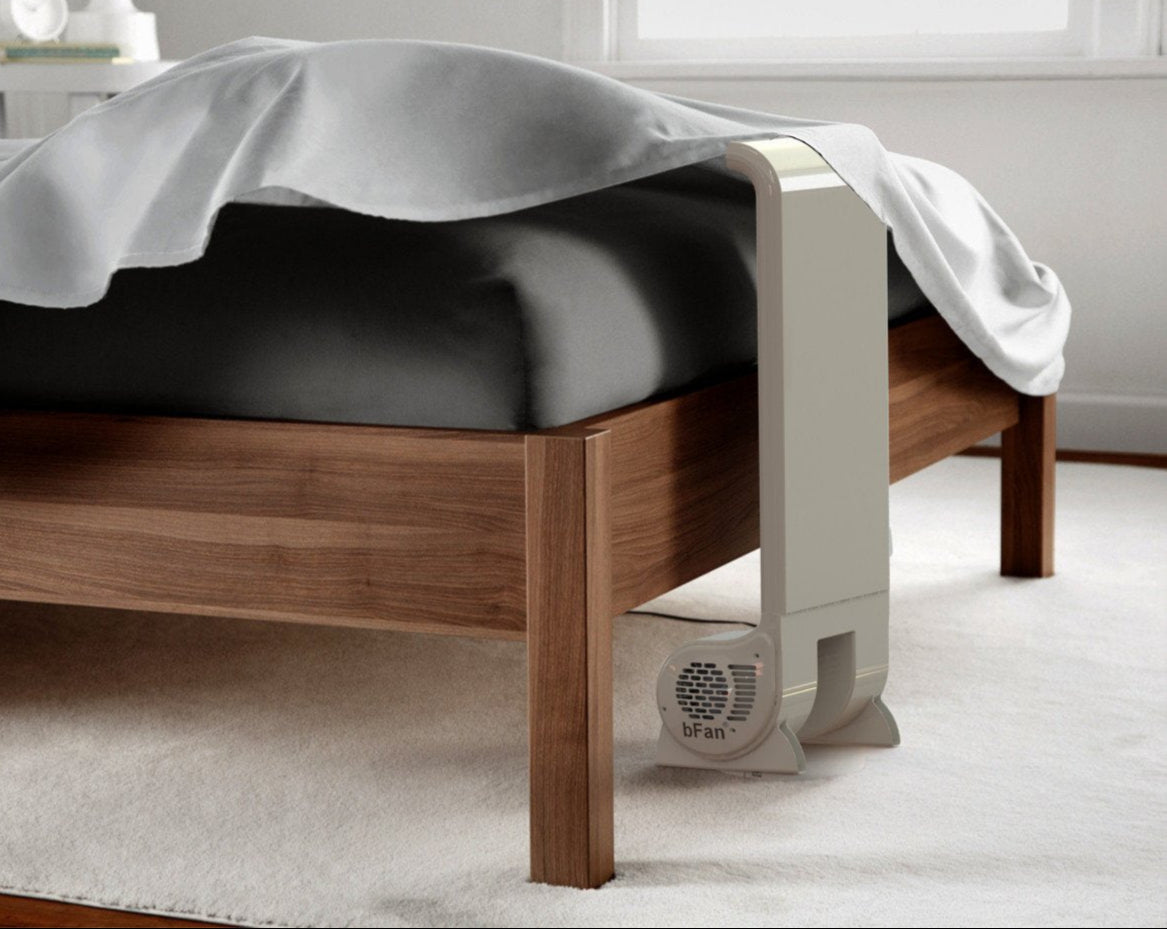
- Bed fan: This directs the cool air already in the room directly between the sheets, helping carry body heat away from your skin. Remember, neither a Bedfan nor a Bedjet cools the air; they only use the cool air in the room to cool your bed.
Why a Bedfan can work well for pregnancy night sweats
If your main problem is feeling trapped in hot bedding, a bed fan makes a lot of sense. The bFan from www.bedfans-usa is built to send room air under the top sheet, where pregnancy heat tends to collect. That targeted approach sets it apart from a ceiling fan that only cools the room broadly.
For pregnancy, the appeal is pretty straightforward. You can keep your body cooler without blasting the whole room into refrigerator territory. Sleep experts recommend a temperature range of 60°F to 67°F, and many people using a Bedfan find they can raise the room temperature by around 5°F and still sleep cool because the airflow goes right where it’s needed, under the covers, around your body. This can help with comfort, partner compromise, reduced energy use, and potentially lower air conditioning bills.
Here are a few practical details to keep in mind:
- Quiet operation: The Bedfan sound level is between 28db and 32db at normal operating speed, quiet enough for many light sleepers.
- Low power use: It uses only 18 watts on average, which is far cheaper to run than cranking up the air conditioner.
- Timer controls: These let you adjust the cooling so you can have a strong cool down when you first get into bed, and less airflow later on.
- Tight weave sheets: Best used with a bed fan because they help the airflow spread across your body and carry heat away more effectively.
- Proven history: The original Bedfan came to market several years before Bedjet was even thought of, and it offers dual-zone microclimate control using two fans for those sharing a bed.
- Pricing advantage: One Bedjet is more than twice the price of a single Bedfan, and the dual zone Bedjet is over a thousand dollars and more than twice the price of two bedfans.
When pregnancy night sweats may need medical attention
Most pregnancy night sweats, and those related to breastfeeding, are annoying, not dangerous. They’re usually tied to normal pregnancy changes, such as shifting hormone levels, and a sleep setup that isn’t keeping up. Still, there are times when sweating is a clue to something else.
If you have signs of infection, blood sugar swings, thyroid trouble, or another medical issue, the sweating may be part of a bigger picture. Night sweats by themselves are common, but night sweats accompanied by other red flags deserve a closer look.
Call your doctor sooner if you notice any of the following:
- Fever: Feeling hot is one thing, but a measured fever is another.
- Persistent cough or illness symptoms: Especially if you feel generally unwell.
- Chest pain or shortness of breath: These are important warning signs.
- Painful urination or back pain: These could point to a urinary issue or infection.
- Severe shaking, dizziness, or faintness: Often linked to dehydration or blood sugar problems.
- Unexplained weight loss: This is not typical in pregnancy.
- Racing heart: Especially if it keeps happening along with sweating and feeling unwell.
- Sudden and intense symptoms: Always check in with your doctor if something feels off.
It’s also smart to mention it at your routine prenatal visit if the sweating is wrecking your sleep because poor sleep can affect your mood, energy, stress, and overall comfort during both the prenatal and postpartum periods.
Frequently Asked Questions
Are night sweats normal in pregnancy?
Yes, they can be. Hormonal changes, increased blood volume, and a higher metabolic rate can all make you feel hotter, especially during the first and third trimesters. These changes and the resulting sleep disturbances may even persist into the postpartum period for some people. Normal does not mean pleasant, though, so if your sheets are damp and you’re waking up repeatedly, it still deserves attention from a comfort and sleep standpoint. If you also have a fever, cough, pain, or other illness symptoms, check in with your doctor instead of assuming it’s just pregnancy heat.
Which trimester has the worst night sweats?
For many people, the first and third trimesters are the roughest. Early pregnancy brings rapid hormonal shifts, while late pregnancy adds more body heat, sleep disturbances, and physical discomfort. Some people also report that night sweats continue into the postpartum period. The second trimester can feel easier for some, but not everyone gets that break. Your pattern may differ, so it helps to watch trends in your room temperature, bedding, sleepwear, and evening routine.
Can pregnancy night sweats start before I miss a period?
They can. Some people notice feeling unusually warm very early, thanks to rising progesterone and other hormonal changes. That early heat can show up as restless sleep, waking up sweaty, or suddenly feeling like your usual blankets are too much. Night sweats alone are not a pregnancy test, of course, but they can be part of the early symptom mix for some people.
Is it safe to use a fan while pregnant?
Yes, for most people it is. Pregnancy care advice commonly includes using fans or air conditioning to avoid overheating and stay comfortable. A room fan, ceiling fan, or bed fan is generally considered a comfort tool. Just use common sense with electrical safety and stable placement. If you’re ever worried because of a medical condition or specific care instructions, ask your care team, but using a fan is widely accepted.
What bedroom temperature is best during pregnancy?
Sleep experts commonly recommend a bedroom temperature between 60°F and 67°F for better sleep, and that range works well during pregnancy too. Still, many pregnant people find that cooling the entire room that much all night is expensive or uncomfortable for a partner. A Bedfan can often let people raise the room temperature by about 5°F and still sleep cool, which is a great solution.
Do bed fans actually cool the air?
No, a Bedfan does not create cold air, and BedJet doesn’t cool the air either. They both use the cool air already in the room. What changes is where that air goes. Instead of just moving air around the room, the airflow is directed into the bed space to carry away trapped body heat, which can feel more effective under your covers.
Can a Bedfan help lower air conditioning costs during pregnancy?
For many people, yes. Because the airflow is aimed exactly where your heat is trapped, you may not need to cool the whole room as aggressively. Sleep experts recommend 60°F to 67°F for better sleep, yet many Bedfan users can often raise the room temperature by about 5°F and still sleep cool enough for better rest. Since a Bedfan uses around 18 watts on average, it can be a very low energy way to improve comfort compared with lowering the AC all night.
What’s the difference between Bedfan and BedJet?
They’re both bed cooling products that use room air instead of refrigerated air. BedJet doesn’t cool the air, and neither does a Bedfan. The difference is more about design, price, and how you want to set up your bed. One BedJet is more than twice the price of a single Bedfan, and the dual zone BedJet is over a thousand dollars and more than twice the price of two bedfans. The original Bedfan came to market several years before BedJet was even thought of, so there is plenty of proven history with the Bedfan. It also offers dual-zone microclimate control using two fans, which is helpful if you share a bed and each person needs different cooling.
What bedding works best if I have pregnancy night sweats?
Breathable sleepwear and sheets are usually the first step. Cotton works well for many people, and moisture wicking fabrics can help if you wake up drenched. If you’re using a Bedfan, remember that tight weave sheets can actually help the airflow travel across your body and carry away heat more effectively. It also helps to keep a spare set of pajamas or a spare top sheet nearby, so you’re not wide awake rummaging through your closet at 3 a.m.
Can anxiety make pregnancy night sweats worse?
Yes, it can. Stress and anxiety can raise arousal levels, make your heart race, and leave you more prone to waking warm and sweaty. Pregnancy already makes sleep lighter for many people, so stress can add onto that. A calm wind down routine, some gentle breathing, or a short meditation can sometimes help reduce those heat spikes. If anxiety is affecting your days too, mention it at a prenatal visit. Sleep, breastfeeding, and mental health are closely connected, and you deserve support for both even during the postpartum period.
Resources
- American College of Obstetricians and Gynecologists: Pregnancy FAQs Comprehensive pregnancy information from ACOG This resource covers a wide range of pregnancy topics, including common symptoms and health tips for each trimester.
- Sleep Foundation: Pregnancy and Sleep Expert advice on sleep challenges during pregnancy This page explains why sleep can be difficult during pregnancy and offers practical solutions for better rest.
- Mayo Clinic: Night Sweats During Pregnancy Medical insights on night sweats and pregnancy Mayo Clinic provides a clear explanation of what causes night sweats in pregnancy and when to seek medical advice.
- National Sleep Foundation: Bedroom Temperature and Sleep Guidance on ideal sleep temperatures This article discusses the best bedroom temperatures for sleep, which is especially helpful for managing night sweats.
- March of Dimes: Pregnancy Symptoms Trusted overview of pregnancy symptoms by trimester March of Dimes offers a trimester-by-trimester breakdown of common pregnancy symptoms, including night sweats.
All links have been checked and are currently working.
Share