
Night Sweats After Quitting Vaping: Causes and How Long They Last
By Kurt Tompkins, Bedfans USA. Reviewed October 2026 against Smokefree.gov, Cleveland Clinic, MedlinePlus, and the National Cancer Institute. This article is general information, not medical advice. Talk with your health care provider about the quit plan that is right for you.
Quick answer: Night sweats after quitting vaping are usually a sign of nicotine withdrawal, as long as your vape contained nicotine. Withdrawal often starts 4 to 24 hours after your last dose, peaks on the second or third day, and fades over three to four weeks. Drinking water, daytime exercise, a cooler bedroom, and airflow under the covers can make those nights easier. If the sweating is drenching, lasts past a month, or comes with fever or weight loss, call your provider.
If you quit vaping and started waking up damp a night or two later, you are not imagining it. Most vapes contain nicotine, which is highly addictive, so stopping can trigger the same withdrawal that people feel when they quit smoking. Smokefree Teen, a program of the National Cancer Institute, lists sweating among the withdrawal symptoms that drinking water can help ease, and trouble sleeping is one of the most common complaints. This guide focuses on what is different about vaping cessation. For a day by day breakdown, see our night sweats after quitting smoking timeline, which applies to nicotine from any source.
Why do night sweats after quitting vaping happen?
Night sweats after quitting vaping happen because your nervous system is adjusting to life without nicotine. Nicotine affects your heart rate, blood pressure, stress hormones, and sleep, so removing it causes a short period of imbalance.
MedlinePlus notes that nicotine itself can raise the heart rate and blood pressure and can cause sweating. When the supply stops, the body has to reset. Some people feel cravings and irritability. Some feel anxious, wired, and tired at the same time. Some sweat more than usual, especially at night, when sleep is lighter and every change in body temperature feels bigger.
Sleep is part of the picture too. If you are waking more often, sleeping lightly, or having vivid dreams after you quit, you notice sweating that you would usually sleep through. Many people call these first days the detox process, but the hard part is really your brain adjusting to the missing nicotine. The good news is that it is temporary for most people.
Is vaping withdrawal different from tobacco withdrawal?
Vaping withdrawal follows the same basic pattern as quitting tobacco cigarettes, because the main driver in both is nicotine. A few vaping habits can change how strong the symptoms feel.
- Nicotine salts: Many pod vapes use nicotine salts at high strengths, which can deliver a lot of nicotine quickly. Heavy daily users may feel stronger cravings when they stop.
- Constant use: A vape is easy to use all day, including late at night, so there is no natural break like there is between cigarettes. Quitting removes a habit tied to every part of the day.
- Dual use: People who both vape and smoke may feel withdrawal from both habits at once.
- Nicotine free vapes: If your vape truly had no nicotine, night sweats are less likely to come from withdrawal, and it is worth looking at other causes.
Nicotine works the same way whether it comes from tobacco cigarettes, cigars, smokeless tobacco, or an e-cigarette, so the body reacts in a similar way when it stops. Many adults started vaping to quit smoking, and some went back and forth between smoking and vaping for years. If that sounds like you, expect the first week of quitting both to feel like quitting smoking did, and plan support for it. Avoid swapping your vape for another tobacco product, which keeps the nicotine cycle and the smoking habit going.
Smokefree.gov notes that the FDA has not approved medicines specifically to help people quit vaping, but nicotine replacement therapy, varenicline, and bupropion are used to help people quit smoking. If you are struggling, ask your health care provider whether one of these is right for you.
Night sweats after quitting vaping timeline
For most people, night sweats after quitting vaping follow the nicotine withdrawal curve: worst in the first week and easing over three to four weeks. Cleveland Clinic says symptoms begin 4 to 24 hours after the last dose of nicotine for long term users, peak on the second or third day, and fade over days to three to four weeks.
- First 4 to 24 hours: Cravings start, sleep gets lighter, and you may feel off before you can name why.
- Day 2 and day 3: Sweating, irritability, trouble sleeping, and urges to vape often feel most intense.
- Days 4 to 7: The National Cancer Institute says withdrawal is usually worst during the first week, then begins to ease.
- Weeks 2 to 4: Symptoms usually settle, though sleep can take a little longer to return to normal.
If your night sweats keep getting worse instead of slowly easing, look at other possible causes and talk with your provider.
Other withdrawal symptoms that show up with night sweats
Night sweats rarely show up alone when quitting vaping is the cause. You will often notice a few other nicotine withdrawal symptoms around the same time.
- Cravings that hit hard at night or first thing in the morning
- Trouble falling asleep, or sleep that feels much lighter
- Irritability that seems bigger than the situation
- Anxiety, restlessness, or a jittery feeling
- Headaches, hunger, and fatigue during the day
A common pattern looks like this: you feel agitated in the evening, sleep lightly, wake up warm and sweaty, check the clock three times, and spend the rest of the night half awake. That is miserable, but it still fits nicotine withdrawal.
How exercise and daytime habits help you sleep after you quit
Daytime exercise, water, and a steady routine are some of the best tools for easing withdrawal at night. Smokefree.gov says exercise during the day can help you relax and feel sleepier at night.

- Exercise early: A brisk walk, a run, or a bike ride during the day burns off restless energy. Try to finish hard exercise a few hours before bed.
- Drink water: Smokefree Teen says water can help ease headaches, sweating, hunger, and fatigue during withdrawal, and it may reduce cravings.
- Cut back on caffeine: People who quit smoking often find that caffeine affects them more than before, so keep coffee and energy drinks to the morning.
- Limit alcohol: Alcohol close to bed can trigger cravings and make night sweats worse.
- Keep screens out of bed: Smokefree.gov suggests turning off screens at least an hour before bed and keeping your phone out of the bedroom.
- Use support: Free vaping cessation programs, such as the EX Program from Truth Initiative and the tools on Smokefree.gov, offer text support and quit plans.
When night sweats after quitting vaping may be something else
Night sweats are common with nicotine withdrawal, but they are not specific to it. The NHS lists menopause, anxiety, some medicines, low blood sugar, alcohol, and a harmless condition called hyperhidrosis among the most common causes.
Infections, thyroid problems, acid reflux, and sleep apnea can also cause sweating at night. If you were already having sweats before you quit, quitting may simply have made your sleep lighter so you notice them more. Our guide to medications and substances that contribute to night sweats covers other triggers.
Call your health care provider soon if the sweating comes with any of these:
- Fever or chills
- Weight loss you cannot explain
- A cough that will not go away or shortness of breath
- Chest pain or a pounding heartbeat that feels unusual
- Drenching sweats that continue more than a month after you quit
Our page on when to see a doctor for night sweats has more warning signs.
How to sleep better while nicotine withdrawal fades
You cannot rush withdrawal, but you can make the nights easier by managing heat in the bed. The Sleep Foundation puts the ideal bedroom temperature for most adults at about 65°F.
- Lighter layers: Swap a heavy comforter for a sheet and a light blanket you can adjust in the night.
- Tight weave sheets: With an under sheet fan, a tighter weave helps guide air across your body. Our guide to cooling sheets explains what to look for.
- Breathable sleepwear: Light cotton dries faster than fleece or flannel.
- Water by the bed: Keep a glass nearby so you can sip if you wake up sweaty.
Can a bed fan help with night sweats after quitting vaping?
A bed fan cannot shorten withdrawal, but it can make sweaty nights more comfortable by moving room air under your covers. Direct airflow helps stop sweat before it starts, so you spend less of the night kicking off blankets.
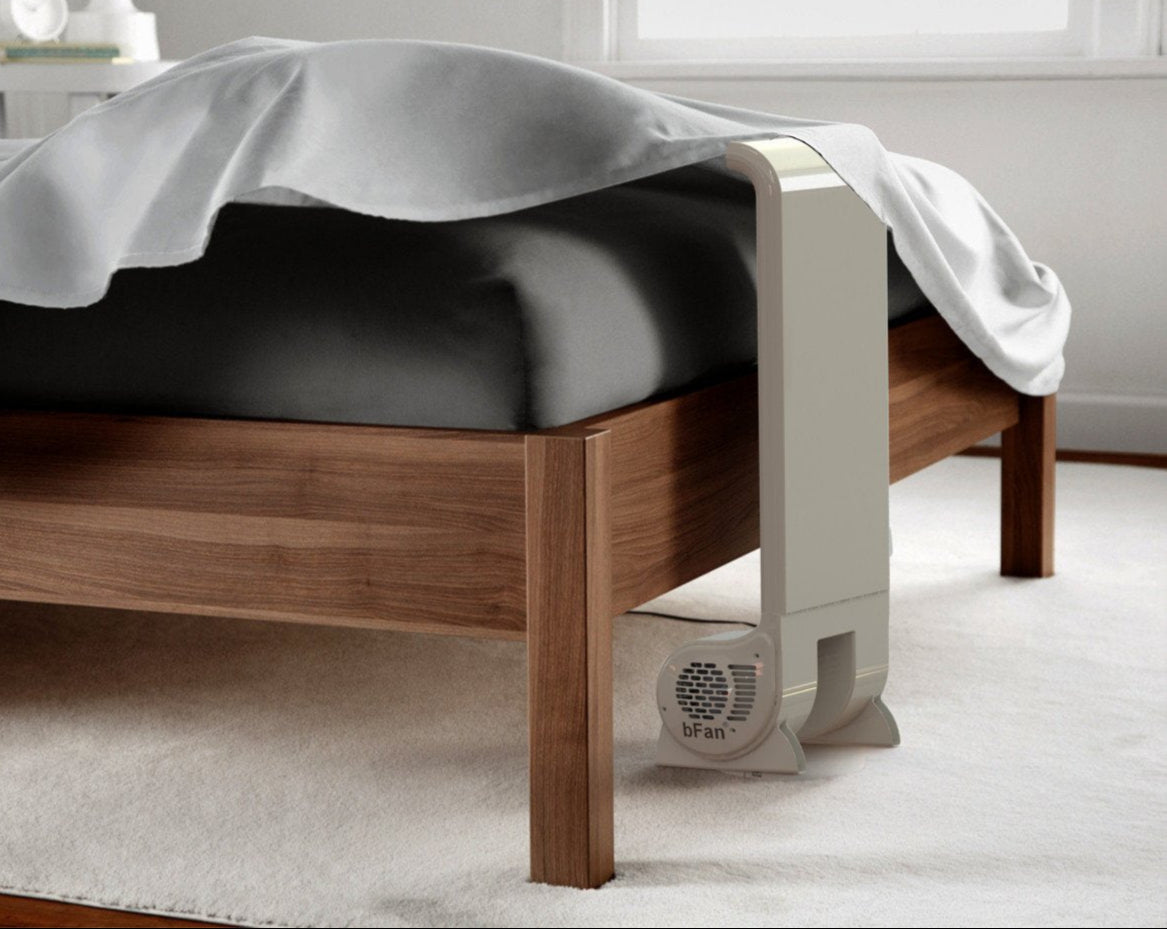
The bFan from Bedfans USA sits centered at the foot of the bed. Its two drum base rests on the floor, and a flat panel rises flush against the foot of the bed and tucks under the bedding at mattress height. The bFan's large squirrel cage blower gives it higher static pressure than other bed fans, so it pushes air under the covers effectively at any speed and the airflow fully covers you with a cooling breeze. Neither the bFan nor a BedJet lowers the air temperature; both use the air already in your room. Learn how the bFan works.
- Sound level: about 28 to 32 dB at normal operating speed
- Power use: about 18 watts on average, 24 watts maximum
- Controls: remote speed control and a sleep timer
- Couples: two bFans give each side of the bed its own airflow
- Price: $204.95, less than half the price of a BedJet, and two bFans cost less than half the price of a dual-zone BedJet
Many customers report they can raise the thermostat up to 6°F and still sleep comfortably, which helps if you share a room with someone who does not want it cold.
Ready for better sleep?
The bFan sits at the foot of your bed and sends a quiet stream of air under your sheets. Direct airflow helps stop sweat before it starts, and one bFan costs less than half the price of one BedJet, making it the less expensive alternative. Shop the bFan at bedfans-usa.com
Frequently Asked Questions
Do night sweats after quitting vaping mean the detox process is working?
Night sweats after quitting vaping are a common sign that your body is adjusting to life without nicotine, so in that sense they can mean the quit is underway. They do not mean toxins are sweating out of your skin, which is a common myth about the detox process. The sweating comes from your nervous system rebalancing after nicotine stops. For most people it eases within a few weeks. If it gets worse over time instead of better, or comes with a fever, talk with your health care provider to rule out another cause.
Can switching to nicotine pouches stop withdrawal night sweats?
Switching from a vape to nicotine pouches can reduce withdrawal symptoms, because you are still taking in nicotine, but it also keeps the addiction going. Many people use pouches as a step down, then face withdrawal later when they stop. If your goal is to quit nicotine completely, ask your provider about a structured plan. FDA approved nicotine replacement therapy, such as patches or gum, is designed to taper the dose over time. Smokefree.gov notes these are approved to help people quit smoking, not vaping, so medical guidance matters.
Why do I feel cold and sweaty at night after I quit vaping?
Feeling cold and sweaty at the same time is common during nicotine withdrawal, because your body's temperature control is unsettled and your sleep is lighter than usual. You may wake up damp, kick off the covers, and then feel chilled a few minutes later. Damp sleepwear makes the chill worse. Keep a dry shirt by the bed, use light layers you can adjust, and avoid piling on heavy blankets. An under sheet fan with adjustable speed lets you turn the airflow up during a sweat and down when you start to feel cool.
Does vaping cessation affect sleep for long?
For most people, sleep problems from vaping cessation are short term and improve within the first few weeks. Withdrawal is usually worst in the first week, and the National Cancer Institute says intensity usually drops over the first month. Some people notice vivid dreams or lighter sleep a little longer. Regular exercise, a consistent bedtime, less caffeine, and a comfortable bedroom all help. If insomnia lasts more than a month or affects your mood, talk with your health care provider, because better sleep makes it easier to stay quit.
Can teens get night sweats after they quit vaping?
Yes. Teens who vape nicotine can go through withdrawal when they quit, and sweating and trouble sleeping can be part of it. Smokefree Teen offers free quit plans, apps, and text support built for younger people who want to stop vaping. Parents can help by keeping the bedroom comfortable, encouraging daytime exercise, and keeping phones and screens out of the bedroom at night. If a teen has drenching sweats, fever, or symptoms that last longer than a few weeks, check in with their doctor or another health care provider.
Will exercise make night sweats worse after quitting vaping?
Daytime exercise usually helps rather than hurts, because it burns off restless energy and helps you feel sleepier at night. The timing matters. Hard exercise late in the evening raises your body temperature and heart rate close to bedtime, which can make it harder to fall asleep and leave you warmer under the covers. Aim to finish workouts a few hours before bed, drink water afterward, and take a lukewarm shower in the evening. Gentle stretching or yoga at night is a good way to relax without warming up too much.
Resources
- Nicotine Withdrawal and Vaping from Smokefree.gov: Common withdrawal symptoms after quitting vaping and practical ways to cope with them
- Vaping Addiction and Nicotine Withdrawal from Smokefree Teen: How nicotine withdrawal feels for younger people and tips such as drinking water and daytime exercise
- Nicotine Withdrawal from Cleveland Clinic: When withdrawal starts, when it peaks, and how long symptoms usually last
- Nicotine and Tobacco from MedlinePlus: How nicotine affects the body, including sweating, and what to expect when you quit
- Tips for Coping with Nicotine Withdrawal and Triggers from the National Cancer Institute: Strategies for cravings, sleep, and stress during the first weeks without nicotine
- EX Program from Truth Initiative: A free quit program with text support and personalized plans for vaping and other nicotine use
Compartir