
Postmenopausal Night Sweats: Why They Can Return Years Later
By Kurt Tompkins, Bedfans USA. Reviewed November 2026.
Quick answer: Postmenopausal night sweats can return years after menopause for several reasons. Hot flashes often last much longer than people expect, and they can fade and then flare again. Stopping hormone therapy, starting a new medication, an overactive thyroid, an infection, sleep apnea, alcohol, and a warm bedroom can all bring them back. Night sweats that come with fever, unexplained weight loss, or sweats that soak your sheets deserve a call to your doctor.
You got through menopause, the hot flashes settled down, and you finally started sleeping again. Then, years later, you wake up damp at 3 a.m. and wonder what happened. You are not alone, and it does not always mean something is wrong. This article is about recurrence: why night sweats can come back after a quiet stretch. If you want to know how long hot flashes usually last in the first place, see our guide to how long hot flashes last after menopause.
Can night sweats come back years after menopause?
Yes. Night sweats can return years after menopause, either as menopause symptoms that never fully ended or because something else is triggering them. The two possibilities call for different next steps, so it helps to think about both.
Hot flashes that happen during sleep are called night sweats, and they are a type of vasomotor symptom. The large Study of Women's Health Across the Nation (SWAN) followed women through the menopause transition and found that frequent vasomotor symptoms lasted a median of 7.4 years in total, and a median of 4.5 years after the final menstrual period. Women whose symptoms began while they were still having regular periods or in early perimenopause had the longest stretch, with a median of 9.4 years after their final period. The SWAN team reported that some women had symptoms for as long as 14 years.
Those are medians, not limits. Many women notice that symptoms fade for a while and then flare again with stress, illness, a change in routine, or a hot summer. So a return of night sweats five or ten years after your last period can still be part of the same menopause pattern. It can also be a sign of something new, which is why the rest of this article matters.
Why postmenopausal night sweats return
The most common reasons are long lasting menopause symptoms, stopping hormone therapy, new medications, and other health conditions that affect how your body handles heat. Here are the ones worth checking first.
Stopping or lowering hormone therapy
If you took hormone therapy for years and recently stopped or lowered the dose, returning night sweats are often the menopause symptoms the hormones were holding back. The NHS notes that symptoms may come back for a while after stopping and that a gradual taper may make this less likely. Our article on night sweats after stopping HRT covers that situation in more detail. Talk with the clinician who prescribed it before restarting or changing a dose.
New or changed medications
Many common medicines list sweating as a side effect. The Cleveland Clinic names antidepressants, some migraine and pain medicines, and blood pressure medicines among them, along with cancer treatments such as hormone therapy. Diabetes medicines that cause low blood sugar overnight can also bring on sweating. If your night sweats started within weeks of a new prescription or a dose change, mention the timing to your doctor or pharmacist. Do not stop a prescribed medicine on your own.
An overactive thyroid
An overactive thyroid, called hyperthyroidism, speeds up your metabolism. MedlinePlus lists sweating, trouble tolerating heat, a fast heartbeat, nervousness, and weight loss among its symptoms. Thyroid problems become more common with age, and a simple blood test can check for them.
Infections
Your body can sweat at night while it fights an infection, from the flu or COVID-19 to less common infections such as tuberculosis. Infection related night sweats usually come with other signs, such as fever, chills, cough, or feeling unwell, rather than showing up alone.
Sleep apnea
Obstructive sleep apnea, where your breathing repeatedly stops and starts during sleep, is often overlooked as a cause of night sweats. A study of the Icelandic Sleep Apnea Cohort found that frequent night sweating was about three times as common in people with untreated sleep apnea as in the general population, and that it dropped back to general population levels with consistent positive airway pressure treatment. Loud snoring, gasping, morning headaches, or daytime sleepiness are reasons to ask about a sleep study.
Alcohol, caffeine, and evening habits
The National Institute on Aging suggests avoiding alcohol, spicy foods, and caffeine because they can make menopausal symptoms worse. A glass of wine with dinner that never bothered you before can start to trigger flushing later in life. Stress and anxiety can also set off sweating during sleep.
A warm bedroom and heavy bedding
Sometimes the change is in the room rather than in your body. A new memory foam mattress or topper, a heavier comforter, flannel sheets, or a thermostat schedule that runs warmer overnight can trap heat around you. That trapped heat makes it easier for a mild hot flash to turn into a full night sweat.
When to talk to a doctor about postmenopausal night sweats
See a doctor if night sweats come with other symptoms, soak your sheets, or start years after menopause with no clear trigger. Most cases have a manageable cause, but some need testing. Contact your health care provider if you notice:
- Fever or chills: these can point to an infection.
- Unexplained weight loss: losing weight without trying should always be checked.
- Drenching sweats: sweats that soak your pajamas and sheets, especially night after night.
- Swollen lymph nodes, a new cough, or ongoing fatigue: symptoms that do not fit menopause deserve attention. Rarely, night sweats are linked to cancers such as lymphoma.
- A fast or pounding heartbeat, chest pain, or shortness of breath: these need prompt medical care.
- Signs of sleep apnea: loud snoring, pauses in breathing, or heavy daytime sleepiness.
It helps to bring a simple log to the appointment: what time the sweats happen, how often, what you ate or drank that evening, any medication changes, and how warm the bedroom was. If the cause turns out to be menopause, your doctor can talk with you about hormonal and nonhormonal options. The Menopause Society notes that there are FDA approved nonhormone medicines for hot flashes as well as hormone therapy.
How to stay comfortable when night sweats come back
Keep heat from building up around you at night, and make it easy to adjust without fully waking up. These steps do not replace a medical review, but they can make nights easier while you sort out the cause.
- Keep the bedroom cool: lower the thermostat at night, or set it a little cooler than you keep it during the day.
- Choose lighter bedding: breathable cotton or linen sheets and layers you can peel back one at a time.
- Wear light sleepwear: loose cotton or moisture wicking fabric feels less clammy.
- Keep cold water by the bed: the NIA suggests sipping small amounts of cold water before bed.
- Watch evening triggers: limit alcohol, caffeine, and spicy food close to bedtime.
- Keep a spare top within reach: a quick change helps you settle back to sleep.
Can a bed fan help?
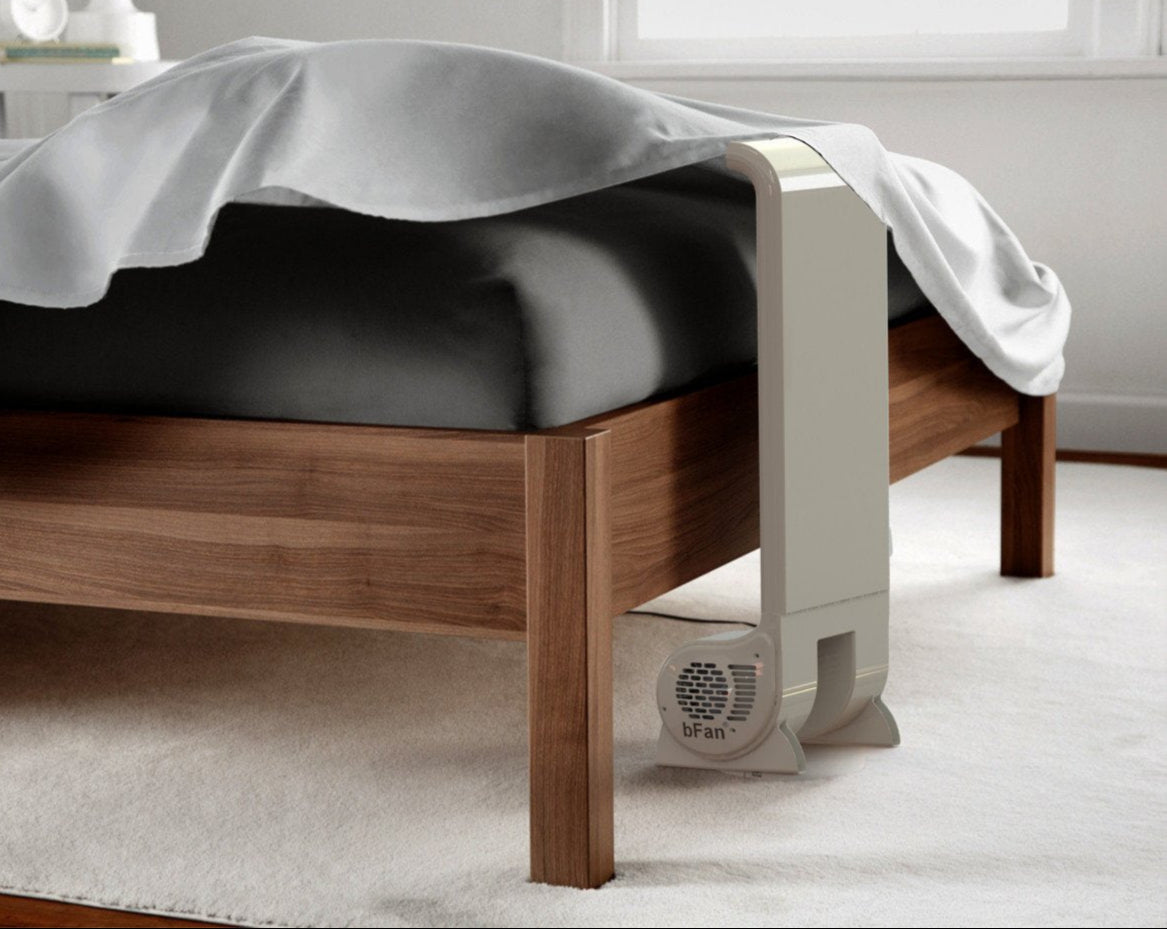
A bed fan can help you stay comfortable by moving room air under the covers, where heat builds up during a night sweat. The bFan from Bedfans USA sits at the foot of the bed and sends a quiet stream of air under your sheets, across your body, and out near your shoulders. It moves the air already in your room and does not make it colder. Direct airflow helps stop sweat before it starts, so heat does not keep building under the covers.
The bFan uses about 18 W on average, and a remote lets you change the speed or set a sleep timer without getting up. Couples can use two bFans, one centered below each sleeper, so each person controls their own side. It is a comfort tool, not a medical treatment, so keep your doctor in the loop if your night sweats are new or come with other symptoms. You can read more on our menopause page.
Ready for better sleep?
The bFan sits at the foot of your bed and sends a quiet stream of air under your sheets. Direct airflow helps stop sweat before it starts, and one bFan costs less than half the price of one BedJet, making it the less expensive alternative. Shop the bFan
Frequently Asked Questions
Is it normal to have night sweats 10 years after menopause?
It can be. The SWAN study found that women whose hot flashes started early in the menopause transition had symptoms for a median of 9.4 years after their final period, and some had them for up to 14 years. So night sweats a decade later can still be menopause related. Because other causes become more common with age, it is still worth mentioning to your doctor, especially if the sweats are new, heavy, or come with other symptoms.
Why did my hot flashes stop and then come back after menopause?
Hot flashes often come and go rather than ending on a fixed date. They may quiet down for months and then flare with stress, illness, alcohol, a warm bedroom, or a new medication. Stopping or lowering hormone therapy is another common reason symptoms come back. If the return has no obvious trigger, ask your doctor to check for causes such as a thyroid problem, an infection, or sleep apnea.
Can antidepressants cause night sweats after menopause?
Yes, sweating is a known side effect of many antidepressants, and the Cleveland Clinic lists them among medicines that can cause night sweats. Some other common medicines, including certain pain, migraine, and blood pressure medicines, can do it too. If your night sweats began after starting or changing a medicine, tell your doctor or pharmacist. Do not stop a prescribed medicine without talking to them first.
When are postmenopausal night sweats a sign of something serious?
Night sweats deserve prompt attention if they come with fever, chills, unexplained weight loss, swollen lymph nodes, a persistent cough, or extreme tiredness, or if they soak your sheets night after night. A fast heartbeat, chest pain, or shortness of breath needs medical care right away. Most night sweats have a manageable cause, but these signs call for testing rather than waiting.
Can sleep apnea cause night sweats in older women?
It can. Research on the Icelandic Sleep Apnea Cohort found frequent night sweating was about three times as common in people with untreated obstructive sleep apnea as in the general population, and it became less common with consistent treatment. Sleep apnea is often missed in women after menopause. Snoring, waking up gasping, morning headaches, or daytime sleepiness are reasons to ask about a sleep evaluation.
What helps me stay comfortable at night while I figure out the cause?
Keep the bedroom cool, choose breathable bedding in layers, wear light sleepwear, keep cold water nearby, and limit alcohol and caffeine in the evening. A bed fan such as the bFan sends room air under your covers from the foot of the bed, and direct airflow helps stop sweat before it starts. These steps can help you stay comfortable, but they do not replace a visit with your doctor if your symptoms are new or unexplained.
Resources
- SWAN study: Duration of menopausal vasomotor symptoms (JAMA Internal Medicine, via PubMed): The study behind the 7.4 year median for hot flashes and night sweats and the 9.4 year median after the final period for early onset.
- SWAN: Up to 14 years of hot flashes found in menopause study: Plain language summary of the SWAN findings from the study team.
- National Institute on Aging: Hot flashes, what can I do?: Practical tips for hot flashes and night sweats and the treatment options to discuss with a doctor.
- The Menopause Society: Hot flashes: Overview of hot flash causes, risk factors, and hormone and nonhormone treatments.
- Cleveland Clinic: Night sweats: Common causes of night sweats, including medications, infections, thyroid problems, and sleep apnea.
- MedlinePlus: Sweating: NIH encyclopedia entry on causes of sweating and when to contact a health care provider.
- MedlinePlus: Hyperthyroidism: Symptoms, causes, and tests for an overactive thyroid.
- Nocturnal sweating and obstructive sleep apnea (BMJ Open, via PubMed): Icelandic Sleep Apnea Cohort research linking untreated sleep apnea to frequent night sweats.
- ACOG: The menopause years: The American College of Obstetricians and Gynecologists explains menopause symptoms and treatment options.
Compartir