
Night Sweats and Frequent Urination: Causes in Men and Women
By Kurt Tompkins, Bedfans USA. Reviewed November 2026.
Quick answer: Night sweats and frequent urination often show up together because of menopause, diabetes, urinary tract infections, sleep apnea, an enlarged prostate, low testosterone, alcohol, or medication side effects. Occasional nights usually trace back to a warm bed or late drinks. If the pattern keeps repeating, or comes with fever, weight loss, thirst, or blood in your urine, see a doctor. Meanwhile, cooling the bed and timing fluids can make nights easier.
Waking up drenched and then realizing you also need the bathroom can feel like a miserable loop. If it happens once in a while, it may be tied to a warm room, late fluids, alcohol, or stress. If it keeps happening, your body may be telling you something worth checking. The key is to look at both symptoms together.
Why do night sweats and frequent urination happen together?
Hormones, blood sugar, infection, and broken sleep can affect both sweating and the bladder. Waking up for one often makes you notice the other.
Night sweats mean sweating enough during sleep to dampen your sleepwear or bedding. Waking at night to urinate is called nocturia. Producing a large amount of urine overall is called polyuria. Your kidneys, hormones, bladder, sleep stages, and even your breathing all play a role. When the two symptoms happen together, it helps to think in categories instead of guessing at one cause.
- Hormone shifts: perimenopause, menopause, low testosterone, thyroid problems
- Blood sugar: diabetes and low blood sugar episodes at night
- Infection: urinary tract or kidney infections
- Sleep problems: sleep apnea and repeated waking
- Medications and alcohol: antidepressants, steroids, diuretics, some diabetes drugs, and evening drinks
What causes night sweats and frequent urination in women?
Menopause is the most common link, followed by urinary tract infections and pregnancy. Medications can also play a part.
During perimenopause and menopause, shifting estrogen can trigger hot flashes and night sweats. The same changes affect the tissues of the bladder and urethra, which can bring urgency, leakage, and more nighttime trips. Pregnancy raises metabolism and blood volume and puts pressure on the bladder, so many pregnant women feel hotter at night and urinate more often.
A urinary tract infection can cause urgency, burning, and frequent trips even when little urine comes out. If the body is fighting infection, sweating at night can happen too, especially with fever or chills.
What causes night sweats and frequent urination in men?
Prostate problems, low testosterone, and the same shared causes as women. An enlarged prostate is a common reason for nighttime bathroom trips.
An enlarged prostate (benign prostatic hyperplasia) can make it hard to fully empty the bladder, which leads to more trips at night, a weak stream, or the feeling you still need to go. It does not usually cause night sweats by itself, but the two can overlap if poor sleep, infection, or another condition is involved. Low testosterone can bring hot flashes, sweating, and fatigue. Prostatitis, an inflammation or infection of the prostate, can cause frequent and painful urination and sometimes fever and sweating; that combination should be checked.
Which medical conditions can cause both symptoms?
Diabetes and sleep apnea are two of the most important to rule out. Both often go undiagnosed for a while.
With high blood sugar, the kidneys work harder to clear extra glucose, so you urinate more and feel thirsty. Low blood sugar at night can cause sweating. If you are also thirsty, tired, or losing weight without trying, get your blood sugar checked. See diabetes night sweats for more.
Sleep apnea causes repeated pauses in breathing that stress the body and can raise nighttime sweating and urination. Loud snoring, gasping, and daytime sleepiness are clues; see how sleep apnea causes night sweats.
Less often, frequent urination can be a sign of bladder problems that need a closer look, including bladder cancer, especially when there is blood in the urine. Night sweats with fever or unexplained weight loss can point to infection or other conditions. These are not the usual causes, but they are why persistent symptoms deserve a doctor's visit.
When should you see a doctor?
See a doctor if the pattern lasts more than a couple of weeks or comes with warning signs. Get help promptly for any of these:
- Blood in your urine, or pain or burning when you urinate
- Fever, chills, or back or side pain
- Increased thirst, hunger, or unexplained weight loss
- Drenching sweats that soak your sheets
- Loud snoring with gasping or daytime sleepiness
- New leakage or trouble emptying your bladder
Keep a simple diary for a week: when you drink, when you wake, how much you sweat, and any new medications. It helps a clinician spot patterns quickly.
What can help at night while you sort out the cause?
Time your fluids, cut evening alcohol and caffeine, and keep the bed from trapping heat. These steps do not replace a diagnosis, but they can make nights more manageable.
- Front-load fluids: drink most of your water earlier in the day and taper off in the last couple of hours before bed.
- Limit evening alcohol and caffeine: both can increase urination, and alcohol can make sweating worse.
- Empty your bladder twice: go before bed, wait a minute, then go again.
- Lighten the bedding: heavy covers hold heat and moisture.
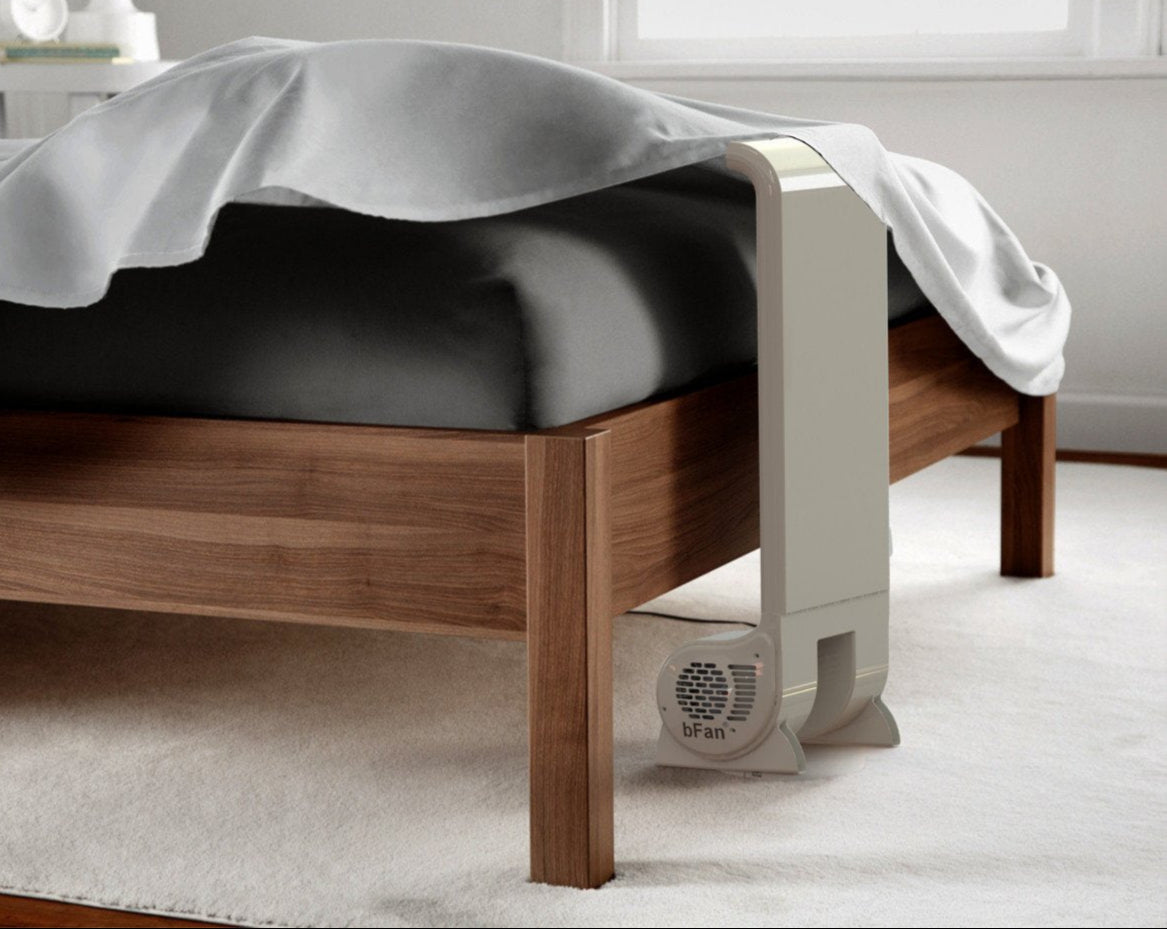
- Cool the bed itself: the bFan from Bedfans USA sits at the foot of the bed and sends room air under the covers and across your body. It does not make the air colder; direct airflow helps stop sweat before it starts. It uses about 18 W on average, runs at about 28 to 32 dB at normal speed, and has a remote, so you can adjust it after a bathroom trip without fully waking. One bFan is less than half the price of a BedJet 3.
Pair it with tightly woven sheets so the airflow stays under the covers. Waking fewer times from heat can make it easier to fall back asleep after a bathroom trip.
Ready for better sleep?
Order the bFan from Bedfans USA and get a quiet cooling breeze under your covers, built in Texas by the company that invented the Bedfan.
Frequently Asked Questions
How many times is it normal to urinate at night?
Many adults sleep through the night or get up once, and getting up once becomes more common with age. Waking at night to urinate is called nocturia, and getting up two or more times a night is a common point where it is worth discussing with a doctor, especially if it is new or getting worse. Late fluids, alcohol, and caffeine are common, easy-to-fix contributors. If you are still waking several times after changing evening habits, a clinician can check for causes such as diabetes, an enlarged prostate, overactive bladder, sleep apnea, or medication effects.
Can anxiety cause night sweats and frequent urination?
Anxiety and stress can contribute to both. Stress hormones can raise heart rate and body temperature and trigger sweating, and anxiety can make you more aware of bladder signals, so you wake and feel the need to go. Poor sleep from worry adds to the cycle. That said, anxiety should not be assumed to be the cause without ruling out physical problems first, especially if you have other symptoms. Relaxation routines, a cool bed, and a consistent bedtime can help, and a doctor can help you sort out what is driving the symptoms.
Can drinking water before bed cause night sweats?
Drinking water before bed does not usually cause night sweats, but it can increase nighttime urination, and waking up more often makes you more likely to notice sweating. Alcohol before bed is a different story: it can widen blood vessels and raise skin temperature, making night sweats more likely, and it also increases urination. Stay well hydrated during the day, taper fluids in the last couple of hours before bed, and limit evening alcohol to see whether both symptoms improve.
Do diuretics or blood pressure pills cause nighttime urination?
Some can. Diuretics, often called water pills, make the kidneys release more fluid, and taking them late in the day can lead to more trips at night. Some other blood pressure, diabetes, and psychiatric medications can affect sweating or urination too. Do not stop or change a prescription on your own. Ask your doctor or pharmacist whether the timing or dose could be adjusted, for example taking a diuretic in the morning instead of the evening.
Should I see a urologist or my primary care doctor first?
Start with your primary care doctor in most cases. They can check your urine and blood sugar, review medications, ask about sleep, and look for hormone or thyroid causes, since night sweats and frequent urination together often have causes outside the bladder. If they find signs of a prostate problem, blood in the urine, or a bladder issue, they will refer you to a urologist. If you have blood in your urine or severe pain, seek care promptly.
Resources
- Cleveland Clinic: Nocturia: Explains why people wake at night to urinate and how it is evaluated.
- MedlinePlus: Urinating more at night: Lists common causes of nighttime urination and when to call a provider.
- NHS: Night sweats: Lists common causes of night sweats and when to see a GP.
- NIDDK: Symptoms and causes of diabetes: Describes diabetes symptoms such as increased thirst and urination.
- NIDDK: Enlarged prostate: Explains benign prostatic hyperplasia and its urinary symptoms.
- NHS: Sleep apnoea: Covers symptoms of sleep apnoea and how it is diagnosed.
- National Cancer Institute: Bladder cancer: Covers bladder cancer signs such as blood in the urine and when to get checked.
Partager