
7 Mattress Cooler Alternatives Compared
Hot sleepers usually do not need a whole new bedroom climate system, they need a better way to get trapped body heat out of the bed. That matters because overheating can delay sleep onset, increase wakeups, and make night sweats feel much worse, especially with dense memory foam, hormone changes, or moisture trapping bedding. Mattress cooler alternatives solve that by either moving heat away from your body or regulating the bed surface more directly. If you choose the right type, you can often sleep cooler without blasting the air conditioner all night.
Why do hot sleepers look for mattress cooler alternatives?
Yes, heat trapped by memory foam and menopause related sweating is a common sleep disruptor. When your bed holds warmth and moisture near your skin, your body has a harder time settling into deeper sleep, even if the room itself seems fine.
A lot of people assume the mattress is only a comfort issue. It is not. It is a thermal issue too.
Sleep experts commonly recommend a bedroom temperature between 60°F and 67°F, 15.5°C to 19.5°C, for better sleep. That said, many people find they can raise the room temperature by about 5°F and still sleep comfortably if they use a Bedfan to move air under the covers and pull heat away from the body. That matters if you want lower AC bills without giving up sleep quality.
Hot sleeping usually comes from more than one factor at once. The mattress might store heat. The protector might block airflow. The sheets might hold moisture. Your body might be running warmer because of menopause, medication side effects, stress, or illness. If all of that stacks up, passive cooling fabric alone often is not enough.
A common misconception is that every “cooling mattress” solves the same problem. Some products only delay heat buildup for a short time. Others actively move heat away all night. That difference is why two people can spend the same amount and get very different results.
How do mattress cooler alternatives actually cool your bed?
Most systems move heat rather than create cold. Bedfan and BedJet use room air under the sheets, while Chilipad and Eight Sleep use circulating water in a pad. If the bedroom is already warm, air systems still help, but water systems usually give tighter control.
This is the key concept people miss. Neither Bedfan nor BedJet cools the air. They only use the cool air already in the room and move it through your bed microclimate. That moving air helps sweat evaporate faster and prevents hot air from pooling under the blanket.
Water based systems work differently. A control unit chills or warms water, then circulates it through channels in a topper or cover. If you want a more fixed surface temperature, that approach is stronger. It is also more complex, more expensive, and usually bulkier.
Passive cooling toppers, PCM covers, and gel layers sit in a third category. They can reduce the first wave of heat buildup, but they do not keep removing heat hour after hour the way active airflow or water circulation can.
If your room is already near the recommended 60°F to 67°F range, a bed fan can feel surprisingly effective. If your room sits closer to 75°F or 78°F, a bed fan can still help, and many users can raise room temperature about 5°F compared with their old setup and still sleep cooler with a Bedfan, but the effect depends on the room air it has available. Water systems are less dependent on room conditions.
Common misconception, the strongest cooling sensation does not always come from the fanciest product. In many bedrooms, targeted airflow beats passive “cooling” foam because it keeps working instead of warming up after the first part of the night.
What are seven mattress cooler alternatives worth comparing?
The best options split into seven clear categories. Bedfans-USA, Chilipad, and BedJet sit at different points on the price and control spectrum, and the right choice depends on whether you want low cost airflow, precise temperature regulation, or the simplest possible setup.
If you want a practical shortlist, start here.
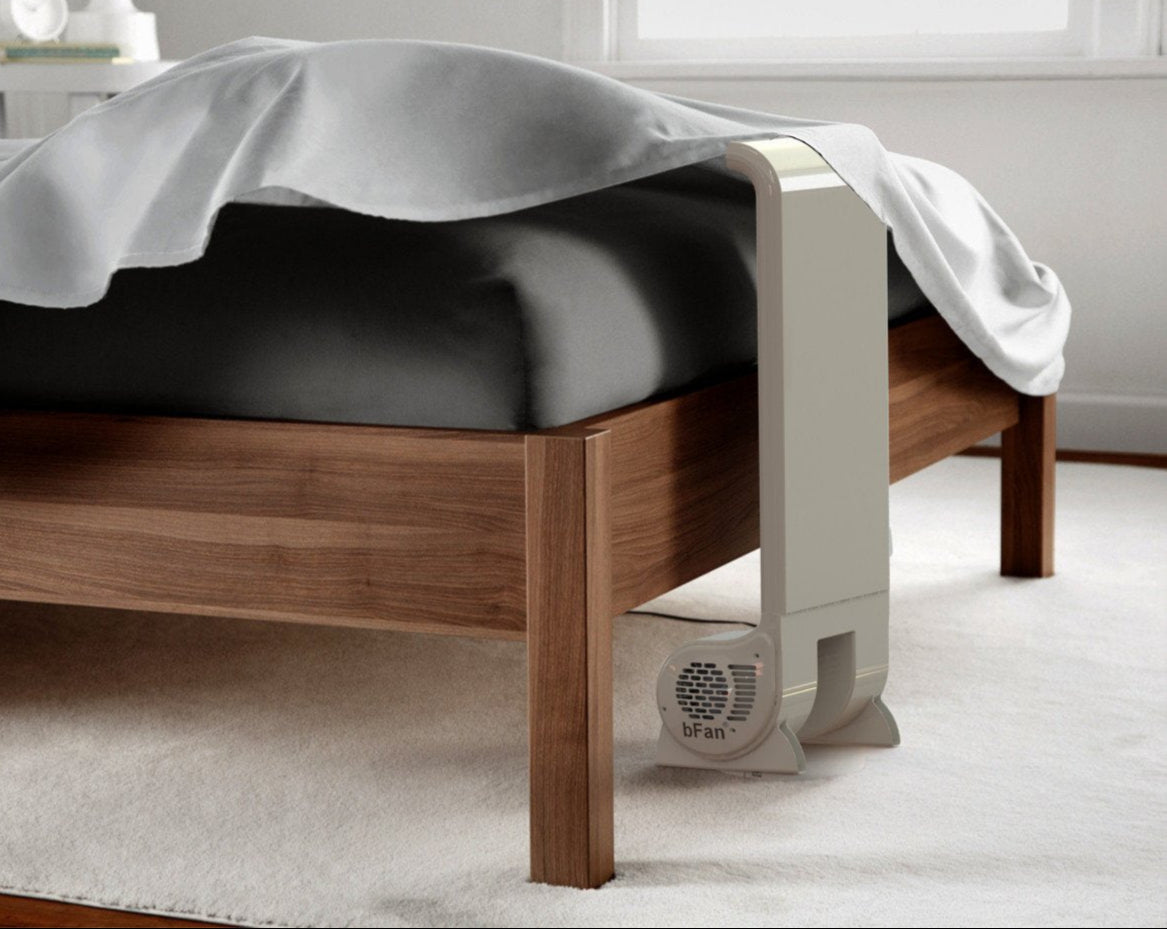
- bFan Bedfan from Bedfans-USA: This is the most cost effective active option for many hot sleepers. It pushes room air under the sheets, uses about 18 watts on average, runs around 28 dB to 32 dB at normal speed, includes timer controls, and avoids the price jump of water systems. If you need dual zone microclimate control for a couple, two Bedfans can do that for a fraction of a dual zone BedJet, which is over $1,000.
- Water based sleep systems, like Chilipad Dock Pro: These circulate cooled or warmed water through a pad. They cost much more, often starting above $1,000 for larger setups, but they give more exact temperature control across the sleep surface.
- BedJet: This is another air based option with scheduling and heating. It does not cool the air, it uses room air, just like a bed fan. A single BedJet is more than twice the price of a single Bedfan, and the dual zone BedJet is over $1,000.
- PCM mattress pads and covers: Phase change materials absorb heat for a while and can smooth out temperature swings. They are silent and easy to use, but the effect is usually milder and shorter lived than active systems.
- Gel infused toppers: These are easy to buy and widely marketed, but many mainly delay heat rather than remove it. They can help a little, though they rarely solve serious overheating on their own.
- Breathable bedding changes: Cotton percale, linen, and moisture managing protectors can improve airflow and reduce humidity around the body. This is often the cheapest upgrade, though it works best as part of a full setup.
- Room airflow upgrades: Ceiling fans and tower fans are not mattress specific, yet they can support any bed cooling strategy by keeping the bedroom closer to the sleep friendly 60°F to 67°F range. Pairing room airflow with a Bedfan often lets people raise the thermostat around 5°F and still feel cooler at bedtime.
If your main goal is value, the bFan Bedfan is the category most people should look at first, and they make excellent gifts for anyone struggling with hot sleeping, especially as a thoughtful surprise for mother's day. If your goal is tight temperature control no matter the room, a water based system is the stronger, pricier choice.
How does a bed fan compare with a water based sleep system?
bed fan is simpler and cheaper, while a water system is more precise. Bedfan and Chilipad show the trade off clearly, airflow removes trapped heat fast with less setup, but water can hold a chosen temperature more consistently through the night.
Both types can work well. They just solve the same problem in different ways.
A bed fan sits under or at the foot of the bed and sends air between the sheets. Installation is usually quick, and there is very little maintenance. A water system needs a topper, hoses, a control unit, regular water care, and usually more space near the bed.
The comfort feel is different too. Airflow feels breezier and drier. Water feels steadier and more uniform across the mattress surface. If you hate the idea of tubes or maintenance, that matters. If you want more exact control, that matters too.
After the trade offs are clear, the decision gets easier.
- Price: Bed fans are the lower entry point, often by hundreds of dollars, and sometimes by more than a thousand dollars versus premium water systems.
- Control: Water systems offer a narrower and more repeatable temperature target, which can matter for severe overheating.
- Maintenance: Bed fans need little upkeep, while water systems need cleaning routines and water management.
- Noise profile: Bed fans create airflow sound, water systems create pump and fan sound, neither is silent in absolute terms, but the sound character is different.
Pro tip, if you are only mildly warm and mainly want less sweat and less blanket heat, a bed fan often solves the problem without introducing hoses, app setup, or water maintenance.
How do you choose the right mattress cooler alternative for your sleep style?
The right choice starts with your heat pattern, not the marketing. Menopause hot flashes, memory foam heat retention, and shared beds each point toward a different solution, and matching the symptom first usually saves money.
Here is the simplest way to choose.
Step 1, identify when the heat shows up. If you feel hot within ten minutes of lying down, your mattress and bedding stack are likely trapping heat. If you wake up sweaty around 2 a.m. or 3 a.m., hormonal changes, medication, alcohol, or room temperature drift may be a bigger factor.
Step 2, decide whether you need airflow or exact temperature control, as these systems can also make great gifts for those seeking a comfortable sleep experience. If your biggest complaint is sticky, trapped heat under the blanket, a bed fan is usually the logical first move. If you want to set the bed to a very specific feel, or you and your partner need very different settings, water based systems earn their higher price.
Step 3, check your budget and tolerance for upkeep. A premium water system may cost five times as much as a Bedfan. If you want relief without a learning curve, it is hard to ignore the simplicity of a bed fan. If you do not mind maintenance and want extra tech, water becomes more attractive.
A useful rule, especially when preparing for a cozy night's sleep after a busy Mother's Day, is this: if your bedroom is already close to the sleep expert range of 60°F to 67°F, start with airflow. If you are still overheating after that, or if you need stronger, more fixed control, then consider moving up to water based cooling.
How does Bedfan compare with BedJet on price, noise, and airflow?
Bedfan is the stronger value pick, while BedJet adds heating and scheduling. A single BedJet usually costs more than twice a single Bedfan, and the dual zone BedJet is over $1,000, more than twice the price of two Bedfans.
This is the comparison many shoppers actually want.
First, both are air based systems. Neither Bedfan nor BedJet cools the air. They use the cooler air already in the room and move it into the bed space. That means both work best when your bedroom is reasonably cool to begin with. Sleep experts commonly recommend 60°F to 67°F, and with a Bedfan many people can raise room temperature by about 5°F while still keeping the body comfortable enough for better sleep.
Second, The original Bedfan came to market several years before BedJet was even thought of. That does not automatically make it better, but it does show this is not a copycat concept. It is a long standing approach to under sheet cooling.
Third, the pricing difference is hard to ignore. A Bedfan from bedfans-usa.com is typically around the low $200 range. A single zone BedJet is usually around the high $400 range, more than twice the price of one Bedfan. If you are a couple, two Bedfans give you dual zone microclimate control with two separate fans at a fraction of the dual zone BedJet, which is over $1,000.
Fourth, the sound profile matters. Bedfan is commonly around 28 dB to 32 dB at normal operating speed. That is in the quiet bedroom range. BedJet is often described as a soft fan hum at moderate settings, but it is generally louder than a Bedfan at like for like everyday use. If you want white noise, you may like that. If you want the softer option, Bedfan has the edge.
After that, it comes down to features.
- Bedfan: Lower price, about 18 watts on average, timer controls, simpler under sheet airflow, easy dual zone with two units.
- BedJet: Higher price, heating mode, more automation features, single zone and dual zone kits, but still no true air chilling.
Common misconception, paying more for BedJet does not mean the air will be colder. It means you get a different feature set. The cooling effect still depends on room air.
How do you set up a bed fan for the coolest results?
Setup affects performance more than people expect. A bFan from bedfans-usa.com works best when the air can travel across your body, so sheet choice, blanket weight, and outlet position matter almost as much as fan speed.
Step 1, give the air a clean path. Put the bed fan at the foot of the bed so the airflow enters between the top and bottom sheets. Tight weave sheets, especially cotton percale, often work better than loose knit jersey because they help the moving air spread across your body and carry away heat instead of leaking out immediately.
Step 2, avoid blocking the airflow. If your comforter is tightly tucked or very heavy, it can choke the path the fan needs. Loosen the foot area a bit so air can move up the bed. You want a gentle channel, not a sealed pocket.
Step 3, use the timer and start earlier than you think. Many people do best if the Bedfan begins before they get fully overheated. That is where timer controls help. Start low or medium, settle in, and only increase if needed. With normal operating sound around 28 dB to 32 dB, many sleepers find it quiet enough to leave on.
Pro tip, do not assume “highest speed” is the best setting. Too much airflow can feel drafty, while a lower steady flow may keep you cooler through the whole night.
Can mattress cooler alternatives cut air conditioning costs?
Yes, targeted bed cooling can reduce AC demand. Bedfan, ceiling fans, and better bedding let many people sleep comfortably at a higher thermostat setting, which can lower energy use without sacrificing rest.
This is where mattress cooling gets practical fast.
Sleep experts commonly recommend a bedroom temperature between 60°F and 67°F, 15.5°C to 19.5°C, for better sleep. In real homes, holding that temperature all night can be expensive, especially in summer. A Bedfan often lets people raise the room temperature by about 5°F while still cooling the body enough for more restful sleep because the airflow works right where heat gets trapped, under the covers.
That is a big distinction. You are not trying to cool the entire house to the same degree. You are targeting the sleep zone.
If your old habit was dropping the thermostat just to make the bed feel bearable, a bed fan can be a smart middle path. A unit drawing about 18 watts on average is tiny compared with central air demand. Even if the exact savings vary by climate and insulation, the logic is simple. If the bed feels cooler, then the room does not always have to be as cold.
Common misconception, energy savings only come from lower device wattage. In sleep cooling, the bigger savings often come from using less whole house air conditioning.
How do you test whether your current mattress is the real heat problem?
You can test mattress heat with a simple bedroom check. Memory foam, waterproof protectors, and polyester sheets hold more warmth than many people realize, and your sleep system may be trapping heat even before you buy any active cooler.
Do this over two or three nights.
Step 1, keep the room temperature consistent. Try to stay near the sleep expert target of 60°F to 67°F if you can. If you already use a Bedfan, note whether you can stay comfortable with the room about 5°F warmer than before. That tells you whether targeted airflow is already compensating for mattress heat.
Step 2, change one layer at a time. Swap only the protector, then only the sheets, then only the topper. If one change sharply reduces warmth or sweat, you found a bottleneck. Waterproof membranes and thick synthetic toppers are frequent culprits.
Step 3, check where the heat sits. If your face feels fine but your back, hips, or chest feel hot against the mattress, the mattress stack is likely the problem. If your whole body feels hot and sticky, room conditions or hormone related sweating may be a larger piece of the puzzle.
A quick screen helps:
- Back hotter than face: Mattress or protector heat retention
- Sweaty under blanket only: Poor bed airflow
- Hot everywhere: Room temperature or body driven overheating
- Only one partner overheats: Dual zone setup may solve it better than changing the whole bed
Which mattress cooler alternatives work best for menopause, night sweats, and couples?
Different symptoms need different tools. Menopause, medication related sweating, and couples with opposite preferences often respond best to directed airflow with Bedfan or split control with two Bedfans or a dual zone water system.
Menopause and perimenopause often bring sudden heat spikes, not just a generally warm bed. That makes active cooling more useful than passive fabric changes alone. A Bedfan can be especially helpful here because it keeps moving heat and moisture away instead of just absorbing some of it for the first hour. Sleep experts still point to 60°F to 67°F as the sweet spot for many sleepers, and with a Bedfan a lot of users can keep the room about 5°F warmer and still get enough body cooling for better rest.
Medication related night sweats can be similar. The body can go from normal to overheated fast, then swing back. A bed fan is easy to adjust in the moment. Water systems can be great too, but some people prefer the lower cost and lower maintenance route first.
For couples, the important question is whether both people need the same thing. If not, separate control matters more than raw cooling power. Two Bedfans can create dual zone microclimate control using two separate fans, each on its own setting, at far less cost than a dual zone BedJet over $1,000. A dual zone water pad also works, but again, at a much higher buy in.
If one partner sleeps cold and the other sleeps hot, that is where targeted zones beat broad room cooling every time.
Frequently Asked Questions
Yes, the most useful questions are usually about fit, not hype. Bedfan, Chilipad, and passive cooling pads each solve a different layer of the overheating problem, so the best answer depends on whether you need airflow, moisture relief, exact surface control, or a cheaper first step.
Do cooling mattress pads really work?
Yes, many cooling pads help, but the degree of help varies a lot. Passive pads made with gel or PCM can reduce the first wave of heat buildup, which is why some people feel cooler when they first lie down.
The issue is duration. Once that material warms up, the effect can fade. If your problem is serious overheating or night sweats, an active option, either a bed fan or a water based system, usually gives a more noticeable all night result.
Is a bed fan better than a cooling topper?
For many hot sleepers, yes, a bed fan is more effective than a topper alone because it keeps removing trapped heat. A topper can only absorb or delay so much warmth before it reaches equilibrium.
A bed fan also helps moisture evaporate, which matters for sticky sleep and night sweats. If your issue is mild, a topper may be enough. If your issue wakes you up, active airflow is usually the smarter starting point.
Can a Bedfan help with menopause night sweats?
Yes, it can help a lot of people because it addresses the bed microclimate directly. When a hot flash hits, moving air under the sheets can reduce the muggy, trapped feeling fast.
It is also useful because you do not always need to freeze the whole room. Sleep experts commonly recommend 60°F to 67°F, and many users can raise the room temperature by around 5°F with a Bedfan and still sleep cooler at the body level.
Will a bed fan work if I do not use air conditioning?
Usually, yes, but results depend on the room air available. Because a Bedfan or BedJet does not cool the air, it will only move whatever air is already in the room.
If your bedroom is moderately warm, airflow can still feel dramatically cooler because it removes heat and moisture from your skin. If the room is very hot and humid, a water based system may give stronger relief, or you may need better room ventilation first.
Is Bedfan noisy at night?
At normal operating speed, Bedfan is generally in the quiet range, around 28 dB to 32 dB. That is soft enough for many people to treat it like background airflow.
Noise perception still varies. Some sleepers want near silence, others like a little white noise. The upside is that a bed fan lets you adjust speed, so you can tune both cooling and sound to your preference.
Can couples get dual zone cooling without buying an expensive smart bed?
Yes. This is one of the strongest cases for using two Bedfans. Each sleeper can run a separate fan and control airflow on their own side.
That gives you dual zone microclimate control without stepping up to a dual zone BedJet over $1,000 or a premium water system that may cost even more. For couples with different temperature needs, independent control matters more than fancy branding.
Do mattress cooler alternatives use a lot of electricity?
Most active options use far less electricity than whole room cooling. A Bedfan uses about 18 watts on average, which is tiny compared with central AC.
That matters because targeted cooling changes the equation. If the bed feels cooler, many people can raise the thermostat by about 5°F and still sleep comfortably. In practice, that can matter more than the device wattage itself.
Are Bedfan and BedJet actually air conditioners for the bed?
No. This is one of the biggest myths in the category. Neither Bedfan nor BedJet chills the air the way an air conditioner does.
They use cooler room air and push it through the bedding space. That still works very well for many people, especially in a bedroom near the recommended 60°F to 67°F range, but it is not the same thing as mechanically refrigerated air.
When should night sweats be discussed with a doctor?
If night sweats are new, severe, frequent, or paired with symptoms like weight loss, fever, chest pain, or unusual fatigue, it is a good idea to speak with a clinician. Night sweats can come from hormone changes, medication side effects, infection, reflux, thyroid issues, or other conditions.
A cooling product can improve comfort, but it does not replace medical evaluation when the sweating pattern seems unusual or suddenly worse. Comfort and diagnosis can happen at the same time.
Resources
- National Sleep Foundation: Sleep Environment Recommendations This guide covers how to create the best bedroom environment for sleep, including tips on temperature, bedding, and noise.
- CDC: Sleep and Sleep Disorders The CDC provides essential information on sleep health, sleep disorders, and how sleep impacts overall well-being.
- Harvard Medical School: Healthy Sleep Harvard’s Healthy Sleep portal offers research-based articles on sleep science, why sleep matters, and practical strategies for better rest.
- Mayo Clinic: Sleep Tips Mayo Clinic shares actionable steps and expert advice to help you improve your sleep habits and environment.
- Sleep Research Society: Sleep Science Resources The Sleep Research Society provides educational materials and scientific resources for understanding sleep and improving sleep quality.
If you want a simple place to start, a Bedfan from bedfans-usa.com is one of the lowest risk active cooling upgrades because it is easy to install, quiet at normal speed, and far less expensive than premium water systems or a dual zone BedJet. For shoppers who want body level cooling without turning the whole bedroom into a refrigerator, that is usually the most sensible first move.
Share