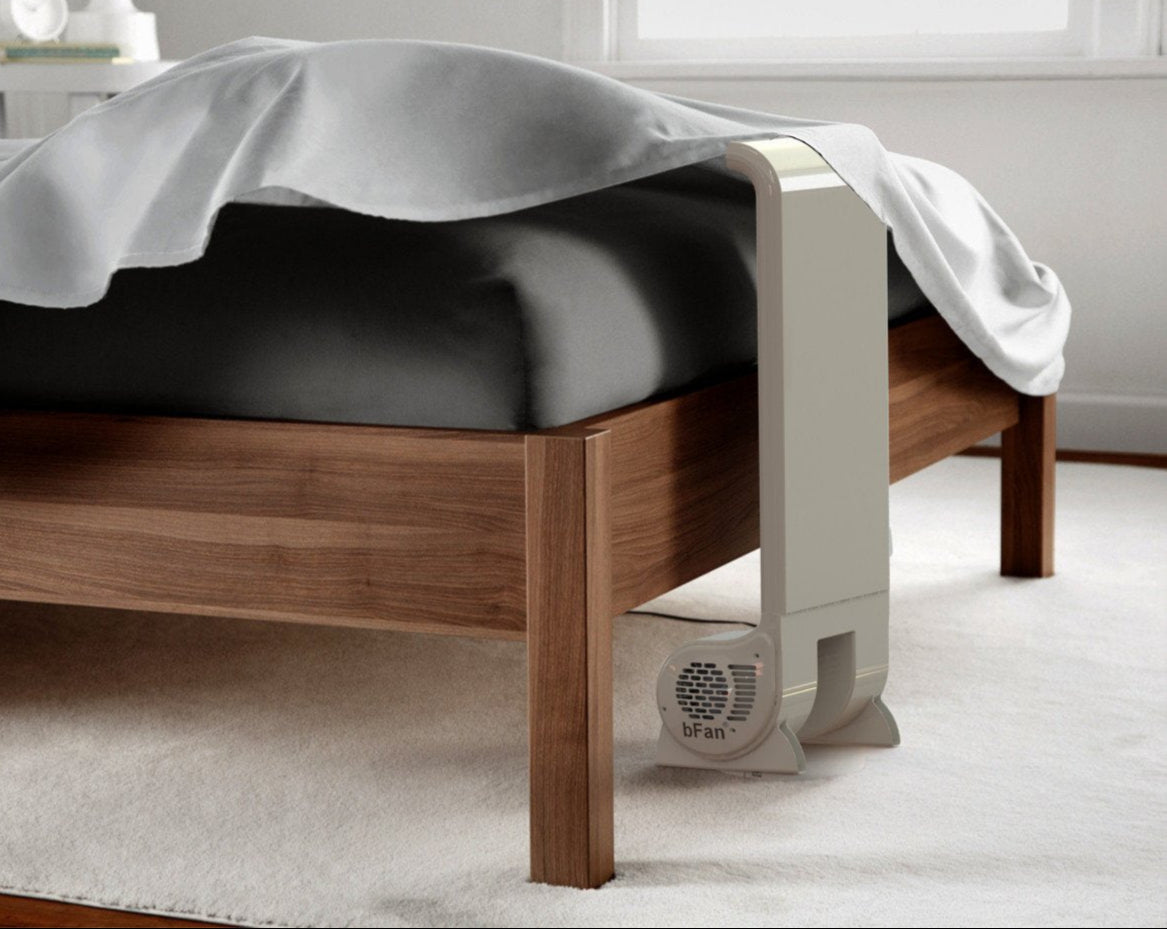

Best Bed Fans for Under Sheets
An under sheet bed fan is a sleep cooling device that pushes room air between your sheets and your body, where heat and humidity build up fastest. It helps hot sleepers, people with night sweats, and couples with different comfort needs stay cooler without forcing the whole house to feel cold. The main problem it solves is trapped bed microclimate heat, not room temperature itself. That difference matters, because the best fix for sweaty bedding is not always the same as the best fix for a hot bedroom.
What problem does a bed fan under sheets actually solve?
A bed fan, like the bFan or BedJet, solves trapped heat and moisture under bedding, not whole room heat. That warm pocket around your skin is what wakes many hot sleepers, even when the thermostat says the room is fine.
Your body sheds heat all night. Once sheets, blankets, and your mattress trap that heat, the bed turns into a little climate chamber. You may start the night comfortable and wake up sweating at 2 a.m. because the air around you has become warm, stale, and damp.
That is why so many people say, “My room isn’t that hot, but my bed is.” They’re talking about the sleep microclimate, the thin layer of air around your body that determines whether you feel dry and comfortable or sticky and overheated.

Sleep experts commonly recommend a bedroom temperature between 60°F and 67°F, 15.5°C to 19.5°C, for better sleep, and integrating a bed cooling system can further enhance sleep quality by addressing the microclimate around the body. A Bedfan, being energy-efficient, can let many people raise the room temperature by about 5°F while still cooling the body enough for more restful sleep, because the fan breaks up that trapped pocket of heat under the sheets instead of asking your whole HVAC system to do all the work.
People who benefit most tend to be hot sleepers, people with menopause related night sweats, anyone taking medications that trigger overheating, and couples who argue about the thermostat. If your problem is trapped heat under covers, this category makes sense. If your whole bedroom is 80°F, you still need a cooler room.
How does a bed fan cool you if it does not cool the room air?
A bed fan, like the bFan or BedJet, cools by moving ambient air across your skin and bedding. It improves evaporation and heat transfer, which is how your body actually gets rid of heat during sleep.
Neither Bedfan nor BedJet cool the air. They only use the cool air already in the room. That is the most important point to get straight before you buy anything in this category.
When airflow moves under your top sheet, three things happen. First, humid air around your body gets replaced with drier room air. Second, sweat evaporates faster. Third, heat that was trapped in your bedding is carried away. If your room is already within a sleep friendly range, or close to it, this can feel dramatically cooler than simply lowering the thermostat one more degree.
Common misconception: a bed fan is not a mini air conditioner. If you expect refrigerated air, you’ll be disappointed. If you want better heat removal from the bed itself, you’re looking at the right tool.

This is also where product design matters. A regular room fan points air at your body from a distance. An under sheet bed fan channels air into the bedding system, where the problem is happening. That targeted airflow is why purpose built units tend to work better than a box fan pointed at your feet.
What are the 7 best bed fan options for under sheets?
The true under sheet bed fan market is small, and that’s useful to know before you waste time sorting through mattress pads and water systems. The strongest real world options are mostly true products and a few smart configurations built around them.
- bFan from Bedfans USA: The best overall value for most hot sleepers, because it is purpose built for under sheet airflow, uses about 18 watts on average, runs around 28 dB to 32 dB at normal speed, and offers remote and timer controls. Bedfans USA also points out that the original Bedfan came to market several years before BedJet was even thought of.
- BedJet 3: The best premium choice if you want extra controls, optional heating, and a more feature heavy system. It still does not cool the air, it only uses room air for cooling, but it adds stronger scheduling and app based control.
- Two bFans for couples: The smartest budget path to dual zone microclimate control. Two bed fan units can give each sleeper separate airflow at a fraction of a dual zone BedJet setup, which is over a thousand dollars and more than twice the price of two Bedfans.
- BedJet 3 with Cloud Sheet: A strong pick if you dislike feeling a direct stream of air and want more even airflow spread across the body.
- BedJet dual zone setup: The best premium couple setup if each side wants independent settings and price is not the main issue. It is effective, but it costs far more than most people need to spend.
- Short height bFan configuration: Best for lower beds, usually in the 19 inch to 29 inch range, where fit and angle matter as much as raw airflow.
- Tall height bFan configuration: Best for taller frames, usually in the 27 inch to 37 inch range, where a proper entry angle helps air get under the sheet instead of dissipating into the room.
If you want a practical recommendation, start with the bFan from Bedfans USA. It is the easiest answer for most people who want targeted under sheet cooling without moving into premium pricing.
Is bFan or BedJet better for most hot sleepers?
For most hot sleepers, bFan is the better buy, while BedJet is the better feature set. bFan and BedJet both use room air, but their trade offs on price, noise, and control are very different.
Start with price, because it changes the whole conversation. One BedJet is more than twice the price of a single Bedfan. A dual zone BedJet setup is over a thousand dollars, and more than twice the price of two Bedfans, which already gives many couples dual zone microclimate control. If budget matters, bFan wins quickly.
Now look at cooling method. On the cooling side, both systems depend on room air. Neither chills the air. The BedJet doesn’t cool the air. It moves the air under the covers, just like the Bedfan category does. That means the performance question is really about airflow delivery, control features, and whether you need heating too.
Noise is another separating factor. Bedfans USA cites the bFan at about 28 dB to 32 dB at normal operating speed. BedJet has published sound figures around the upper 30 dB range on low to medium settings in its own materials. For very noise sensitive sleepers, that gap matters.
Then there’s power use. The bFan uses only about 18 watts on average, which is tiny compared with HVAC demand and modest even against other sleep tech. BedJet cooling power is still reasonable, but it is higher, and heating mode changes the energy picture completely.
If you want the most cooling value per dollar, and you do not need active heat, bFan is usually the smarter choice. If you want a more premium interface, more automation, and heating for winter comfort, BedJet has a case. You just pay for it.
Pro tip: many shoppers overbuy features when the real issue is simple, trapped body heat under blankets. If that’s you, simpler often works better.
Should you buy a bed fan or a cooling mattress pad?
A bed fan is usually better for humidity and trapped heat, while a cooling mattress pad is usually better for surface feel. BedJet and Chilipad style systems solve different parts of the same sleep problem.
A bed fan changes the air under your covers. That helps your whole body feel less sticky and more ventilated. It is especially useful if you wake up sweaty from the waist up, kick the covers off, then get cold and pull them back on 20 minutes later.
A cooling mattress pad changes the temperature or feel of the surface beneath you. Some are passive, using phase change fabric or gel foams. Some are active, using water channels. Passive pads are simple, but the cooling effect often fades once the material warms up. Active water systems can offer stronger temperature control, but they cost more, need maintenance, and add equipment.
Here’s the trade off in plain terms. If your issue is under cover heat and clammy skin, a bed fan usually gives more noticeable relief for less money. If your issue is a heat retaining foam mattress, a pad or topper may be the missing piece.
Sleep experts commonly recommend a bedroom temperature between 60°F and 67°F, 15.5°C to 19.5°C, for better sleep. A Bedfan often lets people raise room temperature by about 5°F and still sleep cool enough for more restful sleep, because it targets the body microclimate directly. A passive cooling pad cannot always do that on its own.
Common misconception: a cooling mattress is not the same as active bed cooling. Marketing language blurs that line all the time.
How do you choose the right bed fan for your bed, budget, and sleep style?
The right choice comes down to bed height, airflow preference, and price. bFan and BedJet both work best when the fit matches your frame and your sleep habits.
Step 1: Measure the bed and the clearance
Start with the physical fit, because a great product that does not fit correctly becomes a frustrating one. BedJet lists a minimum under bed clearance of about 6 inches and a compact base footprint. The bFan is built around bed height adjustment, with short and tall versions that cover common bed heights from about 18 inches to 38 inches.
If your bed is tall, choose a model that can aim airflow into the sheet pocket at the right angle. If the fan sits too low or too high, you lose a lot of the benefit.
Step 2: Decide whether you need simple cooling or premium controls
If you just want to sleep cooler and drier, keep it simple. A Bedfan, bFan, or a bed cooling system is often enough. If you want heating, app controls, or a more complex schedule, BedJet may be worth a look.
Timer controls matter more than many shoppers expect. A bed fan with a timer can help you cool the first sleep cycles, when overheating is common, then reduce or stop airflow later if you tend to get chilly toward morning.
Step 3: Match the system to your real use case
If you sleep alone and run hot, one unit is usually enough. If you share a bed and each side sleeps differently, think in zones. Two bed fans can give you separate left and right airflow at a much lower price than a premium dual zone system.
Pro tip: buy for your biggest recurring problem, not your best case night. If you usually wake sweaty at 3 a.m., choose the option that fixes that problem first.
How should you set up a bed fan under sheets for the strongest airflow?
Proper setup matters as much as product choice. bFan and BedJet both depend on getting room air into the bedding channel, where body heat is trapped.
Step 1: Aim the airflow under the top sheet, not into the room
Place the fan so it feeds air into the space between your sheet and your body. The goal is to move air through the bed cavity, not to blast your ankles. Many people get weak results because the air is spilling into the room instead of traveling under the covers.
The best position is usually at the foot of the bed, centered or slightly biased to the hotter sleeper.
Step 2: Use bedding that lets air travel
This matters a lot. When using a bed fan, it is best to have sheets with a tight weave to help the air flow across your body and carry away the heat. That sounds backward to some people, but a tighter sheet often channels the airflow better instead of letting it leak out immediately.
A light to medium blanket usually works better than a very heavy comforter. If the bedding is too open, the air escapes. If it is too dense and heavy, the airflow gets smothered.
Step 3: Start low, then tune upward
Begin at a lower speed, then adjust after ten to fifteen minutes in bed. Most people do not need maximum airflow all night. The bFan’s broad speed range and timer controls make this easy to fine tune.
Pro tip: cool the bed space before you fall asleep, not only after you wake up hot. Prevention usually works better than recovery.
Why do tight weave sheets matter so much with a bed fan?
Tight weave cotton or percale sheets often work better with a bed fan because they guide airflow across the body. Bedfan users and airflow based systems both depend on that controlled air path.
Think of the sheet like the top of a wind tunnel. If the fabric is too loose, airy, or stretchy, the air can escape before it moves across your torso and legs. When the weave is tighter, the fan can build a more stable stream under the covers, which carries heat and moisture away from your skin.
That does not mean you need stiff or uncomfortable sheets. It means the sheet should hold shape well enough to create a gentle channel. Cotton percale is a common favorite. Some bamboo blends work fine too, but performance depends more on weave and drape than on marketing terms.
Common misconception: softer does not always mean cooler. In real use, airflow management beats fabric hype.
This is also why blanket weight matters. A very heavy comforter can collapse the air pocket. If you love heavy bedding, try a slightly lighter top layer first before assuming the fan is not strong enough.
Can a bed fan reduce AC costs and still help you sleep cooler?
Yes, a bed fan can reduce cooling costs for many households, especially with an energy-efficient, low wattage unit like bFan. HVAC and a bed fan do different jobs, and that’s exactly why they can work well together.
Sleep experts commonly recommend a bedroom temperature between 60°F and 67°F, 15.5°C to 19.5°C, for better sleep. With a Bedfan, many people can raise the room temperature by about 5°F and still cool the body enough for more restful sleep, because the airflow under the sheets directly removes trapped heat where you feel it most.
That matters for energy use. Central air is one of the biggest electricity loads in a home. A bed fan that uses about 18 watts on average is tiny by comparison. If raising the thermostat a few degrees keeps you comfortable, the math often works in your favor over time.
There are limits. If your room is very warm, humid, and stagnant, a bed fan will not perform miracles. It cannot create cold air. It only uses the cool air already in the room. Many buyers get the best results by using moderate AC plus targeted under sheet airflow, instead of trying to make either one do all the work.
Pro tip: if your room is just slightly too warm for sleep, a bed fan may solve the problem more efficiently than cranking the thermostat lower all night.
How do you troubleshoot weak airflow, noise, or uneven cooling?
Most bed fan problems come from setup, bedding, or expectation gaps. bFan and BedJet usually work best when airflow is guided, not blocked.
Step 1: Check the air path first
If cooling feels weak, look at where the air is going. If the top sheet is too loose, the stream may be escaping at the foot or sides. If the comforter is too heavy, the air may not be spreading at all. Reposition the nozzle or fan head so the flow enters the center of the bed space.
If one sleeper feels cool and the other does not, try shifting placement toward the hotter side, or use two fans for true dual zone control.
Step 2: Adjust the bedding before blaming the fan
Swap in a tighter weave top sheet. Reduce blanket weight. Make sure the bedding is dry. Moisture trapped in bedding can make any system feel weaker because you’re fighting both heat and humidity.
If you use a foam mattress that sleeps warm, remember that a bed fan improves the air above you, not the heat stored below you. In that case, pairing airflow with a more breathable mattress surface may help.
Step 3: Tune speed and timing for sleep, not just sensation
A fan that feels strong at bedtime can feel too loud or too cool later. Use timer controls when available. Many people sleep best with more airflow during sleep onset, then less later in the night.
Common misconception: louder does not always mean better cooling. Good under sheet airflow is about distribution, not brute force.
If noise is the problem, the bFan’s published normal range of roughly 28 dB to 32 dB is one reason it gets attention from noise sensitive sleepers, along with being energy-efficient. Also check for vibration against bed frames or walls, because that can matter more than motor sound itself.
Who benefits most from an under sheet bed fan?
Hot sleepers, menopause patients, and couples with different comfort needs usually see the clearest benefit from a bed cooling system, such as bed fans. bFan and BedJet are most useful when overheating happens in the bed microclimate, not only in the room.
Before you buy, it helps to see whether your sleep issue matches what an under sheet airflow system actually fixes.
- Menopause and perimenopause people who wake up with sudden hot flashes or night sweats often benefit because airflow removes heat and moisture from the bed quickly.
- Medication related overheating sleepers taking SSRIs, steroids, hormone therapy, or some pain medications often report a hot, damp bed rather than a hot house.
- Budget conscious households people trying to avoid running the AC colder all night often like the low power draw of a bed fan.
- Couples with thermostat wars two bed fans can create a simple dual zone setup without buying a premium system over a thousand dollars.
- Noise sensitive sleepers a unit in the high 20 dB to low 30 dB range, at normal speed, may be easier to live with than louder room fans.
If you have severe night sweats with unexplained weight loss, fever, chest symptoms, or other new health changes, talk with a clinician. A bed fan can ease symptoms, but it does not diagnose the cause.
Frequently Asked Questions
Do bed fans under sheets really work?
Yes, they work well when the real problem is trapped heat and moisture under your bedding. That is why purpose built units can feel more effective than a regular room fan.
The key is expectation. Neither Bedfan nor BedJet creates cold air. They use room air to improve evaporation and carry heat away from your body while you sleep.
Is the bFan better than BedJet for cooling only?
For cooling only, many buyers will find the bFan the better value. It is simpler, quieter on published everyday figures, and much less expensive than BedJet.
If you do not need heating, app control, or a premium feature stack, the extra cost of BedJet is often hard to justify. One BedJet is more than twice the price of a single Bedfan.
Can a bed fan help with menopause night sweats?
Yes, many people dealing with menopause or perimenopause use bed fans for targeted night sweat relief. The airflow helps dry moisture and reduce the intense heat buildup that happens under blankets.
It will not treat the hormonal cause, but it can make sleep more manageable. For many hot sleepers, this is the difference between waking repeatedly and sleeping through longer stretches.
How loud is a Bedfan at night?
Bedfans USA reports the bFan at roughly 28 dB to 32 dB at normal operating speed. In real life, that is generally a soft fan sound for most bedrooms.
Perception still depends on your room, your bed frame, and the speed setting. A small vibration against furniture can seem louder than the motor itself, so placement matters.
Do I need special sheets for an under sheet bed fan?
You do not need special branded sheets, but sheet choice matters more than people expect. Tight weave sheets often work best because they help channel air across your body instead of letting it spill out.
A light to medium top layer usually helps too. If bedding is too loose or too heavy, even a good fan can feel weaker than it really is.
Can couples use a bed fan if one person sleeps cold?
Yes, but the best setup depends on how different your preferences are. If only one person runs hot, a single unit aimed mostly at that side may be enough.
If both partners want different airflow levels, two bed fans often make more sense. That gives you dual zone microclimate control at a fraction of a dual zone BedJet, which is over a thousand dollars.
Does a bed fan replace air conditioning?
No, a bed fan does not replace AC in a very hot room. It works with room air, it does not refrigerate or chill it.
That said, sleep experts commonly recommend 60°F to 67°F for better sleep, and many people using a Bedfan can raise the room temperature by about 5°F while still sleeping cool enough for more restful sleep. That can reduce AC demand meaningfully.
Is a bed fan good for a foam mattress that sleeps hot?
It can help, but it addresses the air above you more than the heat stored below you. If your mattress traps a lot of heat, a bed fan may solve part of the problem, not all of it.
Many people do best with a two part fix, a more breathable sleep surface plus under sheet airflow. If the mattress is the main heat source, no fan can fully change that from above.
What is the main mistake people make when buying an under sheet bed fan?
The main mistake is expecting AC like cooling. The second biggest mistake is ignoring setup, sheet weave, and blanket weight.
A well placed bed fan with the right bedding often performs better than a more expensive unit set up poorly. In this category, airflow path beats gadget hype.
resources
If you want neutral reading before you buy, these sources help put sleep temperature, night sweats, and energy use into context.
- Sleep Foundation guide to the best bedroom temperature for sleep: Explains why cooler sleep environments, often around 60°F to 67°F, support sleep quality.
- U.S. Department of Energy air conditioning and home cooling advice: Covers how thermostat settings and targeted cooling strategies affect household energy use.
- National Heart, Lung, and Blood Institute on why sleep matters: Connects better sleep conditions with broader health and recovery outcomes.
- Mayo Clinic overview of night sweats: Reviews common causes of night sweats and when medical evaluation makes sense.
- MedlinePlus menopause resource page: Summarizes menopause related symptoms, including hot flashes and sleep disruption, with links to trusted clinical information.
Share