
How Often Should You Wash Your Bed Sheets If You Sleep Hot?
By Kurt Tompkins, Bedfans USA. Reviewed November 2026.
Quick answer: How often should you wash your bed sheets? For most people, once a week is the baseline. Hot sleepers, people with night sweats, allergies, or pets in the bed often do better washing sheets every three to four days, using the hottest water the care label allows and drying them completely.
If you sleep hot, the usual advice to wash your sheets "every so often" is too vague to be useful. Hot sleepers put more sweat, body oils, and moisture into their bedding every night, so a laundry schedule that suits someone who sleeps cool may leave your bed feeling stale by midweek. This guide gives you a realistic washing schedule, a simple wash routine, and a few ways to keep the bed fresher between loads.
How often should you wash your bed sheets if you sleep hot?
Wash bed sheets at least once a week, and every three to four days if you wake up damp or sticky. Weekly is the starting point for hot sleepers, not the upper limit.
When your body gives off more heat overnight, sweat and body oils soak into the fabric faster. Even if you shower before bed, your sheets still collect moisture, skin cells, and natural oils night after night. In a warm or humid bedroom, that moisture lingers longer, so the bed loses its fresh feel sooner.
Cleveland Clinic notes that how often you wash your sheets depends on how much you sweat, the weather, and whether pets share the bed. The Asthma and Allergy Foundation of America gives similar advice for allergy sufferers: wash sheets weekly in hot water and leave the bed unmade during the day to air out. These situations usually move you from weekly to every few days:
- Heavy night sweats: if you wake up damp, or the sheets feel clammy in the morning, wash every three to four days.
- Warm, humid weather: the bed holds onto moisture longer.
- Pets in the bed: fur, dander, dirt, and oils add up quickly.
- Allergies or asthma: more frequent washing helps cut down dust mites and other allergens.
- Illness or medication related sweating: if your sweating changed recently, your sheets need more frequent washing too.
Why do hot sleepers need a different washing schedule?
Sweat, skin cells, and body oils build up faster in a hot bed, and warm, damp bedding is where dust mites and odor thrive. Sweaty sheets are a hygiene issue as well as a comfort issue.
Dust mites feed on shed skin cells and do best in warm, humid places, which describes the inside of a hot sleeper's bed. Allergy groups recommend washing bedding weekly in hot water and keeping indoor humidity down. Bacteria also grow in moisture, and that is a big part of why damp bedding starts to smell even when it looks clean.
Bed cleanliness is part of sleep hygiene, and for hot sleepers it takes a little more maintenance. Then there is your skin. The American Academy of Dermatology notes that heavy sweating can happen during sleep and that skin which stays wet is more prone to problems such as irritation and infection. If you wake up itchy or sticky, your sheets may be part of the problem. Sheets can look fine and smell mostly fine while still holding sweat, oils, and allergens, so do not wait for visible stains before you wash.
What washing routine works best for sweaty sheets?
Use the hottest water the care label allows, a normal amount of detergent, and dry the sheets all the way. A simple routine you keep up with beats a complicated one you skip.
Start with the care label. If your sheets can handle hot water, that is the best choice for hot sleepers, because hot water is widely recommended for bedding when dust mites and sweat are concerns. If the fabric needs warm or cool water, follow the label and focus on washing on schedule and drying completely.
Drying matters more than people think. Sheets that are not fully dry pick up a musty smell fast. Chlorine bleach can brighten white cotton, but it is hard on colors and many fabric blends, so use it only when the label says it is safe and never mix it with other cleaners. For yellow sweat stains on pillowcases, pretreat before washing instead of adding more detergent.
- Water temperature: the hottest setting your sheets can safely handle.
- Detergent: a normal amount; too much can leave residue that traps odor.
- Stains: pretreat sweat stains and body oil marks before the wash.
- Drying: fully dry, not mostly dry.
- Backup set: keep a second set ready so frequent washing is easy.
- Pillowcases: swap these more often if your face, hair, or neck sweat more than the rest of you.
A realistic bed sheet washing schedule for hot sleepers
Match the washing frequency to what is happening in your bed right now. Weekly works for mild heat; damp nights call for a faster cycle.
If you sleep warm but do not wake up soaked, washing every seven days is a solid habit, and for many people it is enough. If you wake up in damp sheets, are going through menopause, have medication related sweating, live with summer humidity, or have active allergies, every three to four days usually feels much better. By the time sheets look dirty, they have been holding sweat and oils for a while.
- Mild heat at night: wash weekly.
- Regular sweating: every four to five days.
- Waking up damp: every three to four days.
- Pets or strong allergies: lean toward the more frequent side.
- Lightly used guest bed: wash after each guest, or every couple of weeks.
Your mattress protector, pillow protectors, and blankets need a washing schedule too. Wash a mattress protector every month or two, more often during heavy night sweats, and follow the care label for duvets and pillows.
Can sleeping cooler reduce sweat buildup in your bed sheets?
Yes. The less you sweat into the bed, the fresher your sheets stay between washes. Cutting down sweat at the source works better than stretching your laundry schedule.
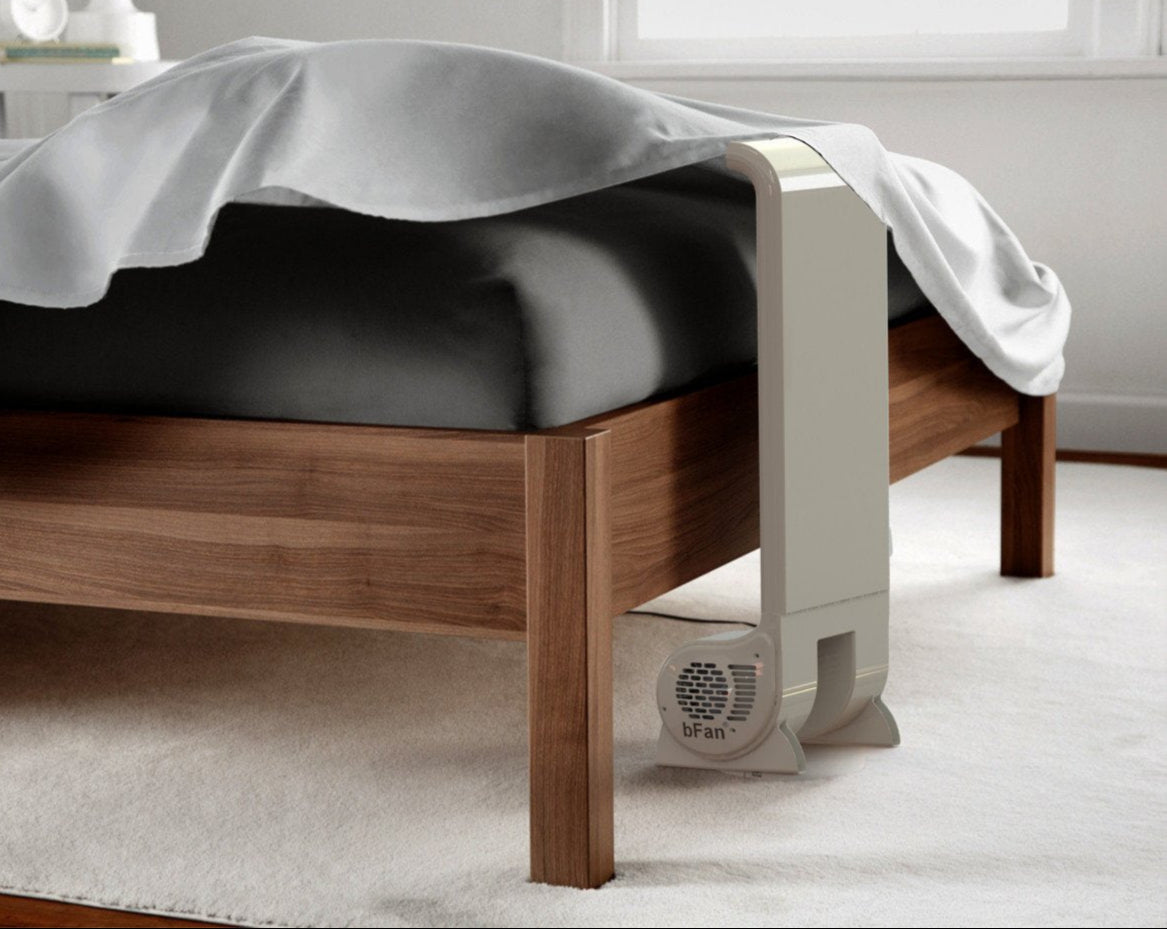
Sleep experts recommend a cool bedroom, but many people still overheat in a cool room because the real problem is heat trapped under the covers. That warm pocket sits against your body and keeps heat and moisture in the bedding. This is where a bed fan helps. The bFan from Bedfans USA sits at the foot of the bed and moves room air under the covers, across your body, and out near your shoulders, carrying trapped heat with it. Direct airflow helps stop sweat before it starts, so less moisture ends up in your sheets.
Neither the bFan nor a BedJet makes the air colder. Both use the air already in the room. The difference is how they move it and what they cost. At list prices, one bFan ($204.95) is less than half the price of a BedJet 3, and two bFans for a couple are less than half the price of a dual-zone BedJet. The original Bedfan has been sold since 2004, and it is still built in Texas with over 80 percent American made parts.
bFan at a glance:
- About 18 W on average and 24 W at maximum
- About 28 to 32 dB at normal operating speed (is the bFan quiet?)
- Brushless, digitally controlled DC motor with a remote (speed 5 to 100 percent) and a sleep timer
- A large squirrel cage blower with higher static pressure than other bed fans, so air reaches under the covers at any speed
- Fits beds with 6.75 inches of under bed clearance; if there is not enough clearance, the base can be turned around so it sits in front of the foot of the bed instead of underneath
- HSA and FSA eligible, with a simple letter of medical necessity process
Many customers tell us they raise the thermostat and still sleep comfortably, which can also take some pressure off the air conditioning bill.
Small habits that keep bed sheets fresher between washes
Air out the bed, keep humidity down, and use tightly woven sheets. These small habits stack up.
Do not make the bed right away. Pull the covers back in the morning and let the sheets air out so trapped moisture can escape. Keep indoor humidity under about 50 percent if your room feels muggy; air conditioning or a dehumidifier helps here, both for comfort and for drier bedding.
- Air out the bed: leave the sheets uncovered for a while after you get up.
- Keep humidity down: aim for under 50 percent in a damp room.
- Shower timing: a quick rinse before bed removes the day's sweat and oils.
- Two sheet sets: frequent swaps feel less like a chore.
- Tightly woven sheets: Bedfans USA recommends higher thread count, tightly woven sheets. A tighter weave keeps the airflow under the covers instead of letting it escape through the fabric, the way a sail holds the wind and a loose net cannot. See our guide to cooling sheets vs bed fans.
When sweaty sheets may point to something else
If you suddenly need to change the bed far more often, pay attention to the sweating itself. Laundry trouble is sometimes a body temperature signal.
Menopause and perimenopause are common reasons people start washing sheets more often, but medications, thyroid problems, infections, anxiety, blood sugar swings, and other conditions can also show up as night sweats. If your sweating is new, heavy, frequent, or comes with fever, weight loss, or other symptoms, talk with a doctor.
Most hot sleepers simply run warm at night. A good home routine is simple: wash sheets at least weekly, wash sooner when they are damp, use the hottest water the fabric allows, and dry them all the way. To keep the bed drier between washes, move air under the covers so less sweat reaches the sheets in the first place.
Ready for better sleep?
Order the bFan from Bedfans USA and get a quiet cooling breeze under your covers, built in Texas by the company that invented the Bedfan.
Frequently Asked Questions
Is it bad to wash bed sheets only every two weeks if you sleep hot?
For a hot sleeper, every two weeks is usually too long. By the second week, sheets have absorbed many nights of sweat, body oils, and shed skin, and that buildup feeds dust mites and odor even if the sheets still look clean. Most health sources set weekly washing as the baseline for everyone, and people who sweat heavily, have allergies, or share the bed with pets benefit from washing every three to four days. If washing that often feels like too much, keep two sets of sheets so you can swap quickly and wash both on your normal laundry day.
Should pillowcases be washed more often than sheets?
Often, yes. Your face, hair, and neck rest on the pillowcase all night, so it collects sweat, skin oils, hair products, and skincare residue faster than the rest of the bed. Hot sleepers who sweat around the head and neck, and people with acne prone skin, often change pillowcases two or three times a week while keeping the rest of the sheets on a weekly schedule. Keep a few spare pillowcases on hand so swapping is quick. Pillows themselves need washing too, usually every few months, following the care label for the fill type.
What water temperature kills dust mites in bedding?
Hot water is the standard advice for dust mites, and allergy groups recommend washing bedding weekly in hot water. The Asthma and Allergy Foundation of America recommends water of at least 130 degrees Fahrenheit to kill dust mites. If your sheets cannot take hot water, washing in warm water and then drying on a hot dryer setting helps, as does a full, thorough dry. Check the care label first, because some fabrics shrink or fade at high heat. Keeping indoor humidity low and using allergen proof pillow and mattress covers also cuts down dust mite exposure.
How can I get sweat smell out of sheets that still stink after washing?
Lingering sweat odor usually means residue is trapped in the fibers. Start by using less detergent, since too much can leave a film that holds odor. Pretreat yellowed areas, then wash in the hottest water the label allows. Adding a cup of white vinegar to the rinse cycle can help release buildup; do not combine vinegar with bleach. Dry the sheets completely, ideally in sunlight when possible. If the smell keeps returning, the sheets may have years of buildup and may be ready to replace. Reducing how much you sweat into the bed helps the next set stay fresher.
Does a bed fan mean you can wash sheets less often?
A bed fan does not replace regular washing, but it can help sheets stay fresher between washes. The bFan moves room air under the covers and out near the shoulders, carrying trapped heat away from your body. Direct airflow helps stop sweat before it starts, so less moisture soaks into the bedding night after night. Most hot sleepers should still wash sheets at least weekly. What changes is how the bed feels on day five or six: drier, less clammy, and less likely to smell stale. Tightly woven sheets help the airflow stay under the covers.
Which sheet fabric is easiest to keep fresh for hot sleepers?
Tightly woven cotton, such as percale, is easy to keep fresh because it handles hot water and frequent washing well, and it dries quickly. Linen also washes well and gets softer over time. Many synthetic blends hold onto body odor more than cotton does, so check how they feel after a few weeks of use. If you use a bed fan, Bedfans USA recommends higher thread count, tightly woven sheets, because a tighter weave keeps the airflow under the covers instead of letting it leak through the fabric. Whatever fabric you choose, follow the care label so the sheets last.
Resources
- Cleveland Clinic: How often should you wash your sheets?: Dermatologist advice to wash sheets at least weekly, more often if you sweat a lot, use hot water, and leave the bed unmade to dry.
- Asthma and Allergy Foundation of America: Dust mite allergy: Recommends washing sheets weekly in water at least 130 degrees Fahrenheit and keeping home humidity between 30 and 50 percent.
- Cleveland Clinic: Dust mite allergy: Explains dust mite allergy symptoms and how hot washing, hot drying, and lower humidity cut exposure.
- American Lung Association: Dust mites: Describes how dust mites affect asthma and allergies and practical steps to reduce them at home.
- American Academy of Dermatology: Hyperhidrosis signs and symptoms: Covers heavy sweating, including sweating during sleep, and the skin problems that wet skin can cause.
- US EPA: A brief guide to mold, moisture and your home: Explains why controlling indoor moisture and humidity matters for a healthier home.
- NHS: Night sweats: Lists common causes of night sweats and when to see a doctor.
Compartir