
Severe Night Sweats: When to See a Doctor and What Helps at Home
By Kurt Tompkins, Bedfans USA. Updated November 2026.
Quick answer: Severe night sweats, the kind that soak your pajamas and sheets, deserve attention. Hormone changes, medications, infections, and other conditions can all be behind them, so see a doctor if they are frequent, getting worse, or come with fever, weight loss, or other symptoms. A cooler bed can help you sleep better while you find the cause.
If you are dealing with severe night sweats, you already know this is not just sleeping a little warm. You wake up drenched, change pajamas, flip the pillow, and lie there awake in a damp bed. After a few nights like that, your sleep falls apart fast. This guide focuses on what severe night sweats can mean, when to see a doctor, and how to keep your bed more comfortable in the meantime.
What do severe night sweats actually mean?
Severe night sweats are sweating during sleep that soaks your sleepwear or bedding, even when your room is not hot. That is different from feeling warm under a heavy comforter.
Doctors separate ordinary overheating from true night sweats because the causes differ. If a warm room and heavy bedding are the cause, changing the setup usually helps. If you are drenched in a cool room, the cause is more likely inside the body. Our overview of night sweats explains the difference in more detail.
What are the common causes of severe night sweats?
Hormones, medications, infections, and other medical conditions are the most common causes. Many people have more than one.
- Hormone changes: menopause, perimenopause, pregnancy, PMS, and low testosterone.
- Medications: antidepressants, steroids, opioids, blood pressure drugs, and some cancer therapies. See medications that contribute to night sweats.
- Infections: from a short illness with fever to longer lasting infections. See infections and illnesses that contribute to night sweats.
- Medical conditions: an overactive thyroid, sleep apnea, low blood sugar, reflux, and some cancers.
- Everyday triggers: alcohol, anxiety, depression, stress, heavy bedding, and a warm room.
The sweating can start gradually and may not line up exactly with a new medication or a hormone change, which is another reason to talk it through with a clinician.
When do severe night sweats need medical attention?
Talk to a doctor if the sweats are frequent, soak your bed, or come with other symptoms. The sweating itself may not need its own care, but the cause can matter a lot.
The NHS advises seeing a GP if you have night sweats regularly that wake you up or worry you, if you also have a very high temperature or feel hot, cold, or shivery, a cough or diarrhea, or if you have night sweats and are losing weight for no reason. Use this simple guide:
- Book a visit: if the sweating is frequent, soaks the bed, or is affecting your daytime energy and mood.
- Mention medication changes: if symptoms began after starting or adjusting a prescription. Do not stop a medicine on your own.
- Get checked sooner: if you also have fever, a lasting cough, weight loss, swollen glands, or ongoing pain.
- Seek urgent care: for chest pain, shortness of breath, confusion, or signs of a serious infection.
Our page on when to see a doctor for night sweats has more.
What should you tell your doctor?
A short, specific history helps most. Bring notes from a week or two of nights.
- Pattern: when the sweats started, how often, and what time of night.
- Severity: whether sheets or sleepwear are soaked and whether you change them.
- Other symptoms: fever, chills, fatigue, weight change, cough, pain, or mood changes.
- Context: medications, supplements, alcohol, recent illness, travel, and menstrual or menopause changes.
- Environment: room conditions and bedding, since doctors ask about them for a reason.
Why can sleeping cooler help severe night sweats at home?
Sleeping cooler does not address the cause, but it can reduce the heat that builds up overnight. Sleep experts suggest a cool, quiet, dark bedroom, because the body sleeps best when it can release heat.
With night sweats, the problem often gets worse under the covers. Your body releases heat, that heat gets trapped in the bedding, humidity builds, and one hot flash can feel much more intense than it would in a cooler bed. Many hot sleepers notice that when the bed feels more comfortable, the night often goes better.
Why does the bed matter as much as the room?
You can lower the thermostat and still wake up sweaty if heat stays trapped under the blanket. The warmest part of your setup is usually the pocket of air between your body, your sheets, and the top bedding.
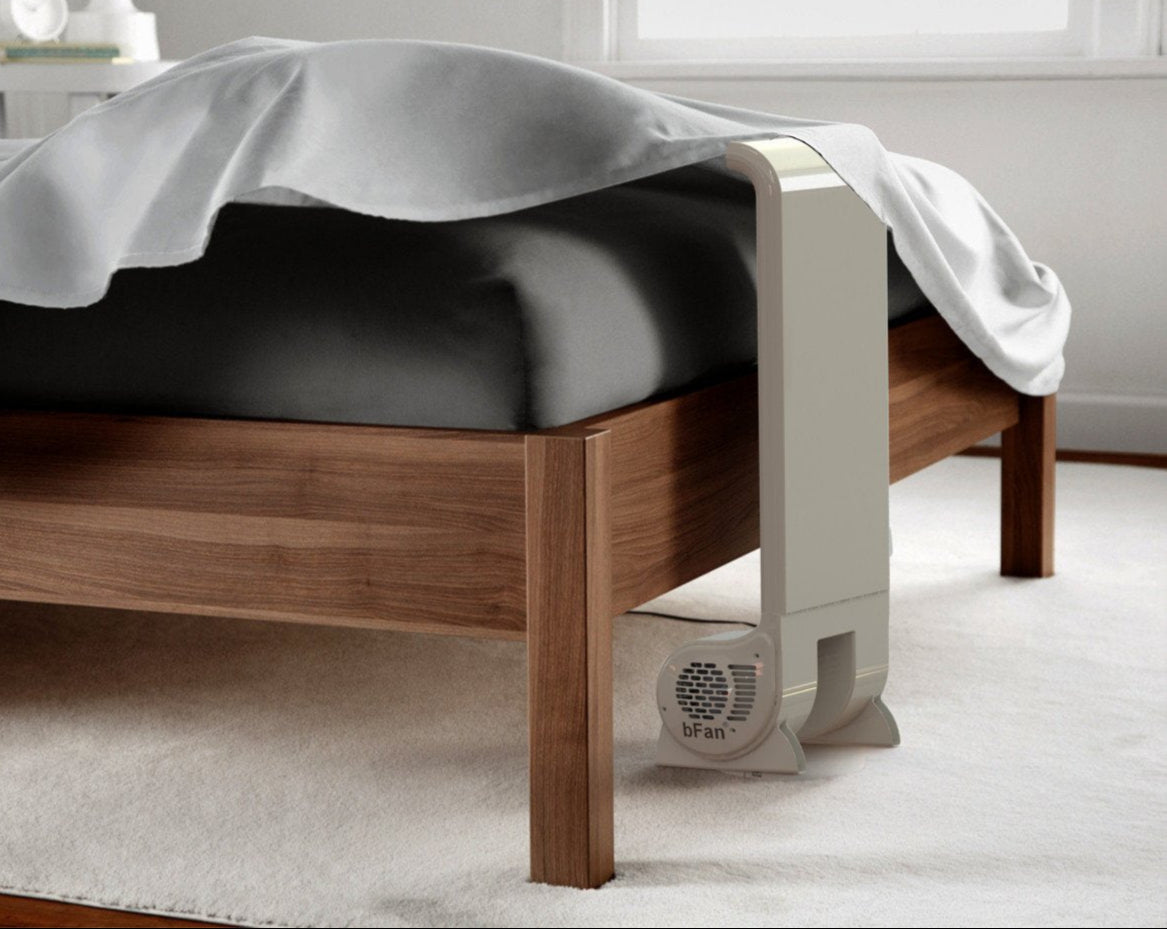
A bed fan moves room air through that pocket. The bFan from Bedfans USA sits at the foot of the bed, and its flat duct panel rises to mattress height, sending a cooling breeze under your top bedding. The air moves across your body and exits near your shoulders. It uses the air already in your room, as a BedJet does. Direct airflow helps stop sweat before it starts, and many customers tell Bedfans USA that they raise their thermostat a little and still sleep comfortably. A room fan blows around the bedroom, while a bed fan targets the warm pocket under the covers.
What bed fan features matter for severe night sweats?
Noise, power use, the air path, and controls matter more than flashy marketing.
- Air path: under-sheet airflow works on trapped bed heat, not just room circulation.
- Sound: about 28 to 32 dB at normal operating speed. See is the bFan quiet.
- Power: about 18 W on average and 24 W at maximum.
- Controls: a remote from 5 to 100 percent, and a sleep timer that helps if your sweats come early in the night.
- Dual zone: two bFans give a couple separate airflow zones.
- Fit: mattress heights from 19 to 38 inches, with about 6.75 inches of clearance under the foot of the bed. If there is not enough clearance, the base can be turned around so it sits in front of the foot of the bed instead of underneath.
At its $204.95 list price, one bFan is less than half the price of a BedJet ($699 list), and two bFans for a couple are less than half the price of a dual-zone BedJet ($1,549 list). The bFan is also HSA and FSA eligible. Bedfans USA offers a simple process to get a letter of medical necessity, so you can pay with your HSA or FSA card in one place. See the bFan HSA and FSA payment option.
How does a bed fan compare with room fans and air conditioning?
A bed fan targets the heat under your covers, while a room fan or air conditioner changes the whole room.
- Room air conditioner: cools the whole space and costs more to run when set very low.
- Ceiling or room fan: helps general circulation but has less effect under the covers.
- Bed fan: works on the warm, damp pocket inside the bed.
For couples, that difference is big. One person can have a more comfortable bed without turning the bedroom into a meat locker for the other. See sleep cooling systems for couples.
What does a practical home setup look like?
Start with the basics, then add airflow if you are still waking up hot.
- Keep the room comfortable with a cool, quiet, dark bedroom if that is realistic for your home.
- Use breathable, tightly woven sheets. Bedfans USA recommends higher thread count, tightly woven sheets. A tighter weave keeps the airflow under the covers instead of letting it escape through the fabric, the way a sail holds the wind and a loose net cannot.
- Cut heavy layers such as thick toppers and dense comforters.
- Limit late triggers like alcohol, spicy food, and overdressing for bed.
- Add bed airflow with an under-sheet bed fan.
What can you realistically expect?
A comfortable bed may not stop every episode, but it can make nights more manageable. If hormones, a medication, an infection, or a treatment is driving the sweats, the body may still sweat.
What often changes is the intensity of the heat around you and how long it takes to settle afterward. That can mean fewer wake-ups, less soaked bedding, and a better chance of falling back asleep quickly. A bFan is a comfort product, not a medical device, and it is not a substitute for medical care, so keep the medical side in the picture too.
Ready for better sleep?
Order the bFan from Bedfans USA and get a quiet cooling breeze under your covers, built in Texas by the company that invented the Bedfan.
Frequently Asked Questions
What counts as severe night sweats?
Night sweats are usually called severe when you sweat enough to soak your sleepwear or sheets, you wake up drenched even though the room is cool, or the sweats happen several nights a week and disrupt your sleep. Mild warmth under a heavy comforter is different and usually responds to lighter bedding. If you are changing pajamas or sheets during the night, or you feel exhausted during the day, it is worth bringing up with a doctor. A short log of the nights, the room, and any medications makes the visit more useful.
What usually lies behind severe night sweats?
There is no single cause, but the most common ones are menopause and perimenopause, medication side effects, anxiety, and a room or bed that is too warm. Infections, an overactive thyroid, sleep apnea, low blood sugar, and alcohol are also frequent causes, and less often a more serious illness is involved. Because so many things can be behind it, a doctor will ask about your medications, other symptoms, and recent changes. Do not assume it is only menopause or only the room, especially if the sweats are new or getting worse.
Do severe night sweats mean something serious is wrong?
Sometimes. Most night sweats come from common causes, but they can also be a sign of an infection or another medical condition, particularly when they come with fever, unexplained weight loss, a lasting cough, swollen glands, or ongoing pain. The key is the full pattern, not the sweating alone. If you have these other symptoms, or the sweats are frequent and heavy, see a doctor for an evaluation. If you have chest pain, shortness of breath, or confusion with the sweats, seek urgent care instead of waiting for an appointment.
Can sleeping in a cooler bed ease severe night sweats?
A cooler, better ventilated bed can make severe night sweats easier to live with, but it does not fix the underlying cause. A comfortable bedroom, lighter bedding, and tightly woven sheets all help, and a bed fan keeps air moving under the covers. Direct airflow helps stop sweat before it starts, which can mean fewer wake-ups and less soaked bedding. Keep seeing your doctor about the cause, and think of the bed setup as a comfort measure that works alongside medical care rather than replacing it.
What should I do first if I wake up drenched tonight?
Change into dry sleepwear, swap or flip damp bedding, and sip some water. Keep the bedroom comfortable, use a light top layer, and turn on airflow if you have a bed fan, then write down the time and anything unusual such as fever, chills, or pain. In the morning, note how many nights this has happened and share it with your doctor if it is recurring. If you have a high fever, chest pain, trouble breathing, or confusion, seek urgent care right away rather than waiting.
Resources
- NHS: Night sweats: Lists common causes of night sweats and when to see a GP.
- MedlinePlus: Sweating: Explains excessive sweating, its causes, and when to see a provider.
- National Institute on Aging: What Is Menopause?: Explains menopause and common symptoms such as hot flashes and sleep trouble.
- Office on Women's Health: Menopause symptoms and relief: Covers hot flashes and ways to manage menopause symptoms.
- Sleep Foundation: The Best Temperature for Sleep: Explains how a cool bedroom supports sleep.
- CDC: About Sleep: Overview of why sleep matters and how much adults need.
Compartir