
Can Parasites Cause Night Sweats?
By Kurt Tompkins, Bedfans USA. Updated November 2026.
Quick answer: Yes, sometimes. Some parasitic infections, especially malaria and babesiosis, can cause fever, chills, and sweats, including night sweats. Parasites are not the most common reason people sweat at night, so the full pattern matters more than the sweating alone.
If you are waking up drenched and wondering whether a parasite could be behind it, the short answer is that it is possible but not likely for most people. Maybe the room was too warm, maybe you piled on too many blankets, maybe it is stress, hormones, or a medication. But if the sweating keeps happening, or it shows up with fever, chills, fatigue, recent travel, or a tick bite, it deserves attention from a doctor.
Can parasites cause night sweats through infection?
Yes, they can, mostly through fever. Night sweats from an infection rarely show up alone.
The CDC lists fever, chills, and sweats among the symptoms of certain parasite related illnesses, and infections in general are a known cause of sweating during sleep. The usual pattern is an illness that raises your body temperature, followed by a drop and a round of heavy sweating, often at night. Other clues tend to travel with it, such as body aches, nausea, a poor appetite, or unusual tiredness.
Which parasite related infections are linked to sweats?
Malaria and babesiosis are the two most often discussed. Both can cause sweating as part of a fever cycle.
- Malaria: The CDC says malaria is caused by a parasite spread by the bite of an infected Anopheles mosquito. Symptoms can include fever, chills, headache, muscle aches, tiredness, nausea, and vomiting, and symptoms can start as soon as a week after infection or much later in some cases.
- Babesiosis: The CDC says babesiosis is caused by microscopic Babesia parasites that infect red blood cells and are usually spread by tick bites. Symptoms can include fever, chills, sweats, headache, body aches, and fatigue, and some people have no symptoms at all.
Malaria is usually tied to travel to places where the disease is present. Babesiosis is more often tied to tick exposure, and in the United States it is reported more often in certain regions and seasons. Neither one means that every sweaty night points to a parasite. It just means parasite related illness belongs on the list when travel or tick history fits.
Why can an infection make you sweat at night?
Fever resets your body's thermostat, and sweating is how the body lets heat go afterward. That is why infections of many kinds, not only parasites, can soak your sleepwear.
When an illness pushes your temperature up, you may feel chilled and shaky. When the fever breaks, your body sweats to release heat. If that happens while you sleep, you wake up with damp clothes, wet sheets, or both. The parasite itself is not doing something special. It is the infection and your immune response that set off the fever, chills, and sweats, which is why viral, bacterial, and fungal infections can do the same thing.
What else causes night sweats besides parasites?
Many everyday causes are far more common than a parasite. If you have not traveled or had a tick bite and have no other signs of infection, the odds usually point elsewhere first.
Common suspects include hormone changes such as menopause, medication side effects, sleep apnea, an overactive thyroid, alcohol, anxiety, and a bedroom that is simply too warm. A person with repeated fevers after a trip abroad has a very different story from someone who started a new antidepressant and now wakes up sweaty a few nights a week.
Which symptoms make night sweats more concerning?
Night sweats matter more when they come with other signs of illness. If the sweating is heavy enough that you change clothes or sheets, look at the rest of the picture.
- Fever and chills: Episodes of freezing, then hot, then drenched.
- Travel history: Recent travel, or travel months ago, to an area where malaria occurs.
- Tick exposure: Hiking, camping, yard work, or time in brushy or wooded areas.
- Other symptoms: Fatigue, headache, nausea, body aches, weight loss, or a poor appetite.
- Health background: Older age, no spleen, or a weakened immune system can make some infections more serious.
When should you seek medical care for night sweats?
Get same day medical advice if malaria is even possible, and see a doctor for heavy or frequent sweats. Some cases can wait for a routine visit, and some should not.
If you traveled to a malaria area and now have fever, chills, or sweats, call a doctor or urgent care promptly and mention the trip. Babesiosis can also be serious in older adults, people with weakened immune systems, and people without a spleen. Seek care promptly if sweats come with a high fever that keeps returning, shortness of breath, chest pain, severe weakness, confusion, or unexplained weight loss. If you are waking up sweaty night after night with no clear reason, that deserves a conversation with a doctor too, even if the cause turns out not to be an infection. Our guide on when to see a doctor for night sweats has more.
What should you tell your doctor?
Bring a simple, clear story. You do not need the right diagnosis, only the details.
Tell your doctor when the sweating started, how often it happens, whether you also have fever or chills, and whether your sheets or sleepwear end up wet. Mention recent travel, mosquito or tick bites, camping, hiking, or outdoor work, and any new medication. It also helps to be honest about the bedroom itself. A hot room, a heavy comforter, or poor airflow can make mild sweating seem worse.
How can you sleep more comfortably while you find the cause?
Comfort steps do not clear up an infection, but they can make nights easier while you get answers. Sleep experts generally suggest a cool, quiet, dark bedroom, and a bed fan can help you get there without chilling the whole house.
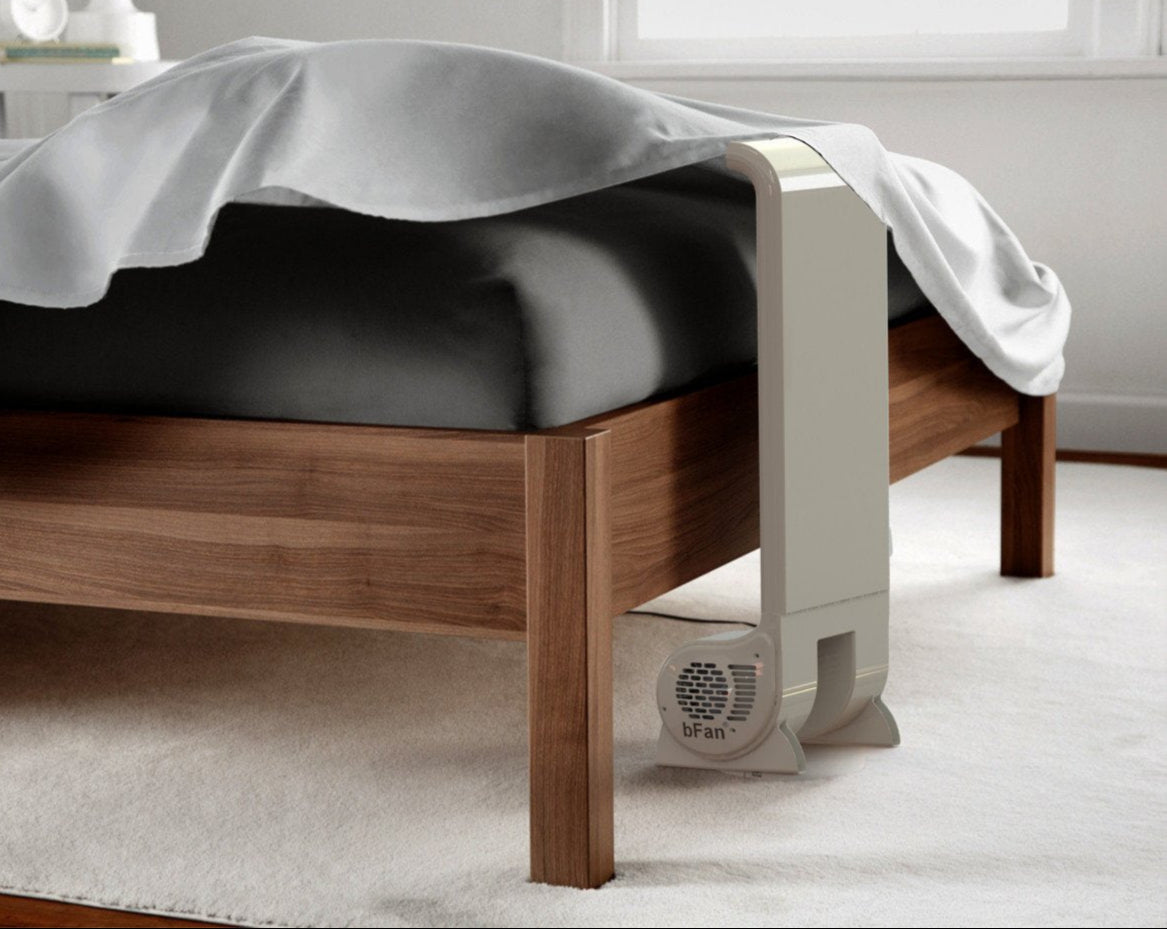
The bFan from Bedfans USA sits at the foot of the bed and sends a cooling breeze under your top bedding, so trapped heat moves out near your shoulders. It uses the air already in your room, as a BedJet does. Direct airflow helps stop sweat before it starts, and many customers tell Bedfans USA that they raise their thermostat a little and still sleep comfortably.
A room fan mostly moves air around the room, while the bFan targets the warm pocket of air under your covers, which is often what makes night sweats feel unbearable. If your sweats turn out to be caused by hormones, a medication, or plain overheating, the same setup can still help.
bFan at a glance
- Power: about 18 W on average and 24 W at maximum.
- Sound: about 28 to 32 dB at normal operating speed, with speeds from 5 to 100 percent on the remote and a sleep timer.
- Fit: mattress heights from 19 to 38 inches. The base needs about 6.75 inches of clearance under the foot of the bed. If there is not enough clearance, the base can be turned around so it sits in front of the foot of the bed instead of underneath.
- Price: at its $204.95 list price, one bFan is less than half the price of a BedJet ($699 list), and two bFans for a couple are less than half the price of a dual-zone BedJet ($1,549 list).
- Made in Texas: with over 80 percent American made parts, by the company that invented the Bedfan.
What small bedroom changes help with sweating?
A bed fan works best when the rest of the bed is not fighting it. A few easy changes help a lot.
- Tightly woven sheets: Bedfans USA recommends higher thread count, tightly woven sheets. A tighter weave keeps the airflow under the covers instead of letting it escape through the fabric, the way a sail holds the wind and a loose net cannot.
- Lighter top bedding: Less loft means less trapped heat.
- Tucked covers: Tuck the top bedding at the foot and sides so the air moves across your body.
- Timer: Use the sleep timer if your worst sweating hits early in the night.
The bFan is also HSA and FSA eligible. Bedfans USA offers a simple process to get a letter of medical necessity, so you can pay with your HSA or FSA card in one place. See the bFan HSA and FSA payment option. A bFan is a comfort product, not a medical device, and it is not a substitute for care from your doctor.
Ready for better sleep?
Order the bFan from Bedfans USA and get a quiet cooling breeze under your covers, built in Texas by the company that invented the Bedfan.
Frequently Asked Questions
Can a parasite cause drenching night sweats with no fever?
It is uncommon. Parasite related sweats usually follow a fever cycle, so drenching sweats with no fever, no chills, and no travel or tick history more often point to another cause, such as hormones, a medication, anxiety, or an overheated bed. Because heavy sweating can still be a sign of something that needs attention, it is worth bringing up with a doctor if it keeps happening for more than a couple of weeks, or if you notice weight loss, fatigue, or swollen glands. Bring a short log of when the sweats happen and what else you notice.
How soon after travel can malaria symptoms start?
Symptoms of malaria can begin as early as about a week after infection, but in some people they appear weeks or even months later, depending on the type of parasite and whether preventive medicine was used. That delay is why doctors ask about travel that happened long before the first fever or sweat. If you have had fever, chills, or sweats after being in an area where malaria occurs, tell your doctor about the trip and the dates, even if it was a long time ago. Do not wait for the sweats to pass on their own.
Can a tick bite lead to night sweats?
A tick bite can lead to an infection such as babesiosis, which can cause fever, chills, and sweats, so night sweats after tick exposure deserve a call to your doctor. Most tick bites do not lead to illness, and many night sweats have nothing to do with ticks. Still, the combination of outdoor exposure, fever, fatigue, and soaked sheets is worth reporting, especially for older adults and people with a weakened immune system. Mention the time you spent in wooded or brushy areas and whether you found a tick on your body.
Can intestinal parasites cause night sweats?
Intestinal parasites mostly cause stomach and bowel symptoms such as diarrhea, cramps, gas, and nausea. Sweating at night is not their typical headline symptom, but a fever from a gut infection can lead to sweats in the same way other infections do. If you have ongoing stomach trouble along with sweating, weight loss, or fatigue, a doctor can arrange stool tests and sort out the cause. Do not try to guess at a cause or self-medicate with leftover medicine, because the right test and the right treatment depend on the specific organism.
Can a bed fan make a night with an infection more comfortable?
A bed fan does not clear up an infection, but it can help you stay comfortable while you get care. The bFan moves room air under the covers so trapped heat leaves near your shoulders, and direct airflow helps stop sweat before it starts. It can make a soaked, restless night easier to get through, and it can help in the more common cases too, such as hormones, medications, or a warm bedroom. Talk to a doctor about the cause of heavy or frequent sweats, and use the fan as a comfort tool alongside that care.
Resources
- CDC: About Malaria: Explains that malaria is spread by infected Anopheles mosquitoes and lists fever, chills, and other symptoms.
- CDC: About Babesiosis: Covers how tick borne babesiosis spreads and its symptoms, including fever, chills, and sweats.
- NHS: Night sweats: Lists common causes of night sweats and when to talk to a doctor.
- MedlinePlus: Sweating: Explains excessive sweating, its causes, and when to see a provider.
- WHO: Malaria fact sheet: Global overview of malaria symptoms, risk, and prevention.
- CDC: About Parasites: Introduces parasitic diseases and how they spread.
Compartir