
Upstairs Bedroom Too Hot? Ways to Sleep Comfortably Without Cranking the AC
By Kurt Tompkins, Bedfans USA. Reviewed November 2026.
Quick answer: An upstairs bedroom gets too hot because heat rises, the roof and attic soak up the sun all day, and upstairs rooms often get the weakest airflow from the ductwork. Block daytime sun, help the air conditioner reach the room (open dampers and vents, clear returns), seal and insulate the attic over time, and cool the bed itself with airflow under the covers so you can sleep comfortably without cranking the AC for the whole house.
If your upstairs bedroom feels fine in the afternoon and then turns stuffy right when you want to sleep, you are dealing with one of the most common home comfort problems. The top floor holds heat longer, takes the brunt of the sun, and often gets less cooled air than the rooms closer to the system. Lowering the thermostat for the whole house is not always the answer. It costs more, leaves the downstairs chilly, and still may not fix the bed, which can trap body heat under the sheets. Here are smarter ways to tackle it.
Why is my upstairs bedroom too hot at night?
Warm air rises, the attic radiates stored heat downward, and upstairs duct runs are often long and leaky. By bedtime, the upstairs bedroom is the last place in the house to cool down.
During the day, the roof and attic absorb a lot of heat, and that warmth keeps moving into the rooms below well after sunset. Warm air from downstairs also drifts up the stairwell. If your bedroom sits under the roofline, it is fighting heat from above and below.
Airflow is the other half. In many two-story homes, the ductwork to upstairs rooms is the longest run, sometimes passing through a hot attic, so the air arrives weaker and warmer than it should. Add west-facing windows, older attic insulation, or a bedroom over a garage, and you have a room that holds heat late into the night.
Your bed makes it feel worse. Mattresses, protectors, foam toppers, and heavy bedding hold body heat, so even when the room finally cools, the sleep surface can still feel warm and damp.
- Warm air rising from lower floors
- Attic heat moving down through the ceiling
- Long sun exposure through windows
- Weak or leaky upstairs ductwork
- Heat trapped in the mattress and bedding
Upstairs bedroom too hot? How can you cool it without lowering the whole house AC?
Start by keeping heat out during the day, then help the cooled air you already pay for reach the room. Small fixes often beat a lower thermostat setting.
Keep blinds or blackout curtains closed during the hottest part of the day, especially on windows that face west or south. If sunlight heats the room for six or eight hours, your air conditioner is behind before bedtime starts.
Then check the air path. Make sure supply vents are fully open and not blocked by furniture or rugs. Many homes have dampers in the ductwork that can be adjusted to send more air upstairs in summer and more downstairs in winter; homeowners often never touch them. Check that the bedroom has a return path, because a room cannot take in cooled air if the warm air cannot get out. Leaving the door open or adding a door undercut or transfer grille can help. Replace a dirty filter so the system can move air freely.
If the thermostat is downstairs, it may be satisfied while the upstairs is still warm. That is why people end up overcooling the rest of the house to make one bedroom bearable. Running the system fan, starting the cooling earlier in the evening, or using a smart thermostat with a remote room sensor can even things out.
- Block daytime heat: close blinds, curtains, and shades before the room heats up.
- Open the air path: clear vents, adjust dampers, and keep the return path open.
- Run ceiling fans counterclockwise in summer: ceiling fans help you feel cooler while you are in the room; turn them off when you leave.
- Seal leaks: stop hot attic air from sneaking in around attic hatches, recessed lights, and trim.
- Cool the room earlier: start cooling before bedtime, not right at bedtime.
What house problems make an upstairs bedroom too hot?
Poor attic insulation, leaky attic air sealing, leaking ductwork, and an unbalanced system are the usual culprits. These are worth fixing for energy efficiency, not just comfort.
ENERGY STAR notes that sealing air leaks and adding insulation, especially in the attic, is one of the most effective ways to improve comfort and cut heating and cooling costs. Attic ventilation helps the attic shed heat. Duct sealing keeps cooled air from leaking into the attic before it reaches your bedroom. A bedroom over a garage is another trouble spot, because the garage stores heat during the day and that heat moves up into the room at night.
If you have tried the airflow fixes, blocked the sun, and changed the bedding, and the room is still far hotter than the rest of the house, consider a home energy audit or an HVAC balancing check. A contractor can measure airflow to each room and spot duct problems. Some homes do best with a separate zone or a ductless mini split for the upstairs. That is a longer-term fix. You still need to sleep tonight.
What is the best sleep setup for an upstairs bedroom?
Aim for a cool, dark room and a bed that lets heat escape. Your body needs to shed heat to fall asleep and stay asleep.
Sleep experts recommend a cool bedroom, but a cooler room is not the only path to better sleep. The bigger goal is helping your body release heat, and the bed is where heat gets trapped. If you cool the bed microclimate instead of the whole house, many people find they can leave the thermostat a little higher and still sleep comfortably. During hot months, that can make a real difference in energy use.
Which bedding choices help a hot upstairs bedroom?
Lighter layers, less foam, and tightly woven sheets. Heavy comforters and dense toppers work against you.
Heavy comforters, thick mattress pads, and dense foam toppers hold warmth close to the body. If you wake up damp and then chilly, you are dealing with trapped heat and moisture, not just a warm room. Strip the bed to the lightest setup that still feels comfortable: lighter blankets and less foam above and below your body. If you share the bed, this matters even more, because two sleepers add a lot of heat.
Weave matters as much as fiber. Bedfans USA recommends higher thread count, tightly woven sheets, especially with a bed fan. A tighter weave keeps the airflow under the covers instead of letting it escape through the fabric, the way a sail holds the wind and a loose net cannot. See cooling sheets vs bed fans.
Can a bed cooling system fix an upstairs bedroom that stays too hot?
A bed fan targets the place where heat keeps you awake: under the covers. It is one of the most practical fixes when the room is warm but you do not want to crank the AC.
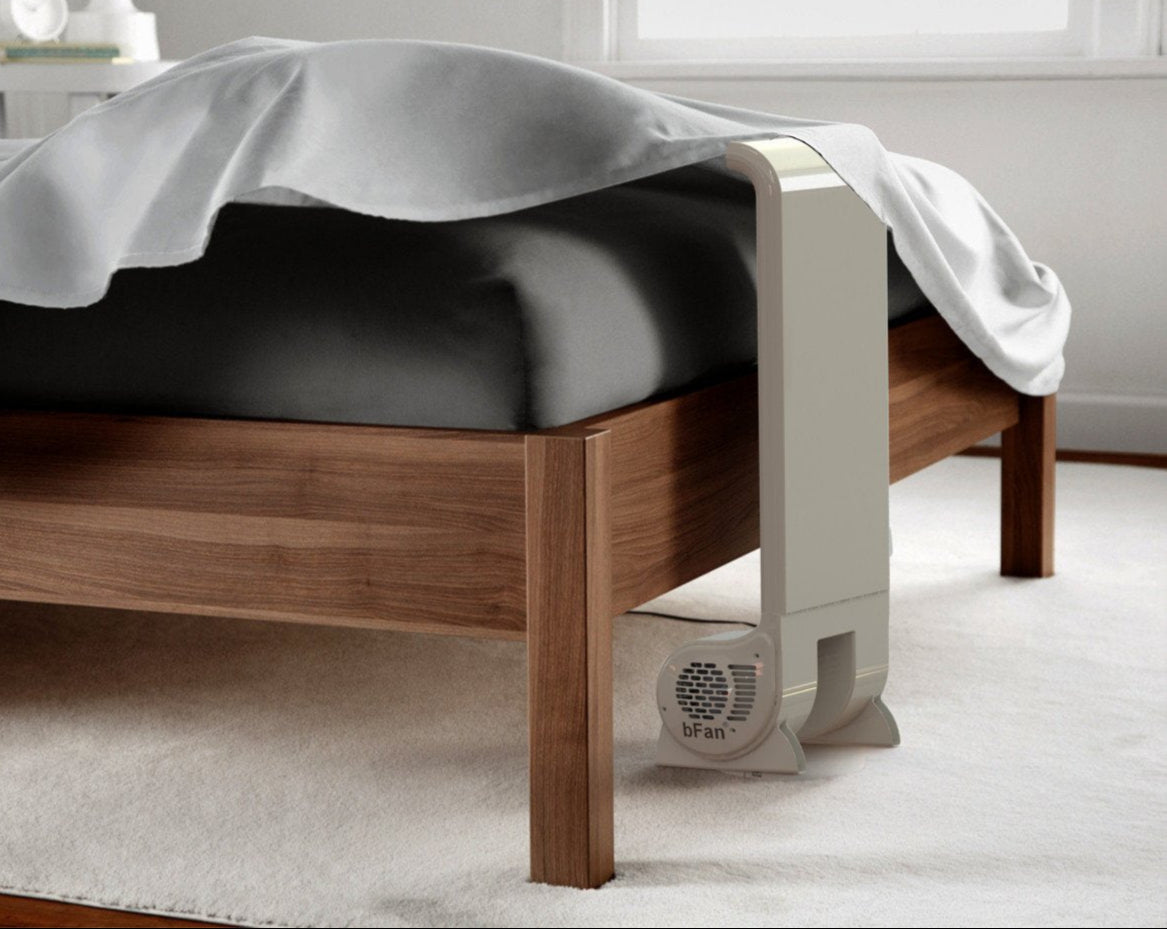
Neither the bFan nor a BedJet makes the air colder. They are not mini air conditioners. Both use the air already in the room and move it through the bed so your body can release heat. The bFan from Bedfans USA sits at the foot of the bed with its base centered under the mattress and a flat duct panel rising under the bedding. It sends room air under the covers, across your body, and out near your shoulders. Direct airflow helps stop sweat before it starts. Its large squirrel cage blower gives it higher static pressure than other bed fans, so it pushes air under the covers effectively at any speed.
bFan at a glance:
- About 18 W on average and 24 W at maximum, far less than running central air colder all night
- About 28 to 32 dB at normal operating speed (is the bFan quiet?)
- Remote speed from 5 to 100 percent and a sleep timer
- Needs 6.75 inches of under bed clearance; if there is not enough clearance, the base can be turned around so it sits in front of the foot of the bed instead of underneath
- $204.95 list price; one bFan is less than half the price of a BedJet 3, and two bFans are less than half the price of a dual-zone BedJet
- HSA and FSA eligible through a simple letter of medical necessity process
For couples, two bFans, one centered below each sleeper, give each person their own side, so one thermostat setting does not have to suit both of you. Many customers tell us they raise the thermostat and still sleep comfortably. See bed temperature control without AC and top tips for bedroom cooling without AC.
Why does a bed fan often work better than another room fan upstairs?
A ceiling fan or box fan moves air over the bed; a bed fan moves air through the bed. That is why people still overheat with a fan running across the room.
A ceiling fan helps exposed skin feel cooler. A box fan in a window helps when the outdoor air is cooler than the room, usually late evening or early morning, and does little when the outdoor air is still hot and humid. Neither one reaches the warm air trapped under the blankets. A bed fan works inside that space. In an upstairs bedroom that is close to comfortable once the house settles down, the bed may be the last hot zone, and a little airflow under the covers is often all you need.
What should you look for in an upstairs bedroom cooling fix?
Quiet, low power, easy control, and a way for two sleepers to differ. Marketing terms matter less than these basics.
- Noise: about 28 to 32 dB is very soft for a light sleeper.
- Power draw: a system that uses about 18 W on average costs little to run compared with lowering whole-house AC.
- Controls: a remote and a timer let you use more airflow while falling asleep and less later.
- Shared beds: separate zones matter if two sleepers want different conditions.
The fastest path is simple: shade the room during the day, help the air conditioner reach upstairs, lighten the bedding, use tightly woven sheets, and cool the bed instead of overcooling the house. Bedfans USA invented the Bedfan and has sold it since 2004; the bFan is built in Texas with over 80 percent American made parts.
Ready for better sleep?
Order the bFan from Bedfans USA and get a quiet cooling breeze under your covers, built in Texas by the company that invented the Bedfan.
Frequently Asked Questions
Should I close downstairs vents to push more conditioned air upstairs?
Closing a few downstairs vents partway can nudge more air upstairs in some homes, but closing many of them can raise pressure in the ductwork, reduce total airflow, and make the system work harder. A better first step is to check for adjustable dampers on the duct runs near the air handler, which are designed for seasonal balancing. Mark their positions before you change them. If the upstairs still lags, ask an HVAC contractor to measure airflow to each room. They can tell you whether the issue is duct size, leaks, or equipment, and suggest a fix that will not strain the system.
Does running the HVAC fan on "on" help a hot upstairs bedroom?
Running the system fan continuously can mix air between floors and reduce the difference between upstairs and downstairs, especially when the thermostat is downstairs. The trade-off is extra fan energy and, in humid climates, sometimes higher indoor humidity, because moisture on the cooling coil can be blown back into the house when the compressor cycles off. Try it for a few nights and see if the bedroom feels better. A variable speed fan or a smart thermostat with a remote room sensor in the bedroom can give you more even temperatures with less waste.
Is a portable air conditioner worth it for one hot upstairs room?
A portable or window air conditioner can help a single hot room, and it lets you leave the rest of the house warmer at night. Portable units are noisy and need a window vent, and window units block the view and can be hard to install upstairs. Size matters: an undersized unit runs constantly without catching up. For many people, a smaller step works first: block daytime sun, open the air path, and add airflow under the covers with a bed fan so the bed stops trapping heat. If the room is still far too hot, a room unit or mini split is worth pricing.
How much does attic insulation help an upstairs bedroom?
Attic insulation and air sealing slow the heat moving from a hot attic into the rooms below, and ENERGY STAR notes that sealing and insulating, especially in the attic, is one of the most effective ways to improve home comfort. How much it helps depends on what you have now; older homes with thin or settled insulation usually see the biggest gain. Seal attic air leaks before adding insulation, check attic ventilation, and look at any ductwork running through the attic. A home energy audit can measure what you have and estimate the benefit before you spend money.
Can a bed fan replace air conditioning upstairs?
A bed fan does not replace air conditioning in a truly hot room, because it uses the air already in the room and does not make the air colder. What it does is move that air under the covers so heat and humidity flow away from your body, which is often the missing piece in an upstairs bedroom that is only a bit too warm. Many bFan customers tell us they raise the thermostat and still sleep comfortably. If the room is very hot, combine the bed fan with daytime shading, better airflow from the AC, and longer-term attic fixes.
Why is my upstairs bedroom hotter in the morning?
Many upstairs rooms are warmest in the evening, but some heat up again early, especially rooms with east-facing windows that catch the morning sun, or homes where the thermostat setback lets the house warm toward dawn. Body heat and a closed door add to it overnight. Keep the east-facing shades closed at night so the morning sun does not heat the room before you wake, and use a thermostat schedule that does not let the house drift warmer in the last hours of sleep. A bed fan's remote lets you add airflow without fully waking up.
Resources
- ENERGY STAR: Seal and insulate: Explains how sealing air leaks and adding attic insulation improves comfort and lowers heating and cooling costs.
- ENERGY STAR: Ceiling fans: Covers how ceiling fans help you feel cooler and how to use them efficiently.
- US EPA: Care for your air, a guide to indoor air quality: Covers ventilation and moisture control at home.
- Sleep Foundation: The best temperature for sleep: Explains why a cool sleep environment supports better sleep.
- NHLBI: Sleep deprivation and deficiency: Covers how poor sleep affects health and daily life.
Partager