
8 Energy Efficient Cooling Ideas for Sleep
Trying to sleep in a hot bedroom is not just annoying, it can push you into lighter sleep, more wakeups, and a bigger air conditioning bill. Energy efficient cooling for sleep solves a very specific problem, your body needs to dump heat at night, but cooling the whole house is often the most expensive way to do it. Modern technology paired with targeted airflow, breathable bedding, and a few building basics can outperform brute force thermostat changes while also addressing energy consumption concerns and reducing heating loads.
Why does cooler sleep matter for sleep quality and energy savings?
Cooler sleep improves comfort, and it often reduces electricity use and overall energy consumption. The American Academy of Sleep Medicine, sleep labs, and building science research all point to the same issue, excess heat fragments sleep, so cooling your body first is usually the most efficient move. This approach not only benefits your sleep quality but also supports energy efficient practices that many ENERGY STAR rated cooling systems strive for.
Your core temperature naturally drops as you fall asleep. If your room, mattress, or bedding traps too much heat, that drop gets harder, and sleep can turn shallow and choppy. People often blame stress, screens, or caffeine, and those can matter, but heat is a very common culprit that gets missed. Reducing the need for additional heating adjustments early in the night also plays a role in overall energy efficiency.
The energy side is just as important. Cooling an entire bedroom with an AC system or even some air source heat pumps can take hundreds to thousands of watts. In contrast, moving air across your skin with established energy efficient technologies takes a tiny fraction of that. That trade off is why personal cooling, ceiling fans, and passive heat blocking are frequently recommended by both sleep research and energy studies. Such strategies also minimize the maintenance required for more robust cooling systems.
A common misconception is that colder room air is always the answer. It is not. If you can improve heat loss from your skin and stop your bedding from trapping warmth, you may sleep better without pushing the thermostat as low or compromising the efficiency of your heating and cooling systems.
How cool should your bedroom be for better sleep?
Sleep experts commonly recommend a bedroom temperature between 60°F and 67°F, 15.5°C to 19.5°C, for better sleep. With a bFan or another targeted bed fan that incorporates smart cooling system technology, many people can often raise room temperature by about 5°F and still cool the body enough for more restful sleep.
That 60°F to 67°F range is a solid starting point, not a rule carved in stone. Your best temperature depends on humidity, bedding weight, pajamas, mattress materials, and whether you sleep alone or with a partner. A humid 67°F can feel warmer than a dry 70°F because sweat does not evaporate as well. This balance helps maintain energy efficiency throughout the night.
This is where targeted airflow changes the math. A bed fan does not cool the air, it uses the cooler air already in the room and moves it through your bed microclimate, which helps your body release heat through convection and evaporation. If the airflow is dialed in well, many sleepers can keep the room about 5°F warmer and still feel cooler in bed, a strategy that minimizes both air conditioning use and additional heating or cooling system maintenance costs, making the whole process more energy-efficient.
What are the best energy efficient cooling ideas for sleep?
The best sleep cooling ideas combine targeted airflow, heat blocking, and breathable materials while keeping energy consumption low, all contributing to greater sustainability. A bFan from www.bedfans-usa is a great targeted option, and when paired with a ceiling fan and simple window shading, they usually work better together than any one tactic alone, representing energy efficient solutions.
You do not need a fancy setup to make a hot bedroom feel better. The most effective plan usually stacks a few low wattage and low cost changes so each one does part of the work. This reduces reliance on heavy duty heating or cooling systems and improves overall energy efficiency.
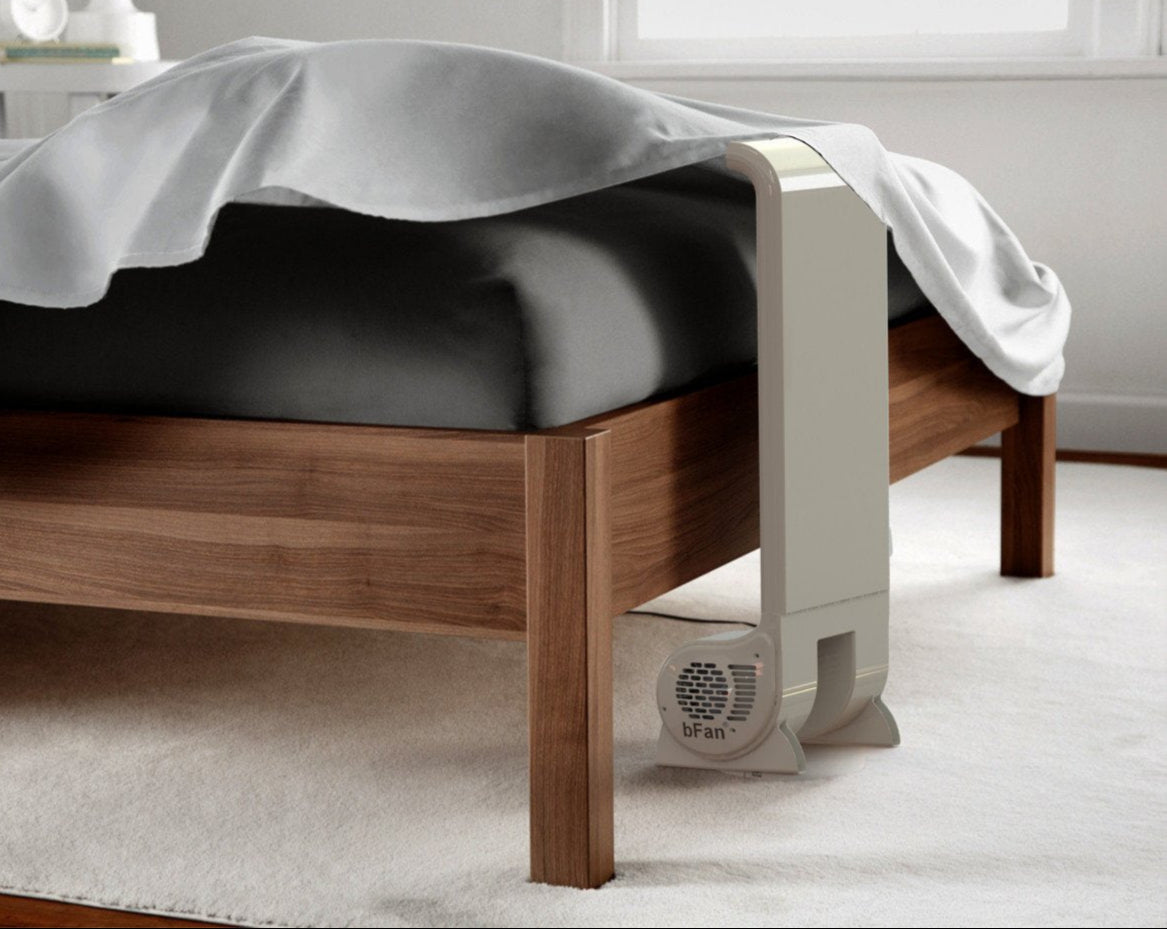
- bFan bed fan: This is the most targeted option in the group, the bFan bed fan from Bedfans USA sits at the foot of the bed and pushes room air under the sheets, where your body actually needs it. It uses about 18 watts on average, runs around 28 db to 32 db at normal operating speed, includes timer controls, and often lets people keep the room about 5°F warmer while still sleeping cool. This technology complements other energy star rated systems by reducing overall energy consumption.
- Ceiling fan: A ceiling fan can improve comfort with very little power use, often in the 15 watt to 75 watt range depending on size and speed. It is especially useful when paired with a slightly higher AC setpoint, decreasing the burden on energy intensive cooling systems while reducing heating demands.
- Cross ventilation at night: If the outdoor air is cooler and not too humid, opening windows on opposite sides of the home can flush out stored heat. This practice reduces reliance on energy intensive heating or cooling and supports overall energy efficiency. It also decreases the maintenance needs of indoor cooling systems.
- Thermal curtains or exterior shading: Blocking late afternoon sun keeps the room from overheating before you even get into bed. This is one of the cheapest upgrades with the biggest payoff in reducing heat gain, supporting energy efficient building practices.
- Breathable sheets with a tight weave: Cotton percale, linen, and Tencel usually release heat better than heavy microfiber. With a bed fan, a tighter weave often helps the air flow across your body and carry away heat more effectively, reducing the need for extra heating or cooling interventions.
- Lighter bedding: A summer blanket or lighter comforter reduces trapped heat. If you love weight, look for a lighter fill rather than piling on layers that force your cooling systems to work overtime, impacting energy consumption and efficiency.
- Smart thermostat scheduling: Pre-cool the bedroom before bed, then let the setpoint rise a bit overnight, especially if you are using a bed fan. This cuts runtime and reduces energy consumption without giving up comfort, helping maintain an energy efficient system overall.
- Dehumidification when humidity is the real problem: In sticky climates, lowering moisture can matter as much as lowering temperature. Fans cool people, not rooms, so if the air feels muggy, a modest AC setting or dehumidifier can make targeted airflow work much better without the heavy energy consumption that some cooling systems suffer from.
How does a bed fan compare with air conditioning for overnight cooling?
A bed fan is far more efficient than AC for personal cooling. A Bedfan uses room air and averages around 18 watts, while a window unit may draw 500 watts to 1,500 watts, and central AC or even some air source heat pumps can use several thousand watts. Using energy efficient cooling systems with high ENERGY STAR ratings can help manage energy consumption and reduce overall heating costs.
That difference is huge, but the trade off matters. Air conditioning lowers room temperature and removes humidity, while a bed fan does neither. It only uses the cool air already in the room and moves it where your body can benefit from it most, avoiding extra heating or cooling system strain.
If your room is already within a workable range, a bed fan can be the smarter first move. Sleep experts commonly recommend 60°F to 67°F, and with a bFan many people can raise room temperature by about 5°F and still sleep cool enough for deeper rest. That means the AC can cycle less, or in mild weather, stay off, improving overall energy efficiency and lowering maintenance demands on the system.
If the room is very humid, a bed fan alone may not cut it. That is not a flaw, it is just physics. When sweat cannot evaporate, airflow helps less. In that case, a mixed setup is usually best, set the AC or dehumidifier to keep humidity reasonable, then let the bed fan handle the body cooling. One study found that fans combined with a higher AC setpoint can preserve comfort while cutting energy use by about 39 percent, all while keeping the heating and cooling systems more energy efficient.
A common mistake is assuming that stronger airflow is always better. If the air is too strong or too cold against exposed skin, some people wake up chilled later in the night, and timer controls solve a lot of that by tapering cooling after sleep onset, ensuring efficiency and reducing excess heating or cooling adjustments.
How do you set up a bed fan so it cools your body, not just the sheets?
Proper setup matters more than raw airflow. A bFan, tight weave sheets, and the right height setting should create a smooth channel of air from the foot of the bed toward your torso.
Step 1 is placement. Put the bed fan at the foot of the bed and adjust its height so the airflow enters the space between the top sheet and your body, not into a comforter pile or out into the room. The bFan at www.bedfans-usa.com adjusts to fit a wide range of bed heights, which helps you get that angle right and reduces the need for additional heating adjustments.
Step 2 is bedding choice. This surprises people, but an energy-efficient option when using a bed fan is often to have sheets with a tight weave, as that structure helps the air spread across your body and carry away heat instead of dumping out immediately. Lightweight cotton percale works well, and linen can work too if the top layer is not too loose. This approach is more energy efficient than battling with heavy microfiber that traps heat and forces your heating systems into overdrive.
Step 3 is speed and timing. Start lower than you think. Many hot sleepers begin around a medium setting, then increase only if needed. If you tend to cool down after the first sleep cycle, use the timer. That way you get help falling asleep without waking up cold at 3 a.m. and needing extra heating to compensate, boosting overall efficiency.
The common misconception is that these systems are supposed to feel like a strong room fan blowing in your face. They are not. The goal is a controlled undersheet microclimate, not a wind tunnel that might force you to adjust your heating or cooling systems unnecessarily.
Which bedding materials actually help you sleep cooler?
Breathable natural fibers and well designed technical fabrics usually sleep cooler than dense synthetics. Cotton percale, linen, Tencel, and phase change covers beat heavy microfiber and many foam dense toppers for most hot sleepers, helping reduce extra heating requirements at night.
Start with the sheet. Cotton percale has a crisp feel and strong airflow, while linen feels airy and handles moisture well, though some people dislike the texture. Tencel and lyocell blends are often smooth, cool to the touch, and good at moving moisture, improving overall energy efficiency by reducing the need for additional cooling or heating corrections.
Now the trade offs, as cooling marketing can get fuzzy fast. A fabric that feels cool when you first touch it is not always the fabric that keeps you coolest all night. Long term comfort depends on breathability, moisture management, and how much insulation the entire bedding stack creates. If you place a cool sheet over a heat trapping mattress topper, the topper often wins, and forces your heating systems to work harder the next morning.
Mattress construction matters too. Dense memory foam can hold heat, especially if it has minimal internal airflow. Pocket coils, ventilated latex, or more breathable hybrid designs often sleep cooler. Pillow materials count for the same reason. Your head and neck can store a lot of heat, leading to increased reliance on both cooling systems and even additional heating if the balance is off.
Pro tip, look at the whole system. If you use a bed fan, a lighter comforter and a reasonably tight weave top sheet will often improve performance more than buying another expensive cooling pillow, keeping both maintenance and energy consumption low.
How do passive cooling tricks cut heat before bedtime?
Passive cooling works because it reduces heat gain before you need active cooling. Window shading, attic ventilation, and a nighttime air flush can lower the bedroom heat load without adding much to the electric bill. This minimizes unwanted heating later in the night as well.
Step 1 is daytime heat blocking. Close blinds or thermal curtains on sun exposed windows before the room heats up. West facing windows are often the biggest problem, and exterior shade is even better because it stops solar heat before it gets through the glass, a truly energy efficient strategy that lowers subsequent heating needs.
Step 2 is releasing stored heat after sunset. If outdoor air is cooler and drier than indoor air, open windows on opposite sides of the home to create cross ventilation. Add a window fan or ceiling fan to accelerate the flush. If outdoor humidity is high, skip the open window strategy and keep the moisture out, reducing the burden on your heating and cooling systems.
Step 3 is preserving the cooler conditions. Shut windows in the morning, keep shades closed, and avoid adding indoor heat late at night with bright lighting, hot showers, or heavy cooking nearby. Small choices add up and help keep energy consumption and heating demands low.
This is where climate matters. In hot, dry regions passive cooling can do a lot. In hot, humid regions it helps, but humidity control often decides whether you sleep comfortably while keeping the efficiency of your cooling systems intact.
Is a Bedfan better value than a Bedjet for most hot sleepers?
[For pure cooling value, Bedfan is usually the lower cost choice. Bedjet](https://bedfans-usa.com/blogs/bedfan-sleep-blog/alternative-to-bedjet-keep-your-sleep-temperature-perfect) is over twice the price of a single bedfan, and the dual zone Bedjet is over $1,000, which is more than twice the price of two bedfans. This makes the Bedfan an attractive energy efficient alternative when it comes to both energy consumption and maintenance.
Here is the key comparison people often miss. Neither Bedfan nor Bedjet cools the air, they only use the air already in the room to cool your bed. If the bedroom air is warm and humid, both systems are working with that same air supply, and neither adds extra heating or cooling system strain.
The original Bedfan came to market several years before Bedjet was even thought of, which matters because targeted undersheet bed cooling is not a brand new gimmick. It is a mature idea, and the most useful questions are about fit, controls, noise, and cost, all while keeping overall energy efficiency and maintenance needs in check.
The value case for Bedfan is pretty straightforward. A single bedfan costs far less than a Bedjet. Remember, one Bedjet is more than twice the price of a single bedfan, and the dual zone Bedjet is over a thousand dollars and more than twice the price of two bedfans. If you are shopping for couples, the dual zone Bedjet is over a thousand dollars, while the bFan approach can create dual zone microclimate control using two fans at a fraction of that cost. The Bedfan also offers timer controls, which many people use to match cooling to the first half of the night, when overheating tends to be worst, further reducing excess heating or energy consumption.
A fair trade off, Bedjet systems may appeal to shoppers who want a specific feature mix or a different form factor. But if your goal is straightforward, efficient cooling with lower purchase cost and reduced energy consumption, a Bedfan is usually the better value. Sound matters too, as the Bedfan sound level is between 28db and 32db at normal operating speed, which is quiet enough for many light sleepers and ensures that no extra maintenance is required to keep the system running smoothly.
How can couples sleep cool when one person runs hot and the other does not?
Couples do best with separate sleep zones, not thermostat warfare. Two sleep surfaces, two top layers, or two bed fans can create individual cooling without freezing the colder partner. This individualized approach also minimizes extra heating or cooling in parts of the room that don’t require it, thereby improving overall energy efficiency.
A shared thermostat is a blunt tool. One person wakes up sweaty, the other wakes up cold, and neither gets good sleep. The fix is usually at the bed level, not the house level, enhancing sustainability by optimizing individual comfort without excessive energy consumption. With energy efficient options, you can better control targeted cooling without overloading your heating systems.
Start with separate top bedding. Even if you keep one fitted sheet, two lighter blankets often solve more than people expect. Then isolate airflow. A single ceiling fan treats the room the same for both people, while two bed fans let each person choose their own feel and keep modern heating or cooling systems from needing extra maintenance.
This is one place the bFan setup makes practical sense. Two bed fans can create dual zone microclimate control, so one side gets more airflow while the other side stays calmer. That is often more precise than turning the whole room colder. Sleep experts commonly recommend 60°F to 67°F, and with a Bedfan many couples can keep the bedroom about 5°F warmer than they used to, yet still let the hotter sleeper feel cool enough to stay asleep without causing extra heating challenges.
A common misconception is that the hotter partner just needs thinner pajamas. Clothing helps, but shared bedding heat and mattress heat retention are usually doing more damage, and could force your energy efficient heating system to work harder.
Can targeted sleep cooling really lower the electric bill?
Yes, targeted cooling can reduce AC runtime, especially in bedrooms. DOE style thermostat guidance, fan studies, and real world sleep products all support the same principle, cool the person first, then ask less from the AC. This in turn lowers overall energy consumption and reduces unnecessary heating or cooling cycles.
Step 1 is to measure your current overnight pattern. Note your usual thermostat setting, the hours the AC runs, and whether you still wake up hot. If you are already keeping the bedroom near 60°F to 67°F and still overheating, you likely need better body level cooling, not colder room air.
Step 2 is to raise the setpoint gradually. Try 2°F first. If you add a Bedfan, many people can often raise room temperature by about 5°F and still cool the body enough for more restful sleep. That shift can make a real dent in nighttime cooling costs, especially through a long summer, and it improves energy efficiency while reducing the demand on heating and cooling systems.
Step 3 is to stack small savings. Use timer controls on the bed fan, close curtains before sunset, and run the system only when you are actually in bed. A bed fan that uses about 18 watts on average costs only pennies to run overnight in most U.S. markets. That is radically different from running whole room AC harder all night, which often leads to higher energy consumption and more frequent maintenance.
The trade off is climate sensitivity. In a dry climate, the savings can be dramatic. In a muggy climate, you may still need some AC for humidity control. Even then, the bed fan can let you use less of it, keeping your overall system more energy efficient.
When should night sweats or overheating push you to call a clinician?
Persistent night sweats deserve medical attention, especially with fever, weight loss, or new medication changes. Menopause, SSRIs, thyroid issues, and infections are all real causes, and cooling tools manage symptoms, not root problems. In cases where extra heating or cooling seems unbalanced despite using energy efficient solutions, it may be time to seek professional help.
Night sweats are common during perimenopause and menopause, and many medications can trigger them too, including antidepressants, steroids, diabetes drugs, and some pain medicines. Anxiety, alcohol, sleep apnea, and thyroid problems can also play a role.
Call a clinician sooner if your sweating is drenching, new, paired with chest pain, palpitations, weight loss, swollen lymph nodes, or repeated low blood sugar symptoms. If logic matters here, if the sweating is occasional and clearly tied to a hot room, try cooling changes first. If it is frequent, unexplained, or comes with other symptoms, get checked.
Symptom relief still matters. Sleep experts commonly recommend 60°F to 67°F for better sleep, and a Bedfan can let many people keep the room about 5°F warmer while cooling the body enough to reduce wakeups and discomfort. That can be a big quality of life improvement while you sort out the medical side, and it minimizes the extra heating or cooling that might otherwise affect energy consumption.
Frequently Asked Questions
Do bed fans actually lower the temperature of the room?
No, a bed fan does not lower room temperature, it uses the cooler air already in the room and moves it through your bedding so your body can release heat more easily. That is why it can feel much cooler in bed even when the thermostat setting stays the same, allowing you to maintain energy efficient control over your heating and cooling systems.
Can a Bedfan replace air conditioning?
Sometimes, yes, but it depends on your climate and humidity. In mild or dry conditions, a Bedfan may let you sleep comfortably with less AC or no AC at all. In hot, humid weather, it usually works best alongside some AC or dehumidification, because airflow cannot remove moisture from the air. This keeps extra heating or cooling from becoming necessary and supports overall energy efficiency.
How much electricity does a Bedfan use?
A Bedfan uses very little electricity compared with room cooling equipment, it uses about 18 watts on average, while many window AC units use 500 watts to 1,500 watts and central systems can use far more. That means overnight operating cost is usually just pennies, and its energy efficient design helps reduce both energy consumption and the maintenance typically required by larger cooling systems.
Is a Bedfan quiet enough for light sleepers?
For many people, yes, the Bedfan sound level is between 28db and 32db at normal operating speed, which is in the whisper quiet range for a bedroom product. If you are very sensitive to sound, start at a lower speed and use the timer so it tapers off after you fall asleep. This low noise design also contributes to the energy efficiency of the overall system by making it easier to run without disturbance.
What sheets work best with a bed fan?
Lightweight, breathable sheets usually work best. Cotton percale, linen, and Tencel are strong options, and when using a bed fan it is often best to use sheets with a tight weave so the air moves across your body instead of escaping too quickly. Heavy microfiber and thick fleece layers often trap more heat than they solve, sometimes causing your heating system to work harder, thus reducing overall energy efficiency.
Can a bed fan help with menopause night sweats?
Yes, many people find targeted airflow very helpful for menopause related overheating, it does not treat the hormone changes themselves, but it can reduce the trapped heat and damp bedding that wake you up. That can mean fewer sleep interruptions and less need to overcool the whole room, thereby reducing extra energy consumption and heating or cooling requirements.
What is the difference between Bedfan and Bedjet?
The main difference is cost, design, and how the airflow is delivered, neither Bedfan nor Bedjet cools the air, both use the air already in the room, but Bedjet is over twice the price of a single Bedfan, and the dual zone Bedjet is over $1,000, which is more than twice the price of two Bedfans. For many shoppers, Bedfan is the simpler and better value cooling choice, especially when you factor in energy efficient technology and lower overall energy consumption.
Can couples set up two different sleep temperatures in one bed?
Yes, and they usually should if one person sleeps much hotter. Separate blankets, different pajama weights, and two Bedfans can create dual zone microclimate control without forcing the colder partner to sleep in an overly chilled room. This is often cheaper and more comfortable than lowering the thermostat for the whole house, which can lead to unnecessary heating or cooling cycles, and reduce energy efficiency.
Share