
Medication Night Sweats: Common Causes and How to Sleep Better
By Kurt Tompkins, Bedfans USA. Reviewed October 2026 against the National Cancer Institute, the NHS, MedlinePlus, and published primary care research. This article is general information, not medical advice. Never stop or change a prescribed medicine without talking to your doctor or pharmacist.
Quick answer: Medication night sweats are a known side effect of several common drug groups, including antidepressants, steroids such as prednisone, hormone treatments, thyroid hormone, some blood pressure medicines, opioids, and diabetes medicines that can lower blood sugar. Sweats often start after a new prescription or a dose change. Tell your doctor, because a dose adjustment or a different medicine may help. In the meantime, a cooler bedroom, lighter bedding, and airflow under the covers can make nights more comfortable.
If you started a new prescription and now wake up damp at 3 a.m., the medicine may be part of the story. The NHS lists some medicines, such as some antidepressants, steroids, and painkillers, among the most common causes of night sweats, alongside menopause, anxiety, low blood sugar, and alcohol. The good news is that medication night sweats often have a clear pattern, which makes them easier to discuss with your doctor. This guide covers the drugs most often involved, how to tell medication sweating apart from other causes, and how to sleep better while you sort it out.
What are medication night sweats?
Medication night sweats are episodes of heavy sweating during sleep that are caused or made worse by a medicine you take. They can soak your sleepwear and sheets even when the bedroom is cool.
Sweating is controlled by the nervous system and the brain's temperature center. Many medicines affect those systems, sometimes as a direct side effect and sometimes by changing hormones, blood sugar, or sleep. The NHS notes that excessive sweating can happen as a side effect of a medicine you are taking. A systematic review in the Journal of the American Board of Family Medicine found that sweating can result from a wide variety of medications that affect the sympathetic nervous system, the temperature center, or the sweat glands.
Which medications commonly cause night sweats?
Antidepressants, steroids, hormone treatments, thyroid hormone, opioids, and some blood pressure and diabetes medicines are among the drugs most often linked to night sweats. Not everyone who takes them has sweats, and the effect often depends on the dose.
- Antidepressants: A primary care study of 413 adults aged 65 to 94 found that people taking SSRIs had about three times the odds of reporting night sweats. The National Cancer Institute also lists tricyclic antidepressants. See our guide to antidepressant night sweats.
- Steroids such as prednisone: MedlinePlus lists increased sweating among prednisone side effects. Our article on steroids and night sweats goes deeper.
- Hormone treatments: The National Cancer Institute lists hormone therapy such as tamoxifen and aromatase inhibitors among cancer treatments that cause hot flashes and night sweats. Changes in other hormones, including starting or stopping hormone replacement therapy, can do the same.
- Thyroid hormone: The same primary care study linked thyroid hormone supplements with night sweats. MedlinePlus lists excessive sweating among the signs that a levothyroxine dose may be too high.
- Blood pressure medicines: The study also linked angiotensin receptor blockers with night sweats. See our post on blood pressure medicine night sweats.
- Diabetes and weight loss medicines: Insulin, sulfonylureas, and GLP-1 medicines can contribute through low blood sugar or side effects. See our guides to Ozempic night sweats and Wegovy night sweats.
- Opioids and fever reducers: The National Cancer Institute lists opioids, and the American Academy of Family Physicians lists fever reducers such as aspirin and acetaminophen among drugs that can cause night sweats.
Our page on medications and substances that contribute to night sweats has a longer list.
How to tell if your night sweats come from a medication
Timing is the biggest clue: medication night sweats usually start after a new prescription, a dose increase, or a change in when you take a dose. A short log helps your doctor see the pattern.

For two weeks, write down each medicine you take, the dose, and the time of day, along with any recent changes. Note when the sweating happens, how heavy it is, the bedroom temperature, what you ate and drank in the evening, and any other symptoms. Include over the counter medicines and supplements, because they count too. Patterns such as sweats only on the nights after a higher dose, or only after an evening dose, give your doctor something concrete to work with.
Other causes to rule out: hormones, infections, and more
Medication is only one possible cause, so it helps to rule out other common triggers such as hormones, infections, and low blood sugar. Some people have more than one cause at the same time.
- Hormones: Perimenopause and menopause are among the most common reasons for night sweats. Thyroid problems and low testosterone are other hormone related causes.
- Infections: Fever from infections, including flu, COVID, and less common infections such as tuberculosis, can cause heavy sweating at night.
- Low blood sugar: Sweating, shakiness, and a racing heart at night can be signs of a low, especially with diabetes medicines.
- Anxiety and stress: Anxiety can raise your heart rate and cause sweating, even during sleep.
- Alcohol and late meals: Alcohol and spicy food can make you feel warmer at night.
- Hyperhidrosis: A harmless condition that causes excessive sweating, day or night.
When should you call a doctor about medication night sweats?
Call your doctor if medication night sweats are drenching, keep getting worse, or come with other symptoms. Do not stop or skip a medicine on your own, because some, including prednisone and many antidepressants, must be tapered.
- Fever, chills, or signs of infections
- Weight loss you cannot explain
- Swollen glands, a lasting cough, or shortness of breath
- Shakiness, confusion, or a racing heart at night
- Sweats that disrupt sleep most nights for more than a few weeks
Your doctor may adjust the dose, change the time you take it, switch to another medicine in the same class, or look for another cause. Some treatments for troublesome sweating exist as well, and your care team can review the options. Our page on when to see a doctor for night sweats covers more warning signs.
How to sleep better with medication night sweats
The goal is to keep heat and humidity from building up under your covers while you work out the cause with your doctor. The Sleep Foundation puts the ideal bedroom temperature for most adults at about 65°F.
- Bedding: Use lighter layers you can adjust, and a tight weave cotton top sheet. Our guide to cooling sheets explains what to look for.
- Sleepwear: Choose light cotton or moisture wicking fabrics, and keep a dry shirt by the bed.
- Fluids: Keep water nearby, since heavy sweating can leave you thirsty.
- Dose timing: Ask your doctor or pharmacist whether taking a medicine at a different time of day is safe for you.
- Evening habits: Ease up on alcohol, spicy food, and late caffeine.
Can a bed fan help with medication night sweats?
A bed fan cannot change how a medicine affects you, but it can make sweaty nights more comfortable by moving room air under your covers. Direct airflow helps stop sweat before it starts.
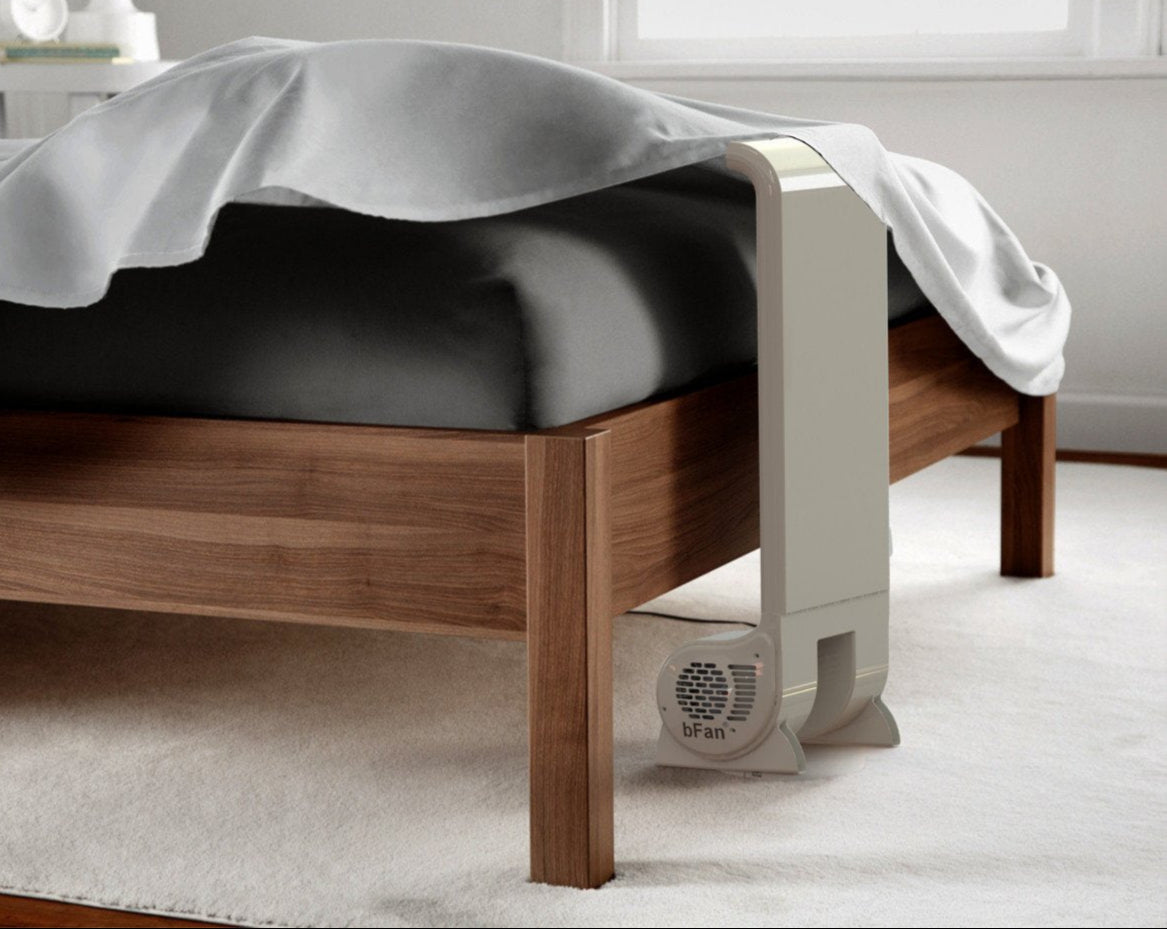
The bFan from Bedfans USA sits centered at the foot of the bed. Its two drum base rests on the floor, and a flat panel rises flush against the foot of the bed and tucks under the bedding at mattress height. The bFan's large squirrel cage blower gives it higher static pressure than other bed fans, so it pushes air under the covers effectively at any speed and the airflow fully covers you with a cooling breeze. Neither the bFan nor a BedJet lowers the air temperature; both use the air already in your room. Learn how the bFan works.
- Sound level: about 28 to 32 dB at normal operating speed
- Power use: about 18 watts on average, 24 watts maximum
- Controls: remote speed control and a sleep timer
- Couples: two bFans give each side of the bed its own airflow
- Price: $204.95, less than half the price of a BedJet, and two bFans cost less than half the price of a dual-zone BedJet
- Payment: HSA and FSA eligible, with a simple letter of medical necessity process from Bedfans USA so you can pay with your HSA or FSA card in one place
Many customers report they can raise the thermostat up to 6°F and still sleep comfortably, which helps when a partner sleeps cold.
Ready for better sleep?
The bFan sits at the foot of your bed and sends a quiet stream of air under your sheets. Direct airflow helps stop sweat before it starts, and one bFan costs less than half the price of one BedJet, making it the less expensive alternative. Shop the bFan at bedfans-usa.com
Frequently Asked Questions
How soon after starting a new medication can night sweats begin?
Medication night sweats can begin within the first few days of a new prescription, but they can also appear weeks later or only after a dose increase. The timing depends on the drug, the dose, and how your body responds. Steroids like prednisone often cause side effects soon after starting, while sweating from some antidepressants may show up as the dose is raised. Keep a log that lists each medicine, the start date, and any dose changes. That record makes it much easier for your doctor to connect the sweats to a specific medicine.
Can coming off a medication trigger night sweats?
Yes. Stopping some medicines suddenly can cause withdrawal symptoms that include sweating, chills, and trouble sleeping. This is well known with opioids, some antidepressants, and medicines like gabapentin, and it can also happen when hormone treatments are stopped. Stopping prednisone too quickly after long use can cause other serious problems, so steroids are usually tapered. Always ask your doctor how to come off a medicine safely. If you are already having sweats after stopping a drug, our article on gabapentin withdrawal night sweats has more detail.
Can pain relievers or cold remedies bought without a prescription cause night sweats?
Some can. The American Academy of Family Physicians lists fever reducers such as aspirin and acetaminophen among drugs that can cause night sweats, often because sweating is how the body releases heat as a fever breaks. Decongestants, some sleep aids, and certain supplements can affect heart rate and sleep in ways that make you notice sweating more. Because over the counter products are easy to forget, include all of them in the medicine list you bring to your doctor or pharmacist, along with the time of day you take each one.
Can thyroid medication cause excessive sweating at night?
Thyroid medication can cause excessive sweating when the dose is higher than your body needs. MedlinePlus lists excessive sweating, along with a fast heartbeat, nervousness, and trouble sleeping, among the signs that a levothyroxine dose may be too high. A primary care study also linked thyroid hormone supplements with night sweats in older adults. If you take thyroid medicine and start sweating at night, ask your doctor whether a blood test to check your thyroid levels makes sense. Do not change the dose yourself.
Are medication night sweats a sign the medicine is not working?
Usually not. Medication night sweats are a side effect, and a side effect does not mean the medicine has stopped doing its job. Many people have sweats on a medicine that is treating their condition well, such as an antidepressant that is helping their mood or a steroid that is calming inflammation. That is why the first step is a conversation with your doctor, not stopping the drug. Your doctor may keep the same medicine and change the dose or timing, or suggest another option in the same class that works for you with fewer side effects.
What should you bring to an appointment about medication night sweats?
Bring a complete list of every medicine and supplement you take, with doses, the time of day you take each one, and the date of any recent change. Add a short sleep log showing when the sweats happen, how heavy they are, the bedroom temperature, and any other symptoms such as fever or shakiness. If you have diabetes, bring your overnight glucose readings. Write down your questions ahead of time, such as whether the dose timing can change or whether another medicine in the same class might work better for you.
Resources
- Night Sweats from the NHS: Common causes of night sweats, including some antidepressants, steroids, and painkillers
- Hot Flashes and Night Sweats from the National Cancer Institute: Cancer treatments and other drugs, such as opioids and steroids, that can cause night sweats
- Night Sweats: A Systematic Review of the Literature from the Journal of the American Board of Family Medicine: A research review of what causes night sweats, including medications
- Diagnosing Night Sweats from American Family Physician: How doctors evaluate night sweats and which drug groups are commonly involved
- Prednisone from MedlinePlus: Uses, precautions, and side effects of prednisone, including increased sweating
- Levothyroxine from MedlinePlus: How thyroid hormone is taken and the signs that a dose may be too high
- Excessive Sweating (Hyperhidrosis) from the NHS: Causes of excessive sweating, including medicines, and when to see a GP
Share