
Wegovy Night Sweats: Causes and Relief
By Kurt Tompkins, Bedfans USA. Reviewed October 2026 against the FDA approved Wegovy prescribing information, MedlinePlus, NIDDK, and the NHS. This article is general information, not medical advice. Never change or stop a Wegovy dose without talking to your prescriber.
Quick answer: Wegovy night sweats are not one of the side effects listed in the FDA label for Wegovy (semaglutide), but sweating is listed as a sign of low blood sugar, and the most common side effects, such as nausea, vomiting, diarrhea, and fatigue, can change how you feel overnight. Other common causes include hormonal changes, other medications, infections, alcohol, and a bed that holds too much heat. Tell your prescriber if the sweats are new, frequent, or come with shakiness, fever, or weight loss you cannot explain.
If you started Wegovy and now wake up damp at 2 a.m., you are not imagining the disruption. Night sweats can turn decent sleep into a string of half awake, sheet kicking, pillow flipping episodes. The tricky part is that sweating at night is rarely one simple thing. With a GLP-1 medicine like Wegovy, the official side effect list matters, but so do the usual suspects: a warm bedroom, hormones, stress, alcohol, other prescriptions, and the way eating less changes your nights. This guide sorts out what is most likely, what to tell your doctor, and how to sleep more comfortably in the meantime.
If you take Ozempic for type 2 diabetes instead, our companion guide to Ozempic night sweats focuses on blood sugar lows with diabetes medication. This article focuses on Wegovy for weight management.
Can Wegovy cause night sweats?
Wegovy night sweats are not a labeled side effect, but sweating can be a sign of low blood sugar and can follow the stomach side effects that are common with semaglutide. That distinction matters, because recurring soaking sweats should not be brushed off as "just the drug" without a second look.
Wegovy is a brand of semaglutide, a GLP-1 receptor agonist. The FDA has approved Wegovy injection, taken once a week, to reduce excess body weight and keep it off long term in adults with obesity, adults with overweight and at least one weight related condition, and children 12 and older with obesity. It is also approved to lower the risk of heart attack, stroke, and cardiovascular death in adults with established heart disease and obesity or overweight, and, under accelerated approval, for a liver condition called MASH with moderate to advanced fibrosis. The FDA approved a once daily Wegovy tablet in December 2025 and a higher 7.2 mg weekly dose called Wegovy HD in March 2026.
The Wegovy prescribing information lists the most common side effects as nausea, diarrhea, vomiting, constipation, abdominal pain, headache, fatigue, indigestion, dizziness, bloating, belching, low blood sugar in people with type 2 diabetes, gas, stomach flu, acid reflux, and hair loss. Night sweats do not appear on that list. The Medication Guide does list sweating, along with shakiness, hunger, anxiety, a fast heartbeat, and dizziness, among the signs of low blood sugar.
So the honest answer is that Wegovy can be connected to night sweats indirectly. The GLP-1 effect on appetite, meals, fluids, and blood sugar can show up in the bedroom even when the medicine is not the direct cause.
How Wegovy side effects can lead to sweaty nights
The gastrointestinal side effects of Wegovy, such as nausea, vomiting, and diarrhea, can leave you dehydrated, clammy, and sleeping lightly, which makes every warm moment under the covers more noticeable. These effects are most common while the dose is going up.
Like other GLP-1 medicines, Wegovy is started low and increased slowly. Wegovy injection usually starts at 0.25 mg once a week for 4 weeks, then the dose increases every 4 weeks until you reach the maintenance dose, which for most people is 2.4 mg weekly. Many people notice that gastrointestinal side effects flare for a few days after each dose step. If your Wegovy night sweats cluster around injection day or a recent dose increase, that timing is worth writing down.
- Nausea and vomiting: Feeling sick at night often comes with sweating, flushing, and a racing heart, the same way it does with a stomach bug.
- Diarrhea and fluid loss: The Wegovy label warns that diarrhea, nausea, and vomiting may cause dehydration, which can lead to kidney problems. Dehydration can also leave you lightheaded and restless overnight.
- Constipation and bloating: Abdominal discomfort can break up sleep, so you wake more often and notice heat you would usually sleep through.
- Fatigue: Fatigue is one of the common side effects in the label. Tired, light sleep tends to be fragmented sleep, which makes sweaty awakenings feel worse.
- Reflux: Acid reflux is listed as a common side effect, and nighttime reflux is a known trigger for waking up hot and uncomfortable.
Most of these side effects improve as your body adjusts, but tell your prescriber if they are severe or do not settle. The FDA label also warns about severe gastrointestinal reactions, so ongoing vomiting or being unable to keep fluids down needs a call, not a wait.
Low blood sugar and Wegovy night sweats
Low blood sugar is the first thing to rule out when Wegovy night sweats come with shakiness, hunger, anxiety, or a pounding heart. The risk is much higher if you also have type 2 diabetes and use insulin or a sulfonylurea.
The Wegovy Medication Guide says low blood sugar can be a serious and common side effect in people with type 2 diabetes, especially those who also take insulin or a sulfonylurea. People without diabetes have a much lower risk, but eating far less than usual, skipping an evening meal, drinking alcohol, or exercising late in the day can still change how you feel overnight, especially when the GLP-1 effect on appetite makes it easy to skip food without noticing. The National Institute of Diabetes and Digestive and Kidney Diseases says low blood glucose during sleep can cause sweating that dampens pajamas or sheets, nightmares, and confusion on waking.

Clues that make a nighttime low more likely include:
- Clammy, sudden sweating rather than a slow buildup of warmth
- Shakiness or a jittery, buzzing feeling
- A sudden anxious or panicky feeling when you wake
- Blurred vision, headache, or weakness in the morning
- A fast heartbeat that settles after you eat something
If that pattern sounds familiar, contact your prescriber and bring any glucose readings you have. If you feel faint, confused, or cannot eat or drink, get medical help right away.
Hormonal changes and other causes of night sweats on semaglutide
Many Wegovy night sweats have causes that have nothing to do with semaglutide itself, and hormonal changes are near the top of the list. The NHS describes night sweats as waking with soaked nightclothes or bedding even when the room is cool, and lists menopause, anxiety, some medicines, low blood sugar, alcohol, and a harmless condition called hyperhidrosis among the most common reasons.
- Hormones and menopause: Perimenopause and menopause are among the most common reasons for night sweats in midlife, and many people start a GLP-1 medicine in the same years. A GLP-1 medicine is not a hormone treatment for menopause, so those symptoms need their own conversation. Thyroid problems are another hormonal cause worth checking.
- Other medications: Some antidepressants, steroids, pain relievers, and diabetes medicines can cause sweating. See our guide to medications that contribute to night sweats.
- Sleep apnea: Obstructive sleep apnea is linked with night sweats and is common in people with obesity.
- Infections: Fever related sweating can begin before other symptoms are obvious.
- Alcohol, caffeine, and spicy food: All three can make you feel warmer at night.
- Bedroom heat: Heavy comforters, foam that traps heat, and warm sleepwear hold body heat against your skin all night.
Weight management itself changes your routine. Smaller meals, new meal timing, more exercise, and a new focus on your body can all make you notice nighttime symptoms you used to sleep through. Timing alone does not prove that Wegovy is the cause, which is why a few nights of notes help.
When should you call a doctor about Wegovy night sweats?
Call your prescriber if Wegovy night sweats are new, drenching, getting worse, or come with other symptoms. Do not stop or skip doses on your own.
- Repeated episodes with shakiness, hunger, or palpitations
- Fever, cough, or weight loss beyond what you and your doctor expect
- Vomiting or diarrhea that keeps you from holding down fluids
- Severe stomach pain that does not go away, with or without vomiting, which the label lists as a possible sign of pancreatitis
- Signs of an allergic reaction such as swelling of the face or throat, trouble breathing, severe rash, fainting, or a very rapid heartbeat, which need emergency care
Your doctor may review your GLP-1 dose schedule, your other medicines, and your eating pattern, or look for another cause. Our page on when to see a doctor for night sweats covers general warning signs.
How to track Wegovy night sweats for your appointment
A simple two week log turns guesswork into a pattern your care team can use. A notes app works fine.
Write down the day and time of your weekly dose, any recent dose increase, what time you last ate, whether you had alcohol, how much fluid you drank, the bedroom temperature, the bedding you used, and when the sweating happened. Note any nausea, vomiting, constipation, or fatigue that day, since GLP-1 side effects often show up in the days after a dose. If you have diabetes and use a glucose meter or continuous glucose monitor, add the overnight trend. Patterns such as sweats on the two nights after injection day, or only after skipped dinners, give your prescriber something concrete to work with.
How to sleep cooler while you sort out the cause
The goal is less trapped heat under the covers, not a freezing bedroom. The Sleep Foundation puts the best bedroom temperature for most adults at about 65°F.
- Bedding: Use lighter layers and skip heavy, insulating comforters. Our guide to cooling sheets explains what to look for.
- Sheets: Choose a tight weave, which helps air travel across your body under the covers.
- Fluids: Sip water through the day, especially on days with nausea or diarrhea, and keep a glass by the bed.
- Evening routine: Ease up on alcohol, spicy food, and late caffeine if they seem to trigger episodes.
- Airflow in the bed: A ceiling fan helps the room, but it does little for heat trapped under a blanket.
Can a bed fan help with Wegovy night sweats?
A bed fan cannot fix the medical cause, but it can make sweaty nights more comfortable by moving room air under your sheets. Direct airflow helps stop sweat before it starts while you adjust to a GLP-1 medicine and work out with your doctor what is behind the sweating.
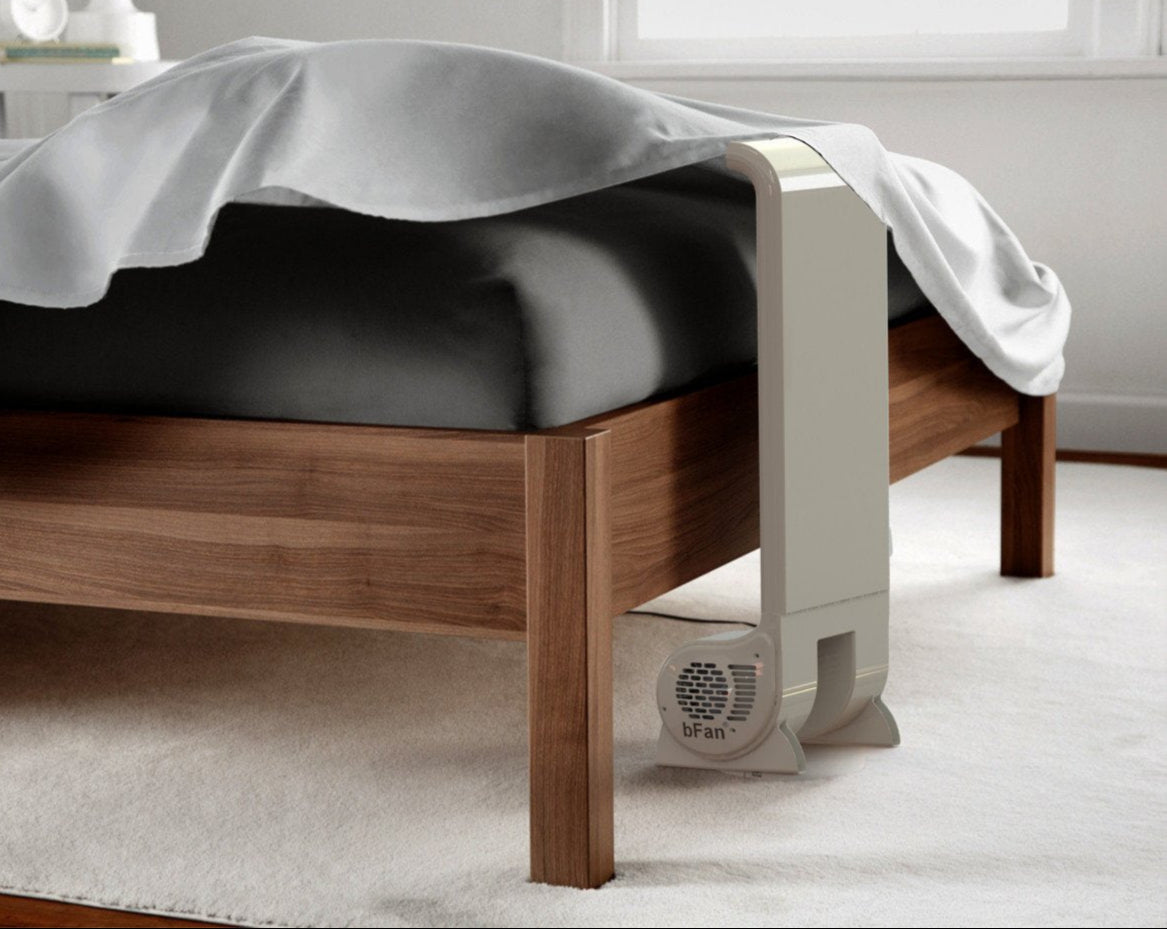
The bFan from Bedfans USA sits centered at the foot of the bed, with its two drum base on the floor and a flat panel tucked under the bedding at mattress height. It moves trapped heat and humidity out from under the covers near your shoulders. Neither the bFan nor a BedJet lowers the air temperature; both use the air already in your room. Learn more on how the bFan works.
- Sound level: about 28 to 32 dB at normal operating speed
- Power use: about 18 watts on average, 24 watts maximum
- Controls: remote speed control and a sleep timer
- Couples: two bFans give each side of the bed its own airflow
- Price: $204.95, less than half the price of a BedJet, and two bFans cost less than half the price of a dual zone BedJet
- Payment: HSA and FSA cards accepted
Many customers report they can raise the thermostat up to 6°F and still sleep comfortably, which helps when a partner sleeps cold.
Ready for better sleep?
The bFan sits at the foot of your bed and sends a quiet stream of air under your sheets. Direct airflow helps stop sweat before it starts, and one bFan costs less than half the price of one BedJet, making it the less expensive alternative. Shop the bFan at bedfans-usa.com
Frequently Asked Questions
Are Wegovy night sweats worse after a dose increase?
Some people notice more side effects in the days after a Wegovy dose increase, and night sweats can follow if nausea, vomiting, or eating much less leaves you unsettled overnight. The prescribing information builds the dose up every 4 weeks partly to reduce gastrointestinal side effects. If your sweats cluster around injection day or a new dose step, write that down and share it with your prescriber. They may suggest staying at a dose longer before moving up. Never skip or change a dose on your own without their advice.
Can Wegovy cause low blood sugar if you do not have diabetes?
Low blood sugar is mainly a concern for people with type 2 diabetes who take Wegovy along with insulin or a sulfonylurea, and the FDA label warns about it in that group. People without diabetes have a much lower risk, but very low food intake, skipped meals, alcohol, or hard exercise late in the day can still make you feel shaky or sweaty. If you notice sweating with hunger, a racing heart, or anxiety at night, eat something and call your prescriber. A quick fingerstick check, if your doctor recommends one, can confirm what is happening.
Can Wegovy affect hormones or menopause symptoms?
Wegovy acts on GLP-1 receptors that help regulate appetite and digestion, and it is not a hormone therapy for menopause. Weight loss can change many things in the body, and many people start Wegovy during perimenopause, when hot flashes and night sweats are already common. That overlap can make it hard to tell what is causing the sweating. If you are in midlife and your sweats come in waves with flushing, mention menopause to your doctor too, because there are separate options for those symptoms that your care team can review with you.
Is fatigue on Wegovy connected to night sweats?
Fatigue is listed among the common side effects of Wegovy, and it can be connected to night sweats in both directions. Sweaty, broken sleep leaves you tired the next day, and being run down from eating less or losing fluids can make sleep lighter, so you wake to every warm spell. Eating enough protein, drinking fluids, and keeping a regular bedtime often helps. If fatigue is severe, comes with dizziness, or does not improve after the dose stabilizes, ask your prescriber to check for dehydration, low blood sugar, or another cause.
Do Wegovy tablets have the same side effects as the injection?
Wegovy tablets contain semaglutide, the same GLP-1 medicine as the weekly injection, and the FDA label lists a similar set of common side effects, including nausea, diarrhea, vomiting, constipation, and abdominal pain. The tablets are taken once a day in the morning on an empty stomach with up to 4 ounces of water, and the dose is increased every 30 days. Because the active ingredient is the same, the same questions about night sweats apply. Track your symptoms after each dose step and share the notes with your prescriber, whichever form you use.
How do you report a Wegovy side effect to the FDA?
You can report a suspected side effect from Wegovy to the FDA through its MedWatch program online at fda.gov/medwatch or by calling 1 800 FDA 1088, as listed in the Wegovy prescribing information. You can also report it to the manufacturer, Novo Nordisk. Reporting helps the FDA track side effects that may not have shown up in clinical trials. Tell your own prescriber first, though, because a report does not replace medical advice. Bring your sleep log so your care team can decide whether the medicine, the dose, or something else is behind it.
Resources
- Wegovy prescribing information and Medication Guide: the FDA approved label listing uses, dose schedule, common side effects, and low blood sugar warning signs including sweating.
- FDA announcement approving Wegovy HD: explains the March 2026 approval of the higher 7.2 mg weekly dose of semaglutide for weight management.
- MedlinePlus drug information for semaglutide injection: covers how semaglutide is used, common side effects such as nausea and constipation, and when to call a doctor.
- NIDDK guide to low blood glucose: describes nighttime hypoglycemia signs such as damp pajamas or sheets, nightmares, and confusion on waking.
- NHS overview of night sweats: defines night sweats and lists common causes such as menopause, anxiety, medicines, low blood sugar, and hyperhidrosis.
- FDA MedWatch safety reporting program: explains how patients and caregivers can report a suspected side effect from a medicine to the FDA.
- Sleep Foundation guide to the best temperature for sleep: explains why a bedroom around 65°F supports better sleep.
Share