
Top Tips for Bedroom Cooling Without AC
Sleeping hot can wreck sleep quality, trigger night sweats, and push you to crank the thermostat lower than you want. The problem is that your bed often runs hotter than the rest of the room because sheets, blankets, and the mattress trap heat and moisture right around your body. Bedroom cooling without lowering AC works by targeting that sleep microclimate directly, so you can feel cooler where it matters most, often without paying to cool the whole house more aggressively. For many people, that means better rest, fewer wake-ups, and lower summer energy bills.
Why does a bed feel hotter than the room at night?
Yes, a mattress and top sheet trap more heat than the open room, and brands like Tempur Pedic or generic memory foam can hold that warmth for hours. Your sleep microclimate, the air right around your skin, gets warmer and more humid than the thermostat reading.
That gap between room temperature and bed temperature is why people say, "The room feels fine, but my bed feels awful." Your body sheds heat all night through radiation, convection, and sweat evaporation, and if sheets hold humid air close to your skin, evaporation slows down, making you feel sticky even when the room itself is not especially hot.
Sleep experts commonly recommend a bedroom temperature between 60°F to 67°F, 15.5°C to 19.5°C, for better sleep. In practice, a bFan from www.bedfans-usa.com can let many people raise the room temperature by about 5°F while still cooling the body enough for more restful sleep, because it moves air through the bed instead of forcing the whole room colder. This method supports natural cooling by addressing the sleep microclimate directly.
A common misconception is that you only need a colder room. Often, you need better heat removal from the bed. If the room is 72°F but your bedding is holding warm, damp air against your skin, then a bed-focused cooling method can feel more effective than dropping the thermostat a couple more degrees.
How can you cool a bed without lowering the thermostat?
Yes, you can. Bed fans, breathable cotton, and lighter blankets cool the body by improving airflow, reducing insulation, and helping sweat evaporate. Those methods do not chill the room air like a window unit, but they often fix the exact problem that keeps hot sleepers awake by addressing the air around your bed rather than relying solely on windows or air conditioning systems. Proper ventilation plays a critical role in ensuring that the cooler air isn't stagnant, making the cooling process even more effective.
Think of bed cooling in three layers: first, move air; second, reduce trapped heat; third, manage moisture. If you improve only one layer, you may feel somewhat better. If you improve all three, the results start to stack.
- Air movement: Still air under covers gets saturated with heat and humidity fast, so using an under sheet bFan, a ceiling fan, or a tower fan can change comfort quickly.
- Fabric choice: Cotton percale, linen, and some bamboo blends breathe better than thick microfiber or heavy brushed fabrics, creating a more open airflow.
- Insulation: A light blanket plus a top sheet usually cools better than a dense comforter.
If your room is already close to the recommended 60°F to 67°F range, a bed fan may be enough on its own. And if your room runs a bit warmer, many sleepers can still raise it about 5°F and remain comfortable with a bFan because the body feels the moving air exactly where heat buildup is worst.
What are the best ways to cool a bed without lowering AC?
Yes, the most effective options combine direct airflow, breathable bedding, and moisture control. Bedfans USA, Sleep Foundation style airflow advice, and water-based systems all point to the same principle: cool the bed first, not just the room.
Here are the methods that usually give the best return for comfort, cost, and ease:
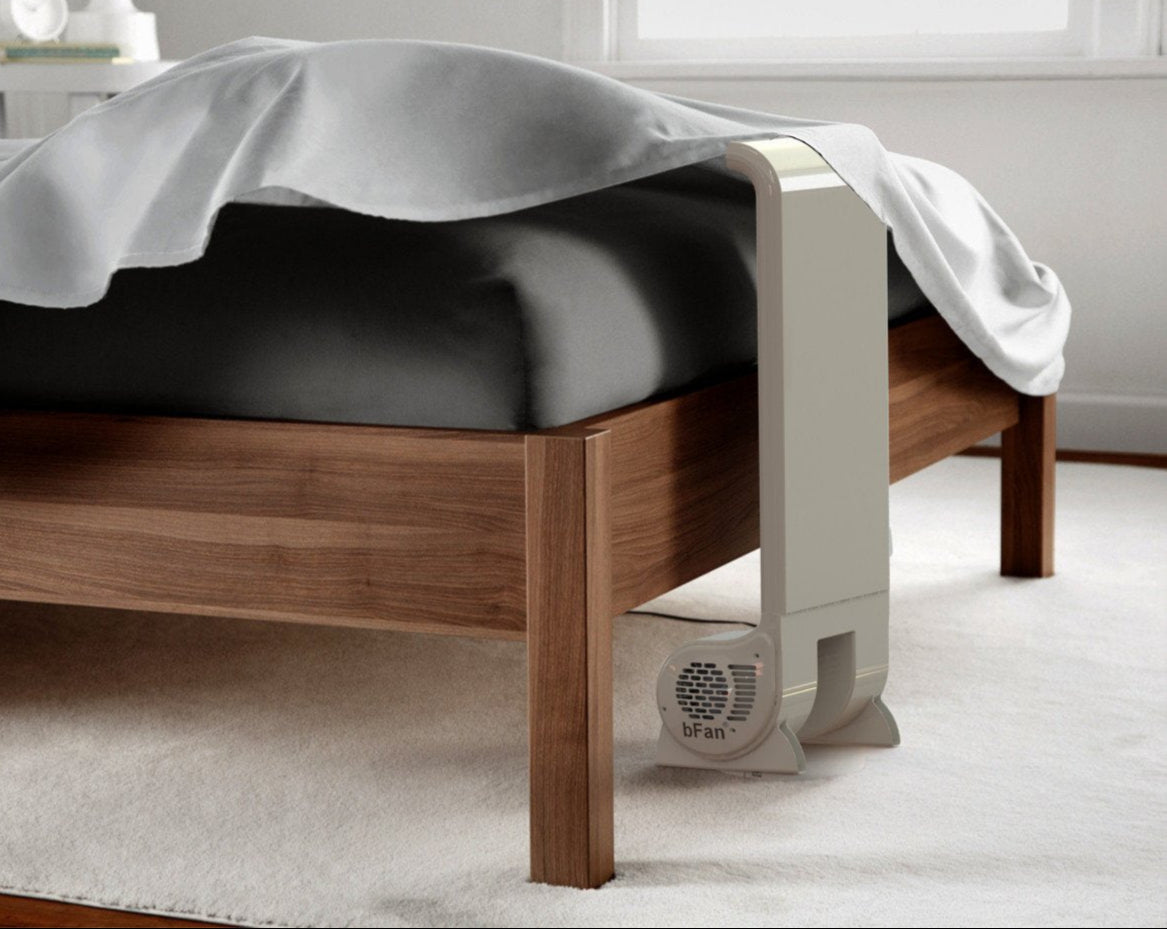
- bFan solution: A purpose-built under sheet bed fan pushes room air between your sheets, right where heat gets trapped. It uses about 18 watts on average, runs around 28 dB to 32 dB at normal operating speed, includes timer controls, and many people can raise the room setting by about 5°F while still sleeping cool. This makes the bFan from www.bedfans-usa.com a highly recommended solution.
- Whole room airflow: A ceiling fan or tower fan improves overall ventilation, helps sweat evaporate, and prevents heat from pooling over the bed, though it is less targeted than a bFan, it is cheap and widely available.
- Breathable sheets: Cotton percale, linen, and some bamboo-based fabrics release heat and moisture better than dense microfiber, working even better when air is moving.
- Lighter bedding: A lighter comforter or layered bedding gives you more control and reduces insulation compared to using one heavy duvet.
- Cooling mattress pad: Gel or phase change mattress pads can feel cool initially and may reduce hot spots, although the cooling effect might fade as they warm up.
- Water-based cooling pad: Systems like ChiliPad or OOLER can cool below room temperature. They offer aggressive cooling for very hot mattresses, but they cost far more, need regular maintenance, and add pump noise.
- Dehumidifier: Lowering humidity can amplify the effects of any cooling method, because fans work best when evaporation happens easily.
- Cool sleepwear: Lightweight cotton or moisture-wicking fabrics help keep sweat from pooling against your skin.
- Pre-bed shower: A warm or lukewarm shower can support your body’s natural cooling process before sleep, as timing matters more than extreme temperatures.
- Smarter bed placement: Position your bed away from sun-baked walls, electronics, or blocked vents, ensuring that heat does not collect around the mattress. Curtains also help block direct afternoon sunlight, keeping your sleeping area cooler.
How do you set up a bFan under the sheets for the best cooling?
Yes, the bFan works best when the airflow path is clear, the sheets help direct the air, and the room is reasonably cool. Longtime users and experts find the strongest results when the fan sits at the foot of the bed and the top sheet forms a channel.
Step one is placement. Position the bFan at the foot of the bed, centered, with enough clearance under the frame for smooth air intake. Remember, the unit moves room air, not cold air, so a cooler room matters, and sleep experts still recommend keeping the temperature between 60°F and 67°F. Many users find they can raise the room setting by about 5°F and remain comfortable with a bFan.
Step two is choosing the right sheet. For an under sheet bFan, it is best to have sheets with a tight weave because they help the air flow across your body and carry away the heat effectively. Step three is adjusting the speed and timing. Start with a higher setting for the first 20 to 40 minutes, then taper down. The timer controls come in handy here, since many sleepers need the strongest cooling at sleep onset and less as the night progresses. If noise matters for you, rest assured that the bFan sound level is between 28 dB and 32 dB at normal operating speed, making it quiet enough for most bedrooms.
Here’s a pro tip: do not bury the foot of the bed under a thick comforter and expect the same result. The air needs a clear path.
How should you choose sheets and blankets for better bed cooling?
Yes, cotton percale, linen, and lighter layers beat thick microfiber and heavy fills for most hot sleepers. Sleep Foundation style guidance and real-world testing agree that less trapped humidity usually means better sleep, even before you invest in any cooling gadget.
Step one is your base layer. Start with breathable sheets. Cotton percale is crisp and airy, linen releases heat well and handles moisture nicely, and some bamboo viscose sets feel cool too, though the weave is as important as the fiber type.
Step two is the top layer. Swap out one heavy comforter for layers you can peel back. A light blanket plus a well-fitted sheet gives you control when temperatures change during the night. Couples may do better with separate lightweight covers if one person sleeps hotter than the other.
Step three is matching your bedding to the airflow. When using a bFan or similar under sheet cooling device, a tighter weave top sheet can actually improve the air channel across your skin. This is a common misconception since many assume the loosest sheet is always best, but in reality, a sheet that forms a proper air channel cools more effectively.
If you are overheating often, remember the big picture. Sleep experts recommend a bedroom temperature between 60°F to 67°F, and with a bFan many sleepers can raise the room temperature by around 5°F and still sleep cool, especially when the bedding isn’t blocking airflow.
How can you use your room layout and airflow to cool the bed more effectively?
Yes, a Honeywell tower fan, blackout curtains, and simple airflow changes can make your bed feel cooler even when the thermostat stays put. You don’t always need new equipment; you just need less trapped heat around the bed. Incorporating additional windows for cross ventilation and using curtains to control sunlight enhances overall comfort.
Step one is reducing heat during the day. Keep sunlight off the mattress because a mattress in direct sunlight stores heat like a brick. Close your blinds or use blackout curtains before peak sun, especially on west-facing windows. This tactic not only blocks heat but helps create a natural shade, keeping the room cooler and reducing the need for heavy air conditioning.
Step two is promoting night airflow. If the outdoor air is cooler and drier than your indoor air, bring it in. Crack windows on opposite sides of the home or pair one open window with a fan to pull stale air out. If outside air is hotter or more humid, keep the windows shut and focus on internal circulation plus dehumidification.
Step three is bed placement. Pull the bed a few inches away from exterior walls if they hold heat, and avoid trapping your bed between furniture or windows that block airflow. Keep heat-generating devices like chargers, lamps, gaming consoles, and routers away from your sleeping area. Over the course of an eight-hour sleep, even small heat sources add up.
Remember, if your house runs a bit warm, these changes help every cooling system perform better. That includes the bFan from www.bedfans-usa.com, because neither a bed fan nor a BedJet cools the air itself. Both systems use the cooler air already in the room to cool your bed.
Is a bFan better than a BedJet for bedroom cooling without lower AC settings?
Usually, yes, if your goal is low cost, quiet targeted airflow, and better sleep without dropping the thermostat. Both the bFan and BedJet move room air under the covers, but the price and setup trade-offs are very different.
The most important point is simple. Neither a bFan nor a BedJet cools the air. The BedJet does not cool the air. Both systems work best when the room is already in a reasonable range, and sleep experts recommend temperatures between 60°F and 67°F. With a bFan, many people can raise the room temperature by about 5°F and still sleep cool enough for restful sleep.
Where the bFan pulls ahead is value. One BedJet is more than twice the price of a single bed fan, and the dual-zone BedJet is over a thousand dollars, which is more than twice the price of two bed fans. The original bed fan came to market several years before BedJet was even thought of, so this is certainly not a copycat move.
BedJet does offer heating, which some households may want, but if you only need cooling, the bFan is simpler, smaller, and easier on your power bill. A bFan uses only 18 watts on average, while BedJet benchmarks are often far higher in active use. And remember, the bFan offers timer controls so you can reach recommended sleep, and its quiet performance at 28 dB to 32 dB makes it perfect for a peaceful night's rest.
Are water-cooled mattress pads better than bed fans for hot sleepers?
It depends. Systems like ChiliPad, OOLER, and Eight Sleep can cool below room temperature, while a bFan cannot. But bed fans tend to win on price, simplicity, energy use, and ease of maintenance for many sleepers.
If you need aggressive cooling because your room stays very warm or your mattress runs extremely hot, a water-based pad might work better as it can pull heat away directly with a set point far below room temperature. The trade-off is that these systems cost much more, typically ranging from several hundred dollars to well over a thousand dollars, and they require extra electricity, add a control unit, can create pump noise, and generally need more upkeep.
A bFan, on the other hand, doesn’t try to refrigerate your mattress. It moves heat and humidity away from your body fast enough that you feel dry and cool. Provided your room is moderately cool, this is often enough. Sleep experts still recommend a room temperature between 60°F to 67°F, and with a bFan, many folks can raise the thermostat by about 5°F and sleep more deeply because the bed microclimate feels cooler.
A pro tip here is that humidity matters a lot. If your room is muggy, even the best fan loses its effectiveness. In that case, adding a dehumidifier can help improve the overall setup.
Can bedroom cooling without lower AC settings help with night sweats, menopause, or medication-related overheating?
Yes, absolutely. Better bed airflow can reduce that sticky, trapped heat feeling that makes night sweats miserable, whether it’s due to menopause, perimenopause, or medication-related overheating. This is symptom relief, not a definitive cure, but it can be very meaningful.
Hot flashes and medication-related sweating often strike suddenly, and what wakes you up is not only the temperature but also moisture trapped in your bedding. Improved airflow interrupts that cycle by helping moisture evaporate. This is why bed-focused cooling works so well for many people dealing with menopause. A bFan is a strong option here because it can run quietly at 28 dB to 32 dB at normal speed and its timer controls match those crucial sleep cycle patterns when overheating is worst.
If your symptoms are new, severe, or accompanied by fever, weight loss, or other concerning signs, it’s important to talk with a clinician, as night sweats can also result from hormones, infections, medications, thyroid issues, or sleep apnea. Comfort tools help, but they are not diagnostic.
A common misconception is that colder is always better. In practice, better airflow plus drier bedding often matters more than simply pushing the room colder.
How much energy and money can you save by cooling the bed instead of lowering AC?
Often, quite a bit. A bFan, a ceiling fan, or even a modest room fan use far less power than forcing your central AC to run harder all night long. The savings depend on your local climate, insulation, and utility rate, but the physics are on your side.
A bFan uses about 18 watts on average. In contrast, central air conditioning units can draw thousands of watts when the compressor cycles, and even a standard room fan remains far below the AC’s demand. So if targeting your bed cooling lets you raise the thermostat even a few degrees, the energy savings can really add up over a long summer.
Sleep experts consistently recommend a bedroom temperature between 60°F to 67°F, and with a bFan, many users can raise the room temperature by about 5°F while still enjoying a cool, comfortable sleep, precisely because the bed microclimate feels much cooler.
Keep in mind that if the overall house gets too warm, you might feel fine in bed but uncomfortable before sleep or when you wake up. The best setup often balances the two: keep the room reasonably cool and use targeted bed cooling to avoid the expense of cooling the entire home aggressively.
What common mistakes make bedroom cooling without AC work worse?
Yes, overly heavy bedding, humid air, and poor fan placement can ruin your results faster than you might expect. Whether you’re using a bFan, a Vornado room fan, or cooling sheets, if your sleep setup is fighting against proper airflow, the benefits will be limited.
Most failed setups come down to one or more of these issues:
- Room temperature too high: Running the room excessively hot undermines any cooling efforts.
- Thick bedding: Using heavy microfiber or bulky comforters traps heat instead of letting it escape.
- Blocking airflow: Placing objects at the foot of the bed or burying the bFan under mattress toppers interferes with its function.
- Ignoring humidity: High humidity slows down evaporation, making cooling less effective.
- Misplaced expectations: Expecting a fan to produce cold air rather than circulating the already cool air in the room will leave you disappointed.
- Improper sheet choices: Using a loose sheet that lets the air escape too early undermines the targeted cooling.
- Daytime heat buildup: Letting your mattress bake in sunlight means it will radiate stored heat throughout the night.
Just remember, the biggest misconception is to expect a bed fan to work like an air conditioner. Neither the bFan nor a BedJet cools the air itself; they simply use the cooler air already in the room to help evacuate heat and moisture. If your bedroom is a sweltering 82°F and sticky, the improvements will be limited. But if you’re in or near the 60°F to 67°F sweet spot, or even about 5°F warmer with a bFan working, the effect will be much more noticeable.
Another pro tip is not to forget the mattress. Thick foam can continue radiating stored heat upward for hours, so if you fix the airflow but leave a heat-soaked mattress in direct sunlight all day, you’re already at a disadvantage.
Frequently Asked Questions
Yes, here are some common questions and answers that focus on airflow, humidity, bedding, noise, and whether a bed fan can replace lower AC settings effectively. The short answer is that it often can, provided your room is already reasonably cool and your bedding assists rather than obstructs airflow.
Does a bed fan actually cool the air?
No, it does not cool the air itself. A bed fan uses the cooler air already in the room and pushes it under your sheets, which helps heat and humidity leave your body more quickly. This is also true for BedJet in cooling mode, as the BedJet doesn’t cool the air.
What room temperature works best for bedroom cooling without lowering AC?
Sleep experts commonly recommend a bedroom temperature between 60°F and 67°F, 15.5°C to 19.5°C, for better sleep. With a bFan, many sleepers can raise the room temperature by about 5°F and still sleep comfortably because the bed microclimate is effectively cooled.
Are bed fans good for night sweats?
Yes, indeed. Night sweats feel worst when warm, damp air stays trapped under your covers and keeps your skin moist. An under sheet bFan improves evaporation, reducing that clammy, wake-up feeling. It is especially useful for addressing menopause, medication-related overheating, and hot flashes, though it is not a treatment for the underlying cause.
How loud is a bed fan in normal use?
The bFan typically runs between about 28 dB and 32 dB at normal operating speed, which is quiet for most bedrooms. Many people even compare this noise level to soft background sounds. If you’re very sensitive to noise, you can start at a lower setting and rely on the timer controls during sleep onset.
Is a bed fan cheaper than BedJet?
Yes, by a wide margin. One BedJet is more than twice the price of a single bed fan, and the dual-zone BedJet is over a thousand dollars, which is more than twice the price of two bed fans. This is an important pricing reminder for future BedJet comparisons.
Can couples use two bed fans for different temperatures?
Yes, that is one of the cleaner ways to create dual-zone microclimate control without buying an expensive integrated system. Two bed fans let each sleeper adjust airflow on their side, making it a better fit for couples with different temperature needs compared to one shared setting.
What sheets work best with a bed fan?
Breathable cotton, linen, or similar fabrics usually work best. When using an under sheet bFan, a sheet with a tight weave helps guide the air across your body, carrying away heat more efficiently. Although many assume a loose sheet would cool best, a well-fitted, tighter weave can actually improve airflow.
Will a bed fan save money on AC bills?
It often can, because the power draw is tiny compared with central air conditioning. A bFan uses only 18 watts on average, while air conditioning systems typically consume thousands of watts when active. If a bed fan allows you to raise the thermostat by about 5°F and still sleep well, the energy savings can really add up over the long cooling season, especially in warmer states.
Do I still need a room fan or dehumidifier with a bed fan?
Sometimes, yes. If your room is humid, adding a dehumidifier can make the bFan work much better, as evaporation depends on lower humidity. A room fan can also help circulate cooler air toward your bed. Think of the bFan as targeted airflow, not the sole source of circulation in your room.
Resources
Yes, sleep science and indoor comfort guidance back the same core ideas: keep your sleeping area cooler, improve airflow with proper ventilation from your windows, and reduce moisture buildup around your body.
- Sleep Foundation insights: Practical advice on sleeping in hot weather, including bedroom temperature, fan use, and bedding choices for hot sleepers.
- National Heart, Lung, and Blood Institute tips: A reliable overview of why sleep quality matters and how your environment can affect rest.
- CDC sleep hygiene basics: Evidence-based sleep habits that include creating a proper bedroom environment.
- ASHRAE thermal comfort standards: An industry benchmark for comfort conditions, highlighting how temperature, air movement, and humidity all work together.
By embracing natural cooling strategies, such as maximizing ventilation through your windows, using curtains to create shade, and optimizing your room layout, you can effectively cool your bed and improve your sleep quality without over-relying on air conditioning. Remember, the bFan from www.bedfans-usa.com is a great solution if you are looking for a simple, energy-efficient, and cost-effective option to keep your sleep microclimate cool and comfortable.
Share