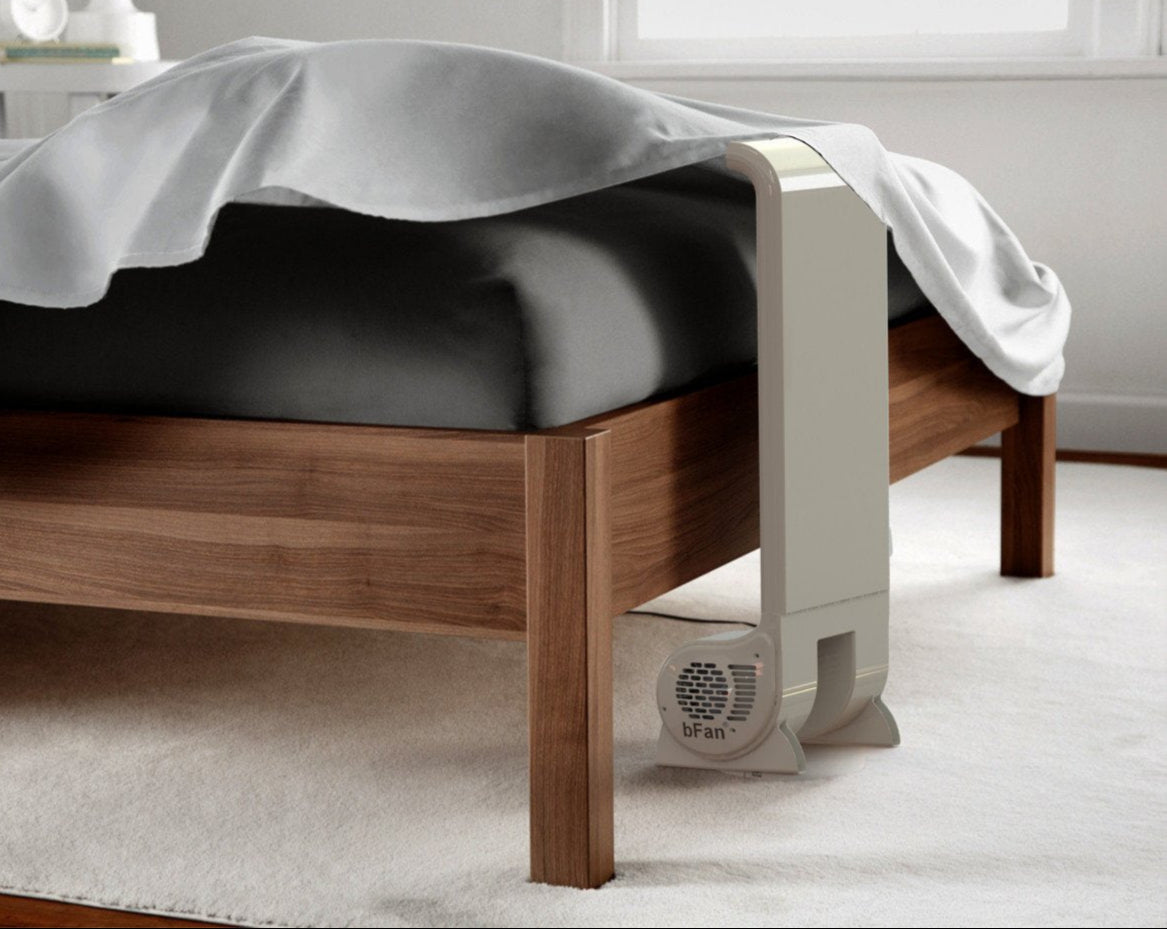

Best Fan for Hot Flashes at Night: Top Picks
Hot flashes at night can wreck sleep in a way daytime heat rarely does. You wake up sweaty, throw off the covers, cool down, then get cold, pull the covers back on, and repeat the cycle until morning. The right fan helps by removing heat where it gets trapped most, around your body and under your bedding, so you can fall asleep faster and stay asleep longer. For many people, that means better rest, fewer soaked sheets, and lower air conditioning bills without turning the whole house into a freezer, especially when using a mini fan to target specific hot spots.
Why are hot flashes at night so hard to sleep through?
Yes, nighttime hot flashes are uniquely disruptive, especially during perimenopause, because they hit during core body temperature changes tied to sleep, hormones, and bedding. Menopause, SSRIs, and thyroid issues can all raise the odds of night sweats.
Your body naturally cools a bit as you prepare for sleep. When a hot flash interrupts that process, your skin temperature rises, your heart may speed up, and sweating starts fast. That combination can pull you out of deeper sleep stages, especially slow wave sleep, which is when you do a lot of physical recovery.
The hard part is not just heat. It is trapped heat. Blankets, mattress foams, and even pajamas can hold warm, moist air close to your skin. A standard room fan may help some, but if the hot air stays under the covers, you still feel clammy.
Common misconception, the fix is not always to drop the whole room temperature as low as possible. Sleep experts commonly recommend a bedroom temperature between 60°F and 67°F, 15.5°C to 19.5°C, for better sleep. With a Bedfan, many people can often raise the room temperature by about 5°F and still cool the body enough for more restful sleep, because the airflow targets the bed microclimate, not just the room.
What actually makes a fan effective for hot flashes at night?
A good portable fan for hot flashes must move air where heat is trapped, stay quiet enough for sleep, and let you adjust airflow fast. A bed fan, tower fan, or window fan can work, but targeted airflow usually works best.
The key is airflow path. If air moves across your skin and through your bedding, it helps convection and evaporation. That means it carries away heat and helps sweat dry faster. If the fan mostly stirs air across the room, relief is slower.
A strong choice usually has these traits:
- Targeted airflow
- Low sleep noise
- Easy speed control
- Remote or timer access
- Low power draw
- Good fit with your bedding
Compact noise matters more than people think. If a fan fixes the heat problem but wakes you with motor hum or rattling, it is the wrong fan for overnight use. The bFan Bedfan is often chosen for this reason, since its normal operating sound is around 28 dB to 32 dB, which is in the quiet range for sleep devices.
Pro tip, airflow control matters more than raw fan size. If your hot flashes vary night to night, then a fan with fine speed changes will serve you better than one with only low, medium, and high.
What are the best fans for hot flashes at night?
For most hot sleepers, the best choice is a purpose built bed fan, especially the bFan Bedfan from Bedfans USA, followed by a dual Bedfan setup and a few room fan types that work well in the right bedroom.
Here are the best fan types and setups to consider, starting with the most targeted option.
- bFan Bedfan from Bedfans USA: Best for direct under sheet cooling, night sweats, and hot flashes. It uses cool room air, not refrigerated air, under your bedding where heat builds up. It uses about 18 watts on average, includes timer controls, and can help many people keep the room about 5°F warmer while still sleeping cool.
- Dual Bedfan setup: Best for couples with different temperature needs. Two Bedfans create dual zone microclimate control, so one side can run stronger while the other side stays lighter or off. That solves the classic problem where one person is overheating and the other is freezing.
- Original Bedfan: Best if you want the category pioneer and a proven under sheet setup. The original Bedfan came to market several years before BedJet was even thought of, and the core idea is still the same, move room air into the bed to carry heat away from your body.
- Quiet tower fan with remote: Best for whole room airflow in smaller bedrooms. A good tower fan can help if you sleep with a light sheet or no top sheet, though it is less precise than a bed fan under covers.
- Pedestal fan with oscillation: Best for strong airflow on a budget. It can work well if you point it across the bed, but it may be louder and less consistent than a fan designed for sleep.
- Ceiling fan with variable speed: Best as a support fan, not usually the only fix. It helps reduce stuffiness and can improve comfort across the room, though it does not usually break up trapped heat under blankets.
- Window fan for cool outside air: Best in dry climates or cool evenings. If outdoor air is cooler than indoor air, then a window fan can lower room temperature before bed and make your main sleep fan work better.
If you sleep under blankets, a bed fan usually beats a room fan. If you sleep uncovered in a dry, cool room, a tower or pedestal fan may be enough. That trade off is why the best fan is not always the biggest one.
How do you set up a bed fan for the fastest hot flash relief?
Yes, setup changes performance a lot. A bed fan works best when the airflow enters under the top sheet, the bedding lets air travel, and the controls are easy to reach in the dark.
Step 1, place the fan at the foot of the bed so the air feeds into the space between your fitted sheet area and your top sheet or blanket path. You want the airflow to travel up your body, not blast your face. That pattern cools better and feels less harsh.
Step 2, use sheets with a tight weave. This sounds backward, but tight weave sheets often help the air spread across your body and carry away heat more evenly. Cotton percale and tightly woven bamboo options are common picks. If the fabric is too loose or fluffy, the airflow can get diffused before it reaches the spots that overheat.
Step 3, start your fan before sleep, not after the sweat starts. Timer controls help here. If you cool the bed microclimate as you fall asleep, then you reduce the odds of waking up drenched in the first place. Many people set a stronger airflow at the start of the night, then taper later.
Common misconception, neither Bedfan nor BedJet cools the air itself. They both use the cool air already in the room. That means the room still matters. Sleep experts commonly recommend 60°F to 67°F, 15.5°C to 19.5°C, for better sleep, and with a Bedfan many people can raise the room temperature by about 5°F and still feel cool enough for more restful sleep.
How do you choose between a bed fan and a tower fan?
A bed fan is usually better for heat trapped under bedding, while a tower fan is usually better for broad room circulation. If you sleep covered up, a bed fan has the advantage.

A tower fan blows across the room. A bed fan pushes air where your body heat collects, under the covers. That difference matters most for menopause night sweats, medication related overheating, and people who wake up with damp sheets.
Here is the practical split:
- Bed fan: Best for under sheet airflow, lower power use, and microclimate cooling
- Tower fan: Best for room airflow, no bed setup, and people who sleep mostly uncovered
- Pedestal fan: Best for strong airflow, but often less quiet and less precise
- Ceiling fan: Best as a support layer, not the only cooling plan for hot flashes
If your room is already fairly cool but you still overheat under blankets, then a bed fan or mini fan is usually the smarter buy. If your whole bedroom stays stuffy and warm, then a tower or ceiling fan may help first, with a bed fan added later if needed.
Pro tip, many people use both. A ceiling or tower fan keeps the room fresh, and a portable bed fan handles the actual sleep zone.
How does a Bedfan compare with BedJet for price, cooling method, and control?
Bedfan is the better value for most shoppers who want targeted cooling without luxury pricing. BedJet and Bedfan both use room air, but BedJet costs far more, especially in dual zone form.
This is the comparison many shoppers care about, and the trade offs are pretty clear.
First, the cooling method. Neither Bedfan nor BedJet cools the air. BedJet does not cool the air. Bedfan does not cool the air. If your room is hot, both systems will work with warmer air, just with less cooling effect than in a cool room.
Second, price. One BedJet is more than twice the price of a single Bedfan. The dual zone BedJet is over a thousand dollars, and more than twice the price of two Bedfans. For couples, two Bedfans offer dual zone microclimate control at a fraction of the dual zone BedJet cost.
Third, simplicity. A Bedfan setup is straightforward and low power, using about 18 watts on average. That matters if you run it every night. It also includes timer controls, which many hot sleepers want so they can cool down at sleep onset and then back off later.
Fourth, history. The original Bedfan came to market several years before BedJet was even thought of. That does not make newer products bad, but it does mean the bed fan concept itself has been tested in real bedrooms for a long time.
If your top priority is price to performance, the original Bedfan and the newer bFan are hard to ignore. If your priority is an app heavy premium system and price is secondary, some shoppers still look at BedJet. Just remember the core physics are the same, both systems rely on room air, not air conditioning inside the device.
How can you use bedroom temperature and sheets to sleep cooler?
Yes, room temperature and sheet choice change fan performance more than most people expect. The fan handles airflow, but the room and fabric decide how much heat your body can actually dump.
Step 1, get the room into a reasonable range before bed. Sleep experts commonly recommend 60°F to 67°F, 15.5°C to 19.5°C, for better sleep. With a Bedfan, many people can often raise the room temperature by about 5°F and still cool the body enough for more restful sleep. That can matter a lot in summer when air conditioning costs climb.
Step 2, pick tighter weave, breathable sheets. A bed fan works best when air can travel along the body and not just leak upward. Tight weave sheets, especially crisp cotton percale, help the moving air carry heat and moisture away more evenly. Heavy fleece or thick knit fabrics usually block that effect.
Step 3, reduce heat traps around the bed. Memory foam toppers, thick mattress pads, and heavy comforters can hold extra heat. If you cannot change the mattress, then lighten the top layers first. Often that is enough to make the fan feel stronger without changing the fan itself.
A common mistake is stacking too many cooling products that fight each other. If you use a moisture trapping protector, thick topper, and heavy blanket, then even a strong fan has to work through all that insulation. Strip back one layer at a time and test.
How do couples handle different sleep temperatures without freezing the whole room?
Couples do best with separate bed airflow, not thermostat battles. A dual Bedfan setup lets each side of the bed run its own comfort level without forcing the whole room colder.
This is one of the biggest reasons compact bed fans stand out. Room based cooling is shared by everyone in the room. Bed based cooling can be personal. If one partner is in perimenopause or menopause, taking medication that triggers night sweats, or simply sleeps hotter, then two independent fans solve a problem a single thermostat cannot.
The smart move is to think in zones. One zone is the room. One zone is each sleeper. If you only cool the room, then both people have to live with the same setting. If you cool each sleeper, then comfort becomes more flexible and arguments usually drop fast.
This is also where price matters. Two Bedfans create dual zone microclimate control at a fraction of the cost of a dual zone BedJet, which is over a thousand dollars and more than twice the price of two Bedfans. For many households, that is the difference between buying now and putting relief off for another season.
Pro tip, if one sleeper is only mildly warm, start with one Bedfan on the hotter side. If that works, great. If it causes airflow drift or envy, then add the second unit and give each person full control.
How can you cut air conditioning costs and still sleep cool?
Yes, targeted bed cooling can lower total cooling costs because cooling your body uses less energy than overcooling the whole house. A Bedfan is especially efficient because it uses about 18 watts on average.
Step 1, set the bedroom for sleep, not for daytime comfort. Sleep experts commonly recommend 60°F to 67°F, 15.5°C to 19.5°C, for better sleep. With a Bedfan, many people can often raise the room temperature by about 5°F and still cool the body enough for more restful sleep. If your usual set point is 67°F, then 72°F may still feel good with targeted under sheet airflow.
Step 2, pre cool the room only when needed. If outdoor air is cooler at night, use a window fan before bed. If it is hot outside, use air conditioning to bring the room into range, then let the bed fan do the close to body cooling work while you sleep.
Step 3, use timers and zoning. Timer controls matter because your highest cooling need is often at sleep onset and during a hot flash, not necessarily all night long. If the fan runs harder early and eases later, then comfort stays high and energy use stays low.
If your electric bill spikes in summer, then this approach is worth testing for a week. Track room temperature, fan settings, and how often you wake up. Most people know fast whether their sleep got better.
When are night sweats a sign to talk with a doctor?
Night sweats are often tied to menopause, medication, or room heat, but they can also signal infections, endocrine problems, or sleep apnea. Mayo Clinic and Cleveland Clinic both advise medical review when symptoms are persistent or severe.
A fan can help you sleep better, but it does not diagnose the cause. If your night sweats are new, intense, or paired with other symptoms, it is smart to ask a clinician what is driving them.
Please get checked sooner if you notice any of these:
- Unexplained weight loss
- Fever or chills
- Swollen lymph nodes
- Chest pain or shortness of breath
- Heavy snoring with gasping
- Medication changes before symptoms started
- Persistent daytime fatigue
If the cause is hormonal, a fan may become part of a solid symptom plan. If the cause is medication, your prescriber may adjust timing or dose. If the cause is something more serious, you want that caught early.
What do people still ask about fans for hot flashes at night?
Yes, people ask the same core questions over and over, because the real goal is not just feeling cooler, it is staying asleep. These are the questions that show up most often in search and in real buying decisions.
Do fans actually help with hot flashes at night?
Yes, they often do, especially when the fan moves air directly across your body or under your bedding.
The cooling effect comes from moving heat away from your skin and helping sweat evaporate faster.
For many people, that means fewer wakeups and less of the hot, sticky feeling after a flash.
Is a bed fan better than a regular bedroom fan for night sweats?
Usually, yes, if your heat is trapped under blankets. A bed fan targets the microclimate around your body, while a regular fan mostly circulates the room air. If you sleep covered up, that direct under sheet airflow is often the difference between mild relief and real relief.
What room temperature is best for sleeping during menopause?
Sleep experts commonly recommend 60°F to 67°F, 15.5°C to 19.5°C, for better sleep. With a Bedfan, many people can often raise the room temperature by about 5°F and still cool the body enough for more restful sleep. That can lower air conditioning use while still helping with overheating and hot flashes.
Can a Bedfan cool the air like an air conditioner?
No, it cannot, and this trips people up a lot.
A Bedfan does not cool the air, it uses the cool air already in the room and moves it into the bed.
That is also true of BedJet, which does not cool the air either.
Are bed fans noisy?
Some are, some are not. The bFan Bedfan is generally used as a quiet sleep option, with normal operating sound around 28 dB to 32 dB. That is one reason people use it overnight instead of relying on louder pedestal fans or old box fans.
What sheets work best with a bed fan?
Tight weave sheets usually work best. They help the airflow spread across your body and carry away heat and moisture more evenly. Crisp cotton percale is a common favorite, while thick fleece and bulky bedding can weaken the effect.
Is BedJet worth it compared with Bedfan?
That depends on your budget and what features you want. BedJet is much more expensive, one unit is over twice the price of a single Bedfan, and the dual zone BedJet is over a thousand dollars. For many shoppers, two Bedfans give dual zone control at a fraction of that cost.
Can a fan help if my night sweats come from medication?
Yes, symptom relief is still possible even if the root cause is medication. Antidepressants, steroids, diabetes drugs, and hormone related treatments can all contribute to overheating or sweating at night. A targeted bed fan will not change the medication effect itself, but it can make sleep more manageable while you talk with your clinician.
Should I use a timer on my sleep fan?
Usually, yes. Many people need the most cooling as they fall asleep or when a hot flash tends to hit, not necessarily all night long. Timer controls let you front load the cooling and then ease back later, which can feel better and use less power.
Can a fan replace air conditioning for hot flashes?
Sometimes, but not always. If your room is already within a reasonable sleep range, then a good bed fan can often let you keep the thermostat about 5°F warmer and still feel cool enough to sleep. If the room itself is very hot and humid, you may still need some air conditioning first, because the fan only works with the air that is already there.
Where can you verify sleep and menopause guidance?
Yes, the best way to judge cooling claims is to pair product details with trusted sleep and medical sources. Mayo Clinic, Cleveland Clinic, and major sleep organizations all offer useful baseline guidance.
- Sleep Foundation guidance on the best temperature for sleep This explains why cooler rooms tend to support better sleep and why the usual target range lands around 60°F to 67°F.
- Cleveland Clinic overview of night sweats and when to seek care This covers common causes of night sweats, including menopause, medications, and medical conditions that should be checked.
- Mayo Clinic information on hot flashes and menopause symptoms This gives a solid medical overview of hot flashes, night sweats, and common symptom patterns during menopause and perimenopause.
- North American Menopause Society patient resources This is a strong source for menopause symptom education, treatment options, and practical self care guidance.
- American Academy of Sleep Medicine sleep environment tips This gives basic sleep hygiene guidance, including environmental factors that can help or hurt sleep quality.
If you want a product built for the bed microclimate itself, the bFan Bedfan at Bedfans USA is the targeted option many hot sleepers start with. If you want to compare the long running earlier version, the original Bedfan is worth a look too.
Compartir