
Sleep Apnea Night Sweats: Key Warning Signs
Waking up sweaty once in a while can be as simple as a warm bedroom or too many blankets. Waking up sweaty again and again, especially when it comes with snoring, choking, dry mouth, and crushing daytime fatigue, can point to something much more specific, sleep apnea.
That connection surprises a lot of people. They assume sleep apnea is only about loud snoring or pauses in breathing. In real life, it often shows up as a whole cluster of symptoms, and night sweats can be one of the more noticeable ones.
Sleep apnea night sweats can be an early warning sign
Obstructive sleep apnea, usually called OSA, is a disorder that happens when the upper airway repeatedly narrows or closes during sleep. Each time that happens, your oxygen can dip, your brain briefly jolts you into a lighter sleep stage, and your body kicks into a stress response. You may not fully wake up, but your system knows something is wrong.
That repeated stress response is one reason people with sleep apnea can sweat so much at night. Research has found that frequent night sweats are much more common in people with OSA than in people without it. In one large study, about 30 percent to 33 percent of people with OSA reported frequent night sweats, compared with about 10 percent in matched controls. Another report found about half of OSA patients described nocturnal sweating.
The sweating often shows up around the neck, chest, or upper torso, and it can happen even when the room itself is not hot. That matters, because it helps separate sleep apnea night sweats from the simple, “the thermostat is too high,” kind of overheating, where nocturnal sweating can be particularly pronounced.
If you’re trying to figure out whether your sweating could be tied to apnea, the most common signs tend to cluster together.
- Loud snoring: often the first clue a bed partner notices.
- Breathing pauses: someone sees you stop breathing, then start again.
- Gasping or choking: you wake with a start, feeling like you need air.
- Dry mouth on waking, especially if you breathe through your mouth at night.
- Morning headaches, which can happen after repeated oxygen drops and poor sleep.
- Daytime sleepiness: you got hours in bed, but you still feel wrecked.
- Restless, broken sleep: lots of tossing, frequent awakenings, or both.
- Irritability and brain fog: poor concentration, short temper, slower thinking.
Why obstructive sleep apnea causes sweating at night
The short version is that your body treats each airway blockage like a threat.
When airflow drops or stops, your nervous system responds with a burst of fight or flight activity. Heart rate rises. Blood pressure can spike. Stress hormones surge. Sweating can be part of that response, just like it can be when you feel suddenly anxious or startled during the day.
This is why apnea related sweats often feel different from simple overheating. You may wake up clammy, unsettled, and oddly alert, even though you were just asleep. It can feel less like you got too warm and more like your body was thrown into overdrive.
Severity matters, but not in a neat, predictable way. Moderate and severe OSA are tied to a lot of night sweating, but mild sleep apnea can do it too. There are case reports of people with mild OSA whose drenching night sweats eased once their apnea was treated. So if you’ve been told your symptoms seem “too dramatic” for mild apnea, that isn’t always true.
Central sleep apnea may also lead to sweating because it can cause drops in oxygen and sleep disruption, but most of the night sweat research has focused on obstructive sleep apnea. In day to day practice, OSA is the form most commonly linked with repeated sweating during sleep.
Clues that separate sleep apnea night sweats from other causes
Night sweats have a long list of possible causes. Infection, menopause, medication side effects, alcohol, anxiety, reflux, thyroid issues, and some cancers can all be part of the picture. That’s why context matters so much.
Sleep apnea related sweats often happen without fever, chills, or a general “I feel sick” feeling. They also tend to travel with snoring, observed breathing pauses, choking, or daytime sleepiness. If the sweating is heavy, but there’s no illness, no hot room, and no obvious hormone trigger, apnea moves higher on the list.
Menopause can look similar at first glance, especially if you’re waking up soaked. The difference is that menopausal hot flashes often show up during the day too, and they usually come with other hormone related changes. Sleep apnea can affect men and women, and the sweating is more likely to show up beside breathing symptoms and fractured sleep.
Medication side effects can muddy the waters. Antidepressants, steroids, opioids, some blood pressure drugs, diabetes medications, and stimulants can all contribute to sweating. That doesn’t mean apnea is off the table. In some people, both are happening at once.
These clues make sleep apnea more likely than some other common causes.
- No fever or weight loss: that makes infection or cancer less likely, though not impossible.
- A bed partner notices snoring: one of the strongest real world clues.
- Sweats follow a jolt awake: many people wake sweaty right after gasping or choking.
- Morning dry mouth and headache: classic add on symptoms.
- Sweating without a hot room: the room may feel fine, but your body still overheats.
- Daytime exhaustion: poor sleep quality tends to show up the next day.
Sleep apnea risk factors and habits that can make night sweats worse
Sleep apnea becomes more likely with excess body weight, aging, a narrow airway, nasal blockage, and certain jaw or throat structures. Men are often diagnosed more often, but women absolutely get it too, and the gap narrows after menopause. One interesting finding from research is that younger people with OSA sometimes report night sweats more often than older people do.
Lifestyle can push things in the wrong direction. Alcohol relaxes the airway, making obstruction more likely. Sedatives can do the same. Smoking can irritate and inflame the airway. Sleeping on your back may worsen airway collapse in some people. Poor sleep habits add another layer, because more fragmented sleep can lead to insomnia and make you notice every symptom more intensely.
Heat itself is not the root cause of sleep apnea, but it can make a bad night feel even worse. Sleep experts commonly recommend a bedroom temperature between 60°F and 67°F, 15.5°C to 19.5°C, for better sleep. A Bedfan can let many people raise the room temperature by about 5°F while still cooling the body enough for more restful sleep, which can be a big deal if you share a room with someone who hates sleeping in a meat locker.
A few habits tend to make both apnea and nighttime overheating harder to manage.
- Alcohol near bedtime: can worsen airway collapse and make sweats feel more intense.
- Sleeping flat on your back: may increase snoring and obstructive events.
- Heavy bedding: traps more heat around the torso and neck.
- Loose, airy sheets that spill airflow: a tighter weave often works better when you use a bed fan.
- Skipping treatment: untreated apnea lets the stress and sweating cycle keep going.
How doctors diagnose sleep apnea when night sweats are part of the picture
Night sweats are not a formal question on the best known apnea screening tools, but they should still get attention. If you keep waking sweaty, struggle with insomnia, and you also snore, feel sleepy during the day, or get reports that you stop breathing, a sleep evaluation makes sense.
That usually means either an in lab sleep study or a home sleep apnea test. These tests measure breathing interruptions, oxygen levels, airflow, heart rate, and sometimes sleep stages. The result often includes an apnea hypopnea index, or AHI, which shows how many breathing events happen per hour.
Doctors also look at the full story. Is there fever, chills, or unexplained weight loss? Are you on medications that cause sweating? Do you have reflux, thyroid symptoms, or menopause related hot flashes? The goal is not just to label the sweating, but to find the real driver behind it.
If night sweats are frequent, your sheets are damp, and you’re dragging through the day, it’s worth bringing all of that up, even if you think the sweating sounds minor compared with snoring. Sometimes it’s the symptom that gets the whole problem recognized.
Treatment options for sleep apnea night sweats and better sleep
If sleep apnea is the cause, the most effective way to reduce apnea related night sweats is to treat the apnea itself. CPAP remains the main treatment for many people, and research shows that consistent CPAP use often sharply reduces night sweating. That makes sense, because it stops the repeated airway blockage and the stress response that comes with it.
Other options can include oral appliances, positional therapy, weight loss, selected surgery, and lifestyle changes, depending on the person. Even modest weight loss can improve OSA severity in some people. Side sleeping can help some back sleepers. Cutting back on evening alcohol can also make a noticeable difference.
Cooling the sleep environment still matters, because even when treatment is underway, you may continue to deal with heat buildup under the covers. Sleep experts commonly recommend a bedroom temperature between 60°F and 67°F, 15.5°C to 19.5°C, for better sleep. A Bedfan can let many people raise the room temperature by about 5°F while still cooling the body enough for more restful sleep, which may lower air conditioning costs without leaving you overheated under the blankets.
That’s where a bed fan fits in. It does not treat the airway problem, and it should never replace medical care for apnea. What it can do is make you far more comfortable while you sleep, especially if the sweating wakes you up, leaves the sheets damp, or makes CPAP feel stuffier than it already does.
Bedroom cooling for sleep apnea night sweats
A lot of people try to solve night sweats by blasting the AC all night. That can work, but it’s expensive, and it can leave the rest of the house cold while you’re still too warm under the covers. Since the heat gets trapped in the bed microclimate, targeted airflow often works better than you’d expect.
Sleep experts commonly recommend a bedroom temperature between 60°F and 67°F, 15.5°C to 19.5°C, for better sleep. With a Bedfan, many people can raise the room temperature by about 5°F and still cool the body enough for more restful sleep, because the air is being moved right where the heat collects, under the sheets and around your skin.
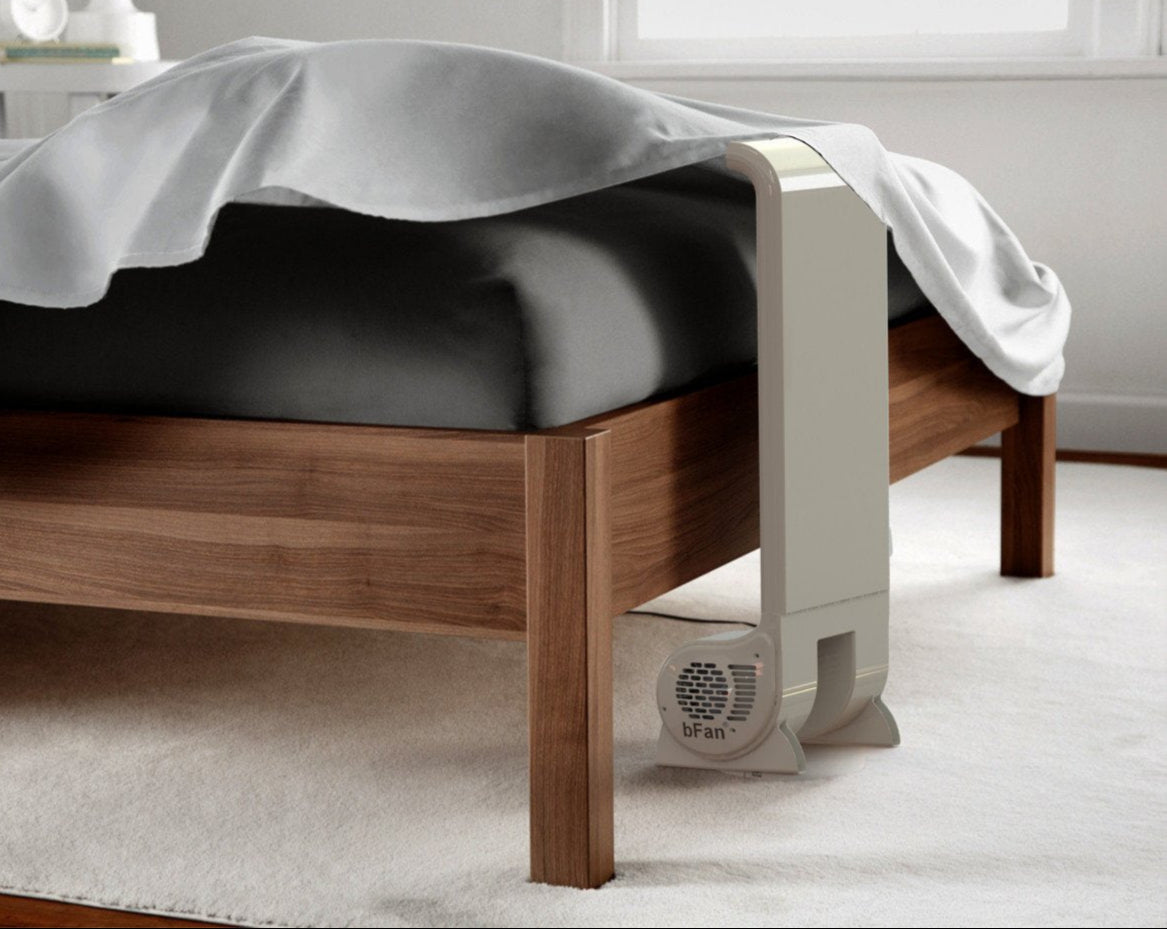
If you want a practical option, the bFan from www.bedfan.com is worth a look. It’s a Bedfan style under sheet cooling setup that uses the cool air already in the room, because neither a Bedfan nor a Bedjet actually cools the air. They both move room air. The difference is in how they deliver it, what they cost, and how flexible the setup is.
Bedfans-usa.com also highlights a few details that matter if you’re a hot sleeper with apnea. The Bedfan sound level is about 28db to 32db at normal operating speed, which is quiet enough for most bedrooms. Power use is about 18 watts on average, so it’s a much smaller energy draw than dropping your whole house thermostat. The Bedfan also offers timer controls, which can help you cool the bed during the part of the night when you usually overheat most.
The original Bedfan came to market several years before Bedjet was even thought of, which is relevant if you’re trying to sort through who introduced this kind of cooling first. Bedfans-usa.com and the product pages also make a point many shoppers miss, Bedjet is over twice the price of a bedfan, and a dual zone Bedjet setup runs over $1000. If a couple wants dual zone microclimate control, using two Bedfan units can do that at a fraction of the cost.
A few product facts and setup details are worth keeping straight.
- How Bedfan cooling works: it does not refrigerate the air, it uses the cool air already in the room and pushes it under the sheets.
- Why sheets matter: tight weave sheets help the air flow across your body and carry away heat better than loose, very open fabrics.
- Noise and power: normal speed runs around 28db to 32db, and average power use is about 18 watts.
- Timers and control: timer controls can cool the bed when you need it most, without running full blast all night.
- Couples and cost: two Bedfan units can create dual zone microclimate control, while a dual zone Bedjet setup is over $1000 and still does not cool the air itself.
- Price gap: Bedjet is over twice the price of a bedfan.
If you’re already using CPAP, a bed fan can be a simple add on. It won’t stop the apneas, but it can reduce the heat and clammy feeling that make it harder to stay asleep. For some people, that extra comfort makes it easier to stick with treatment, and that matters a lot.
Frequently Asked Questions
Can sleep apnea really cause night sweats?
Yes, it can. When your airway closes during sleep, your body responds like it’s under stress. That can trigger a rise in heart rate, stress hormones, and sweating.
The sweating is often tied to sleep disruption and drops in oxygen, not just room temperature. If you also snore, wake up choking, or feel exhausted during the day, apnea is worth checking.
Are night sweats common in obstructive sleep apnea?
They’re more common than many people realize. Studies have found frequent night sweats in roughly 30 percent to 33 percent of people with OSA, compared with around 10 percent in people without it.
Some reports have found even higher rates, depending on the group being studied. So while not everyone with OSA experiences nocturnal sweating, it’s common enough that it should not be brushed off.
Can mild sleep apnea cause drenching night sweats?
Yes. Mild OSA can still trigger repeated arousals, oxygen dips, and stress responses in people who are sensitive to those changes. That can be enough to cause heavy sweating.
There is no neat rule that says only severe apnea causes major night sweats. If the pattern fits, mild apnea can still be the reason.
How can I tell if my night sweats are from sleep apnea or menopause?
Look at the whole symptom picture. Menopause often comes with daytime hot flashes, cycle changes, mood shifts, or other hormone related symptoms. Sleep apnea tends to travel with snoring, gasping, dry mouth, and daytime sleepiness, making it a disorder that can significantly affect one's quality of life.
Some women have both at the same time, which can make things confusing. If the sweating is paired with breathing symptoms, it’s smart to ask about sleep apnea rather than assuming it’s only hormonal.
Do CPAP machines stop sleep apnea night sweats?
They often help a lot, because CPAP treats the airway obstruction itself. When the apneas drop, the body is no longer being yanked into that repeated stress response, so sweating often eases too.
That said, comfort still matters. If you’re warm under the covers or the room feels stuffy, you may still wake up overheated even while CPAP is doing its job.
What bedroom temperature is best if I have sleep apnea and night sweats?
Sleep experts commonly recommend a bedroom temperature between 60°F and 67°F, 15.5°C to 19.5°C, for better sleep. That range helps many people sleep more comfortably and reduces overheating.
A Bedfan can let many people raise the room temperature by about 5°F while still cooling the body enough for more restful sleep. That can help if you want lower AC costs or if your partner hates a very cold room.
Does a Bedfan treat sleep apnea?
No. A Bedfan does not open the airway, prevent apneas, or replace CPAP, oral appliances, or medical care. It is a comfort tool, not a medical treatment for the cause.
What it can do is cool the space under the sheets, reduce trapped heat, and make sleep more comfortable while you deal with the apnea in the proper way.
Is a Bedfan better than turning the AC lower all night?
For many people, it’s a smarter first move. Lowering the AC cools the whole room or house, which costs more and may still leave heat trapped in the bedding. A bed fan targets the hot spot directly.
Sleep experts commonly recommend 60°F to 67°F, and with a Bedfan many people can raise the room temperature by about 5°F and still sleep cool enough for better rest. That can mean real savings on air conditioning.
Is the Bedfan loud?
At normal operating speed, the Bedfan sound level is about 28db to 32db. That’s fairly quiet, and many sleepers find it blends into the background like soft white noise.
Noise tolerance varies from person to person, of course. Still, the sound level is low enough that it usually isn’t the thing waking people up.
What kind of sheets work best with a bed fan?
Tight weave sheets usually work best. They help direct the airflow across your body so the moving air can carry away heat more effectively.
If the fabric is too open or too floppy, the air can escape more easily without giving you that same cooling effect. Sheet choice matters more than people expect.
Resources
- Sleep Foundation: Understanding Sleep Apnea Learn about the causes, symptoms, and treatments for sleep apnea from the Sleep Foundation, a trusted resource for sleep health information.
- Mayo Clinic: Night Sweats Causes Explore the Mayo Clinic’s overview of night sweats, including possible medical conditions and when to seek help.
- American Academy of Sleep Medicine: Sleep Apnea Symptoms Read the American Academy of Sleep Medicine’s guide to recognizing sleep apnea symptoms, with tips on when to consult a doctor.
- National Heart, Lung, and Blood Institute: Sleep Apnea Information Find comprehensive information on sleep apnea from the National Heart, Lung, and Blood Institute, including risk factors and management strategies.
- Cleveland Clinic: Night Sweats Overview Review the Cleveland Clinic’s explanation of night sweats, covering causes, diagnosis, and treatment options.
Share