
How Long Do Night Sweats Last After Quitting Smoking? A Timeline
By Kurt Tompkins, Bedfans USA. Reviewed October 2026 against guidance from the National Cancer Institute, Cleveland Clinic, and MedlinePlus. This article is general information, not medical advice.
Quick answer: How long do night sweats last after quitting smoking? For most people they start within 4 to 24 hours of the last cigarette, are worst in the first week with a peak around day 2 or 3, and fade over roughly 3 to 4 weeks. Some people notice milder withdrawal symptoms, including occasional sweaty nights, for a few months, and sweats that get worse or come with fever, weight loss, or a cough deserve a call to your doctor.
If you quit smoking and suddenly started waking up damp and overheated, you are not imagining it. Sweating is one of the physical withdrawal symptoms many quitters report as the body adjusts to life without nicotine. The good news is that the duration is usually short, and there are practical ways to make those nights easier while your body resets.
How long do night sweats last after quitting smoking?
Night sweats after quitting smoking usually last a few weeks, not months. The National Cancer Institute says nicotine withdrawal symptoms are usually worst during the first week after quitting, peak during the first 3 days, and then drop in intensity over the first month.
That does not mean every night is miserable for a month. For many people, night sweats come in waves. You may have two or three rough nights, a few better ones, then one random sweaty night again. That up and down pattern is common while your brain and body adjust to the absence of nicotine. Heavy, long term tobacco use can stretch the timeline, and so can switching to another nicotine product instead of stopping completely.
If your sweating is still intense after several weeks, or it is getting worse instead of better, it makes sense to look beyond nicotine withdrawal and talk with a clinician about other causes.
Night sweats after quitting smoking, a week by week timeline
The typical withdrawal timeline runs from the first day through the first month, with the hardest stretch on day 2 and day 3. Cleveland Clinic describes symptoms that begin 4 to 24 hours after the last dose of nicotine, peak on the second or third day, and fade over days to 3 to 4 weeks.

First 4 to 24 hours
Withdrawal can start fast. If you quit in the morning, you might notice sweating, restless sleep, or strong cravings that same night. Not everyone sweats on night one. Some people mostly notice irritability, mood shifts, or trouble falling asleep.
Day 2 and day 3
This is often the peak. Many people wake up drenched, kick off the covers, or change clothes in the middle of the night. Cravings can feel sharpest here, and the stress of those cravings can make sweating more noticeable. A miserable night at this stage usually means you are right in the middle of withdrawal, which is temporary.
Days 4 to 7
The first week is still rough for many quitters, even after the peak. Smokefree.gov notes that withdrawal is often strongest in the first week, and it is also when many people are most tempted to smoke again. Expect a mix of better and worse nights.
Weeks 2 to 4
By now most people notice real improvement. You may wake up warm instead of soaked, or the sweating may only show up after a stressful day, alcohol, late caffeine, or a hot bedroom. Sleep disturbances such as vivid dreams and lighter sleep usually start to settle too.
After one month
Some sweating after a month does not automatically mean something is wrong. The National Cancer Institute notes that some people have withdrawal symptoms for several months. Still, the pattern should be getting lighter, not heavier. New, intense, or worsening night sweats at this stage are a reason to check in with your doctor.
Why nicotine withdrawal can cause night sweats
Nicotine affects heart rate, stress signals, and temperature regulation, so removing it forces the body to recalibrate. During that reset, sweating can show up alongside better known withdrawal symptoms such as cravings, anxiety, irritability, and trouble sleeping.
MedlinePlus explains that nicotine raises heart rate and blood pressure and changes how you feel and focus, which is part of why addiction to tobacco is so strong. When the supply stops, the body has to relearn its normal baseline. MedlinePlus lists anxiety, depression, trouble sleeping, bad dreams, and feeling tense or restless among the common withdrawal symptoms, and medically reviewed sources such as Medical News Today also list sweating.
Sleep itself gets lighter during withdrawal. People often report vivid dreams and waking more often, and when sleep is broken you notice every temperature shift. That can make a single sweaty episode feel much worse than it is. Nicotine addiction also involves habit and stress relief, so the first weeks can feel keyed up, and that tension can feed sweating at night when everything else is quiet.
What can make night sweats last longer after quitting smoking?
Smoking history, other nicotine use, alcohol, caffeine, a warm bedroom, and unrelated health issues can all stretch the duration. Two people can quit on the same day and have very different experiences.
- Smoking history: Heavy, long term smoking often means a tougher withdrawal period.
- Other nicotine use: If you quit cigarettes but still vape or use pouches, symptoms may change rather than fully resolve.
- Alcohol and caffeine: Both can make nighttime overheating and sleep disturbances worse for some people.
- Room temperature: A warm bedroom can turn mild withdrawal sweating into a real sleep problem.
- Other causes: Menopause, infections, medication side effects, anxiety, reflux, and sleep apnea can all cause night sweats too.
If you were already waking up hot before you quit, nicotine withdrawal may be only part of the story. The same is true if you are in perimenopause or take medications known to cause sweating.
How to get through nicotine withdrawal night sweats
You cannot rush withdrawal, but quit support, daytime exercise, and a cooler sleep setup can make the nights easier. Small changes add up while your body adjusts.
- Use quit support: Free coaching at 1 800 QUIT NOW, nicotine replacement, or a prescription plan from your doctor can ease withdrawal symptoms and cravings.
- Move during the day: Regular exercise helps many people manage cravings, stress, and anxiety, and it can make sleep deeper. Finish hard workouts a few hours before bed.
- Cut late caffeine and alcohol: Both can worsen night sweats and broken sleep.
- Keep the bedroom cool: The Sleep Foundation puts the best sleep temperature for most adults at about 65°F.
- Choose light, breathable bedding: Tight weave cotton sheets and light layers keep heat from building up around your body.
- Stay hydrated: Several sweaty nights in a row can leave you short on fluids.
Mood changes are part of withdrawal for many people. If low mood or depression lingers, or anxiety makes it hard to function, tell your doctor. Support is part of a successful quit, not a sign that it is failing.
How a bed fan helps with nicotine withdrawal night sweats
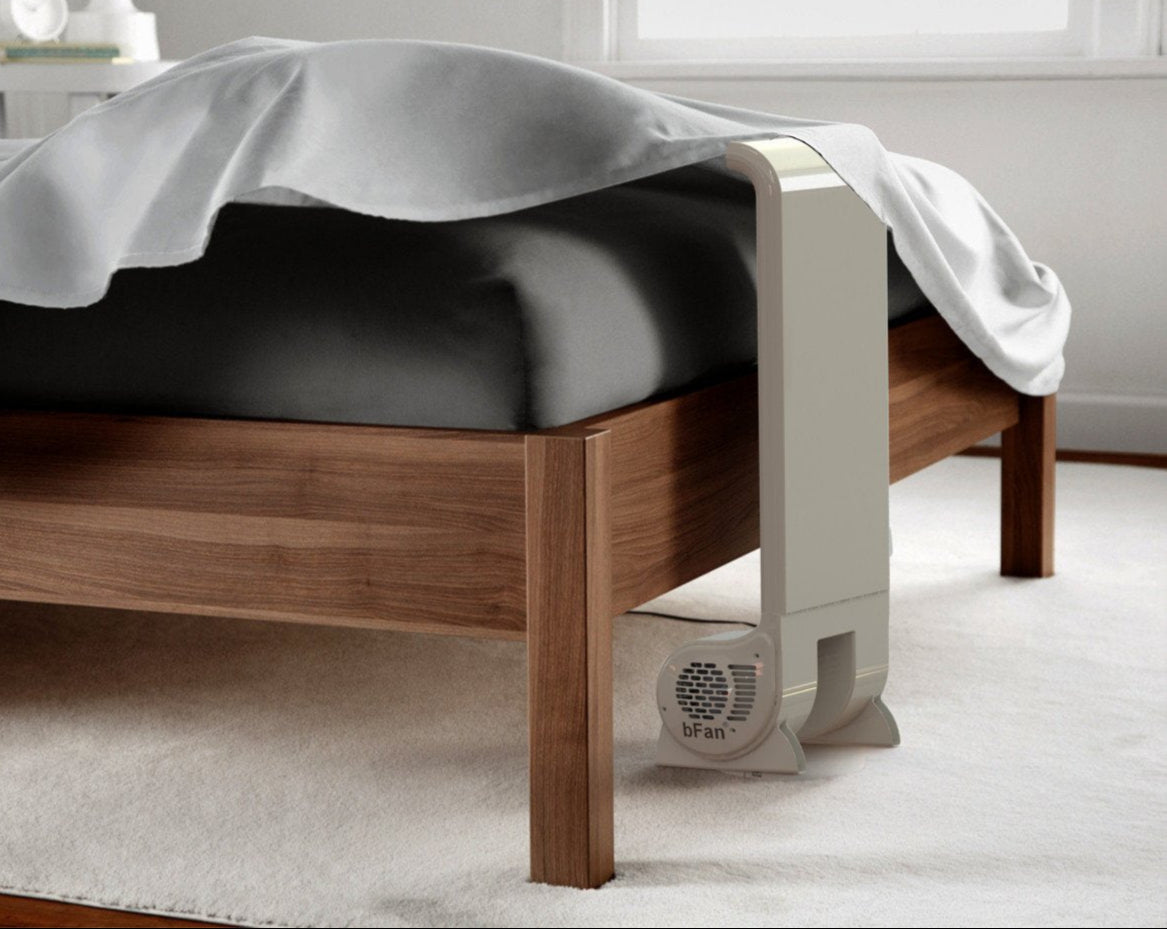
A bed fan moves room air under your covers, where trapped heat builds up while you sleep. Direct airflow helps stop sweat before it starts, without chilling the whole house.
The bFan from Bedfans USA sits centered at the foot of the bed and sends a quiet stream of air between the top and bottom sheets, moving trapped heat and humidity out from under the covers near your shoulders. Neither the bFan nor BedJet lowers the air temperature, since both use the air already in your room. What differs is how the air is delivered, the price, and how the setup feels night after night.
- Sound level: about 28 to 32 dB at normal operating speed, quiet enough for most bedrooms.
- Power use: about 18 watts on average and never more than 24 watts.
- Controls: remote speed control and a sleep timer, handy if you want stronger airflow while you fall asleep.
- Price: $204.95, less than half the price of a BedJet. Two bFans cost less than half the price of a dual zone BedJet, which helps couples who sleep at different temperatures.
The original Bedfan came to market several years before BedJet, and Bedfans USA has refined the design since 2004. Many customers report they can raise the thermostat up to 6°F and still sleep comfortably. For more on how sweating and nicotine interact, see our earlier guide to night sweats and nicotine withdrawal.
When night sweats after quitting smoking may not be withdrawal
If sweating starts weeks after you quit, keeps getting worse, or comes with other symptoms, something besides withdrawal may be involved. Withdrawal sweats usually start soon after quitting, peak within days, then slowly improve.
Talk with a clinician sooner rather than later if any of these apply:
- Fever or chills: These can point to an infection rather than nicotine withdrawal.
- Unexplained weight loss or poor appetite: Unexplained body changes deserve attention.
- Cough, chest pain, or trouble breathing: These are not symptoms to brush off, especially after years of smoking.
- Sweats well past 4 weeks: If you are still soaking the bed long after the usual window, get checked.
- New medications: Some prescriptions, including some quit smoking medicines and antidepressants, can affect sweating or sleep.
The big picture is reassuring. Night sweats after quitting smoking are usually short term, worst in the first week, and fade within a few weeks. Keep your bed setup comfortable, lean on quit support, and give your body time to finish the reset.
Ready for better sleep?
The bFan sits at the foot of your bed and sends a quiet stream of air under your sheets. Direct airflow helps stop sweat before it starts, and one bFan costs less than half the price of one BedJet, making it the less expensive alternative. Shop the bFan at bedfans-usa.com
Frequently Asked Questions
Are night sweats a sign that quitting smoking is working?
Night sweats are a common sign that your body is adjusting to the absence of nicotine, not a sign that something has gone wrong. When nicotine leaves your system, heart rate, stress hormones, and temperature regulation all recalibrate, and sweating can appear during that reset. They are not proof of progress on their own, but sweats that begin in the first day or two and ease over a few weeks fit the normal withdrawal pattern described by Cleveland Clinic and the National Cancer Institute.
Does nicotine replacement therapy stop night sweats after quitting?
Nicotine replacement therapy can soften withdrawal symptoms for many people, but it does not guarantee that night sweats disappear. Patches, gum, and lozenges supply a steady, lower dose of nicotine so the drop is less abrupt, which may reduce sweating, cravings, and irritability. Some people notice vivid dreams with a 24 hour patch and switch to removing it at bedtime, but that change should be discussed with a pharmacist or doctor. Your clinician can match the product and dose to how much you smoked.
Can vaping or nicotine pouches keep night sweats going?
Yes, switching to a vape or nicotine pouches can stretch out or reshape withdrawal because your body is still getting nicotine. Night sweats may ease for a while, then return when you cut back on the new product, since that is when the real nicotine drop happens. People who stop cigarettes and all nicotine at the same time usually follow the standard 3 to 4 week timeline. If you plan to taper with a vape, expect symptoms to show up around each step down.
Why do night sweats get worse at night instead of during the day?
Night sweats feel worse at night because heat builds up under the covers and withdrawal makes sleep lighter, so you wake up more often and notice every temperature change. During the day you can move around, change layers, and stay distracted, while at night a heavy comforter traps warm, humid air against your skin for hours. Cravings and anxiety also tend to feel louder in a quiet bedroom. Lighter bedding and airflow under the sheets help reduce that buildup. Smoking cessation programs can also offer coping tips for restless nights.
Can quitting smoking cause night sweats months later?
It is possible but less common for withdrawal related sweating to last more than a few months. The National Cancer Institute notes that some people have withdrawal symptoms for several months, though intensity usually drops sharply after the first month. If night sweats start for the first time months after you quit, or become heavier over time, they are more likely to have another cause, such as hormone changes, medications, infection, or sleep apnea, and a doctor should take a look.
Is it normal to feel cold and sweaty at the same time after quitting?
Feeling chilled while sweating can happen during withdrawal, because damp skin and wet bedding pull heat away quickly once the sweating stops. Many quitters describe waking up soaked, then shivering after they kick off the covers. Keeping a dry shirt nearby, using breathable layers you can adjust, and keeping the bedroom around 65°F can make these swings easier. If chills come with a fever, body aches, or a cough, an infection is more likely, so check your temperature and call your doctor.
Resources
- National Cancer Institute tips for coping with nicotine withdrawal: explains that withdrawal is usually worst in the first week, peaks in the first 3 days, and eases over the first month.
- Cleveland Clinic guide to nicotine withdrawal: outlines the withdrawal timeline from the first 4 to 24 hours through the 3 to 4 week mark, plus treatment options.
- Smokefree.gov on managing nicotine withdrawal: offers practical ways to handle cravings, mood changes, and sleep problems in the first weeks after quitting.
- MedlinePlus overview of nicotine and tobacco: describes how nicotine affects the body and lists common withdrawal symptoms such as anxiety, depression, and trouble sleeping.
- CDC guide to how to quit smoking: covers free quitline support, approved quit medicines, and planning a quit date.
- Medical News Today on nicotine withdrawal symptoms and timeline: a medically reviewed summary that lists sweating and waking at night among physical withdrawal symptoms.
- Sleep Foundation guide to the best temperature for sleep: explains why a bedroom around 65°F supports better sleep.
Compartir