
Ozempic Night Sweats: Causes, Warning Signs and Sleep Tips
By Kurt Tompkins, Bedfans USA. Reviewed October 2026 against MedlinePlus, NIDDK, and the Ozempic prescribing information. This article is general information, not medical advice. Never change a diabetes medication dose without your prescriber.
Quick answer: Ozempic night sweats are most often linked to low blood sugar, which lists sweating among its warning signs, especially when Ozempic (semaglutide) is used with insulin or a sulfonylurea. Night sweats are not one of the most common Ozempic side effects, so other causes such as infections, other medications, hormones, sleep apnea, or a hot bedroom are also worth checking. Tell your prescriber if the sweating is new, frequent, or comes with shakiness, hunger, or a racing heart.
Waking up sweaty while you take Ozempic can be unsettling. If it keeps happening, it is reasonable to ask whether the medicine is involved, whether your blood sugar is dropping overnight, or whether something else is going on. Here is what the evidence says and how to sleep more comfortably while you sort it out.
Can Ozempic cause night sweats?
Ozempic can be linked to night sweats indirectly, mainly through low blood sugar, but sweating is not listed among its most common side effects. MedlinePlus lists nausea, vomiting, diarrhea, stomach pain, constipation, heartburn, and headache as typical side effects of semaglutide injection.
Ozempic is a brand of semaglutide, a GLP-1 receptor agonist injected once a week. It is prescribed to help control blood sugar in adults with type 2 diabetes and to lower the risk of heart attack and stroke in some adults with diabetes and heart disease. As a GLP-1 diabetes medication, semaglutide helps the pancreas release insulin when blood sugar is high and slows how fast the stomach empties.
MedlinePlus also warns that semaglutide may cause changes in blood sugar, and its list of low blood sugar signs includes sweating, hunger, shakiness, irritability, a fast heart rate, and feeling jittery. That overlap is why low blood sugar is the first thing to rule out when Ozempic night sweats show up.
Why low blood sugar can trigger Ozempic night sweats
When blood sugar drops during sleep, the body releases stress hormones that can cause excessive sweating, a pounding heart, and a sudden wake up. The National Institute of Diabetes and Digestive and Kidney Diseases says low blood glucose during sleep can cause sweating strong enough to make pajamas or sheets damp.
The risk is higher in some situations. The Ozempic prescribing information notes that the risk of low blood sugar may be higher when Ozempic is used with another medicine that can cause low blood sugar, such as a sulfonylurea or insulin. Eating much less than usual, skipping an evening meal, drinking alcohol, or exercising late in the day can add to that risk.

Clues that point toward a nighttime low include:
- Damp pajamas or sheets around the neck, chest, or back
- Nightmares or crying out during sleep, which NIDDK lists as a sign
- Shakiness, hunger, or a racing heart when you wake
- Morning headache, confusion, or irritability
Some people do not notice early warning signs until levels are very low, a pattern called hypoglycemia unawareness. If you use a glucose meter or a continuous glucose monitor, an overnight trend gives your care team something concrete to work with.
Other causes of night sweats while taking Ozempic
Night sweats can happen while you take Ozempic without Ozempic being the reason. Mayo Clinic lists medications, infections, hormone changes, low blood sugar, and sleep disorders such as obstructive sleep apnea among common causes of night sweats.
- Other diabetes medication: Insulin and sulfonylureas make overnight lows more likely, and other prescriptions such as some antidepressants can cause excessive sweating on their own.
- Hormonal changes: Menopause, perimenopause, and thyroid problems often show up as nighttime overheating.
- Sleep apnea: Obstructive sleep apnea is linked with night sweats in some people.
- Infections: Fever related sweating can start before other symptoms are obvious.
- Bedroom heat: Heavy comforters, foam that traps heat, and warm sleepwear can hold body heat against your skin all night.
Timing matters. If your sweating started when you began Ozempic or after a dose increase, mention that, but remember that timing alone does not prove cause and effect. Our guide to medications that contribute to night sweats covers other common culprits.
When should you call a doctor about Ozempic night sweats?
Call your prescriber if Ozempic night sweats are new, frequent, getting worse, or come with symptoms of low blood sugar. Do not change your dose or stop the medication on your own.
- Repeated episodes with shakiness, hunger, or palpitations
- Low glucose signs such as confusion, weakness, blurred vision, or slurred speech
- Severe symptoms such as fainting, seizures, or severe disorientation, which need emergency care
- Dehydration from vomiting or diarrhea along with sweating, since semaglutide side effects can include both
- Fever, weight loss you cannot explain, or a cough alongside the sweats
Your doctor may review your other diabetes medication doses, check overnight glucose, or look for another cause. Treatment depends on what is driving the sweats, which is why clear notes help.
How to track Ozempic effects on your sleep
A simple sleep log turns guesswork into a pattern your care team can use. A notes app works fine.
Write down when the sweating happened, what time you last ate, whether you had alcohol, the bedroom temperature, the bedding you used, the day and time of your weekly dose, and any glucose reading. If you use a CGM, note the overnight trend, not just the morning number. Ozempic effects on appetite can mean lighter evening meals, so note those nights too. Small patterns, such as sweats clustering two days after each injection or on nights with a light dinner, often tell the real story.
How to sleep cooler while you sort out the cause
The goal is less trapped heat under the covers, not a freezing bedroom. The Sleep Foundation puts the best bedroom temperature for most adults at about 65°F.
Start with lighter sleepwear, breathable bedding, and tight weave sheets. A breathable mattress topper can help if your mattress holds heat. If you still wake up overheated under the covers, air movement inside the bed is the next step.
Can a bed fan help with Ozempic night sweats?
A bed fan cannot fix the medical cause, but it can make sweaty nights more comfortable by moving room air under your sheets. Direct airflow helps stop sweat before it starts, while you and your doctor work out what is behind the sweating.
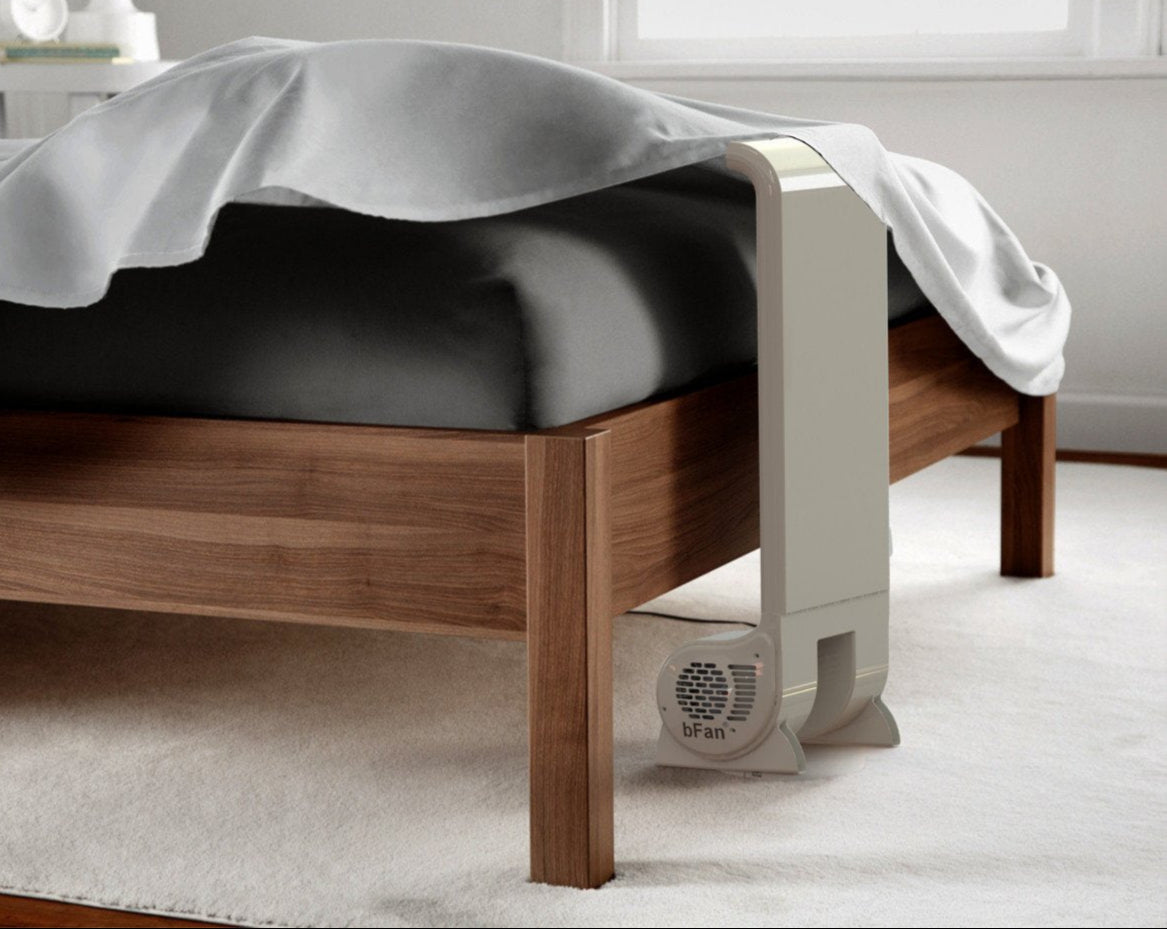
The bFan from Bedfans USA sits centered at the foot of the bed, with the two drum base on the floor and a flat panel tucked under the bedding at mattress height. It moves trapped heat and humidity out from under the covers near your shoulders. Neither the bFan nor BedJet lowers the air temperature, since both use the air already in your room.
- Sound level: about 28 to 32 dB at normal operating speed
- Power use: about 18 watts on average, 24 watts maximum
- Controls: remote speed control and a sleep timer
- Couples: two bFans give each side its own airflow
- Price: $204.95, less than half the price of a BedJet, and two bFans cost less than half the price of a dual zone BedJet. See our BedJet alternative guide.
Many customers report they can raise the thermostat up to 6°F and still sleep comfortably, which helps when someone else in the house sleeps cold.
Ready for better sleep?
The bFan sits at the foot of your bed and sends a quiet stream of air under your sheets. Direct airflow helps stop sweat before it starts, and one bFan costs less than half the price of one BedJet, making it the less expensive alternative. Shop the bFan at bedfans-usa.com
Frequently Asked Questions
Is sweating a side effect of Ozempic?
Sweating is not listed among the most common Ozempic side effects, which are mainly digestive, such as nausea, vomiting, diarrhea, and constipation, which are typical of GLP-1 medicines. Sweating does appear on the list of low blood sugar warning signs in MedlinePlus and in the Ozempic prescribing information. That means sweating while taking semaglutide often points to a blood sugar dip, particularly when Ozempic is combined with insulin or a sulfonylurea. Your prescriber can help sort out whether the medicine, a low, or something else is responsible.
Do Ozempic night sweats go away after the first few weeks?
Many people find that side effects settle as their body adjusts to semaglutide, but there is no fixed timeline for night sweats because they usually have a specific cause. If the sweats come from overnight lows, they can continue until a dose or meal plan changes. If they began right after a dose increase, they may ease once you stabilize. Keep a log of sweaty nights next to your dose schedule and share it with your doctor rather than waiting it out.
Can Wegovy cause night sweats like Ozempic?
Wegovy contains the same GLP-1 medicine as Ozempic, semaglutide, so the same questions about low blood sugar and other causes apply. People without diabetes who take Wegovy for weight management have a lower baseline risk of hypoglycemia than people using insulin or a sulfonylurea, but lows can still happen with reduced eating, alcohol, or heavy exercise. Night sweats on Wegovy are worth reporting to your prescriber in the same way, along with any shakiness, hunger, or racing heart. Excessive sweating that keeps you awake is worth a call even if it seems minor.
Should you eat a snack before bed to avoid night sweats on Ozempic?
A bedtime snack can help some people who have overnight lows, but it should be part of a plan from your doctor or diabetes educator, not a guess. The right choice depends on your other medications, your glucose readings, and your weight goals. Checking your blood sugar before bed and, if advised, once during the night shows whether lows are actually happening. If they are, your care team may adjust medication timing or doses instead of relying on extra food.
Can other GLP-1 medications cause night sweats?
Other GLP-1 receptor agonists, such as dulaglutide and liraglutide, share the same basic action as semaglutide and carry similar warnings about low blood sugar when combined with insulin or a sulfonylurea. On their own, these drugs rarely cause hypoglycemia, so sweating with any GLP-1 medicine still deserves a look at blood sugar, other prescriptions, and non medication causes. Bring the medication name, dose, and your sleep notes to your appointment so your clinician can compare options. Never stop a medicine without talking to your doctor first.
Does dehydration from Ozempic make night sweats worse?
Dehydration does not directly cause night sweats, but losing fluids from vomiting or diarrhea while also sweating at night can leave you lightheaded, tired, and more likely to feel unwell. MedlinePlus advises telling your doctor if you have had nausea, vomiting, or diarrhea, or cannot drink liquids, because that can lead to dehydration. Sip fluids through the day, keep water by the bed, and call your prescriber if you cannot keep fluids down or feel dizzy when standing up. Mention any new night sweats at the same visit.
Resources
- MedlinePlus drug information for semaglutide injection: lists uses, common side effects, and the warning signs of low blood sugar, including sweating.
- Ozempic prescribing information from Novo Nordisk: the official label, including the higher risk of low blood sugar when used with insulin or a sulfonylurea.
- NIDDK guide to low blood glucose: describes nighttime hypoglycemia signs such as damp pajamas or sheets, nightmares, and morning confusion.
- American Diabetes Association on hypoglycemia: explains symptoms, the 15 and 15 rule for treating lows, and when to get help.
- Cleveland Clinic overview of hypoglycemia: covers causes, symptoms, and treatment of low blood sugar in people with and without diabetes.
- Mayo Clinic list of night sweats causes: covers medications, infections, hormone changes, low blood sugar, and sleep disorders.
Compartir