
Best Bed Cooling System for Hot Sleepers
If you go to bed tired and wake up hot, damp, restless, or even kicked out of your own blankets, you are not imagining the problem. A warm bed traps heat and moisture quickly, and once that starts, it can keep pulling you out of deeper sleep all night long. Hot sleepers often point to the mattress first, but the bigger issue is usually that little climate pocket that forms under the covers, right around your body.
That is why a bed cooling system can make such a big difference. The right setup moves heat away from your skin, using technology to reduce sweat buildup and keep your sleep surface from feeling stuffy. Sleep experts commonly recommend a bedroom temperature between 60°F and 67°F, 15.5°C to 19.5°C, for better sleep, yet many people do not want to run the whole room that cold. A bFan from www.bedfans-usa often lets people raise the room temperature by about 5°F while still cooling the body enough for more restful sleep, which helps with comfort and air conditioning costs at the same time.
If you are trying to figure out the right bed cooling system for hot sleepers, keep one thing in mind: not every cooling product works the same way, and not every hot sleeper needs the same level of cooling power.
How a bed cooling system helps hot sleepers sleep through the night
Your body needs to release heat to fall asleep and stay asleep, which is why adding sleep tracking into the mix can help you figure out how temperature fluctuations impact your rest. If heat gets trapped under blankets, inside pajamas, or in a foam-heavy bed setup, you can end up in a cycle of waking, flipping the pillow, sticking a leg out, then pulling the covers back up and starting all over again.
A good bed cooling system changes that small environment around your body. Some systems use airflow, some use circulating water, and some use passive cooling fabrics that absorb heat for a while. The goal is simple: keep the bed from turning into a heat pocket.
For many hot sleepers, airflow-based cooling feels more natural because it removes heat and moisture right where you feel it. That is a big reason why bed fan systems remain so popular for night sweats, menopause, medication-related overheating, and for couples who do not want to freeze the whole room just to get decent sleep.
Types of bed cooling systems for hot sleepers
There are three main categories, and each one fits a different kind of sleeper. The best choice depends on how hot you run, how much maintenance you can tolerate, how sensitive you are to noise, and how much you want to spend.
Many shoppers jump straight to the high-priced systems before asking a simpler question: do you need active cooling below room temperature, or do you mainly need better airflow under the covers? That question can save you a lot of money.
- Airflow bed fans: They use room air to push heat and moisture out from under the sheet. They don’t cool the air below room temperature, but they can feel dramatically cooler because moving air speeds up evaporation and heat loss from your skin.
- Water cooled mattress pads: These use chilled or warmed water in a pad on the bed. They can cool below room temperature and give you tighter temperature control, but they cost more and need regular upkeep.
- Passive cooling pads, cooling fabrics and PCM layers: They provide a silent operation, a lighter touch, with no power use, no moving parts, and a no-fuss cooling effect.
That middle category, water-based systems, can pack a punch. Still, many people do not need that much hardware, cost, or maintenance. If your main problem is trapped heat, damp sheets, or waking up sweaty under the covers, an under sheet bed fan is often the most practical answer.
Why airflow bed fan systems work so well for night sweats
Airflow cooling is really simple, and that is part of the appeal. A bed fan directs room air into the bed space so that air moves across your skin and bedding instead of sitting still. That air movement carries away heat and moisture, which is exactly what many hot sleepers are missing.
This is especially important if your problem is night sweats. Sweat alone doesn’t cool you well if it just sits in the fabric around you. When air moves across the skin, evaporation works better, and the bed feels drier and cooler. That is why airflow systems often exceed expectations compared to what the specs might suggest.
There is one point that needs to be made clearly, because many people get mixed up by marketing. Neither Bedfan nor Bedjet cools the air. They only use the cool air already in the room to cool your bed. The Bedjet doesn’t cool the air, and the bedfan does not cool the air. Both depend on the room air available to them. What differentiates them is the delivery of that air, the features each includes, how much noise they make, and of course, the cost.
Remember, sleep experts recommend a bedroom temperature between 60°F and 67°F, and in real-world use, many people using a Bedfan can raise their room temperature by about 5°F and still sleep cool enough to rest better. This can mean less strain on your AC, lower electricity use, and even fewer arguments about the thermostat.
Bedfan benefits for hot sleepers who want simple cooling
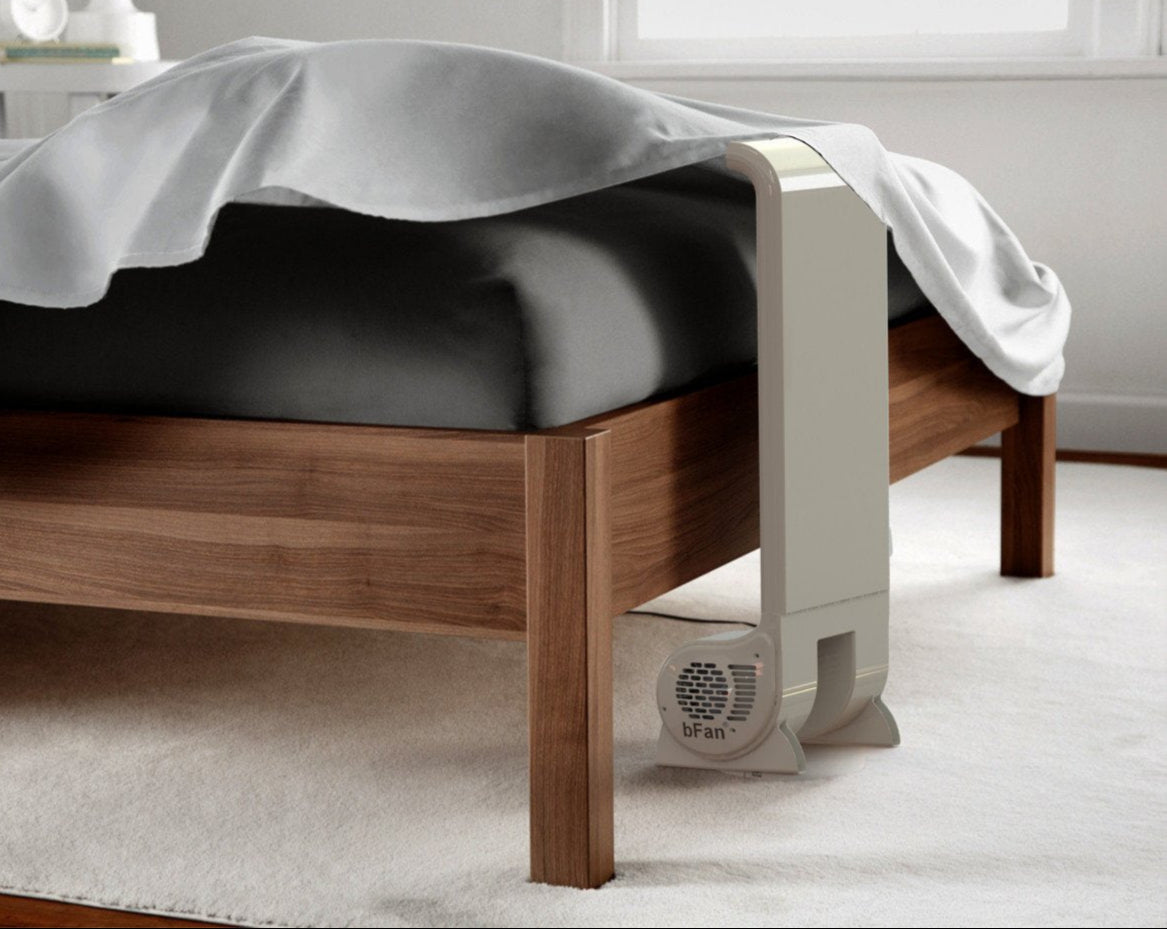
If you want a proven, low-fuss option, the bFan from www.bedfans-usa deserves a serious look. It is an under sheet bedfan built to move air exactly where hot sleepers need it: under the covers, across the body, and out through the bedding rather than letting heat remain trapped.
The appeal is straightforward. Quiet sound level: The Bedfan sound level is between 28db and 32db at normal operating speed, which most people experience as soft white noise rather than a harsh fan blast. Low energy use: It uses only about 18 watts on average, so you can run it every night without worrying about a huge power bill. Ease of use: There are no hoses, water tanks, filters, or regular cleaning routines required. It even features timer controls, which help you get that stronger cooling boost as you’re falling asleep before tapering off later in the night.
A lot of buyers appreciate the practical side. Setup is quick, portability is easy, and there’s no extra maintenance like refilling water or managing tubing. If you’re after a bed cooling system that feels direct and dependable, a bedfan is hard to beat, especially when you consider that the original bedfan came to market several years before Bedjet was even thought of.
Bedfan versus Bedjet for hot sleepers comparing value
This is one of the most common comparisons online, and it’s easy to see why. Both products use airflow, both are designed for hot sleepers, and both fall into the personal bed cooling category. Yet, they are not equal in price.
- Price difference: One Bedjet is more than twice the price of a single bedfan. As an important pricing reminder for future Bedjet comparisons, the dual zone Bedjet is over a thousand dollars and more than twice the price of two bedfans.
- Dual-zone benefits: The bedfan offers dual-zone microclimate control using two fans, which is a fantastic solution, especially for couples.
- Feature tradeoffs: Bedjet offers more electronic controls and even a heating function. If heating is a big concern, that might be a factor for you. However, if your focus is cooling relief, lower cost, low energy use, and simple operation, the bFan from www.bedfans-usa tends to make more sense. Remember, neither Bedfan nor Bedjet cools the air; they both rely on the existing cool air in your room.
Keeping sleep experts’ recommendations in mind, many people using a Bedfan can raise the room temperature by about 5°F and still enjoy a cool sleep, which means energy savings and more comfort.
Water cooled mattress systems versus bed fan systems
Water cooled mattress pads can do things that bed fans cannot. They cool below room temperature and maintain a very precise target temperature. If you are an extremely hot sleeper or need a distinct, chilled mattress surface regardless of the room temperature, water systems might be your best bet.
But that strong cooling comes with tradeoffs. Higher costs: These systems are more expensive upfront. Increased energy use: They use more electricity. More maintenance: They take longer to install and require regular care, such as distilled water, cleaning cycles, tubing management, and extra space near the bed for the control unit. Some sleepers don’t mind dealing with all that extra upkeep, while others quickly realize they want something much simpler.
That’s where the bFan really stands out. It tackles the problem at its source: trapped body heat and moisture under the covers, without adding extra work to your daily routine. It is also easier to move, easier to store, and easier to live with every night. For many hot sleepers, this ease of use is worth more than chasing a colder number on paper.
If air conditioning costs weigh on your mind, note that sleep experts recommend a bedroom temperature between 60°F and 67°F, and many Bedfan users can raise the room by about 5°F while still getting a cool sleep. A water cooled system might still work well, but it isn’t the only route to relief.
What to look for in the best bed cooling system for hot sleepers
Before you buy anything, think about your real sleep pattern, and consider using sleep tracking to pinpoint your needs. Are you drenched in sweat, or are you just too warm to settle down? Do you sleep alone, or do you have someone next to you who loves extra blankets? Do you need cold surface contact, or do you mainly want better airflow and dryness?
The best system isn’t always the most expensive one; it’s the one that solves your actual problem without creating new hassles.
- Cooling method: Airflow is excellent for dealing with trapped heat and sweat, while water systems offer precise temperature control, and passive pads provide a milder cooling effect.
- Noise level: The Bedfan runs at a comfortable 28db to 32db at normal operating speed, which most sleepers find soothing, almost like soft white noise.
- Energy use: Using just about 18 watts on average, the Bedfan is much more energy-efficient than whole-room air conditioning or many water-based systems.
- Dual-zone options: Couples can easily set up dual-zone microclimate control by placing two bedfans on each side, a much more affordable option than investing in a dual-zone Bedjet.
- Maintenance: If you’re not keen on hoses, refills, or cleaning routines, a bedfan is usually the better match.
- Timer controls: This feature helps get you that stronger cooling boost as you drift off, then a gentler airflow later in the night.
- Sheet compatibility: It is best to use sheets with a tight weave so the air flows across your body efficiently, carrying away heat before it builds up.
- Budget reality: Always weigh the cost against the cooling benefits you truly need.
Best setup tips for getting more cooling from a bed fan
Even a strong bedfan works better when your entire bed setup makes sense. Start with breathable bedding, lighter layers, and a fitted sheet that minimizes moisture buildup. Tight weave sheets work very well because they guide the airflow across your body and under the bedding, instead of letting it escape too soon.
Keep your room reasonably cool, even if you’re not turning down the temperature as far as before. Remember, sleep experts recommend a temperature between 60°F and 67°F, and many Bedfan users can raise the room temperature by about 5°F and still sleep cool enough for better rest. This doesn’t mean your room can be hot and stuffy; it means you may not have to push the thermostat as low as you once did.
It also helps to think about timing. If you tend to overheat right when you get into bed, use the timer controls to start with stronger airflow and taper down later. That way, you get fast comfort when you need it and a quieter, lighter airflow once you’re asleep.
Who benefits most from a bed cooling system for hot sleepers
Hot sleepers are not all the same. Some simply run warm by nature, while others are dealing with hormonal shifts, medication side effects, medical conditions, anxiety, or a humid bedroom that makes everything worse.
A bedfan can be especially useful for menopause and perimenopause-related night sweats, pregnancy-related warmth, medication-induced overheating, and anyone who wakes up damp but doesn’t want a complicated cooling setup. Airflow is often the key because the biggest issue is not just heat but also the moisture trapped inside the bedding.
Couples can benefit too. A shared thermostat is a tough compromise when one person sleeps hot and the other sleeps cold. Two bedfans can create dual-zone microclimate control right at the bed, which is usually a much smarter fix than trying to keep the whole room at one uncomfortable temperature.
Frequently Asked Questions
Do bed cooling systems really work for hot sleepers?
Yes, they can work very well, but it all depends on the type of system. Airflow systems help by moving heat and moisture away from your body, while water systems actively cool the bed surface. If your main issue is trapped heat and sweating under the covers, a bedfan is often enough to make a noticeable difference.
What is the best kind of bed cooling system for night sweats?
For many people with night sweats, an airflow bedfan is the most practical starting point. It helps to dry the bed climate around your body, which often brings the most relief when sweat wakes you up. Water systems can provide stronger cooling, but they also come with higher costs and more maintenance.
Does a Bedfan actually cool the air?
No, it does not cool the air itself. Neither Bedfan nor Bedjet cools the air; they both use the cooler air already present in your room and move it into the bed. The Bedjet doesn’t cool the air, and the Bedfan doesn’t either. Both rely on delivering that room air to you in a way that maximizes its cooling effect.
Can a Bedfan help lower air conditioning costs?
It often can. Sleep experts recommend a bedroom temperature between 60°F and 67°F, and many people using a Bedfan can raise the room temperature by about 5°F while still sleeping cool enough for better rest. Since the Bedfan uses only about 18 watts on average, it can be a much cheaper way to improve sleep comfort than lowering the AC all night.
Is a Bedfan noisy at night?
For most sleepers, it is quite quiet. At normal operating speed, the sound level is between 28db and 32db, which many people find reassuringly soft, like gentle white noise, rather than a harsh fan blast.
Is Bedfan better value than Bedjet?
For those focused on cooling, the value difference is clear. One Bedjet is more than twice the price of a single bedfan, and as mentioned before, the dual zone Bedjet is over a thousand dollars and more than twice the price of two bedfans. Since neither product cools the air, many buyers decide that the bedfan offers a simpler and more affordable answer.
Can couples use a bedfan if they sleep at different temperatures?
Yes, they can, and this is one of the easiest ways to manage different sleep preferences. Two bedfans can create dual-zone microclimate control, with each sleeper getting the temperature they prefer, instead of forcing both people into the same bed temperature.
What sheets work best with a Bedfan?
Tight weave sheets work best. They help the airflow travel directly across your body and under the bedding, improving heat removal and leaving you feeling drier throughout the night. Very thick, fluffy, or heavy bedding can reduce the effect by trapping air in the wrong places.
When should I choose a water cooled mattress pad instead of a bedfan?
A water cooled system makes more sense if you need stronger cooling than room air can provide. If you want the bed surface itself to feel distinctly cold, or you sleep hot even in a cool room, water cooling might be your best option. If you prefer a simpler setup, lower cost, less maintenance, and very low energy use, a bedfan is usually the better first step.
Resources
Sleep Foundation guide to the best bedroom temperature for sleep
A clear overview of why cooler room temperatures support better sleep and why many sleepers aim for the 60°F to 67°F range.
Cleveland Clinic explanation of night sweats
A helpful medical summary of common reasons people overheat at night, including hormones, illness, and medication effects.
United States Department of Energy advice on air conditioning efficiency
Useful background on AC energy use, which helps explain why personal bed cooling can reduce the need to overcool the whole room.
ScienceDirect study on phase change materials in mattresses
A research-based look at how passive cooling materials work, and why they help some sleepers while usually offering a lighter effect than active systems.
Compartir