
Can UTI Cause Night Sweats? Understanding the Symptoms
If you’re waking up sweaty and wondering whether a urinary tract infection could be the reason, the short answer is yes, sometimes. A UTI can be linked to night sweats when it causes a fever, moves up into the kidneys, or starts making you feel sick all over. Night sweats by themselves, though, are not a classic sign of a simple bladder infection.
That distinction matters. A lower UTI, the kind that stays in the bladder and urethra, usually shows up with burning when you pee, urgency, frequent trips to the bathroom, pelvic discomfort, and sometimes blood in the urine. Drenching sweat, the kind that leaves you with soaking wet bedding even though the room is cool, points more toward fever, chills, or a more serious infection pattern.
Can can UTI cause night sweats ?
Yes, but usually not in the early, straightforward version of a UTI.
Most uncomplicated UTIs stay in the lower urinary tract, meaning the bladder and urethra, and are typically treated with antibiotics. Those infections are miserable, no question, but they tend to cause urinary symptoms more than whole-body symptoms, and rarely cause fatigue. If your only issue is bladder irritation, night sweats are less likely to be the main clue.
Night sweats show up more often when infection is causing fever. That can happen with many illnesses, not just UTIs. When a UTI travels upward and turns into a kidney infection, also called pyelonephritis, you’re more likely to feel feverish, shaky, chilled, nauseated, and sweaty during the night.
Put simply, a UTI can cause night sweats, but usually because the infection is doing more than irritating the bladder.
After that first big picture answer, it helps to separate the common pattern from the more serious one:
- Lower UTI: Burning with urination, strong urgency, frequent small-volume urination, pelvic pressure, cloudy or bloody urine
- Kidney infection: Fever, shaking chills, back or side pain, nausea, vomiting, feeling worn out, sweating episodes
- Night sweats: More of a fever clue than a stand-alone UTI symptom
Why fever can trigger sweating during sleep
When your body is fighting infection, your temperature control system can get pushed around. You may feel chilled while your temperature is rising, then sweaty when it starts to come down. Those swings can be especially noticeable at night, when you’re under bedding and less aware of gradual temperature changes.
That sweaty wake-up, when you feel suddenly hot and damp, can be part of your body trying to cool itself after a fever spike.
Medical references have long noted that night sweats can happen with any febrile illness. So if a UTI is causing fever, sweating makes sense. If the infection is limited to the bladder and you have no fever, night sweats become a less convincing fit.

This is also why night sweats, including during menopause, are considered a nonspecific symptom, as they can also occur with lymphoma, cancer, and other serious conditions. They can happen with infections, hormonal shifts, medication side effects, anxiety, sleep apnea, and a long list of other conditions. A sweaty night does not automatically mean “UTI,” even if you also feel off.
Lower UTI symptoms versus kidney infection symptoms
A plain bladder infection often announces itself in the bathroom. You feel like you need to pee right now, then only a little comes out. It burns. Your lower abdomen may feel sore or heavy. Some people notice urine that looks cloudy, smells stronger than usual, or has a pink tinge from blood.
A kidney infection is a different animal, often complicating with urinary tract infections caused by bacteria, which may require treatment with antibiotics. You can still have the urinary symptoms, but now there’s often fever, chills, flank pain, nausea, vomiting, and a general sense that you’re really sick. Some people get shaking chills, sometimes called rigors, then break into sweating. That pattern deserves quick medical attention.
If you’re trying to sort out what you’re dealing with, these symptom clusters can help:
- More like a bladder infection: burning, urgency, frequency, pelvic discomfort, cystitis
- More like a kidney infection: fever, chills, back or side pain near the ribs, nausea, vomiting
- More urgent overall: symptoms that are getting worse, trouble keeping fluids down, confusion, or weakness that feels out of proportion
When night sweats with a UTI can signal something more serious
If you have night sweats plus urinary symptoms, don’t ignore the bigger context. Fever changes the picture. So does pain in your back or side, especially around the kidney area. Vomiting, symptoms that cause fatigue, and shaking chills also raise concern that the infection has moved beyond a simple lower UTI.
There’s another reason not to wait too long. Untreated urinary infections can spread, and in some cases an infection can trigger sepsis, which is the body’s extreme response to infection. A UTI is one of the infections that can lead there. Sweating, fever, confusion, fast breathing, a racing heart, or feeling suddenly very ill are not symptoms to watch overnight and hope away.
Some people should be extra cautious, including pregnant people, older adults, people experiencing menopause, people with diabetes, people with immune system problems, and anyone with a history of kidney problems or frequent UTIs. In those groups, infection can turn serious faster.
Seek urgent medical care if any of these show up:
- High fever: especially with shaking chills or rigors
- Flank pain: pain in the back or side below the ribs
- Vomiting: trouble keeping fluids or medicine down
- Confusion: feeling foggy, disoriented, or unusually weak
- Symptoms not improving: getting worse instead of better over a day or two
Other causes of night sweats that can look similar
This is where things can get a little messy, because night sweats have a wide range of causes, including conditions like cancer or lymphoma. Menopause and perimenopause are common reasons. So are medication side effects, especially certain antidepressants, steroids, pain medicines, hormone therapies, and some diabetes medications. Anxiety, sleep apnea, thyroid problems, alcohol use, and other infections can also be behind it.
You might also have two things going on at once. A person can have urinary burning from one issue and night sweats from something else entirely. That’s why night sweats alone are a weak clue for UTI. The urinary symptoms do more of the diagnostic heavy lifting.
If the sweating keeps happening and you don’t have the usual UTI signs, it’s smart to widen the lens instead of assuming the bladder is the culprit.
What to do if you think a UTI is causing sweaty nights
If you have urinary symptoms and night sweats, contact a clinician. A urine test can help show whether you’re dealing with a UTI, and whether treatment is needed. If you also have fever, flank pain, nausea, or vomiting, same-day care is the safer move.
Try not to self-diagnose from sweating alone. Plenty of people have a sweaty night after a fever from a virus, a medication change, or even an overheated room. What tips the scale toward urinary tract infections is the combination of symptoms, especially burning, urgency, frequent urination, and pelvic discomfort.
If antibiotics are prescribed, take them exactly as directed. Drink fluids as you’re able, unless you’ve been told to limit them for another health reason. If symptoms are not improving, or if they worsen after treatment starts, get checked again.
A recurring pattern matters too. Repeated UTIs, repeated fevers, or repeated night sweats deserve a closer look, because the cause may be more complicated than a simple infection.
Sleep relief for night sweats while you treat the cause
When you’re waiting for treatment to kick in, getting even a little sleep can feel like a big win. Sleep experts generally recommend a bedroom temperature of 60°F to 67°F for better sleep. Still, cooling the whole room that much isn't always practical, especially if your partner sleeps cold or you’re trying to keep energy costs from creeping up.
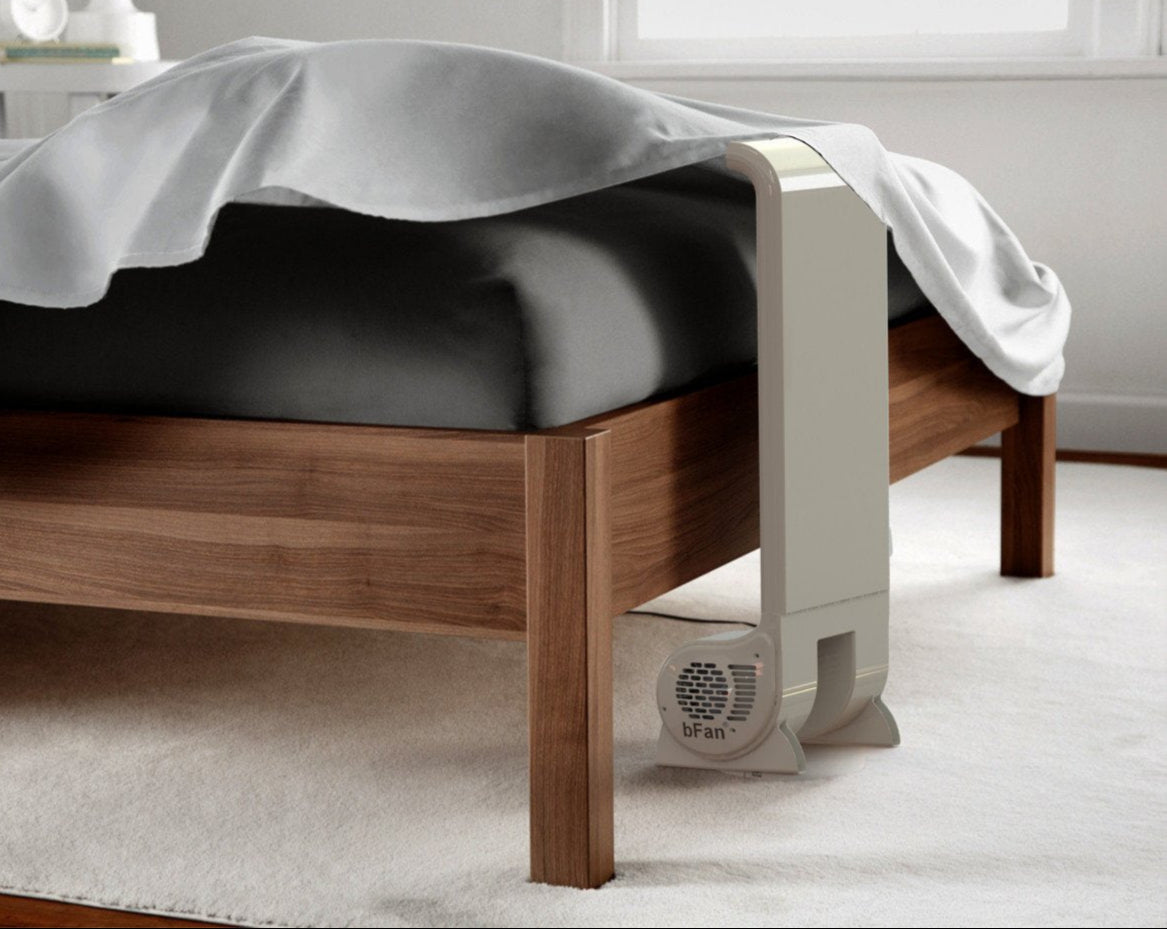
That’s where directed bed cooling can help. A bed fan does not treat a UTI, and it does not cool the air itself. It uses the cooler air already in the room and moves it under the covers to carry body heat away. The same is true for BedJet, it does not cool the air either. These systems are about moving air, not refrigerating it.
One option worth a look is the bFan from www.bedfans-usa.com. It’s an under-sheet bed cooling fan designed to sit at the foot of the bed and push room air under the bedding, so trapped heat can move away from your body and escape around the shoulders. For hot sleepers, people with night sweats, or couples with different sleep temperatures, that focused airflow can make a rough night more manageable.
A few practical points matter here. Tight-weave sheets work best because they help guide the airflow across your body instead of letting it leak out too early. People can often raise the room temperature by about 5°F and still sleep cool with a bedfan, which can help cut AC use. The bFan uses only about 18 watts on average, and at normal operating speed it runs around 28db to 32db, so it’s pretty quiet.
Price matters too, because these products do not all land in the same bracket. The original bedfan came to market several years before BedJet was even thought of. One BedJet is more than twice the price of a single bedfan, and the dual-zone BedJet is over a thousand dollars, more than twice the price of two bFans. If you and your partner want dual-zone microclimate control, two bFans can do that without forcing both sleepers into one setting. Timer controls are also useful, especially if you want cooling support for the first part of the night and then less airflow later.
If you’re comparing options, keep these basics in mind:
- It’s symptom relief, not treatment: a bed fan can help you sleep cooler while you address the infection itself
- Tight-weave sheets tend to work better for under-cover airflow
- Low power use: around 18 watts on average for a bedfan
- Couples can use two bFans for dual-zone microclimate control
- Cost often favors bedfans over BedJet, especially for dual-zone setups
When night sweats need a broader medical check
If you don’t have burning, urgency, pelvic pain, or frequent urination, a UTI becomes a less likely explanation for your sweaty nights. And if the sweating keeps coming back, even after a UTI has been treated, it makes sense to get checked for other causes.
Pay attention to patterns. Night sweats with weight loss, a lingering cough, swollen glands, chest symptoms, medication changes, or unexplained fever deserve a proper workup. So do drenching sweats that keep soaking your clothes or sheets in a cool room.
A UTI can be part of the story, especially when bacteria, fever, or kidney infection is involved. Night sweats alone, though, are usually a sign to look wider, not narrower.
Partager