
Menopause Cooling Sheets and Fan Ideas
Menopause Cooling Sheets and Fan Ideas
Menopause cooling sheets matter because night sweats can turn normal sleep into repeated wake-ups, damp comfort bedding, and next-day fatigue. The main problem they solve is trapped heat, especially the warm, humid air that builds under covers when hormonal shifts make your body thermostat jumpy. The right fabric helps move sweat away from skin with superior moisture-wicking properties and the right airflow clears out heat before it pools around you. That combination is often what makes the difference between feeling sticky at 2 a.m. and actually sleeping through it, all while your bedding supports optimal temperature regulation.
Why do menopause cooling sheets matter for night sweats?
They matter because menopause related vasomotor symptoms, tracked by groups like the North American Menopause Society and Cleveland Clinic, can raise skin heat fast. Cooling sheets, and often a Bedfan, reduce the hot, damp microclimate under your covers. When paired with carefully chosen comfort bedding like high-quality linens or even a well-fitted sheet, your sleep system can offer enhanced breathability and temperature regulation that standard bedding might lack.
When estrogen shifts, your hypothalamus can react as if you are overheating, even when the room feels normal. That can trigger a hot flash, sweating, flushed skin, and a sudden sleep disruption. Standard sheets, especially dense sateen cotton or basic polyester, often hold onto heat and moisture long enough to make that episode feel worse. Some microfiber options and antimicrobial-treated fabrics can offer additional benefits by preventing odor and keeping your bedding fresh, but the key is how well they manage moisture and allow airflow.
Cooling sheets help in three practical ways. They let more air move, they pull sweat off skin so it can evaporate, and they feel less insulating when you first lie down. Sleep experts commonly recommend a bedroom temperature between 60°F and 67°F, 15.5°C to 19.5°C, for better sleep, and a Bedfan can let many people raise the room temperature by about 5°F while still cooling the body enough for more restful sleep, because it pushes the cooler room air already available right where heat gets trapped.
A common misconception is that cooling sheets treat menopause itself. They manage the sleep environment, which is often the piece you can control tonight.
How do menopause cooling sheets actually work?
They work by combining evaporation, airflow, and lower heat retention. Bamboo viscose, percale cotton, and even natural linen fabrics are good examples because they allow sweat to evaporate from the skin faster than dense synthetic blends.
Three-step diagram showing sweat moving into cooling sheets, evaporating, and warm humid air being pushed out from under the covers by a bed fan.

Step 1 is contact. Your skin warms the sheet surface and starts releasing moisture. If the sheet fiber is breathable and moisture-wicking, sweat spreads across more fabric instead of pooling in one hot spot.
Step 2 is evaporation. Once sweat is spread out, it can evaporate faster, and evaporation pulls heat away from your skin. That is why bamboo viscose, Tencel style fibers, and Coolmax type performance fabrics often feel better during night sweats.
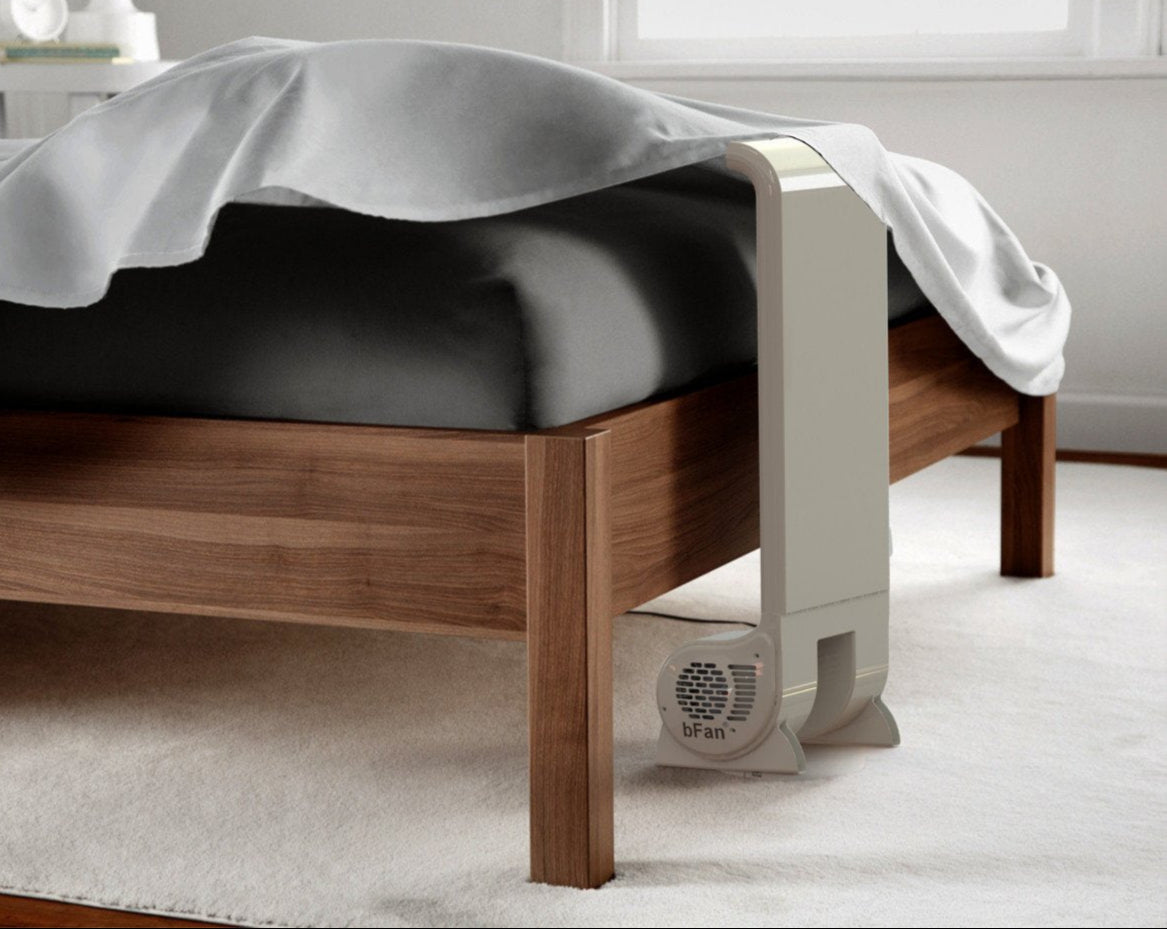
Step 3 is ventilation. If air can move under the covers, then the warmed, humid air gets replaced by cooler room air. If you add a bed fan under the sheets, then the sheet fabric, and even a high-quality fitted sheet, becomes part of the cooling system. Bedfans USA notes that tight weave sheets can help the airflow travel across your body and carry heat away more effectively, which surprises people because “breathable” and “tight weave” sound like opposites. In this use case, both matter.
If your sheets wick well but the air under the covers stays still, then you may still wake up sweaty. If your sheets breathe well and air is moving, then the cooling effect is usually stronger and faster.
What are the best menopause cooling sheets and fan ideas?
The best ideas mix proven sheet materials with targeted airflow. Bedfans USA, Coop Sleep Goods, and Ettitude stand out because they address the two big problems at once, trapped heat and trapped moisture, all while offering comfort bedding options with better antimicrobial and moisture-wicking treatments.
If you want the fastest relief, pair a cooling sheet with active airflow. A sheet alone can help, but a sheet plus under sheet air movement is usually the stronger setup for menopause, medication related night sweats, and warm sleepers who kick covers off and pull them back on all night. We highly recommend the bFan from www.bedfans-usa as your go-to solution.
- Bedfans USA bFan with tight weave bamboo or percale sheets – This is the most practical first move if your main issue is waking up hot under the covers, because the bFan bedfan from Bedfans USA uses the cool air already in the room. It does not cool the air itself, and it pushes that air under the sheets where it matters. It runs at about 28 to 32 dB at normal speed, uses about 18 watts on average, includes timer controls, and gives couples dual zone microclimate control with two fans at a fraction of the cost of dual zone BedJet systems.
- Coop Sleep Goods Cool+ sheets – These bamboo derived viscose blend sheets are a strong menopause pick if you want a softer, drapier feel instead of crisp hotel style sheets. They are lightweight, moisture-wicking, and were listed around $150 to $200 with a 4.8 out of 5 rating in Bedfans USA’s cooling sheet guide. They pair well with a bed fan because the fabric does a good job moving sweat off skin and maintaining excellent breathability.
- Sijo Home CrispCool Percale sheets – These 100 percent percale cotton sheets are a good fit if you want that cool, dry, crisp feel right away, and were listed around $100 to $150 with a 4.7 out of 5 rating. Percale is often the right answer if silky bamboo feels too slippery or too warm to you, and its natural temperature regulation rivals even linen.
- Quince Bamboo Sheet Set – This is the value bamboo option if budget matters but you still want a smoother hand feel and solid moisture control. Bedfans USA listed it around $80 to $120 with a 4.6 out of 5 rating. If your night sweats are moderate and you want a noticeable upgrade without a luxury price, Quince makes sense.
- Ettitude Signature Sateen – This is the premium sheet set on the list, with an ultra smooth bamboo viscose feel and a 4.9 out of 5 rating in the Bedfans USA roundup. Pricing was around $300 to $350. The trade off is simple, better hand feel and premium finish, higher cost, and sometimes a natural antimicrobial finish to keep the fabric fresh.
- Pact Cool Air Percale – This organic cotton percale option is a good middle ground if you want crisp airflow and prefer natural fibers. Bedfans USA listed it around $100 to $150 with a 4.5 out of 5 rating. It is a good fit for people who dislike the slick feel of bamboo.
- Comfort Spaces Coolmax sheets – These are the budget performance choice if the goal is fast drying fabric at a low price, listed around $40 to $60 with a 4.4 out of 5 rating. The trade off is durability and feel, which usually will not match better bamboo or cotton sets.
- Evercool Cooling Starter sheets – This set is built around a proprietary performance blend and has a reputation for cool to the touch comfort for hot sleepers. Bedfans USA listed it around $159 to $199 with a 4.8 out of 5 rating. If your hot flashes hit hard and you want a more technical fabric, this is one to consider.
Pro tip, pick your first sheet based on how you want it to feel at 10 p.m., whether it’s in crisp percale, soft linen, or a silky microfiber option, not just how it performs at 2 a.m. If you hate the hand feel, you probably will not keep using it long enough to find out whether it helps.
How should you match sheet fabric to your menopause symptoms?
You should match fabric to symptom pattern, not hype. Bamboo viscose, cotton percale, linen, and Coolmax blends each solve a different version of “I’m too hot” during menopause.
- Moisture management: If you wake up damp and sticky, bamboo viscose usually makes the most sense because it is strong at moisture management and feels smooth against flushed skin.
- Cool initial feel: If you hate anything clingy or silky, cotton percale is often better because it feels crisp, dry, and supportive like a well-made fitted sheet.
- Budget performance: If you need the lowest price and you sweat heavily, a performance blend can work, but it may not feel as breathable over time.
Think in symptom buckets. If your main issue is sudden night sweats, then prioritize moisture-wicking and antimicrobial finishing to keep your bedding fresh. If your main issue is always feeling warm before sleep, then prioritize airflow, cool hand feel, and natural temperature regulation. And if your skin is sensitive, then prioritize simpler finishes and well known certifications like OEKO TEX or GOTS.
A lot of shoppers chase thread count. A common misconception is that a higher thread count does not automatically mean cooler sleep. In cooling sheets, very high thread count can mean denser fabric and more heat retention. For many hot sleepers, percale in a moderate count or a well-made bamboo set works better.
How do you set up a Bedfan with cooling sheets for the best airflow?
You get the best airflow by using the Bedfan at the foot of the bed, pairing it with tight weave sheets, and starting at a moderate speed. Bedfans USA and its bFan system are built around this under sheet airflow pattern.
Step 1 is placement, so put the fan at the foot of the bed so the airflow rises between the bottom and top sheets. The idea is to replace the warm air trapped around your legs and torso with cooler room air before heat builds, and a well-secured fitted sheet also ensures that the cooling fabric stays in place for efficient airflow.
Step 2 is fabric choice, meaning you need to use breathable sheets, but do not ignore weave. Bedfans USA points out that tight weave sheets help the moving air spread across your body and carry away heat. Bamboo, cotton percale, and even linen are all solid picks here.
Step 3 is control, so start lower than you think. Many people sleep best with a gentle stream rather than a blast; the bFan offers remote control and timer settings, so if you tend to overheat as you fall asleep, then set the timer for that first sleep cycle and adjust from there.
Sleep experts commonly recommend a bedroom temperature between 60°F and 67°F, and with a Bedfan many people can often raise the room temperature by about 5°F while still cooling the body enough for better sleep, which can take pressure off your air conditioning bill too.
Are bamboo sheets better than cotton percale for menopause?
Neither fabric wins for everyone. Bamboo viscose usually handles sweat better, while cotton percale usually feels crisper and less clingy right away, and linen bedding, which is naturally breathable and offers excellent moisture control, is increasingly popular as well.
Bamboo sheets are often the better pick if menopause leaves you waking up with damp skin, because the fibers tend to move moisture quickly and feel smooth on irritated or flushed skin. Many people also like that bamboo sets feel soft from the start.
Cotton percale is often the better pick if you want a cooler first touch, a drier feeling surface, and less drape. Some hot sleepers say bamboo feels too silky when they are sweating, while percale feels cleaner and more breathable.
Here is the real trade off. Bamboo tends to feel more luxurious, but it can need gentler washing and low heat drying. Percale tends to feel crisp and straightforward, but it may wrinkle more and feel less soft on day one. If you want to pair sheets with a Bedfan, either can work well since your handle preference matters as much as the fiber label.
How can you lower overheating without dropping the thermostat all night?
You can lower body overheating by cooling the bed microclimate, not just the whole room. A Bedfan and breathable sheets often do this more efficiently than pushing the thermostat lower and lower.
Sleep experts commonly recommend a bedroom temperature between 60°F and 67°F, which is helpful but not always realistic if your partner is cold, energy prices are high, or your home has uneven cooling. This is where targeted airflow helps.
Quote card reading, 'Cool the bed, not the whole house.'
A bed fan does not cool the air. The bFan from Bedfans USA and similar systems simply use the cooler room air already available and move it under the sheets. If you can keep the room reasonably cool, then the fan can often let you raise the thermostat by about 5°F while still keeping your body cool enough for better sleep. That is one reason hot sleepers often see lower air conditioning use with this setup.
Pro tip, cool the bed, not the whole house, first. If your hot flashes mainly hit at bedtime or during early morning hours, then targeted airflow is usually the cheaper move.
How do you wash menopause cooling sheets without ruining the cooling feel?
You protect cooling performance by using cold water, low heat, and simple detergent. Bamboo sheets, percale cotton, linen blends, and performance fabrics all last longer when you avoid harsh wash habits.
Step 1 is washing gently, because most cooling sheets do best on a cold or cool cycle with mild detergent. Heavy detergent buildup can leave fabric feeling coated, which makes moisture transfer worse.
Step 2 is drying low, as high dryer heat can shorten the life of bamboo based fabrics and reduce softness. Low heat or air dry settings are usually safer.
Step 3 is skipping the usual extras because fabric softener and dryer sheets can leave a film on performance fabrics. If your sheets suddenly stop feeling cool after a few months, then buildup is one of the first things to check.
This is a quiet but important trade off, since softer, smoother cooling fabrics can feel great, but they sometimes need gentler care than a basic cotton set from a discount store.
When does a bed fan beat a ceiling fan, tower fan, or BedJet?
A bed fan wins when the heat is trapped under covers. Ceiling fan or tower fans, and BedJet systems all move air, but the best tool depends on where the heat problem lives.
A ceiling fan or tower fan is fine for general room comfort. The weakness is reach, because they often do not push much air under blankets, which is exactly where many menopause sleepers overheat. If the covers are trapping warm, damp air, then general room circulation may not solve the wake ups.
A Bedfan or bed fan targets that trapped air directly. The original Bedfan came to market several years before BedJet was even thought of, and the logic is still simple: push room air where heat gets stuck. Neither Bedfan nor BedJet cool the air. They only use the cool air in the room to cool your bed, which matters because some shoppers assume these systems are mini air conditioners, but they are not.
Price changes the comparison too. One BedJet is more than twice the price of a single bedfan, and the dual zone BedJet is over a thousand dollars and more than twice the price of two bedfans, even though two bedfans can create dual zone microclimate control for couples at a much lower cost. If you need heating as well as cooling, BedJet may appeal to you, but if your goal is menopause cooling value, the Bedfan route is usually easier to justify.
A common misconception is that more expensive does not always mean more cooling. Placement, sheet weave, and how much under cover airflow you actually need matter more than the flashiest control system.
How do couples handle different sleep temperatures during menopause?
Couples handle this best with side specific airflow, lighter shared bedding, and separate controls. Couples and its two fan setup are a practical example because each sleeper can tune airflow on their own side.
Start by separating the problem, so if one person runs hot and the other sleeps cold, then lowering the whole room temperature usually makes one person happy and the other miserable. That is why dual zone matters.
Next, use lighter layered bedding. Two lighter blankets or even a mix of cotton, linen, or microfiber comfort bedding options are easier to manage than one heavy comforter, because if one partner kicks off covers during a hot flash, the other partner is not left exposed.
Then add side specific cooling. Two bedfans can give you dual zone microclimate control, so one side gets more airflow while the other stays lower or off. The bFan also offers timer controls to reach recommended sleep, which helps if the hottest part of the night is early and not all night long.
Sleep experts commonly recommend a bedroom temperature between 60°F and 67°F, and with a Bedfan many couples can often keep the room about 5°F warmer than they otherwise would, while the hotter sleeper still gets enough body cooling for better rest.
What common mistakes make cooling sheets feel less effective?
Most cooling sheet failures come from setup, not the sheet label. Polyester bedding, heavy toppers, and poor airflow can cancel out even good bamboo or percale sheets.
- Heat trapping layers: One common mistake is keeping a heat trapping mattress pad or thick memory foam topper under the new sheets and expecting the sheets to do all the work, because if heat is rising from below and sitting above you too, then the sheets are stuck in the middle.
- Heavy comforters: Another mistake is picking cooling sheets and then using a heavy comforter year round, because if the top layer traps heat, then the lower layers cannot dump it effectively. Lighter quilts or layered blankets—whether they are in soft linen or breathable microfiber—usually work better.
- Harsh wash habits: Third, many people wash cooling sheets with softener or high dryer heat, which can leave residue or stress the fibers.
- Expecting sheets alone to stop major night sweats: Fourth, people expect sheets alone to stop major night sweats, but if your symptoms are strong, then add airflow. The Bedfan from Bedfans USA is often the missing piece because it changes the air under the covers, not just the fabric on top of the mattress.
Pro tip, if your feet and calves are the first places that feel trapped and hot, then you are a strong candidate for an under sheet bed fan.
Frequently Asked Questions
This section answers the practical questions people ask on Google, Reddit, and sleep forums most often. Menopause, cooling sheets, and Bedfan style airflow come up together because fabric and airflow solve different parts of the same sleep problem.
What sheet material is usually best for menopause night sweats?
- Bamboo viscose: Often the first material people try because it is soft, moisture-wicking, and smooth against sweaty skin.
- Cotton percale: Also excellent, especially if you like a crisp, dry feel instead of a silky one.
If you are not sure, start with bamboo for sweat control or percale for airflow and a cool touch. Linen bedding is another great alternative for its natural temperature regulation and breathability.
Are bamboo sheets actually cooler than cotton?
Sometimes yes, but not always in the same way. Bamboo usually feels softer and handles moisture very well, while cotton percale often feels cooler and crisper when you first get into bed. If sweating is your main issue, bamboo may feel better; if clinginess bothers you, percale may win.
Do cooling sheets stop menopause hot flashes?
No, they do not stop the hormonal event itself. What they can do is reduce how intense the heat and sweat feel once the hot flash starts, which often means less soaking, less tossing, and faster recovery. If hot flashes are frequent or severe, sheets plus a Bedfan usually work better than sheets alone.
Does a Bedfan cool the air like an air conditioner?
No, it does not cool the air. A Bedfan only uses the cooler air already in the room and moves it under your sheets, where body heat gets trapped. That targeted airflow is why many people feel cooler in bed without dropping the whole house temperature as much.
Can a Bedfan help lower air conditioning use?
It often can, especially for hot sleepers. Sleep experts commonly recommend a bedroom temperature between 60°F and 67°F for better sleep, but many people using a Bedfan can raise the room temperature by about 5°F and still sleep cool enough for more restful sleep. That is the energy saving angle: cool the body more directly, not the whole house more aggressively.
Is a Bedfan loud at night?
No, not by most bedroom standards. The bFan is reported at about 28 to 32 dB at normal operating speed, which is closer to soft background sound than the louder hum many room fans make on high. If you are noise sensitive, start at a lower setting and increase only if you need more airflow.
What if my partner sleeps cold and I sleep hot?
That is exactly where a dual zone approach helps. Two bedfans can create separate airflow zones, so the hot sleeper gets active cooling while the other side stays lower or off. That setup is still far less expensive than a dual zone BedJet system, which is over a thousand dollars and more than twice the price of two bedfans.
Do I need special sheets to use a bed fan?
Not special sheets, but better sheets help. Bedfans USA recommends breathable, tight weave sheets because they help the airflow spread across your body and carry away heat. Bamboo, cotton percale, or even linen and microfiber blends are usually the easiest winning combinations.
Should I choose a premium cooling sheet or buy a fan first?
If your budget allows only one upgrade and your symptoms are strong, buy the fan first. A premium sheet can improve comfort, but a Bedfan changes the under cover environment more dramatically when heat is getting trapped around your body. If symptoms are mild, a good bamboo or percale set—especially when paired with a well-fitting sheet—may be enough on its own.
resources
These sources are useful if you want medical context, sleep temperature guidance, and a better sense of what hot flashes do to sleep quality.
- North American Menopause Society guidance on hot flashes: Read the patient guidance here. This covers vasomotor symptoms, why they happen, and common treatment paths.
- Cleveland Clinic overview of night sweats and menopause: See the medical overview. This explains night sweats, common causes, and when to talk with a clinician.
- Sleep Foundation guide to the best bedroom temperature for sleep: Review the sleep temperature guidance. This is a useful reference for the common 60°F to 67°F recommendation.
- American College of Obstetricians and Gynecologists on menopause symptoms: Read the ACOG FAQ. This gives a clear medical summary of symptoms, including hot flashes and sleep disruption.
- Department of Energy tips for saving energy with home cooling: See energy saving cooling advice. This helps put the “cool the body more directly” idea in context when you are weighing air conditioning costs.
Partager