
Bedfan Sleep Blog
College Students and Their Relationship With Sleep
on Oct 20 2021
1
College students are notoriously some of the most sleep-deprived people on the face of the earth. Pulling all-nighters, popping Adderall, and slipping naps into every uninterrupted moment seem to be considered the norms. This is generally due to having heavy school loads and part-time jobs, while still trying to maintain a social life. While students do lose sleep trying to maintain high grades, their lack of sleep usually hurts their grades in the long run. Here we will cover the relationship between sleep and college students, as well as provide some tips in overcoming sleep deprivation.
A lack of sleep heavily impacts memory and concentration skills which go on to make performing well on a test very difficult. Instead of cramming late into the night and early morning, the best way to prepare for a test is to study well and get the full recommended 8 hours of sleep. While getting those 8 hours of sleep can be tricky, there are some things that can help.
Going to bed early ensures that you will get the amount of sleep you need, even if you encounter some hiccups along the way to falling asleep. This also gives you extra time in case you have trouble getting to sleep and need to get out of bed and do something relaxing. These relaxing activities can be taking a bath or reading a boring book. Most important to getting sleep is staying off of electronics, as the blue light emitted by them affects sleep. Naps taken during the day should also be under an hour long and before 3 pm.
It’s also important for students to get good sleep because not only can lack sleep affect grades, it can also strongly affect mental health. According to the National Alliance on Mental Illness, 50% of students struggle with anxiety, and 44% experience symptoms of depression. (Sleep Education) And while lack of sleep is bad enough for grades, mental health issues can only worsen academic struggles.
It is also recommended that extra sleep is not made up for on the weekends by sleeping in. While this seems a common and straightforward enough thing to do, it actually greatly messes with the body’s sleep schedule, making healthy sleep more evasive. Instead, it is recommended that students get to bed earlier on the weekends and wake up at their usual time, rather than sleep in late.
As a general rule, it is also important to avoid caffeine late at night when trying to sleep early, as caffeine (obviously) makes falling asleep more difficult than necessary. (Learn: how does caffeine affect sleep.) Students should also make an effort to not eat a big meal before bed, instead rely on small snacks or desserts to keep their stomachs full while going to bed. Nothing can keep you awake and delay you from sleeping as much as an angry, empty stomach. One good pre-bedtime snack is tart cherries, which have a healthy helping of melatonin. But always avoid ice cream, chocolate, alcohol, potato chips, and any other fried foods before bed. Sugar raises blood sugar, which can make it hard to fall asleep, while the oil in fried foods keeps the body from focusing on going to sleep.
on Oct 20 2021
Melatonin is generally called “the sleep hormone,” and anyone who has had issues winding down at night is likely familiar with it. Many people take synthetic melatonin as a supplement at night to help them wind down and get a good night of sleep. Of course, being a hormone, melatonin is naturally produced by the body. Melatonin production is linked to the circadian rhythm, with more being produced after dark, in order to help the body sleep at the proper times.
Research in recent years has shown that synthetic melatonin can help people get better sleep in multiple different situations. Troubled sleepers can benefit greatly from taking, as can night owls who need to get to bed at an unusually early time. Even people who wake up too early in the morning can take melatonin to help them sleep until a decent time. Studies done over short amounts of time have found that melatonin supplements help people fall asleep faster and have better sleep efficiency. Sleep efficiency is the amount of time spent in bed compared to the amount of time you actually spend sleeping. (VeryWell Health)
Melatonin supplements have also been found to be helpful for people who are neurodivergent. Children who have ADHD experience better sleep while taking melatonin. Many people with autism have a hard time producing the proper amount of melatonin and studies have shown that supplements help them fall asleep sooner. Better sleep has also been found to improve functioning during the day.
One of the most impressive facets of melatonin supplements is the lack of severe side effects. There are a handful of minor reported side effects, such as dizziness, nausea, and drowsiness. These are very minor side effects in comparison to the ones commonly associated with prescription or over-the-counter sleeping medications. The large majority of people who use sleeping medications report feeling as though they are hungover the next day. Melatonin supplement side effects include gastrointestinal issues such as constipation, diarrhea, gas, heartburn, and nausea. Your body can also become dependent on sleeping pills and after quitting, rebound insomnia can occur.
When deciding whether or not one should take melatonin, any present health concerns should be taken into consideration and a doctor should be consulted. Melatonin can interact with high blood pressure medications, immune system suppressants such as cyclosporine, and herbs such as valerian, kava kava, and St. John’s wort. Melatonin is also not suggested for children to take due to some concern that it may affect gonadal development. Women who are pregnant or trying to get pregnant should also avoid taking melatonin as it may inhibit ovulation to an extent. Men taking melatonin have also reported increased breast size and reduced sperm count.
on Sep 19 2021
A lot of us have talked in our sleep at some point in our life. The degree to which varies greatly though, as it might be just a word or sound, or it may be a whole dialogue. So, what causes sleep talking at night? A whopping 50% of children between 3 and 10 years old deal with this parasomnia, while only around 5% of adults do. There is also a high possibility that sleep talking is, in fact, a genetic trait! Studies have found that only about half of sleep talk is clear enough to understand, while the other half is just gibberish. While the statistics of it may seem clear cut, the content of the activity is a little less clear.
Science is yet to come to a conclusion on what causes sleep talking. It’s rarely related to the sleep-talker’s consciousness and their real-life events. It’s more likely related to conflict-heavy events, such as nightmares, or an underlying mental health factor such as PTSD. More often than not, sleep talk that is recorded contains exclamations or profanities. (Sleep Foundation) It may also be connected to Sleep Apnea and chronic headaches.
As a whole, it’s not dangerous for people to be talking in their sleep, it’s just disruptive to whoever may be sharing a bedroom with them. Waking up another person with sleep talking can quickly become problematic, because high-quality sleep is so important to functioning in everyday life. Some small changes can be made to try and lessen the frequency and severity of sleep talking- most of it tying back to sleep hygiene and environment.
Keeping a sleep diary for a couple of weeks for your doctor to look at is one of the best things you can do to get started on making some changes with sleep talking. A sleep diary can be a big responsibility to take on though, even if just for a little while. So if you’re looking for something a little bit smaller to try and help, you can also try making your bedroom space better for sleep. Making sure the mattress is of high quality and the bedding is cozy goes a long way. Keeping the temperatures low can also encourage great sleep. You should be sure to limit the amount of light and noise pollution in your bedroom. This can be as simple as unplugging bright electronics at night or running a sound machine to drown out distracting noises.
As for the person who is sharing the room with the sleep talker, there are some things you can do to make your quality of sleep a little bit better, too. Earplugs or headphones worn in or over the ears can help filter out the sound enough to not disturb your sleep. A sound machine can also help to drown out the sound of your room partner talking in the middle of the night. If a sound machine isn’t feasible, trying something with a little less volume such as a fan. If it comes down to it, sleeping in another room may be one of the only ways to get a good night of sleep without having it disrupted.
The most important thing is, if you’re experiencing troubles in your life due to sleep talking, you should consult your doctor about it. For more information on other sleep issues, follow our Sleep Health Blog.
https://www.webmd.com/sleep-disorders/talking-in-your-sleep
https://www.sleepfoundation.org/parasomnias/sleep-talking
on Sep 19 2021
Most of us know someone who sleepwalks on the regular- you might even be that person! Sleepwalking, formally called somnambulism, is a very strange parasomnia, which can lead people to do things that are very out of the ordinary for them. Whether that be eating food in their sleep in the middle of the night, or walking down the road and putting themselves in dangerous situations. Some people have actually even driven while being in a state of sleepwalking. We are going to cover what sleepwalking looks like, its causes, and sleepwalking treatment.
What Does Sleepwalking Look Like?
Someone in a sleepwalking episode typically has wide open, glassy eyes and a blank expression on their face. As noted earlier, sleepwalking is also not just walking- it can be running, violent, or include urination in inappropriate places. It usually happens an hour or two after the sleepwalker goes to sleep. The sleepwalking person rarely remembers what happened during the seconds to half-an-hour long episode. They either return to bed and continue sleeping or wake up out of bed and be confused as to where they are and what’s happening. (Sleep Foundation)
Sleepwalking Causes
Sleepwalking is a parasomnia, described specifically as a disorder of arousal. It occurs during the deepest stage of non-rapid eye movement (NREM) sleep. Sleep terrors also occur during NREM sleep, so the two can occur at the same time. (MayoClinic) Sleepwalking causes can be attributed to several other health conditions such as sleep-disordered breathing, like obstructive sleep apnea. Gastroesophageal reflux disease (GERD) can affect sleepwalking and there is alcohol induced sleepwalking. Medications used for psychiatric disorders and sedatives can worsen or cause sleepwalking. A consistent lack of sleep can cause the body to need more deep sleep, which can make sleepwalking more likely to occur.
Sleepwalking Treatment
Most people who sleepwalk don’t require any kind of treatment for it. It’s more common in children than adults as it usually becomes less frequent as you get older. Those who do have some treatment for it are generally children whose parents use the anticipated awakening method. This method has the parents wake the child before the anticipated time when they are going to sleepwalk. This is easy to calculate because it occurs in the same sleep stage each time. It has been shown to be effective in children, but has yet to be tested in adults.
Other measures can be taken to try and lessen sleepwalking, such as improving sleep hygiene and atmosphere. Consumption of alcohol or caffeine near bedtime can cause disturbances in sleep which may be linked to sleep problems that can worsen sleepwalking. Learning more about sleep hygiene and how to improve it is a good place to start if you or someone you know is struggling with sleepwalking.
If you’re trying to help someone who sleepwalks, the best that you can do is eliminate safety risks in the area where they may be while sleepwalking. Putting away sharp objects, removing tripping hazards, and latching doors and windows securely can all help keep a sleepwalking person safe. If the sleep walking is happening multiple times a week or resulting in dangerous activity, you should reach out to a doctor.
https://www.mayoclinic.org/diseases-conditions/sleepwalking/symptoms-causes/syc-20353506
https://www.sleepfoundation.org/parasomnias/sleepwalking
on Jul 12 2021
All of the human senses play an important role in sleep wellness. But the most important of those is how we interact with light. To fully understand the effects of light, we need to dig deeper into the body's circadian process and how it works. Thus, it’s important to know how your circadian rhythm and light interact to understand how blue light affects sleep.The body's circadian rhythm functions are connected to the circadian pacemaker (or a master clock) within the brain. The specific area of the brain is within the hypothalamus, the part of the brain primarily responsible for hormone regulation. Inside of the hypothalamus is the suprachiasmatic nucleus (or shortened, SCN). And the SCN is highly sensitive to one external factor: light. A healthy circadian rhythm allows for restorative sleep. It even helps our bodies to produce proteins close to mealtime hormones to provide enough energy (Sleep Foundation). The circadian rhythm also influences mental and physical health- from metabolism to dementia. The circadian rhythm even affects the sleep-promoting hormone melatonin! The circadian rhythm is supposed to follow the pattern of light from the sun to ensure that we sleep at night and are awake during the day. This process is fundamental in producing melatonin. Thus, when darkness begins to fall at dusk, melatonin levels start to rise, encouraging us to sleep. But in our modern age, all of this can be disrupted by the excess of artificial light around us. Light can affect the circadian rhythm in different ways, depending on when the exposure occurs. For example, exposure early in the morning can push the circadian rhythm earlier. In contrast, exposure late at night pushes it later. This explains why late-night exposure to artificial light, especially blue light, can be so harmful. Blue light is a specific wave of light that impacts the body especially powerfully, because most of our exposure to blue light comes from the sun! When we get blue light exposure from the sun, it elevates body temperature and heart rate, making us feel awake and energized (Sleep Foundation). Knowing that, it's no surprise that when the body is exposed to blue light at night, whether from a TV, phone, or other electronic devices, the circadian rhythm is thrown off. Late-night light exposure also throws off transitions through sleep cycles, which makes sleep less refreshing. The best way to ensure that light is not interfering with sleep is to minimize exposure to light (especially blue light) near bedtime. This means avoiding electronics usage as much as possible or using blue light glasses. Efforts can also be made to eliminate outside light from the bedroom by using curtains (especially blackout curtains) or a sleep mask. Blocking out the light from electronics in the bedroom, such as clocks, is also helpful. However, not everyone likes a pitch-black room at night, which is where red light comes in. It is currently theorized that red light promotes melatonin, thus promoting better sleep (Healthline). Most importantly is getting plenty of natural light exposure during the day. https://www.sleepfoundation.org/circadian-rhythmhttps://www.sleepfoundation.org/bedroom-environment/light-and-sleephttps://www.sleepfoundation.org/bedroom-environment/blue-lighthttps://www.healthline.com/health/why-not-to-have-red-lights-on-at-night#facts-about-red-light
on Jun 26 2021
Those who are avid coffee lovers know the jittery, awake feeling that too much caffeine can cause- and moreover, its effects on sleep. Drinking any caffeinated drinks too close to bedtime is a sure way not to fall asleep on time. But how does caffeine affect sleep quality?
Caffeine, which is usually consumed through drinks, enters the bloodstream through the stomach and then crosses the blood-brain barrier. Once it reaches the brain, it begins blocking the adenosine receptors. These receptors and adenosine play an essential part in sleep and feeling tired. Adenosine is a sleep-promoting chemical produced throughout the day so that as it builds up, the feeling of sleepiness starts to show up. But the presence of caffeine blocking the receptors creates an alert and awake feeling.
It usually takes about 30-60 minutes for the effects of caffeine to kick in. It then has a half-life (time taken to eliminate half of the drug) of about 4-6 hours (Sleep Foundation). This means that in some cases, the effects can still be felt six hours after it is consumed. Though, the half-life varies widely for everyone.
Because of the long half-life, even a coffee consumed six or so hours before bed could cause sleeping issues. When caffeine is used at night to stave off sleepiness, it can cause insomnia symptoms or worsen pre-existing insomnia. It also not only makes it harder to fall asleep, but it also makes it harder to stay asleep (Sleep Health Foundation)! One of the symptoms of having too much caffeine (or caffeine too close to bedtime) is waking up frequently throughout the night.
The consumption of caffeine also cuts down the length of deep sleep, which reduces the refreshingness of sleep. Not only does it reduce deep sleep, but it also reduces sleep time as a whole! One study (https://jcsm.aasm.org/doi/10.5664/jcsm.3170) found that caffeine consumption six hours before bed can reduce sleep time by a whole hour.
Most concerningly is the impact that caffeine from a soda can have on breathing during sleep. Sleep-disordered breathing (SDB), which is one of the most common symptoms of Obstructive Sleep Apnea, is more severe after caffeine is consumed.
As a whole, caffeine can affect sleep in a multitude of ways, and the amount consumed should be monitored to ensure good, restful sleep.
https://www.sleepfoundation.org/nutrition/caffeine-and-sleep
https://www.sleephealthfoundation.org.au/caffeine-and-sleep.html
on Jun 26 2021
One of the most common sleep disorders, affecting around 35% of adults, is the sleep-stealing disorder insomnia (Sleep Foundation). Those who have insomnia have difficulty falling asleep or getting a whole, restful night of sleep. While falling back asleep in the morning after waking up too early is easy for most, those with insomnia struggle to go back to sleep. Insomnia, especially long-term, can cause even more significant issues such as daytime sleepiness, poor mental health, and brain fog. These issues can then cause damage to the insomniac's life and relationships. We will cover the reasons for such sleeplessness and the types of insomnia that one can experience.
Types of Insomnia
Depending on what is causing insomnia, it can be labeled as one of two different types of insomnia. The first is primary insomnia, which is insomnia caused by something outside of health issues, substances, or medications. The second is secondary insomnia, which means that a health issue, substance, or medication is causing insomnia. There are then three types of primary insomnia: idiopathic, SSM (sleep state misperception), and stress-related (Psychiatric Times). The most common type, idiopathic insomnia, is insomnia that is genuinely not caused by any identifiable factors. The rare SSM condition (commonly known as paradoxical insomnia) is the misjudging of how much sleep the person is getting. They may believe that they only got two or three hours of sleep when they actually got a full seven or eight. People with SSM likely bounce between wakefulness, stage one sleep, and light sleep, all while remaining very aware of their surroundings (Verywell Health). This causes them to feel as though they have not gotten enough sleep. The last type of primary insomnia, stress-related, can be caused by mild stress or anxiety. Primary insomnia can also be caused by more minor things, such as the atmosphere of the bedroom. Loud noises from outside, too bright of lights, or a too-hot room can all interrupt sleep and cause insomnia. Changes to the regular sleep schedule, such as jet lag, staying up too late, or working nightshifts, can also cause insomnia. Luckily, this kind of insomnia is short-lived and solved with a change of habit. This could be like wearing an eye mask, using ear plugs, or investing in a bFan bed fan to keep your mattress cool.Secondary insomnia is more of a symptom of another issue than an issue itself. These issues vary widely, from mental health to medications. Insomnia commonly occurs as a symptom of mental health disorders such as anxiety or depression. As many as 80% of people with depression have trouble falling asleep- and those with chronic insomnia are three times more likely than others to develop depression (WebMD). Insomnia can be a symptom of other health issues like sleep apnea, hyperthyroidism, diabetes, and more. Medications for colds, allergies, depression, and more can cause trouble sleeping. Everyday substances like caffeine, alcohol, and tobacco can cause secondary insomnia, too. There are also general factors that make the risk of having insomnia even higher. Pregnancy and the usual hormonal changes that come with being a woman make it more likely for women to struggle with insomnia (Mayo Clinic). Being over the age of 60 or a teenager also increases the chances due to changes in sleep patterns. If you are suffering from this insomnia, look at our list of who to talk to about sleep problems and get the help you need.https://www.sleepfoundation.org/insomnia/what-causes-insomniahttps://www.verywellhealth.com/definition-of-paradoxical-sleep-3014904https://www.psychiatrictimes.com/view/primary-insomnia-lifelong-problemhttps://www.webmd.com/depression/features/sleep-problemshttps://www.webmd.com/sleep-disorders/insomnia-symptoms-and-causeshttps://www.mayoclinic.org/diseases-conditions/insomnia/symptoms-causes/syc-20355167
Sleep Inertia: Why waking up is so hard
on Jun 20 2021
The feeling of waking up in the morning and feeling bogged down and disorientated is all too familiar to some people. Those people likely struggle with something known as sleep inertia. Sleep inertia occurs when waking up in the morning or waking up from a nap. It's the feeling of just not having the energy to get up and wanting nothing more than to go back to bed.
on Jun 16 2021
Roughly half of all adults within the United States suffer from the same sleep problem. In fact, you or someone you know likely suffer from this loud problem as well: snoring. While it might seem like a sleep disorder in and of itself, it's not, but it can be a symptom of one. One of the more common symptoms of obstructive sleep apnea (OSA) is snoring. But unless that snoring is accompanied by choking or gasping sounds, it is likely just harmless snoring (Sleep Foundation). So what exactly is snoring? The distinctive snoring sound is caused by tissues in the back of the throat rattling and vibrating. The muscles in the airway relax during sleep, causing the airway to tighten. The restricted air that moves through the airway causes the rattling and vibrating sounds as it moves past the tissues in the back of the throat. So, what causes people to snore? Several factors can play a part in whether or not a person without OSA snores. Some factors, such as having a cold, are not long-lasting and cause snoring to occur for a limited time only. Having a cold or otherwise caused congestion limits a person's ability to breathe through their nose (WebMD). Drinking alcohol can also cause snoring, as it causes the muscles in the throat to relax and thus narrows the airway. The position in which someone is sleeping also plays a significant role in snoring occurring. Any awkward sleeping position which restricts the airway can cause snoring (Advanced Sleep Medicine Services, Inc.). Pregnancy, specifically in later trimesters, causes swelling, which can constrict the airway and cause snoring. Swollen adenoids or swollen tonsils can also restrict breathing and cause snoring to occur (this is most commonly seen in children).More long-term factors, such as obesity, cause snoring to become a more persistent issue. Obesity causes snoring because of the extra fatty tissue on the neck, which puts pressure on the airways (MedlinePlus). A generally large or misshapen tongue can restrict the airways and cause snoring as well. Older people are more likely to snore as the muscles in their throat weaken due to age. Nasal issues, such as misshapenness, can also cause difficulty breathing and lead to snoring.Two significant risk factors that can cause snoring are being a man or having a family history of snoring or OSA. The airway within men is more vulnerable to collapse or be constricted as they have a longer upper airway. Men being more prone to snoring is also due to hormone differences and fat distribution (Sleep.org). People most commonly find out that they snore from their partners or anyone else near enough to hear them. If no one else is around to hear and inform someone worried they're a snorer, they can opt to use apps that will record their sleep. https://www.sleepdr.com/the-sleep-blog/is-snoring-a-sleep-disorder-or-symptom/https://www.sleep.org/men-snore-women/https://medlineplus.gov/ency/patientinstructions/000720.htmhttps://www.sleepfoundation.org/snoringhttps://www.webmd.com/sleep-disorders/ss/slideshow-stop-snoring
on Jun 10 2021
The best rule of thumb for this range is that the younger you are, the more sleep time you need. Newborn babies, specifically, need the most sleep per day. Over the course of 24 hours, a newborn baby needs to get between fourteen to seventeen hours of sleep.
Cardiovascular Consequences of Sleep Loss
on May 11 2021
It is important to ensure that you are sleeping to your fullest, otherwise, one of the biggest consequences of sleep loss will be inflammatory cardiovascular struggles. It has been found that sleep loss can result in heightened blood pressure, which thus can cause many other determinants regarding the cardiovascular system.
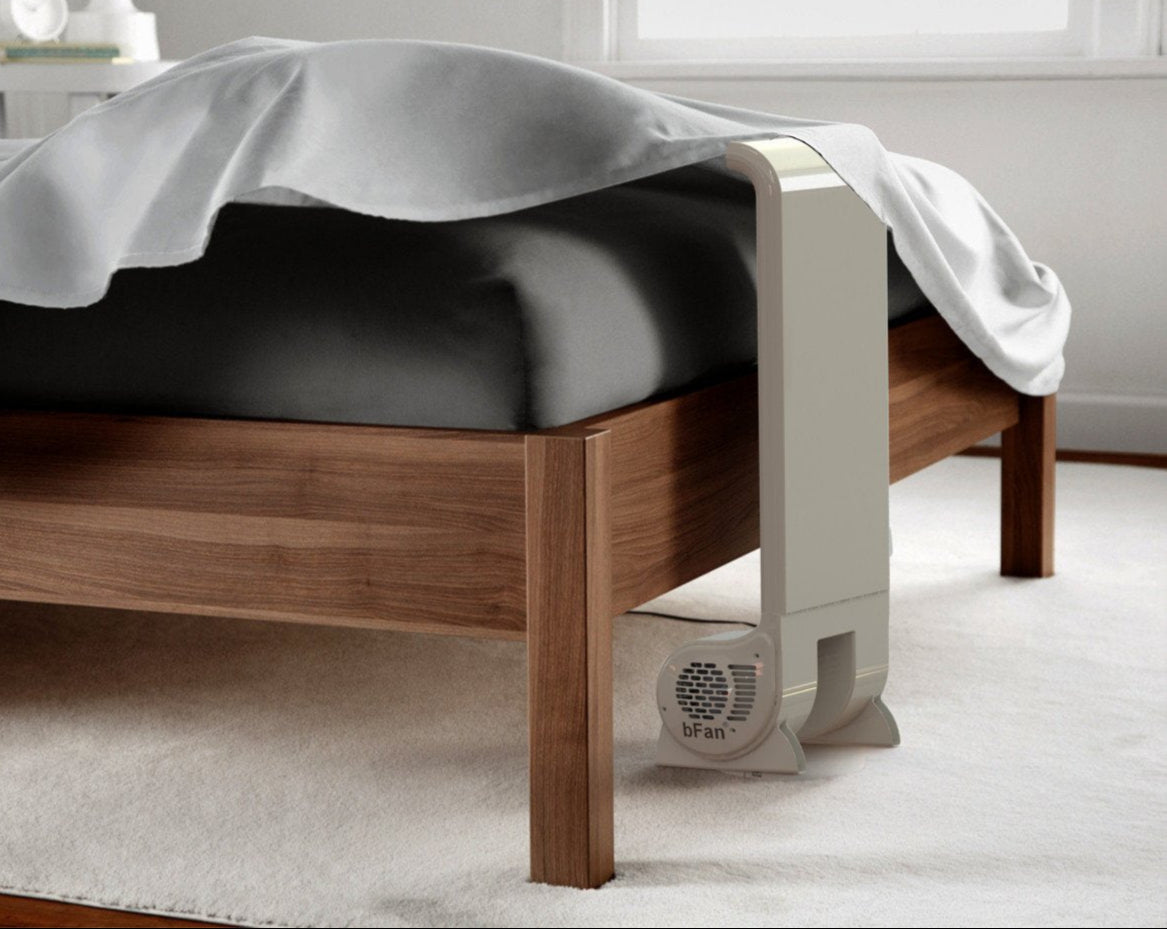
bFan Bedfan Under Sheet Fan
End Sleeples Nights
Your bFan Bedfan will keep you cool and sweat-free for many years. Order today and start sleeping cooler.