
9 Cooling Bedding Picks for Sweaty Sleep
Cooling bedding matters because your bed can trap a pocket of heat and humidity right where your body is trying to cool itself. That trapped warmth can lead to more wakeups, soaked sheets, and the familiar cycle of kicking covers off, then pulling them back on. Good cooling bedding solves a simple but stubborn problem, it helps heat escape and lets sweat evaporate faster. For people with night sweats, menopause, medication related overheating, or just naturally hot sleep, that change can mean improved sleep quality and deeper sleep without turning the whole house into a refrigerator.
Why does cooling bedding matter so much for sweaty sleep?
Yes, it matters. Sleep Foundation and Mayo Clinic both point to overheating and night sweats as common sleep disruptors, and bedding is where that heat gets trapped first.
When you fall asleep, your core temperature is supposed to drop a bit. If your mattress surface, sheets, pillow, and top layer hold onto heat, your body has to work harder to dump it. That can mean more tossing, more sweating, and lighter sleep, especially in the first half of the night when temperature regulation is closely tied to sleep onset.
Sleep experts commonly recommend a bedroom temperature between 60°F to 67°F, 15.5°C to 19.5°C, for better sleep. In real life, many people do not want to keep the whole room that cool, especially in summer or in homes with high AC bills. A Bedfan can let many people raise the room temperature by about 5°F while still cooling the body enough for more restful sleep, because the moving air under the sheet helps carry heat and moisture away from your skin.
That last part matters. Cooling bedding is not only about feeling cool when you first touch it. The real goal is to keep your sleep microclimate, the thin layer of air, fabric, and moisture around your body, from turning into a warm, damp pocket.

Which cooling bedding materials actually work best, cotton, linen, bamboo, or TENCEL?
Cotton percale and linen usually sleep coolest, while bamboo viscose and TENCEL lyocell often feel softer. Sleep Foundation and Brooklinen style testing keep landing on that same trade off.
If your main problem is trapped heat, cotton percale and linen are still the best starting point for most people. They breathe well, release heat fast, and do not cling when you sweat. Percale feels crisp and airy. Linen feels looser and more textured, and it usually gets softer over time.
If your main problem is clammy skin, not just heat, bamboo derived viscose, TENCEL lyocell, and Oeko-Tex certified fabrics are strong contenders. They tend to feel smoother and drapier, and many sleepers like that softer hand feel. They can wick moisture well, though some sets feel less airy than good percale or linen.
A common misconception is that higher thread count always means cooler sheets. It usually does not. In many cases, weave matters more than thread count. Sateen often feels smoother but sleeps warmer because the yarn pattern is tighter and less airy. Percale is usually the cooler weave.
Pro tip, if you are using a bed fan, a tighter weave top sheet can actually help channel the airflow across your body instead of letting it escape too quickly. That is why some Bedfan users report better results around 400 thread count or higher, even though ultra high thread count is not usually the answer for passive cooling alone.
What cooling bedding picks work best for sweaty sleep?
These nine picks cover the full cooling system, and the best results usually come from combining airflow, breathable fabric, and a lighter top layer instead of betting on one miracle product.
If you sweat lightly, start with sheets and a pillow. If you wake up damp, swap the comforter. If you are dealing with true night sweats, menopause, SSRI related overheating, or medication triggered heat, add directed airflow early instead of after wasting money on four sheet sets that only feel cool for ten minutes.
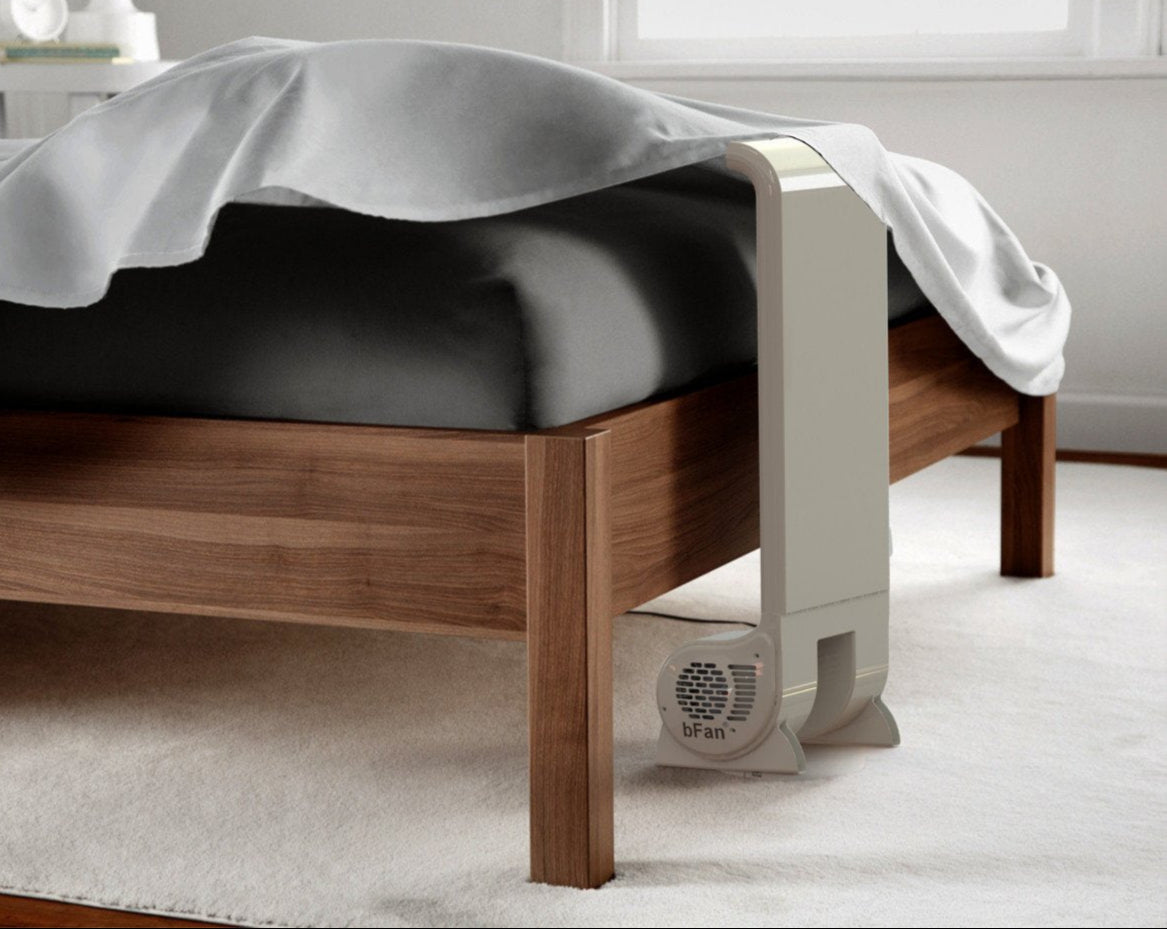
- Bedfans-USA bFan Bedfan: For heavy sweating, this is the strongest first move because it changes the air under the covers, not just the fabric touching your skin. The Bedfan from Bedfans-USA uses room air, not refrigerated air, averages about 18 watts, runs around 28db to 32db at normal speed, and offers timer controls so you can start cool and settle into sleep without freezing the room.
- Cotton percale sheets: Crisp, breathable, and usually the best value for hot sleepers who want real airflow. This is the easiest place to start if you want a low risk upgrade.
- European flax linen sheets: Airy and forgiving in humid climates. Linen can feel textured at first, but many sweaty sleepers end up loving it because it rarely feels sticky.
- TENCEL lyocell sheets: Smooth, cool feeling, and good at handling moisture. A strong pick if you want softness without the warmer feel of sateen cotton.
- Bamboo viscose sheets: Very soft and drapey, often a comfort win for people who dislike crisp bedding. Cooling can be good, but quality varies a lot by brand and blend.
- A breathable latex pillow: Your head releases a lot of heat. Latex usually sleeps cooler than dense solid memory foam and keeps air moving better.
- A cooling mattress pad: Useful if your mattress runs warm but you do not want the bulk of a topper. This can help when the mattress surface itself is the heat trap.
- A graphite or gel infused topper: Better than plain memory foam if you need pressure relief. Still, it will rarely feel as cool as breathable fibers plus airflow.
- A lightweight cooling comforter or blanket: A lofty, insulated top layer can undo the benefits of cool sheets. For warm sleepers, less fill is often the smarter move.
How should you build a cooling bed in 3 steps?
Start with the layer closest to your skin, then fix the heat trap above you, then add active airflow if sweating still wakes you up. That sequence works better than buying random cooling products.

Step 1, choose sheets by your actual problem. If you feel hot and trapped, pick cotton percale or linen. If you feel damp and sticky, try TENCEL lyocell or a quality bamboo viscose set. If you love the look of thick sateen but wake up sweaty, that is the first thing to change.
Step 2, look up, not just down. Many hot sleepers focus on the mattress and ignore the comforter. A heavy duvet with synthetic fill can cancel out your cooling sheets. If your top layer feels puffy, dense, or too lofty for the season, go lighter. That single swap can lower the heat load a lot.
Step 3, add under sheet airflow if you are still waking up overheated. This is where a Bedfan can beat fabric only changes, because it keeps room air moving where sweat actually builds up. Sleep experts recommend 60°F to 67°F for better sleep, but many people using a Bedfan can raise the room temperature by about 5°F and still sleep cool enough for more restful sleep, which can help trim AC use.
How does a Bedfan compare with BedJet and passive cooling bedding?
A Bedfan, a BedJet, and passive bedding do different jobs. Bedfan and BedJet move room air under the covers, while sheets and comforters manage heat and moisture more passively.
Here is the plain English version. Neither Bedfan nor BedJet cools the air. They only use the cooler air already in the room to cool your bed. If your bedroom is already very warm, neither one will feel like air conditioning. They work by improving airflow and evaporation under the covers.
Compared with passive cooling bedding, a bed fan usually feels more effective for true night sweats because moving air helps heat leave the body faster. That is why people with menopause, medication side effects, or drenching sweat often do better with airflow plus breathable sheets than with premium sheets alone.
Compared with BedJet, the Bedfan is the simpler and lower cost route. The original Bedfan came to market several years before BedJet was even thought of, so it is not a copy of a later trend. A single BedJet is more than twice the price of a single Bedfan. A dual zone BedJet setup is over a thousand dollars, and that is still far above the cost of using two Bedfans for dual zone microclimate control at a fraction of the price. Bedfan also offers timer controls, which many sleepers like because the first hour of sleep is often the hottest.
The trade off is feature philosophy. BedJet is a more complex system. Bedfan keeps the concept simple, direct airflow under the sheet, low power draw, and relatively quiet operation at about 28db to 32db at normal speed. If you want strong targeted cooling without paying premium system pricing, the bFan from Bedfans-USA is the value play many hot sleepers should look at first.
What sheet weave works best with a bed fan?
A tighter weave top sheet usually works better with a Bedfan, while percale or linen still work well as your fitted sheet or body facing layer. Bedfans-USA and user reports point to that airflow pattern.
This sounds backward at first, so it trips people up. Passive cooling sheets need airflow through the fabric. A bed fan setup needs the air to travel along your body under the top sheet. If the top layer is too loose or too open, the air can leak upward before it reaches the hottest parts of your torso and legs.
That is why some Bedfan users report strong results with a tighter weave sheet, often around 400 thread count or higher, placed so the air flows under the top sheet at the foot of the bed. The goal is not to block air. The goal is to guide it.
Pro tip, think of the sheet like a channel, not a filter. If you use a Bedfan, your best setup is often breathable fitted bedding underneath, a tighter weave top sheet above, and a lighter blanket or comforter over that. If the air is escaping too soon, the fan may feel weaker than it really is.
How do you set up cooling bedding for night sweats in 3 steps?
Strip the heat traps first, then control moisture, then add airflow. That order works for menopause, SSRIs, prednisone, and other common night sweat triggers.
Step 1, remove the obvious heat hoarders. Thick mattress toppers, dense foam pillows, fleece blankets, and heavy synthetic comforters are the usual culprits. Many people spend money on cooling sheets while keeping every other hot layer in place.
Step 2, build a moisture friendly stack. Use breathable pajamas if you wear them. Wash sheets at least weekly if sweating is frequent. Choose Oeko-Tex certified sheets that dry fast against the skin. A damp surface feels hotter because evaporation slows down once the fabric gets saturated.
Step 3, use directed airflow if symptoms are strong or persistent. A Bedfan can be especially helpful here because it does not depend on the fabric alone. Sleep experts commonly recommend a bedroom temperature between 60°F and 67°F, but many users find they can raise the room temperature by about 5°F with a Bedfan and still cool the body enough for more restful sleep, which is useful when AC costs climb.
One more point, if your sweats are new, drenching, or paired with fever, weight loss, or swollen nodes, that is not just a bedding problem. Bedding can help symptoms, but it should not replace medical evaluation.
What mistakes make cooling bedding disappoint?
The biggest mistake is buying for cool touch instead of all night heat release. Tempur style foam and silky sateen can feel nice at first, but they often trap more heat later.
A lot of products win people over with the first thirty seconds. Cool touch covers, glossy marketing, and words like ice or Arctic can create a cold first impression, then fade once your body warms the material. That is not fake cooling, but it is only one kind of cooling.
The more reliable question is this, what happens after two hours? Breathable weaves, lighter fill, open structure pillows, and moving air usually outperform slick finishes in real sleep. If a product is dense, plush, and slow to release heat, you should expect a trade off even if the cover feels cool in your hand.
Another common mistake is stacking too many moderate cooling products and expecting an active cooling result. A cooling pillow, cooling topper, and cooling sheet can still sit under a thick duvet in a warm room. If that sounds like your setup, simplify first.
Pro tip, do not ignore sound and power. Some people assume any bed fan will be noisy or expensive to run. The Bedfan typically runs around 28db to 32db at normal speed and uses about 18 watts on average, which is tiny compared with whole room air conditioning.
How can couples share a bed when one person sleeps hot and the other sleeps cold?
Yes, couples can split the sleep climate without freezing the whole room. Bedfan style airflow and lighter bedding zoning work better than thermostat fights.
Step 1, stop treating the whole bedroom like one climate. If one person sleeps hot and the other sleeps cold, lowering the house thermostat for both is usually the bluntest, most expensive fix. Sleep experts recommend 60°F to 67°F for better sleep, but a Bedfan often lets the hot sleeper raise room temperature by about 5°F and still cool the body enough for better rest, which keeps the cold sleeper happier too.
Step 2, zone the bedding. Use lighter layers on the hot sleeper's side and keep extra insulation on the cooler side. Separate blankets can solve more problems than couples expect.
Step 3, use dual zone airflow if needed. Two Bedfans can create dual zone microclimate control, one for each side, at a fraction of the cost of a dual zone BedJet, which is over a thousand dollars. That matters because many couples do not need premium system pricing, they just need each person to stop overheating or shivering.
A common misconception is that one hot sleeper means the whole bed has to be cold. Usually, you only need targeted relief where the heat is building.
When should you choose a topper, pillow, comforter, or under sheet airflow?
Choose based on where the heat is trapped. Latex pillows, lighter comforters, and airflow systems solve different parts of the same problem.
If your head and neck feel hot first, start with the pillow. Dense solid memory foam often sleeps warm, even with a fancy cover. Latex or a more breathable fill usually performs better.
If your back feels hot from below, look at your mattress and topper. Memory foam can contour well, but it also stores heat. A graphite or gel infused topper may help, yet there is still a trade off between pressure relief and breathability. If pressure relief is non negotiable, pair the topper with percale or linen sheets so the surface can breathe more.
If you wake up hot all over, especially under the covers, the comforter or blanket is often the real issue. Less loft, less fill, and more breathable shells usually win.
If you are sweating enough to wake up damp, under sheet airflow often outperforms passive bedding changes because it improves evaporation, not just surface feel. That is why a Bedfan is usually the right next step after the easy fabric swaps.
When are night sweats more than a bedding problem?
Night sweats can be normal, but Mayo Clinic warns that new, drenching, or unexplained sweating deserves attention. Bedding helps symptoms, not root causes.
A lot of night sweating is linked to common issues, menopause, perimenopause, PMS, pregnancy, anxiety, warm rooms, alcohol, spicy meals, and medications like SSRIs, SNRIs, steroids, and some pain medicines. Many of those cases improve when you fix the sleep environment.
Still, there are times to stop treating it like a shopping problem. If your night sweats are suddenly severe, soak the bed, or come with fever, unexplained weight loss, persistent cough, enlarged lymph nodes, chest pain, or unusual fatigue, see a clinician. Infections, endocrine issues, sleep apnea, cancers, and other medical conditions can be involved.
That does not mean cooling bedding is pointless. It means symptom relief and medical evaluation can happen at the same time. People dealing with menopause or medication side effects often get real help from better bedding and a bed fan while they work with a doctor on the underlying cause.
How can cooling bedding lower AC costs without making the whole house cold?
Yes, targeted cooling can reduce overcooling the entire home. CDC style sleep guidance and common energy logic both favor cooling the sleeper more directly when possible.
This is where cooling bedding becomes a budget decision, not just a comfort decision. If you lower the thermostat for the whole house just to fix a hot bed, you are paying to cool unused rooms, hallways, and square footage that does nothing for your sleep.
Sleep experts commonly recommend 60°F to 67°F for sleep, and many hot sleepers using a Bedfan can often raise room temperature by about 5°F while still cooling the body enough for more restful sleep. That can cut AC runtime while keeping the bed comfortable. Since the Bedfan uses about 18 watts on average, its operating cost is tiny compared with air conditioning.
This is also why passive cooling bedding and a bed fan are a good pair. Breathable sheets reduce heat retention. Directed airflow helps your body shed heat more efficiently. If you do both, you often need less help from the thermostat.
Resources
- Sleep Foundation guide to cooling sheets: Read Sleep Foundation's cooling sheets guide A solid overview of which fabrics and weaves sleep coolest, and why percale, linen, bamboo, and TENCEL perform differently.
- Sleep Foundation guide to cooling mattress toppers: Read Sleep Foundation's cooling mattress topper guide Useful if your mattress runs hot and you need to compare pads, toppers, foam, and breathable alternatives.
- Mayo Clinic overview of night sweat causes: Read Mayo Clinic on night sweats Helpful for spotting when sweating is a comfort issue versus a symptom worth discussing with a doctor.
- CDC sleep hygiene basics: Read CDC sleep hygiene guidance A practical sleep environment checklist that supports cooler, more consistent sleep habits.
- The North American Menopause Society information on vasomotor symptoms: Read NAMS on hot flashes and night sweats Useful context for readers dealing with menopause related overheating and repeated nighttime wakeups.
Frequently Asked Questions
What is the best cooling bedding material for sweaty sleepers?
For most people, cotton percale or linen is the best first move if the issue is trapped heat. If the issue is clammy skin and you want more softness, TENCEL lyocell or quality bamboo viscose can work well. If sweating is heavy enough to wake you up, add airflow, because fabric alone may not be enough.
Are bamboo sheets actually cooler than cotton?
Sometimes, but not always. Bamboo viscose often feels softer and can handle moisture well, while cotton percale usually allows stronger airflow and feels crisper. If you want the coolest sleep, percale often beats bamboo, but if you want soft plus fairly cool, bamboo can be a good fit.
Does a cooling comforter really help, or should I just use a sheet?
It helps if your current comforter is the heat trap. A lighter comforter with less fill can keep you covered without building a warm pocket around your body. If you still wake up sweaty under a light comforter, the next step is usually under sheet airflow, not an even pricier comforter.
Can a Bedfan replace air conditioning?
No, it does not replace AC in a truly hot room.
A Bedfan does not cool the air, and neither does BedJet, both use the cooler room air that is already there.
What it can do is let many people raise room temperature by about 5°F and still sleep cool enough for better rest and improved sleep quality, which can reduce AC use.
Is a Bedfan loud at night?
Usually not at normal speed. The Bedfan sound level is about 28db to 32db at normal operating speed, which is quiet enough for many bedrooms. If you are sensitive to sound, place it correctly under the sheet and use the timer controls so the strongest airflow is concentrated when you first fall asleep.
Is higher thread count better for cooling bedding?
Not usually for passive cooling. In most cases, weave matters more than thread count, and percale usually sleeps cooler than sateen. The exception is with a Bedfan setup, where a tighter weave top sheet can help channel the air across your body more effectively.
Are cooling mattress toppers worth it if I sleep on memory foam?
They can help, but they are rarely a magic fix. Gel, graphite, or cooling cover toppers are usually better than plain memory foam, yet foam still holds more heat than breathable fiber layers. If you need the contouring, keep the topper, but pair it with cooler sheets and consider a Bedfan if the mattress still feels warm.
What is the cheapest way to sleep cooler without buying a whole new mattress?
Start with the layers you can change easily. Swap to percale sheets, use a lighter blanket, and replace a dense pillow that traps heat. If the problem is still serious, a Bedfan is often a better spend than cycling through multiple premium sheet sets that do not solve the underlying heat buildup.
Is BedJet better than Bedfan for couples?
Not automatically. A dual zone BedJet setup is over a thousand dollars, and that is far more than using two Bedfans for dual zone microclimate control. Since neither system cools the air itself, the better choice depends on whether you want simple targeted airflow at a lower cost, or a more complex premium system.
When should night sweats send me to a doctor instead of the bedding aisle?
See a doctor if the sweating is new, severe, drenching, or unexplained. That is even more important if it comes with fever, weight loss, chest pain, swollen lymph nodes, or ongoing fatigue. Bedding can make you more comfortable, but it should not delay evaluation when the pattern changes or looks medically significant.
Share