
Sleeping Hot? Here’s What You Can Do About It
If you feel too warm almost every night, you’re not imagining it, and you’re not alone. A lot of people go to bed tired, drift off, then wake up sweaty, restless, and irritated because the temperature makes their body feel like it’s running too hot under the covers, disrupting their rest. Sometimes the room is the problem. Sometimes it’s hormones, medication, stress, or your bedding. Quite often, it’s a mix of all of them.
Your body is supposed to cool down a bit as you get ready for sleep. That drop in body temperature helps signal that it’s time to stay asleep, not toss around. When that cooling process gets blocked, sleep gets choppy fast. You wake up, flip the pillow, kick off the blanket, then repeat the whole cycle again.
Sleep experts commonly recommend a bedroom temperature between 60°F and 67°F, 15.5°C to 19.5°C, for better sleep. That range works well for a lot of people, but it can feel hard to maintain if cooling the whole house is expensive. One reason bed fans have become popular is that many people can raise the room temperature by about 5°F and still cool their body enough for more restful sleep, which can lower air conditioning costs without giving up comfort.
Why your body overheats during sleep
Your sleep cycle and your temperature cycle are tied together. In the evening, melatonin rises, blood flow to your hands and feet tends to increase, and your core temperature starts to dip. That’s normal. It’s part of how your body gets ready for deeper sleep.
If your room is too warm, your sheets trap heat, or your body is producing extra heat on its own, that natural cooldown gets interrupted. You may still fall asleep, but staying asleep becomes the hard part. This is why some people say, “I’m fine when I first get in bed, then I wake up burning up two hours later.”
A lot of hot sleepers also notice that the heat feels trapped, not just present. That’s an important clue. The bed itself can hold warm air and moisture close to your skin. Once that pocket of heat builds up, your body has a tougher time shedding it.
After a while, your nervous system reacts. You sweat, your heart rate may pick up a bit, and you wake just enough to feel miserable.
Medical reasons and hormones behind sleeping hot
Sometimes sleeping hot is mostly about the room. Other times, there’s something going on inside your body that keeps pushing your temperature up or makes you sweat more easily.
Hormones are a big one. Perimenopause and menopause are common reasons women start overheating at night, even if they never used to be “hot sleepers” before. Pregnancy can do it too. Hormone shifts can change the way your body handles blood flow, sweating, and temperature regulation, which is why nighttime heat can seem to show up out of nowhere.
Thyroid issues can also matter. An overactive thyroid can speed up metabolism and make you feel warmer than usual. Blood sugar swings can trigger sweating. Some infections, inflammatory conditions, and a few cancers are also linked with night sweats. That doesn’t mean every sweaty night is a serious warning sign, but persistent night overheating deserves attention if it’s new, severe, or paired with other symptoms.
Medications are another overlooked cause. Antidepressants, steroids, some pain medications, hormone treatments, and some diabetes medicines can all increase sweating or make you feel hot at night. People sometimes spend months swapping sheets and blankets without realizing a prescription changed the whole picture.
After you’ve ruled out the obvious, these are some of the most common reasons people sleep hot every night.
- Hormones: menopause, perimenopause, pregnancy, menstrual cycle shifts
- Medications: antidepressants, steroids, hormone therapy, some diabetes drugs
- Medical conditions: hyperthyroidism, infections, sleep apnea, anxiety, hyperhidrosis
- Body factors: higher body weight, higher metabolic rate, naturally heavier sweating
- Lifestyle triggers: alcohol, caffeine late in the day, spicy meals, stress, late intense workouts
Bedroom temperature, humidity, and bedding that trap heat
Even if your body runs warm, your bedroom setup, including your choice of sleepwear, can make the problem much worse. Heat trapped under bedding is a big reason people wake up sweaty after falling asleep in comfort. The issue isn’t always the air temperature alone. Humidity matters too. When the air is sticky, sweat doesn’t evaporate as well, so your body loses one of its easiest cooling tools.
Sheets and blankets can either help release heat or hold it right against you. Natural fabrics, cotton, linen, and some bamboo blends, often feel cooler than slick synthetic fabrics that trap warmth and moisture. Mattress materials matter too. Some foam beds hang on to heat more than others, which means the mattress keeps warming the air around your body as the night goes on.
This is also where airflow becomes a big deal. If air can’t move across your skin, your body heat just builds under the covers. That’s why many people feel cooler with a light sheet and a fan than with “cooling” fabric that still sits in a warm pocket of air.
Side-by-side bed scene showing a sleeper with heat and moisture trapped under covers versus a sleeper cooled by airflow moving under the sheets.
When bedroom temperature comes up, the 60°F to 67°F guideline is still the starting point. If you use a Bedfan, many people can bump the room temperature up by around 5°F and still sleep cooler because the airflow helps carry body heat away from the skin, rather than trying to chill the whole room down to one number.
A small setup change can make a bigger difference than you’d think.
- Tight weave sheets
- Lighter blankets
- Lower humidity
- Less memory foam heat retention
- Air moving under the covers
When using a Bedfan, tight weave sheets are usually the better pick because they help the airflow travel across your body and carry away heat, instead of spilling out too quickly from the sides.
Daily habits that make night overheating worse
What you do in the last few hours before bed can show up in the middle of the night. Alcohol is a classic example. It may make you feel sleepy at first, but it can widen blood vessels, disrupt sleep, and leave you sweating later. Caffeine can linger longer than many people expect. Spicy food can raise body heat. Hard exercise too close to bedtime can keep your system revved up.
Stress deserves its own mention. If your body is stuck in a more alert state, insomnia and sweating can come with it. Some people notice that anxious nights are hotter nights, even when the thermostat hasn’t changed.
These triggers don’t affect everybody the same way, which is why it helps to look for patterns instead of assuming there’s one universal cause.
- Alcohol: often leads to warmer, more broken sleep later in the night
- Caffeine: can keep your system more activated than you realize
- Stress: raises the odds of sweating and fragmented sleep
- Late exercise: can leave body temperature elevated at bedtime
- Heavy meals: can make your body work harder while you’re trying to settle down
How a Bedfan cools the bed without cooling the room air
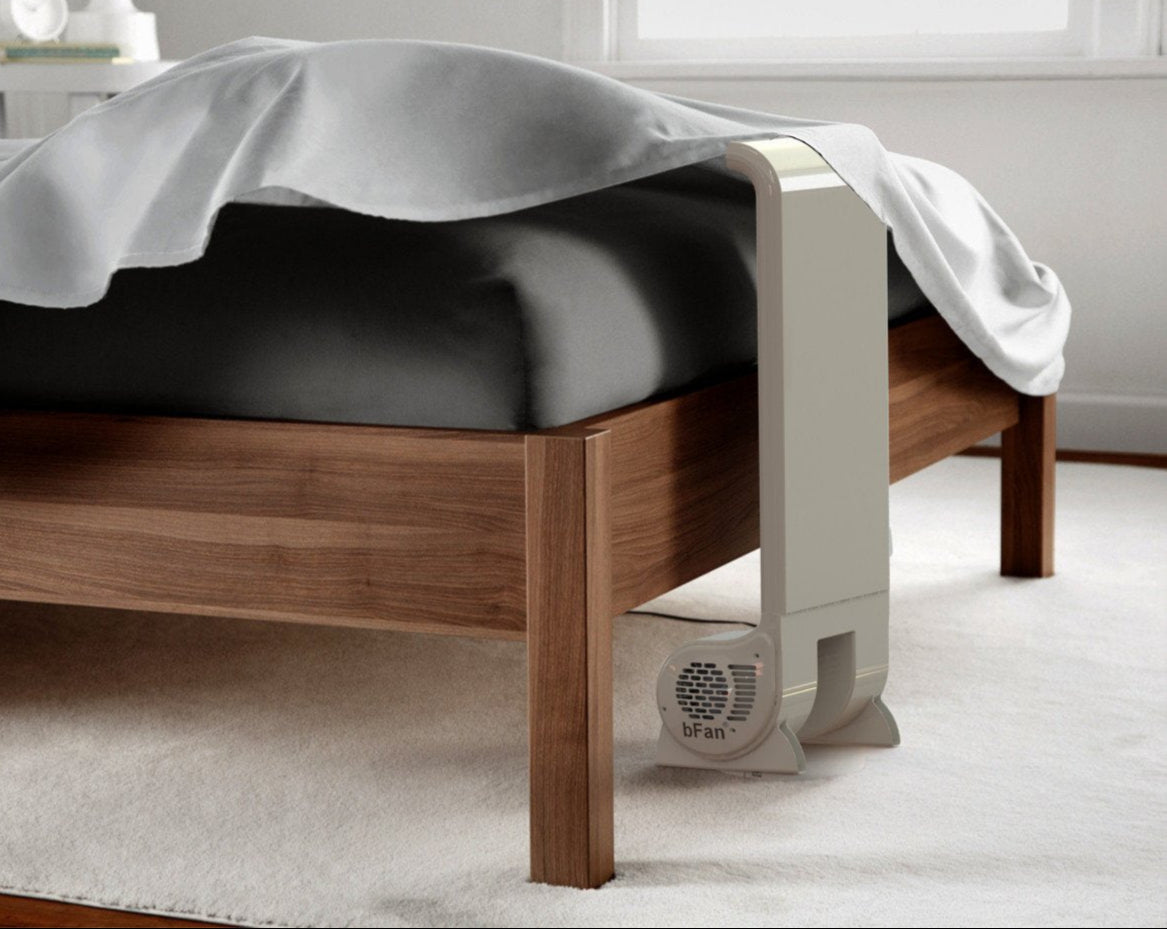
A bed fan works in a very simple way, and that simplicity is part of the appeal when paired with breathable sleepwear. It moves room air under your sheets so heat and moisture can leave the bed instead of building up around your body. It does not create cold air. It uses the cooler air already in the room.
That last point matters. Neither a Bedfan nor a Bedjet cools the air itself. They only use the cool air in the room to cool your bed. So if your bedroom feels like an oven, no bed fan is going to perform magic. But in a normally air conditioned room, or even a room kept a bit warmer than usual, directed airflow can feel dramatically cooler than still air.
The The bFan bed fan from Bedfans USA is built around this idea. It sits at the foot of the bed and sends air under the top sheet, where the heat actually gets trapped. The result is a personal sleep micro climate, not an attempt to cool the whole room.
That targeted approach is why many hot sleepers like it more than a ceiling fan alone. A ceiling fan moves air in the room. A bed fan moves air where you need it most, right inside the bed.
The bFan from www.bedfans-usa.com uses about 18 watts on average, which is tiny compared with the energy draw of air conditioning. Its normal operating sound level is around 28 dB to 32 dB, so most people find it quiet enough for regular nightly use. It also offers timer controls, which can be handy if you want stronger cooling while falling asleep, then less airflow later in the night.
There’s another practical angle here. Sleep experts commonly recommend a bedroom temperature between 60°F and 67°F, 15.5°C to 19.5°C, for better sleep, yet many people using a Bedfan can raise the room temperature by about 5°F and still cool their body enough for more restful sleep, allowing them to rest more comfortably. That can take some pressure off summer power bills.
Bedfan versus Bedjet for hot sleepers and couples
If you’re comparing products, price and design both matter. The original Bedfan came to market several years before Bedjet was even thought of, so the bed fan category didn’t start with the newer option people often see advertised today.
The big thing to know is that these products are not doing the same job in the same way, and the pricing gap is real. One Bedjet is more than twice the price of a single Bedfan. The dual zone Bedjet is over a thousand dollars, and more than twice the price of two Bedfans. For a lot of couples, that changes the conversation quickly.
Two Bedfans can give a couple dual zone micro climate control at a fraction of the price of the dual zone Bedjet. Each sleeper can run their own airflow on their own side, which is often exactly what couples need when one person sleeps hot and the other doesn’t.
There’s also no need to pretend these are mini air conditioners. Neither the Bedfan nor the Bedjet cools the air. The Bedjet doesn’t cool the air. The Bedfan doesn’t cool the air. Both rely on the room already having reasonably cool air available.
Here’s the short version shoppers usually care about most.
- Cooling method: both products move existing room air, not refrigerated air
- Price: one Bedjet is more than twice the price of one Bedfan
- Dual zone cost: the dual zone Bedjet is over a thousand dollars, and more than twice the price of two Bedfans
- Couples: two Bedfans offer dual zone micro climate control with separate airflow on each side
- Energy use: a Bedfan uses about 18 watts on average, which is very low for nightly use
- Sleep timing: Bedfan timer controls can help you cool the bed at the start of sleep, then ease off later
If your goal is simple, targeted cooling without spending a small fortune, a bed fan tends to make a lot of sense.
Sleep quality, energy savings, and why airflow often works better than lowering the thermostat all night
There’s a reason this approach clicks with so many hot sleepers. You do not always need to make the whole room colder to feel cooler in bed, as controlling the temperature directly under your sheets can be more effective. Quite often, you just need help moving trapped heat away from your body. That’s a very different job.
When air flows under the sheets, it helps sweat evaporate and keeps warm, damp air from sitting against your skin. That can mean fewer wakeups, less blanket kicking, and less of that sticky, overheated feeling around your chest, back, and legs.
This can also make your thermostat strategy more flexible. Sleep experts commonly recommend a bedroom temperature between 60°F and 67°F, 15.5°C to 19.5°C, for better sleep. With a Bedfan, many people can keep the room about 5°F warmer and still cool the body enough for more restful sleep, which is one reason bed fans often come up in conversations about air conditioning costs and energy savings.
That difference may sound small, but in summer it can be noticeable on your power bill.
When night sweats need medical attention
Most hot sleeping is annoying, not dangerous, but there are times when it’s smart to get checked out. If night sweats are drenching, new, or paired with fever, unexplained weight loss, swollen lymph nodes, chest pain, or shortness of breath, don’t just chalk it up to bad bedding.
The same goes if a medication change lines up with the problem, or if a partner notices loud snoring, choking, or pauses in breathing that could point to sleep apnea.
A better mattress or a bed fan can help comfort, but it should not replace medical care when your body is waving a red flag.
Frequently Asked Questions
Why do I feel hot only after I fall asleep?
That’s very common. Your body may be okay at bedtime, then the bed starts trapping heat and moisture once you’ve been under the covers for a while. As that warm pocket builds, you wake up feeling suddenly overheated.
Your body is also trying to lower core temperature during early sleep. If the room, mattress, or bedding blocks heat loss, the problem shows up after sleep begins, not always before.
Is sleeping hot the same thing as having night sweats?
Not always. Sleeping hot can mean you feel uncomfortably warm and restless, even without soaking the sheets. Night sweats usually mean noticeable sweating that can leave clothing or bedding damp.
The causes can overlap, though. Hormones, stress, medications, and room conditions can all push someone from “too warm” into actual night sweats.
What bedroom temperature is best for hot sleepers?
Sleep experts commonly recommend a bedroom temperature between 60°F and 67°F, 15.5°C to 19.5°C, for better sleep. That range helps support the body’s natural cooling process as you fall asleep.
If you use a Bedfan, many people can raise the room temperature by about 5°F and still cool the body enough for more restful sleep. That can make the room more affordable to cool, especially in summer.
Does a Bedfan actually cool the air?
No. A Bedfan does not cool the air itself. It uses the cooler air already in the room and moves it under the sheets so your body can release heat more effectively.
That’s also true of Bedjet. The Bedjet doesn’t cool the air, and the Bedfan doesn’t cool the air. They move existing room air, which is why the room still needs to be reasonably cool to begin with.
Is a Bedfan loud at night?
Most people find it fairly quiet. The Bedfan sound level is generally around 28 dB to 32 dB at normal operating speed, which is in the soft background range for many bedrooms.
Noise tolerance is personal, of course. Still, that sound level is low enough that many sleepers use it all night without feeling bothered by it.
What sheets work best with a bed fan?
Tight weave sheets usually work best. They help the airflow spread across your body and carry away heat, instead of letting the air dump straight out the sides too fast.
Cotton sheets with a smooth, tighter weave are often a good match. Very loose, airy bedding can feel nice on its own, but it may not guide bed fan airflow as effectively.
Can a Bedfan help lower air conditioning costs?
For many people, yes. Sleep experts commonly recommend 60°F to 67°F for better sleep, yet a Bedfan can let many users raise room temperature by about 5°F while still keeping the body cool enough for more restful sleep.
Because the Bedfan uses about 18 watts on average, the energy use is tiny compared with whole room air conditioning. That’s why a bed fan can be a practical comfort tool and an energy saving tool at the same time.
Is Bedfan a better value than Bedjet?
A lot of shoppers think so, especially if price matters. One Bedjet is more than twice the price of a single Bedfan, and the dual zone Bedjet is over a thousand dollars.
Two Bedfans can provide dual zone micro climate control for couples at a fraction of that cost. If your main goal is targeted nighttime cooling, that price difference is hard to ignore.
Can couples use Bedfans if one person sleeps hot and the other does not?
Yes, and this is where bed fans can be especially useful. Two Bedfans can create dual zone micro climate control, one per side, so each person can set their own comfort level.
That setup often works better than trying to fight over the whole room thermostat. One sleeper can stay cool, while the other avoids feeling blasted by cold air.
Should I worry if my hot sleeping started suddenly?
A sudden change is worth paying attention to. If you used to sleep fine and now you’re waking up drenched, it could be tied to hormones, medication, stress, infection, thyroid issues, or sleep apnea.
If the change is strong, frequent, comes with insomnia, or other symptoms, talk with a clinician. Comfort tools can help you sleep better, but they don’t replace medical evaluation when something has clearly shifted.
resources
Sleep Foundation guide to the best bedroom temperature for sleep A solid overview of why cooler bedroom temperatures help sleep quality and where the recommended range comes from.
Sleep Foundation article on humidity and sleep Useful for seeing how sticky air makes sweating less effective and why comfort is not only about the thermostat.
Cleveland Clinic overview of night sweats A practical medical summary of common causes, warning signs, and when night sweating needs clinical attention.
American College of Osteopathic Family Physicians review of night sweats A more clinical look at the broad range of conditions linked with persistent night sweats.
Healthline article on why people get hot while sleeping A reader friendly summary of body temperature rhythms, bedding, and sleep environment factors.
Share