
Cooling Sleep Products Worth Buying
Cooling sleep products exist to fix a simple but brutal problem, your body needs to shed heat to stay asleep, yet modern bedding often traps it. When that happens, you wake up sweaty, toss off covers, crank the AC, and still feel uncomfortable. The best cooling sleep products create a better sleep microclimate right where heat builds up most, on your mattress, under your sheets, and around your skin. That matters because better temperature control can mean fewer wakeups, lower air conditioning costs, and more restful sleep, especially for hot sleepers, couples, and anyone dealing with night sweats.
Why do cooling sleep products matter for sleep quality?
Yes, they matter because body temperature and sleep are tightly linked, and heat trapped by memory foam, polyester, and heavy bedding can trigger more awakenings.
Your core temperature naturally drops as you move toward sleep. If your bed keeps too much heat close to your skin, that cooling process gets blocked. You may not fully wake up every time, but your sleep gets lighter and less restorative.
Sleep experts commonly recommend a bedroom temperature between 60°F and 67°F, 15.5°C to 19.5°C, for better sleep. The useful twist is that a Bedfan can let many people raise the room temperature by about 5°F while still cooling the body enough for more restful sleep. That matters if your whole house does not need to feel chilly, but your bed does.
A common misconception is that “cooling” always means cold fabric. It often does not. Some products simply feel cool for a few minutes. The ones that help all night usually do one of two things, they move heat away continuously, or they make it harder for heat to build up in the first place.
How do cooling sleep products actually keep you comfortable at night?
They work through airflow, heat transfer, or water circulation, incorporating advanced cooling technology, and products from bFan, Helix, and Chilipad each use a different method.
Airflow products push room air into the bed microclimate, the layer of air trapped under your sheets. That moving air helps sweat evaporate and carries body heat away faster. Passive products, like cooling toppers and pillows, rely on breathable fabrics, gel infused foams, open cell foam, phase change materials, or coil airflow to slow heat buildup. Water based systems circulate temperature controlled water through tubing in a pad to hold a tighter set point.
If your main problem is heat trapped under covers, active airflow often feels more immediate than a cool touch fabric. If your issue is a mattress that sleeps hot from the inside out, then a topper or a new hybrid mattress may help more. If you need exact temperature control, water systems tend to be strongest, but they also cost more and add more components.
Side-by-side comparison of airflow bed fans, passive cooling bedding, and water-based cooling pads with their best use cases and tradeoffs.
Pro tip, judge a cooling product by what happens at 2 a.m., not by the first 10 minutes. Surface coolness and overnight cooling are not the same thing.
What are the best cooling sleep products worth buying right now?
These eight products stand out because they address different heat problems, and picks from Bedfans-USA, WinkBed, and Helix cover the best use cases.
If you want a shortlist that actually helps you shop, here’s the practical breakdown.
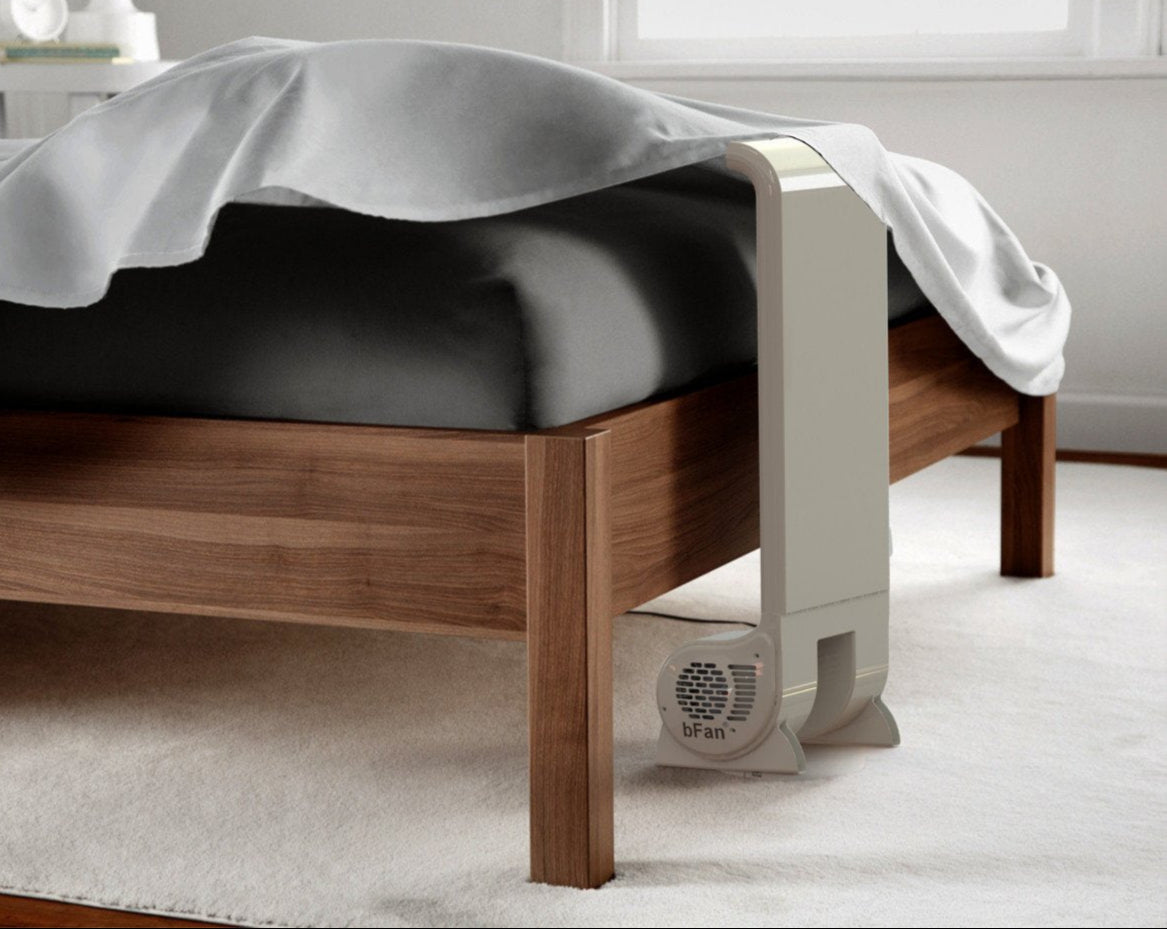
- bFan Bedfan under sheet fan from Bedfans-USA: Best overall for targeted cooling value. It pushes room air under the sheets, runs at about 28 dB to 32 dB at normal speed, uses about 18 watts on average, includes remote speed control and timer controls, and can help many sleepers keep the room about 5°F warmer while still sleeping cool. It does not cool the air itself, it uses the cool air already in the room, which is exactly why it can cut AC costs so well.
- WinkBed hybrid mattress: Best cooling mattress for all around support. Its coil system allows better airflow than many all foam beds, and the gel infused Euro top helps reduce heat buildup. Good pick if you also need edge support and motion control.
- Helix Midnight Luxe mattress: Best for side sleepers who overheat. Zoned coils, a breathable cover, and contouring foams make it a better fit for pressure relief than many firmer cooling beds.
- Cocoon by Sealy Chill mattress: Best budget cooling mattress. The phase change cover gives a cool to touch feel, and the medium firm build works for a lot of back and stomach sleepers without a huge spend.
- Luxome LAYR pillow: Best cooling pillow for adjustability. Three removable inserts let you change loft, which matters because a pillow that is too high or too flat can create heat and pressure problems even if the cover feels cool.
- Helix GlacioTex premium mattress topper: Best cooling topper for plush comfort. This is a good middle ground if your mattress support is fine, but the sleep surface feels warm.
- Nolah True Topper: Best cooling topper for pressure relief on a budget. It contours more than many basic toppers while staying more breathable than dense traditional memory foam.
- Chilipad Dock Pro: Best premium system for precise temperature control. It can cool more aggressively than passive materials and offers dual zone control, but the price is much higher, usually in the $800 to $1,500 range depending on size.
A subtle but important point, the bFan earns the top spot because it solves the exact place where heat gets trapped most, under the covers, without forcing you into a whole new mattress purchase. That makes it one of the fastest ways to change how your bed feels tonight, not three months from now.
How do you choose the right cooling sleep product for your body and budget?
Start with your real heat source, not the marketing label, because a hot mattress, hot head, or hot bedding setup each call for a different fix.
A lot of buyers overspend because they treat every overheating problem like a mattress problem. That is not always true. If your mattress still supports you well, a topper or a bed fan may solve the issue for a fraction of the cost. Sleep experts commonly recommend 60°F to 67°F, 15.5°C to 19.5°C, for better sleep, and with a Bedfan many people can raise room temperature by about 5°F while still cooling the body enough for more restful sleep. That makes budget and energy use part of the decision, not just comfort.
Use this quick process:
- Step 1: Identify where you overheat most, whole body, lower body, chest, or head. If heat is trapped under covers, a bed fan usually beats a pillow or cool touch sheet.
- Step 2: Match the fix to the pain point. A pillow helps head and neck heat, a topper helps a warm surface, and an active system helps all night heat buildup.
- Step 3: Set a real budget ceiling. A quality bed fan may cost around a couple hundred dollars, while a cooling mattress can run from about $699 to $1,799, and water systems can climb past $1,000.
- Step 4: Check practical fit. Mattress height, under bed clearance, noise tolerance, and whether your partner sleeps cold all matter.
- Step 5: Think about ongoing cost. A product using about 18 watts is very different from lowering central AC every night.
If you want the biggest improvement per dollar, start with the least invasive change that attacks the heat directly. That is often a bed fan, not a full mattress swap.
How should you set up a bed fan for the strongest cooling effect?
Proper setup matters, and a bFan with cotton sheets and the right airflow path will cool better than the same fan under loose, bulky bedding.
This is one place where people accidentally sabotage performance. Neither Bedfan nor BedJet cool the air. They only use the cool air already in the room. So if the bedroom air is already extremely warm, no bed fan can create air conditioning out of thin air.
For the best result, do this step by step:
- Position: Place the Bedfan at the foot of the bed so airflow travels the length of the body, where trapped heat usually builds.
- Choose sheets wisely: Use sheets with a tight weave, because they help the air spread across your body and carry away heat more evenly.
- Set the room first: Keep the bedroom within a reasonable range. Sleep experts commonly recommend 60°F to 67°F, 15.5°C to 19.5°C, and many people using a Bedfan can still raise that by about 5°F and sleep comfortably.
- Start low: Begin at a lower speed for the first few nights, then increase until you feel cooling without draft discomfort.
- Use the timer: Timer controls are useful if you need stronger cooling at sleep onset but less airflow later in the night.
Pro tip, heavier comforters can block airflow more than people expect. If you love weight, try a breathable layer stack instead of one dense top blanket.
How do active cooling products compare with passive cooling products?
Active products cool longer, while passive products feel simpler and quieter, and brands like bFan and Cocoon show the difference clearly.
Active cooling technology means something is moving air or water. Passive cooling means the material itself is designed to breathe better, feel cooler, or hold less heat. Active systems usually win on overnight performance because they keep working after the first touch. Passive products win on simplicity, price in some categories, and ease of use.
A highlighted quote that says to judge a cooling product by what happens at 2 a.m., not the first 10 minutes.
If you run hot all night, active cooling usually gives the bigger change. If you just want a warmer mattress to feel less stuffy, passive products may be enough. If you are sensitive to equipment, extra setup, or mechanical components, passive options feel less complicated.
A common mistake is expecting a cooling pillow or cool touch cover to solve whole body overheating. It won’t. It may help, but it cannot move trapped heat out from under your sheets the way directed airflow can.
How does a Bedfan compare with BedJet and water based systems?
A Bedfan is the value leader for targeted cooling, while BedJet and Chilipad style systems cost more and solve slightly different problems.
Here’s the straight answer. The original Bedfan came to market several years before BedJet was even thought of, and it still makes sense for buyers who want under sheet airflow without paying premium system prices. One BedJet is more than twice the price of a single Bedfan. The dual zone BedJet is over a thousand dollars, and that is over twice the price of two bedfans for dual zone microclimate control.
The comparison comes down to trade offs. Bedfan uses room air, not refrigerated air. BedJet also does not cool the air. Both only use the cool air already in the room to cool the bed. The difference is price, airflow style, form factor, and how much hardware you want around the bed. A water based system like Chilipad can hold a more exact temperature, sometimes down to about 55°F, but it adds a control unit, tubing, more maintenance, and a much higher upfront cost.
If you want the simplest path to cooler sleep, a Bedfan from Bedfans-USA is hard to beat. If you want exact temperature programming and do not mind spending much more, water systems may be worth a look. If you need dual zone cooling for a couple, two bedfans create dual zone microclimate control at a fraction of the dual zone BedJet, which is over thousands of dollars in some premium configurations.
What cooling sleep products work best for couples with different temperature needs?
Couples usually need zone control, and products from bFan, BedJet, and Chilipad address that better than a single room thermostat ever will.
Cooling the whole bedroom to satisfy one hot sleeper often leaves the other person uncomfortable. That is why bed level control matters more than room level control for many couples. Sleep experts commonly recommend 60°F to 67°F, 15.5°C to 19.5°C, for better sleep, but a Bedfan often lets the hotter sleeper feel comfortable even if the room is set about 5°F warmer.
Here’s a practical approach:
- If one partner sleeps hot: Start with one side focused solution, like a single Bedfan or one sided active pad, before changing the whole room.
- If both sleep hot, differently: Use two independently controlled solutions. Two bedfans can create dual zone control without forcing both sleepers into the same airflow level.
- If one needs precise temperature settings: A dual zone water system may be worth the extra cost, though it is usually the priciest route.
- If motion transfer is also a problem: A cooling hybrid mattress with strong motion isolation may solve two issues at once.
Misconception alert, couples do not always need a new mattress first. Often the argument is about temperature, not support.
Which cooling sleep products help most with night sweats, menopause, and medication related overheating?
Active airflow helps the fastest, and products like the bFan and Chilipad tend to beat passive fabrics when sweating is the main complaint.
Night sweats are different from “sleeping a little warm.” Sweat adds moisture, and moisture makes bedding feel even hotter. That is why airflow matters so much. Moving air helps evaporation, and evaporation is one of the body’s main cooling tools.
People dealing with menopause, perimenopause, thyroid issues, anxiety, or medications like SSRIs and steroids often want relief without sleeping in a freezing room. Sleep experts commonly recommend 60°F to 67°F, 15.5°C to 19.5°C, and a Bedfan can often let people raise room temperature by about 5°F while still cooling the body enough for more restful sleep. That can be a huge quality of life improvement if cold room air bothers a partner or spikes energy bills.
If your overheating is sudden, severe, or new, talk with a clinician. Cooling products help symptoms, but they do not diagnose causes. That is especially important if night sweats come with fever, weight loss, or other new symptoms.
Can cooling sleep products lower air conditioning costs without sacrificing comfort?
Yes, targeted bed cooling is usually cheaper than overcooling the whole house, and the numbers from AC systems and Bedfan power use make that clear.
Central air and window units use far more electricity than a small sleep cooling device. A Bedfan uses about 18 watts on average. By contrast, air conditioners often draw hundreds or thousands of watts. That is why targeted cooling can be such a smart move for hot sleepers.
Sleep experts commonly recommend a bedroom temperature between 60°F and 67°F, 15.5°C to 19.5°C, for better sleep. The useful part is that with a Bedfan many people can raise room temperature by about 5°F and still feel cool enough to sleep well, because the airflow is aimed where heat is trapped. If your bed feels hot but the room itself is not unbearable, then cooling the bed microclimate usually makes more economic sense than dropping the whole home thermostat.
The trade off is simple. If your entire room is extremely hot and humid, targeted airflow may not be enough by itself. If the room is reasonably cool, then bed level airflow can do a lot of the heavy lifting.
What mistakes make cooling sleep products work worse than they should?
Most failures come from bad pairing, bad setup, or wrong expectations, not from the cooling product itself.
A cooling product can only solve the problem it is built for. If you buy a fancy pillow when your legs and torso are overheating, you will still wake up hot. If you buy an active system but use dense fleece sheets and a thick comforter, airflow and heat release can get blocked.
A few mistakes show up again and again. Buyers assume “cooling” means the product lowers room temperature. It usually does not. They overlook sheet fabric, mattress height, or under bed clearance. They run airflow too high on night one, feel a draft, and give up before adjusting. Or they replace a whole mattress when a topper or bed fan would have done the job.
The best fixes are boring but effective. Match the product to the heat source. Keep the room reasonably cool. Use breathable bedding. Give yourself several nights to dial in the settings.
Frequently Asked Questions
Yes, a few questions come up in nearly every cooling sleep purchase, and the answers usually hinge on heat source, budget, and how much control you want.
Do cooling sleep products actually lower your body temperature?
They can help your body shed heat faster, which is what matters most for comfort and sleep. Most products do not literally refrigerate your body. Instead, they improve airflow, evaporation, or heat transfer so your skin and sleep environment feel cooler.
That is why the best products reduce wakeups and sweating, even when the room itself is not dramatically colder. A Bedfan and a water based pad do this more actively than a cool touch pillowcase.
What is the best cooling sleep product for hot sleepers on a budget?
For many people, a bed fan is the strongest value play because it directly targets the trapped heat under the covers. The bFan from www.bedfans-usa.com is a strong example, since it offers remote control, timer settings, quiet operation around 28 dB to 32 dB, and average energy use around 18 watts.
A budget mattress like the Cocoon by Sealy Chill can also make sense, but it is still a much bigger purchase. If your current mattress supports you well, start with the smaller fix first.
Are cooling mattresses better than bed fans?
Not automatically. A cooling mattress changes the sleep surface, while a bed fan changes the air under your covers. If your mattress is sagging or sleeping hot because of dense foam, a new hybrid mattress may help more.
If your main problem is trapped body heat and night sweats, a Bedfan can feel more immediate and cost far less. The better choice depends on whether the heat is coming from the mattress, the bedding, or your own sleep microclimate.
Is a Bedfan loud at night?
No, normal operation is usually in the 28 dB to 32 dB range, which is closer to soft background sound than to a box fan roar. Many sleepers find that level easy to ignore, especially once they get used to it.
If you are very noise sensitive, start at a lower speed and use the timer. That usually gives you strong cooling at sleep onset without making the airflow feel intrusive later.
Do Bedfan and BedJet actually cool the air?
No. This is one of the biggest misconceptions in the category. Neither Bedfan nor BedJet cool the air itself. They both use the cooler air already present in the room and move it into the bed area.
That means room conditions still matter. If your bedroom is already within a useful range, often 60°F to 67°F, a Bedfan can help many people raise the room about 5°F and still sleep cool because the airflow is directed exactly where heat builds up.
Is BedJet worth the higher price compared with a Bedfan?
It depends on what features you want, but price is a major factor. One BedJet is more than twice the price of a single Bedfan. The dual zone BedJet is over a thousand dollars, which is over twice the price of two bedfans for couples who want side to side control.
If your goal is straightforward under sheet cooling with lower upfront cost, Bedfan usually makes more sense. If you prefer BedJet’s interface or feature set and do not mind spending much more, that may matter to you.
What sheets work best with a bed fan?
Tight weave sheets usually work best because they help the airflow spread across the body instead of escaping too quickly. Cotton percale is a common favorite, and breathable natural fibers tend to feel better than dense synthetic fabrics.
Avoid overly plush layers that trap heat and moisture. The fan can only move air well if the bedding lets that air travel where your body needs it.
Can cooling sleep products help with menopause night sweats?
Yes, many people use them exactly for that reason. Active airflow is often especially helpful because it does not just feel cool on contact, it keeps moving heat and moisture away through the night.
That matters during hot flashes and sudden sweating episodes. A Bedfan can be useful here because it cools the under sheet zone directly, and many users can keep the bedroom around 5°F warmer than they otherwise would while still sleeping comfortably.
Do I need a cooling pillow if I already have a cooling mattress?
Maybe, but not always. A cooling mattress and a cooling pillow solve different problems. If your head and neck stay warm, a better pillow can help even if your mattress is fine.
If your whole body overheats, a pillow alone will not solve it. Think of pillows as a targeted add on, not a full body fix.
Are water based cooling pads better than airflow systems?
Water systems usually offer tighter temperature control, and that can be a huge plus for people who want exact settings. They can also cool more aggressively than many passive products.
The trade off is price, maintenance, setup complexity, and more hardware near the bed. Airflow systems are simpler, cheaper, and often enough for people whose main issue is trapped heat and sweat under the covers.
resources
Yes, outside guidance helps because sleep temperature, night sweats, and energy use sit at the intersection of health, comfort, and home efficiency.
CDC sleep health guidance This covers core sleep habits and explains why sleep quality matters for overall health.
Mayo Clinic overview of night sweats This gives a medically grounded look at common causes of night sweats and when to seek care.
U.S. Department of Energy thermostat and energy savings advice This explains how thermostat settings affect household energy use, useful when comparing bed cooling with whole home AC.
National Heart, Lung, and Blood Institute sleep deprivation resource This outlines the health impact of poor sleep, which helps put nighttime overheating in context.
Compartir