
COPD and Night Sweats: What to Know
By Kurt Tompkins, Bedfans USA. Updated November 2026.
If you live with COPD and you’re waking up sweaty, it’s easy to assume the lung condition is the reason. Sometimes it’s related, but not in the way many people think. A steady cooling breeze under the covers helps stop sweat before it starts.
Here’s the key thing to know right away. Night sweats are not considered a classic core symptom of COPD. Major U.S. symptom lists for COPD focus on breathing problems, cough, wheezing, mucus or phlegm, and chest tightness. So if you have COPD and you’re getting repeated, soaking sweats at night, it’s smart to look a little wider and not just chalk it up to COPD itself.
Are night sweats a common COPD symptom?
Usually, no.
COPD, short for chronic obstructive pulmonary disease, limits airflow and makes it harder to breathe. The symptoms most often tied to it are shortness of breath, an ongoing cough, wheezing, chest heaviness, and extra mucus. That’s the usual picture.
Night sweats are different. Medical sources generally describe them as sweating during sleep that’s heavy enough to soak your pajamas or bedding, even when the room is cool. That’s not the same as feeling a bit warm under a thick comforter, or waking up slightly damp after a stuffy night.
When someone with COPD has drenching night sweats, it can be a clue that something else is going on, or that a COPD flare-up has a trigger that needs attention.
After all, the common COPD symptom picture looks more like this:
- Shortness of breath: trouble getting enough air, especially with activity, but sometimes at rest
- Ongoing cough: dry or wet, often worse in the morning
- Wheezing: a whistling sound when breathing
- Extra mucus or phlegm: more sputum than usual, or a change in color or thickness
- Chest tightness: a heavy, constricted feeling in the chest
Why someone with COPD might have night sweats
This is where the overlap gets tricky.
COPD flare-ups, also called exacerbations, are often triggered by infections or irritants. If you pick up a respiratory infection, the infection itself can cause fever and sweating, while the COPD gets worse at the same time. That can make it feel like the sweating is “from COPD,” when the bigger issue is an illness layered on top of it.
Medications can matter too. Some people with COPD take oral steroids during flare-ups, and steroids can make some people feel hot or sweaty. Other non-COPD medications can do it as well, including certain antidepressants, pain medicines, hormone treatments, and drugs that affect blood sugar.
And then there are conditions that can happen alongside COPD, but aren’t caused by COPD. Sleep apnea, reflux, anxiety, menopause, low blood sugar, infections, and some inflammatory or hormonal conditions can all show up with sweating at night.
A warm room and heavy bedding can pile onto all of this, which doesn’t help.
Some of the more likely reasons include:
- Infection
- Medication side effects
- Menopause or hormonal shifts
- Sleep apnea
- Anxiety or stress
- Overheated sleep environment
- Another medical condition outside COPD
When COPD and night sweats need medical attention
A single sweaty night after a hot evening, spicy food, or too many blankets is one thing. Repeated drenching sweats are another.
If your sheets are getting soaked, your sleep is being disrupted again and again, or you’re noticing other symptoms that seem off, it’s worth getting checked. This matters even more if you already have COPD, because infections and other illnesses can hit harder when your lungs are already working overtime.
Pay close attention to warning signs like these:
- Fever: feeling hot, chilled, shaky, or measuring an elevated temperature
- Cough changes: more coughing than usual, coughing up more mucus, or mucus that changes color
- Weight loss: losing weight without trying
- Breathing changes: more shortness of breath, more wheezing, or faster fatigue than normal
- Chest symptoms: pain, pressure, or a new heavy feeling
- Sleep disruption: sweating that wakes you up often, even in a cool room
If you have severe breathing trouble, bluish lips, confusion, or chest pain, don’t wait around for a routine visit. Get urgent care right away.
Infection, COPD flare-ups, and drenching night sweats
This is the overlap that deserves the most respect.
A COPD flare-up can be triggered by an infection, and infections are a well-known cause of night sweats. So when those two show up together, the sweating may be your body waving a flag that something more than heat is going on.
A regular cold, the flu, COVID, bronchitis, pneumonia, and less common infections can all stir things up. Some infections are famous for a mix of cough, fever, weight loss, and night sweats. That combination should never be ignored, especially if you already have a lung condition.
You don’t need to panic over every sweaty night, but you do want to pay attention to the pattern. A COPD patient with worsening cough, more phlegm, fever, and drenching night sweats needs medical review, because treatment may be needed for the trigger, not just the sweating.
Sleep temperature and bedding for COPD night sweats
Even when you’re sorting out the medical side, sleep comfort still matters. Poor sleep can make everything feel worse, including breathlessness, fatigue, stress, and your ability to recover from a flare.
Sleep experts usually recommend a cool, quiet, dark bedroom. That works well for many people, but some hot sleepers still feel trapped under the covers because body heat gets stuck between the sheets. That trapped heat can leave you damp and miserable, even when the room itself is not especially warm.
The goal isn’t to blast a cooling breeze at your face. It’s to let heat escape from the bed microclimate around your body. For a lot of people, that makes a bigger difference than turning the thermostat down even further.
Tightly woven sheets help more than people expect. They let airflow travel under the covers in a more directed way, across your body, instead of leaking out too quickly.
Bed cooling options for hot sleepers with COPD
If your doctor is evaluating the cause of the night sweats, you can still work on comfort at the same time. Just keep the roles separate. The bFan is not a medical device and does not address the underlying cause. What it can do is help you sleep cooler and more comfortable while you deal with the real cause.
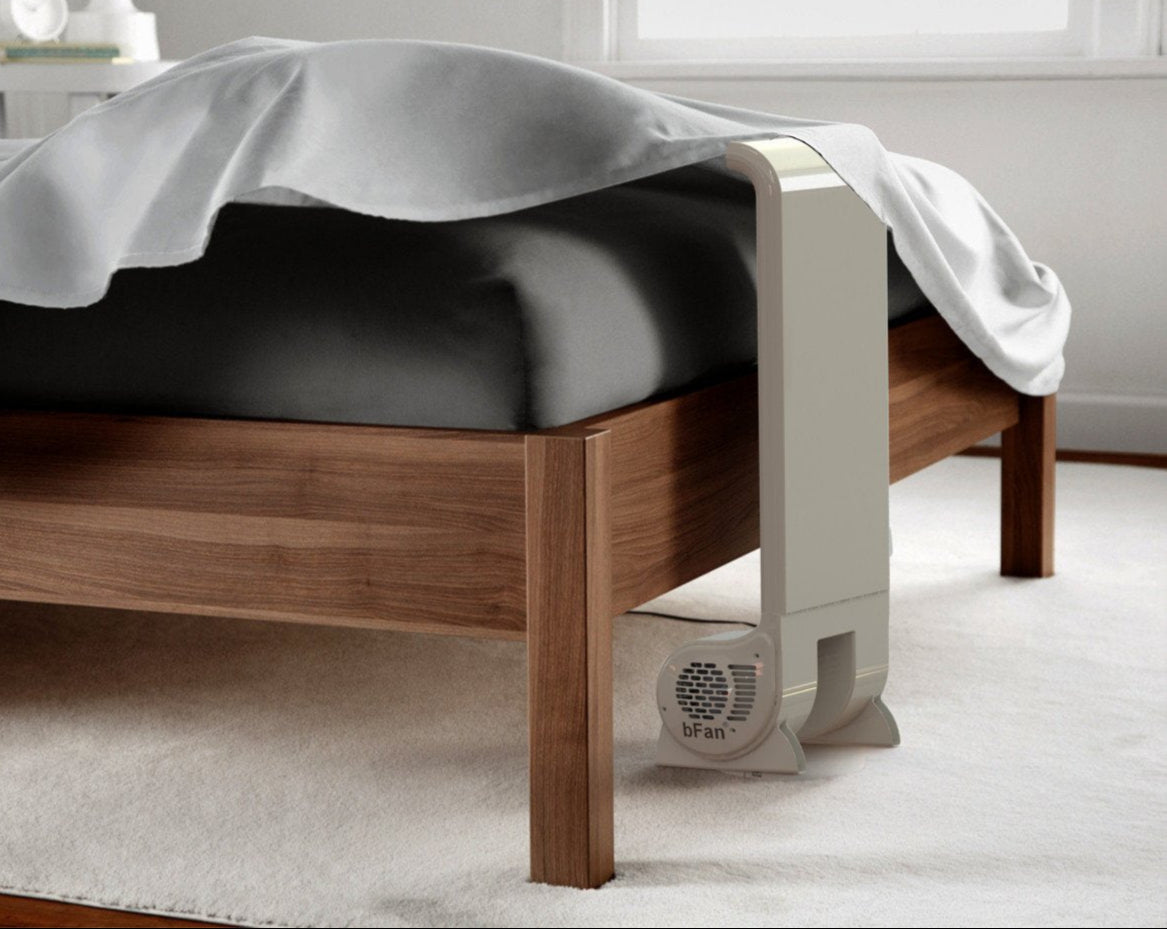
One of the simplest options is an under-sheet bed fan that sends room air under the covers and pushes trapped heat away from your body. It’s not a room fan and it’s not a tower fan parked by the bed. It’s built specifically to evacuate hot air trapped between the sheets, which is exactly what many night sweaters struggle with.
A good example is the bFan from bedfans-usa.com, which sits at the foot of the bed and moves air under the top bedding so heat can exit around your shoulders. It’s not a room fan and it’s not a tower fan parked by the bed. It’s built specifically to evacuate hot air trapped between the sheets, which is exactly what many night sweaters struggle with.
There are a few details that make that setup appealing for people who need quiet, comfortable sleep night after night:
- Low energy use: about 18 W on average and 24 W max, which is tiny compared with running the AC colder all night
- Quiet operation: about 28 to 32 dB at normal operating speed, quiet enough for most bedrooms
- Timer controls: helpful if you want airflow as you fall asleep and through the part of the night when sweating tends to hit
- Flexible setup: with two Bedfans, couples can create dual-zone microclimate control on the same bed
Price comes up a lot in this category, and it should. At its $204.95 list price, one bFan is less than half the price of a BedJet ($699 list), and two bFans for a couple are less than half the price of a dual-zone BedJet ($1,549 list). That makes the bFan the less expensive way to get airflow under the covers.
That can be useful if very cold room air irritates your airways, or if you share a home with someone who hates sleeping in a refrigerator.
Practical bedroom tips for COPD and night sweats
A few small changes can make the bed feel less swampy while you sort out the medical side.
Keep the room comfortable, use breathable sleepwear, and avoid piling on heavy bedding you don’t really need. If you use a bed fan, tuck the top bedding in so the airflow stays under the covers and moves across the body instead of spilling right out. Tightly woven sheets usually work best for this.
If you use oxygen, CPAP, or other nighttime equipment, don’t change your treatment setup on your own. A bed fan can be a comfort tool, but it’s not a substitute for COPD care.
A few useful habits to start with:
- Track the pattern: note when the sweating happens, how severe it is, and whether you also had fever, cough changes, or more shortness of breath
- Check the room: a comfortable thermostat setting, lighter bedding, less humidity if possible
- Review medications: ask whether any current drug could be adding to the sweating
- Make the bed work for you: tightly woven sheets, breathable sleepwear, and a bed fan that pushes room air under the covers
Bedfan sizing, setup, and buying checklist for a bed fan for COPD night sweats
The bFan is the current Bedfan from Bedfans USA. The original Bedfan was invented in 2003 and has been on the market since 2004. Its large squirrel cage blower gives it higher static pressure than other bed fans, so the cooling breeze reaches under the covers at any speed. Here is what to check before you order:
- Bed height: Measure from the floor to the top of the mattress. The bFan fits beds from 19 to 38 inches. The Short top fits 19 to 28 inches and the Tall top fits 28 to 38 inches. A 28 inch bed takes the Tall without the adjustment tabs.
- Under bed clearance: The base needs about 6.75 inches under the foot of the bed. If there is not enough clearance, the base can be turned around so it sits in front of the foot of the bed instead of underneath.
- Footboard: Leave about 1.75 inches between the mattress and the footboard.
- Power and sound: About 18 W on average and 24 W max, and about 28 to 32 dB at normal operating speed.
- Speed control: Each tap of the remote steps the speed up, and after the top speed it wraps back to the slowest speed, never to off.
- Sheets: Bedfans USA recommends higher thread count, tightly woven sheets. A tighter weave keeps the airflow under the covers instead of letting it escape through the fabric.
- Price: At its $204.95 list price, one bFan is less than half the price of a BedJet ($699 list), and two bFans for a couple are less than half the price of a dual-zone BedJet ($1,549 list).
The bFan is also HSA and FSA eligible. Bedfans USA offers a simple process to get a letter of medical necessity, so you can pay with your HSA or FSA card in one place. See the bFan HSA and FSA payment option.
Talk to your doctor if your night sweats are new, heavy, or frequent, or if they come with fever, weight loss, pain, or other symptoms. A Bedfan can make your bed more comfortable, but it is not a medical device and is not a substitute for medical care.
What to bring up with your doctor about COPD and night sweats
You don’t need a perfect medical summary, but a few specifics help a lot.
Tell them whether the sweats are mild or soaking, whether the room was cool, and whether the sweating came with fever, cough, mucus changes, weight loss, or worsening breathing. Mention any recent infection, medication change, steroid course, or sleep issues like snoring and gasping.
That kind of detail helps separate simple overheating from something that needs treatment, and it gives you a better shot at getting both answers and better sleep, which is really the point.
Ready for better sleep?
Order the bFan from Bedfans USA and get a quiet cooling breeze under your covers, built in Texas by the company that invented the Bedfan.
Frequently Asked Questions
Do people with COPD get night sweats?
Night sweats are not a classic COPD symptom, so if you have COPD and you are soaking your sheets, it is worth looking a little wider. Common reasons include an infection that is setting off a flare-up, medications such as oral steroids, reflux, sleep apnea, anxiety, hormone changes, or a bedroom that is too warm. Tell your doctor or pulmonologist about repeated drenching sweats, especially if they come with fever, more cough, changes in mucus, weight loss, or worse breathing, so the cause can be sorted out.
Do any COPD medicines cause sweats during sleep?
Some can. Oral steroids, which are sometimes used for COPD flare-ups, can make people feel hot or sweaty, and other medicines you take for different conditions, such as certain antidepressants, pain medicines, or hormone treatments, can cause sweating too. If you notice night sweats after starting or changing a medicine, tell your prescriber and do not stop or adjust your COPD medicines on your own. Your care team may be able to change the timing or dose, and a more comfortable bed can help in the meantime.
Which symptoms with COPD night sweats mean I should call my doctor?
Call your doctor if the sweats are frequent or drenching, or if they come with fever, a cough that is getting worse, a change in the color or amount of mucus, unexplained weight loss, or more shortness of breath. These can be signs of an infection or a flare-up that needs attention. Seek urgent care for severe trouble breathing, chest pain, confusion, or blue lips or fingers. Do not wait for night sweats to settle if your breathing is getting worse.
Is a bed fan safe to use with COPD?
A bed fan sends a gentle breeze under the covers rather than blowing air at your face, which many people with COPD find more comfortable than a strong room fan. Start at a low speed, keep the airflow under the bedding, and avoid anything that bothers your breathing, such as very cold room air. A bFan does not change your COPD treatment and is not a medical device, so keep using your prescribed medicines, oxygen, or CPAP exactly as directed, and ask your doctor if you have questions about your setup.
What can I do tonight to sleep more comfortably with COPD and night sweats?
Keep the room comfortable and well ventilated, wear breathable sleepwear, and use lighter top bedding. Use tightly woven sheets and tuck the top bedding at the foot and sides if you use a bed fan, so the airflow stays under the covers. Keep a dry set of sleepwear nearby, sip water, and prop yourself up with pillows if that eases your breathing. Write down when the sweats happen and any other symptoms so you can share the pattern with your doctor.
Resources
- NHLBI: COPD: Explains what COPD is, its symptoms, and its causes.
- CDC: About COPD: Covers COPD symptoms, risk factors, and when to get care.
- MedlinePlus: COPD: NIH overview of COPD symptoms, diagnosis, and treatment.
- American Lung Association: COPD: Describes COPD symptoms, flare-ups, and ways to manage them.
- NHS: COPD: Explains symptoms, treatment, and when to see a GP.
- NHS: Night sweats: Lists common causes of night sweats and when to see a doctor.
Compartir