
Blood Pressure Medicine Night Sweats: Can Your Meds Cause Them?
By Kurt Tompkins, Bedfans USA. Reviewed October 2026 against Cleveland Clinic, MedlinePlus, and the NHS. This article is general information, not medical advice. Never stop or change a blood pressure medicine without talking to your doctor.
Quick answer: Blood pressure medicine night sweats can happen. Cleveland Clinic lists blood pressure medications among the medicines that can cause sweating, and some, such as calcium channel blockers and hydralazine, list flushing as a side effect. Other medications that can raise blood pressure, including NSAIDs like ibuprofen, corticosteroids like prednisone, and some antidepressants, can also be linked to sweating. Keep taking your medicine and ask your doctor to review the timing and doses.
If you started waking up drenched after beginning a new blood pressure prescription, you are not imagining it. Timing matters, the pattern matters, and it is worth bringing up with your clinician. This guide explains which medications are most often discussed, what clues point to a medicine, what your doctor may do, and how to sleep more comfortably while you sort it out.
Can blood pressure medicine cause night sweats?
Yes, blood pressure medicine can cause night sweats in some people, but it is only one of many possible causes. Cleveland Clinic lists blood pressure medications, antidepressants, some migraine medication, pain relievers like ibuprofen, narcotic pain medication, breast cancer treatments, and steroids among the medications that can cause sweating.
Night sweats mean more than feeling warm. The NHS describes them as sweating so much that your nightclothes and bedding are soaked, even when the room is cool. If your bedroom is stuffy or your comforter is heavy, you may simply be overheating. If the room is reasonable and you still wake up damp or soaked, medications move higher on the list.
Which blood pressure medications are linked to sweating or flushing?
Not every blood pressure medicine has the same side effects, and most people never notice sweating at all. A few classes come up more often when people ask about heat at night.
- Calcium channel blockers: MedlinePlus lists flushing among the side effects of amlodipine and nifedipine. Flushing is a warm, red feeling in the face and neck that some people notice at night.
- Vasodilators: Hydralazine relaxes blood vessels, and MedlinePlus lists flushing first among its side effects. Minoxidil tablets are another vasodilator, used along with other blood pressure medicines.
- ACE inhibitors: MedlinePlus notes for lisinopril that diarrhea, vomiting, not drinking enough fluids, and sweating a lot can cause a drop in blood pressure, which may cause lightheadedness and fainting. That is a reason to mention heavy sweating to your doctor.
- Beta blockers: Metoprolol and carvedilol slow the heart rate. MedlinePlus warns not to stop metoprolol without talking to your doctor, because stopping suddenly may cause serious heart problems.
- Diuretics: Water pills help the body get rid of extra fluid and sodium. They are not a classic cause of sweating, but combined with heavy sweating they can leave you dehydrated.
Each product leaflet lists its own side effects. Check yours, or ask your pharmacist to review it with you.
Other medications that raise blood pressure and cause sweating
Some medications can both raise blood pressure and cause sweating, so the drug behind your night sweats may not be the blood pressure pill at all. MedlinePlus lists nonsteroidal anti inflammatory drugs (NSAIDs), corticosteroids, and some antidepressants, including venlafaxine and bupropion, among medicines that can raise blood pressure.
- NSAIDs and ibuprofen: Pain relievers like ibuprofen and naproxen can raise blood pressure, and Cleveland Clinic lists ibuprofen among pain relievers that can cause sweating. Cleveland Clinic also names naproxen as an example of a medication that can cause generalized sweating, including during sleep.
- Corticosteroids and prednisone: MedlinePlus lists increased sweating among the side effects of prednisone, and corticosteroids can raise blood pressure.
- Antidepressants: Both Cleveland Clinic and the NHS list some antidepressants among common medication causes of night sweats.
- Diabetes medications: Low blood sugar can cause sweating. Our guide to Ozempic night sweats explains the warning signs.
If you take an over the counter pain reliever every night for aches, mention it at your appointment. Many people do not think of it as a medication. Our guide to medications that contribute to night sweats lists more.
Hyperhidrosis vs night sweats from medications
Hyperhidrosis means sweating more than your body needs to cool down, and when a medication or health condition causes it, doctors call it secondary hyperhidrosis. Cleveland Clinic explains that secondary generalized hyperhidrosis can be caused by an underlying medical condition or a medication and may cause sweating while you sleep.
Primary hyperhidrosis is different. Cleveland Clinic says it usually affects the armpits, hands, feet, and face and tends to start before age 25. Cleveland Clinic also advises seeing a provider if sweating happens overnight while you sleep. If your sweating is all over your body and started after a new prescription, the medicine is worth discussing.
How to tell if your medication may be involved
The clearest clue is timing: sweating that started after a new prescription, a dose change, or a new combination of medications.
- New prescription: sweating began within days or weeks of starting the medicine
- Dose change: symptoms appeared after a dose increase
- Repeat pattern: you wake up sweaty at about the same point each night
- Cool bedroom: the room is not obviously too warm
- No bedding change: same sheets, blanket, mattress, and season
If you suspect blood pressure medicine night sweats, keep a short log for one to two weeks. Write down each medication name and dose, the time you take it, when the sweating happens, your home blood pressure readings if you check them, and anything else that could matter, such as alcohol, illness, or stress.

What your doctor may do
If a medication seems to be the cause, your doctor may adjust the dose, change the time you take it, or switch you to a different medicine. Do not stop a blood pressure medicine on your own; with some drugs, such as beta blockers, stopping suddenly can be dangerous.
- Medication review: every prescription, over the counter product, and supplement you take
- Symptom timeline: when the sweating started and how often it soaks your bedding
- Blood pressure control: whether the current medicine is otherwise working well
- Next steps: a dose change, a switch, watchful waiting, or tests for another cause
Other causes of night sweats to rule out
Night sweats can also come from menopause, anxiety, infections, sleep apnea, low blood sugar, alcohol, and thyroid problems. Many people who take blood pressure medicine also take other daily medications, so the answer may not be obvious right away.
Midlife can add to the confusion. A woman in perimenopause might start a blood pressure medicine and notice night sweats in the same season. Our article on menopause and high blood pressure and our menopause guide cover that overlap. Obstructive sleep apnea is linked with night sweats, so snoring and daytime sleepiness are worth mentioning too.
When blood pressure medicine night sweats need faster medical attention
Get prompt medical advice if night sweats come with fever, weight loss you cannot explain, chest pain, fainting, severe weakness, confusion, or trouble breathing. The same goes if your blood pressure medicine was recently changed and you feel clearly unwell. Repeated soaking sweats with no obvious reason deserve a check even if you feel fine otherwise. See our page on when to see a doctor for night sweats.
How to sleep more comfortably while you sort it out
Aim for a bed that does not trap heat, rather than a freezing room. The Sleep Foundation suggests about 65°F for most adults.
- Tight weave sheets: help air travel across your body instead of leaking out
- Lighter bedding: heavy comforters trap heat even with airflow underneath
- Fluids: replace what you lose overnight, especially if you take a diuretic
- Airflow in the bed: a room fan helps the room, but heat under the covers needs air inside the bed
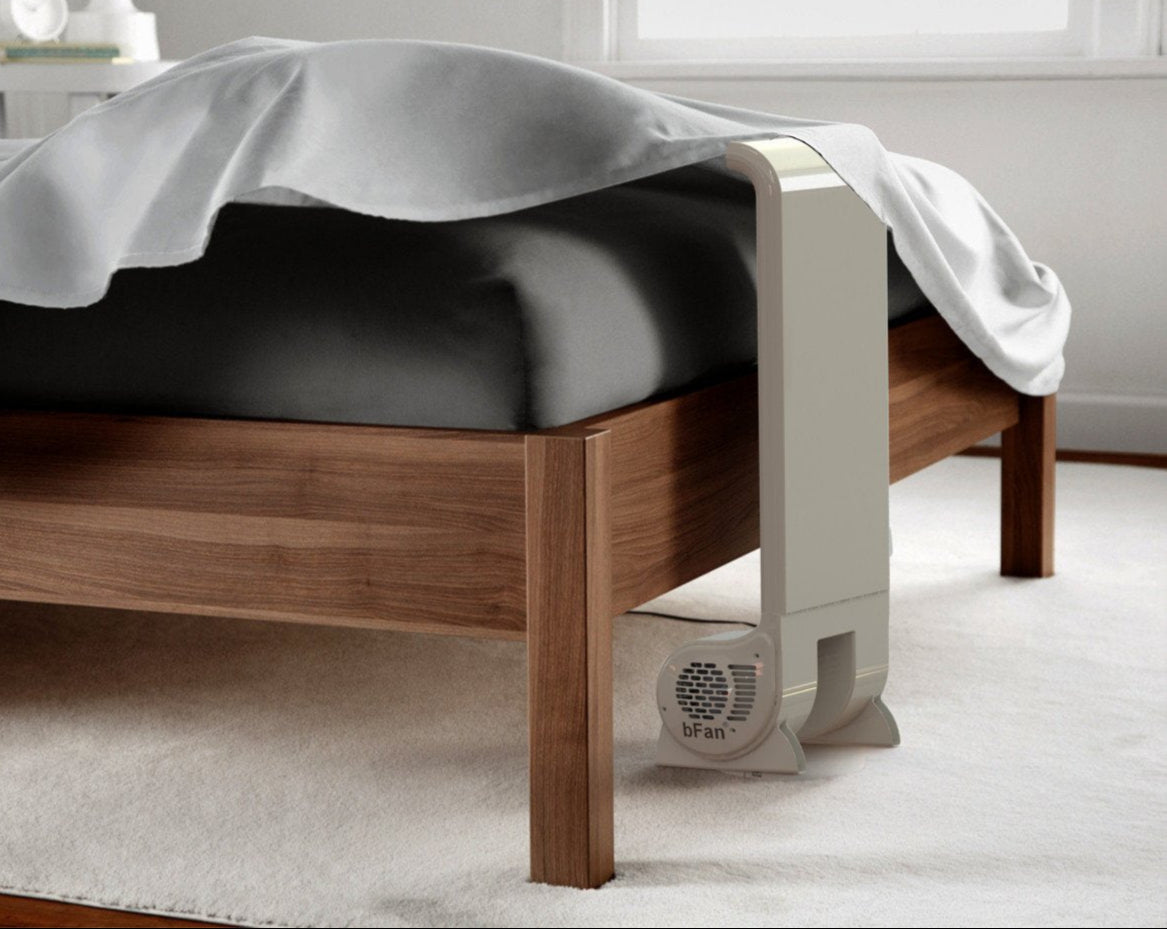
The bFan from Bedfans USA sits centered at the foot of the bed and sends a quiet stream of room air under your sheets, so trapped heat moves out near your shoulders. Direct airflow helps stop sweat before it starts. It does not change the room temperature and does not replace medical care. It uses about 18 watts on average, runs at about 28 to 32 dB at normal operating speed, and has a sleep timer. Two bFans give couples separate airflow on each side.
Ready for better sleep?
The bFan sits at the foot of your bed and sends a quiet stream of air under your sheets. Direct airflow helps stop sweat before it starts, and one bFan costs less than half the price of one BedJet, making it the less expensive alternative. Shop the bFan at bedfans-usa.com
Frequently Asked Questions
Which blood pressure medicine is most likely to cause night sweats?
There is no single blood pressure medicine that causes night sweats in everyone, and most people on these medications never notice a change. Calcium channel blockers such as amlodipine and nifedipine and the vasodilator hydralazine list flushing as a side effect, which some people feel as heat at night. Reactions vary from person to person, so the best clue is your own timeline. If sweating started after a new medicine or dose, bring your log to your doctor or pharmacist so they can check the product information for your exact medication.
Does the time you take blood pressure medicine affect night sweats?
For some people, the time of day they take a medicine can change when side effects show up, so a medicine taken at bedtime may feel different from one taken in the morning. That does not mean you should move your dose on your own. Some blood pressure medicines are meant to be taken at a specific time, and changing the schedule can affect how well they work. If your night sweats seem to follow your evening dose, ask your doctor or pharmacist whether a different time is safe for your prescription.
Can ibuprofen raise blood pressure and cause sweating?
MedlinePlus lists NSAIDs, the group that includes ibuprofen and naproxen, among medicines that can raise blood pressure. Cleveland Clinic lists pain relievers like ibuprofen among medications that can cause sweating, and names naproxen as an example of a medicine that can cause generalized sweating, including during sleep. If you have high blood pressure and take NSAIDs often, tell your doctor. They may suggest a different pain reliever or a lower dose. Do not stop a prescribed medicine on your own, but do mention over the counter use at every visit.
Is it safe to stop blood pressure medicine if it causes night sweats?
No, you should not stop a blood pressure medicine on your own, even if you think it is causing night sweats. With some medicines, such as beta blockers like metoprolol, stopping suddenly may cause serious heart problems, and blood pressure can rise quickly when other medicines are stopped. Call your doctor or pharmacist instead. They can review your symptoms, check your readings, and decide whether to adjust the dose, change the timing, or switch to another medication. In the meantime, keep notes and focus on keeping your bed comfortable.
Can heavy sweating lower your blood pressure?
Heavy sweating can lead to fluid loss, and MedlinePlus notes for lisinopril that sweating a lot, along with diarrhea, vomiting, or not drinking enough fluids, can cause a drop in blood pressure that may lead to lightheadedness and fainting. That risk can be higher if you also take a diuretic. If you wake up soaked and feel dizzy when you stand, sit down, drink fluids, and call your doctor. Mention how often the sweating happens so your care team can check your medication doses and fluid balance.
Resources
- Cleveland Clinic on night sweats causes and care: lists medications that can cause sweating, including blood pressure medications, antidepressants, ibuprofen, and steroids.
- MedlinePlus on medicine related high blood pressure: lists medicines that can raise blood pressure, including NSAIDs, corticosteroids, and some antidepressants.
- Cleveland Clinic guide to hyperhidrosis: explains primary and secondary hyperhidrosis, including sweating caused by medications or during sleep.
- MedlinePlus drug information for prednisone: lists side effects of prednisone, including increased sweating.
- MedlinePlus drug information for amlodipine: lists side effects of this calcium channel blocker, including flushing.
- MedlinePlus drug information for metoprolol: explains why you should not stop this beta blocker suddenly without talking to your doctor.
- NHS overview of night sweats: defines night sweats and lists common causes such as medicines, anxiety, and hyperhidrosis.
Partager