
Night Sweats and Joint Pain: Causes Worth Knowing
By Kurt Tompkins, Bedfans USA. Updated November 2026.
If you're waking up soaked at 2 a.m. and your knees, hands, shoulders, or hips hurt at the same time, it’s easy to blame the wrong thing. Maybe the room is too warm. Maybe you slept in a bad position. Maybe you’re just stressed, or anxiety kept you up. Sometimes that’s true. A steady cooling breeze under the covers helps stop sweat before it starts.
But when night sweats and joint pain keep showing up together, the pattern can point to something more than a simple temperature problem.
Night sweats, sometimes called sleep hyperhidrosis, are more than feeling a little hot under a thick comforter. Joint pain is also a wide category, from overuse and aging to infection, autoimmune disease, and inflammatory arthritis. When those two symptoms overlap, it’s worth paying attention.
Why night sweats and joint pain together can matter
On their own, each symptom has a long list of possible causes. Put them together, though, and the list gets narrower. According to Mayo Clinic, night sweats often show up alongside other concerning symptoms, including fever, weight loss, pain in a specific area, cough, or diarrhea. Joint pain can come from autoimmune diseases, infections, inflammatory arthritis, and even some blood disorders.
That overlap is the reason this combo deserves a closer look. The CDC also notes that chronic symptoms following infections can include sweating, muscle pain, and chronic or recurrent joint pain, and those symptoms can last for weeks or months, sometimes longer.
A few patterns tend to raise the stakes a bit.
- Drenching sweats: You wake up needing to change clothes or bedding, not just kick off the blanket
- Multiple sore joints: Pain shows up in more than one area, especially hands, wrists, knees, ankles, or feet
- Morning stiffness: You feel especially stiff when you first get up
- Fever or chills: The symptom cluster starts looking more like infection or active inflammation
- Recent illness: Diarrhea, a urinary infection, a respiratory illness, or a tick bite happened before the joint pain started
That does not mean every case is serious. Menopause, medication side effects, and a room that runs too warm can still be part of the story. Still, true night sweats plus painful joints are a combination that deserve a real medical conversation.
Medical causes of night sweats and joint pain
Autoimmune diseases that can cause night sweats and joint pain
Autoimmune disease is one of the first buckets doctors think about when joint pain and sweating come together. In these conditions, the immune system attacks the body’s own tissues, which can cause widespread inflammation.
Rheumatoid arthritis is a common example. It often causes painful, swollen joints, morning stiffness, and fatigue. Lupus is another. The National Institute of Arthritis and Musculoskeletal and Skin Diseases says lupus is a chronic autoimmune disease that can affect the joints and many other organs, and joint pain, stiffness, and swelling are common.
Inflammation can affect more than the joints, which is why people with autoimmune disease may also feel run down, feverish, or sweaty at night. If you’ve got joint pain plus rashes, mouth sores, chest pain, unusual fatigue, or swelling, that adds more weight to the autoimmune side of the list.
Infections and post-infectious symptoms linked to night sweats and joint pain
Infections can trigger both symptoms directly, or they can set off lingering inflammation that sticks around after the infection itself is gone.
Lyme disease is a well-known cause of joint pain, and depending on the stage and severity, people may also have fever, fatigue, and sweats. Hepatitis B and hepatitis C can also be tied to joint pain. Some infections are less obvious. A person may have an intestinal illness, urinary tract infection, or genital infection, start to feel better, then develop joint pain afterward.
That’s where reactive arthritis comes in. Mayo Clinic says reactive arthritis causes joint pain and swelling after an infection in another part of the body, often the intestines, genitals, or urinary tract. It also notes that the pain can be worse at night or in the morning, which makes it especially relevant here.
The CDC has also described chronic symptoms following infections, including sweating, muscle pain, and chronic or recurrent joint pain. If your symptoms started after an illness, even one that seemed minor at the time, tell your doctor.
Inflammatory arthritis and other conditions on the list
Inflammatory arthritis is a broader category that includes rheumatoid arthritis, psoriatic arthritis, ankylosing spondylitis, and reactive arthritis. These conditions often cause joint pain with stiffness, swelling, and a pattern that’s worse after rest.
Mayo Clinic includes all of those among causes of joint pain. With inflammatory disease, people often say the pain feels different from simple wear and tear. There may be heat in the joints, puffiness, stiffness that lasts more than a few minutes, and symptoms that ease a bit once the body gets moving.
Less often, night sweats and joint pain can also show up with certain cancers, including leukemia, or with other inflammatory conditions. That does not mean cancer is likely, but it’s one reason doctors pay attention when night sweats are paired with weight loss, ongoing fatigue, fever, swollen lymph nodes, or pain that keeps building.
When night sweats and joint pain should prompt medical care
The biggest question most people have is simple, when should I stop watching it and get checked?
If the symptoms are new, brief, and clearly tied to something obvious, like a hot room and a tough workout, you may not need to panic. But persistent night sweats and joint pain deserve a real medical conversation, especially if they’ve been going on for more than a couple of weeks, are getting worse, or keep waking you up.
A few warning signs push this out of the “wait and see” category.
- Fever: A raised temperature along with sweats and joint pain can point to infection or active inflammation
- Weight loss: Unplanned weight loss needs follow-up
- Joint swelling: Puffy, red, warm, or hard-to-move joints are more concerning than mild aches
- Shortness of breath or chest pain: Get urgent care right away
- New rash: A rash with joint pain can fit autoimmune or infectious causes
- One very painful hot joint: That can signal a joint infection or crystal arthritis and should be checked quickly
- Symptoms after a recent infection: Especially after diarrhea, a urinary infection, or a tick bite
If you’re immunocompromised, pregnant, on steroids, in cancer treatment, or taking medications that affect your immune system, it makes sense to call sooner rather than later.
What doctors often ask about night sweats and joint pain
A good workup usually starts with the timeline. Did the sweats begin first, then the pain? Did both start after a viral illness? Are the symptoms every night or only sometimes? Did you recently change medications?
Doctors also pay attention to the joint pattern. Pain in both hands and wrists points in a different direction than one swollen knee. Pain that’s worst in the morning can suggest inflammatory arthritis. Pain that follows an infection can suggest reactive arthritis or another post-infectious problem.
It helps to go in with notes, even quick ones on your phone.
- Timing: What time do the sweats happen, how often, and how drenching are they
- Joint pattern: Which joints hurt, whether they swell, and whether the pain moves around
- Other symptoms: Fever, rash, cough, diarrhea, fatigue, swollen glands, weight loss
- Recent exposures: Tick bites, travel, sick contacts, new partners, food poisoning, urinary symptoms
- Medication changes: Antidepressants, steroids, hormones, and other drugs can affect sweating
That kind of detail can save time and make it easier to sort out whether the issue looks infectious, autoimmune, medication-related, or something else.
Sleep comfort while you sort out the cause
Even when you’re doing the right medical follow-up, you still need to sleep tonight. That’s the hard part. Night sweats can wreck your rest, and poor sleep tends to make pain feel worse the next day.
Sleep experts usually recommend a cool, quiet, dark bedroom. That helps many people sleep better, but hot sleepers often still feel trapped under the covers because the real problem is the warm air building up around the body.
That’s where a real bed cooling setup can help. Neither a Bedfan nor a BedJet makes the air colder. They both simply use the air already in the room. They both use the cooler air already in the room and move it into the bed. The difference is how they do it, how much they cost, and how practical they feel night after night.
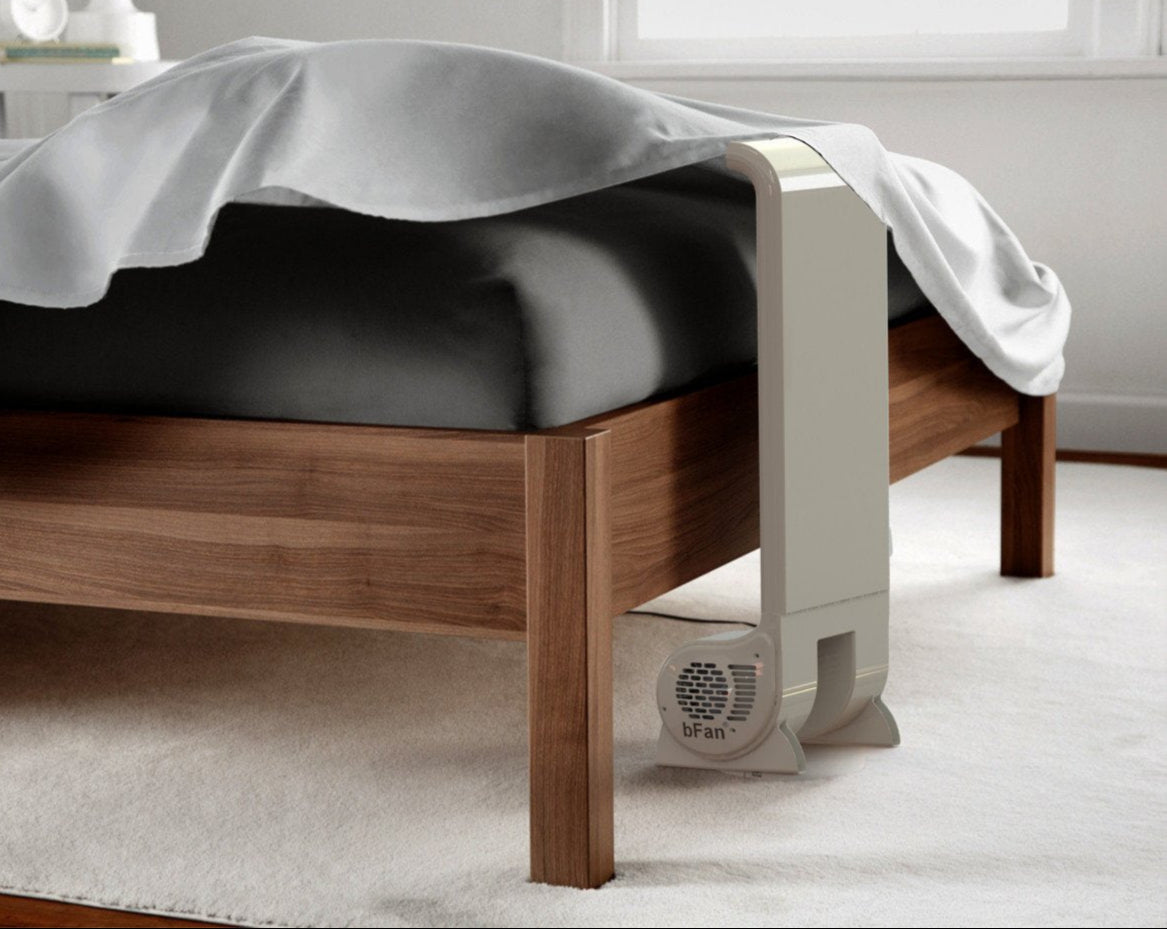
A good under-sheet system pushes air under the covers and carries heat away from your body. The bFan from Bedfans USA is one option worth a look. It sits at the foot of the bed, with the blower section tucked under the mattress edge, and sends room air up under the top bedding so trapped heat can escape around your shoulders. With tightly woven sheets, the airflow tends to move across your body better and carry away heat more effectively.
A few details matter if you’re comparing options.
- Noise level: Normal operating sound is about 28 to 32 dB, which is quiet enough for most bedrooms
- Timer controls: The Bedfan offers timer controls, handy if you want cooler airflow during the first part of the night
- Dual-zone setup: Couples can get dual-zone microclimate control by using two fans, one for each sleeper
Price is a big part of the conversation too. At its $204.95 list price, one bFan is less than half the price of a BedJet ($699 list), and two bFans for a couple are less than half the price of a dual-zone BedJet ($1,549 list). That makes the bFan the less expensive way to get airflow under the covers. And if you’re wondering which came first, the original Bedfan came to market about a decade before BedJet launched.
The bFan is not a medical device and does not address the underlying cause. It just makes the nights more manageable while you work on that part. For people dealing with menopause, medication-related sweating, inflammatory flares, or post-infectious heat at night, that can be the difference between broken sleep and a usable night.
Bedfan sizing, setup, and buying checklist for a bed fan for night sweats and joint pain
The bFan is the current Bedfan from Bedfans USA. The original Bedfan was invented in 2003 and has been on the market since 2004. Its large squirrel cage blower gives it higher static pressure than other bed fans, so the cooling breeze reaches under the covers at any speed. Here is what to check before you order:
- Bed height: Measure from the floor to the top of the mattress. The bFan fits beds from 19 to 38 inches. The Short top fits 19 to 28 inches and the Tall top fits 28 to 38 inches. A 28 inch bed takes the Tall without the adjustment tabs.
- Under bed clearance: The base needs about 6.75 inches under the foot of the bed. If there is not enough clearance, the base can be turned around so it sits in front of the foot of the bed instead of underneath.
- Footboard: Leave about 1.75 inches between the mattress and the footboard.
- Power and sound: About 18 W on average and 24 W max, and about 28 to 32 dB at normal operating speed.
- Speed control: Each tap of the remote steps the speed up, and after the top speed it wraps back to the slowest speed, never to off.
- Sheets: Bedfans USA recommends higher thread count, tightly woven sheets. A tighter weave keeps the airflow under the covers instead of letting it escape through the fabric.
- Price: At its $204.95 list price, one bFan is less than half the price of a BedJet ($699 list), and two bFans for a couple are less than half the price of a dual-zone BedJet ($1,549 list).
The bFan is also HSA and FSA eligible. Bedfans USA offers a simple process to get a letter of medical necessity, so you can pay with your HSA or FSA card in one place. See the bFan HSA and FSA payment option.
Talk to your doctor if your night sweats are new, heavy, or frequent, or if they come with fever, weight loss, pain, or other symptoms. A Bedfan can make your bed more comfortable, but it is not a medical device and is not a substitute for medical care.
Practical steps that can help right away
You don’t need a giant bedroom overhaul to make things better this week. Small changes can help you get cleaner information about your symptoms and a little more rest at the same time.
- Use tightly woven sheets to help direct airflow across your body
- Keep a symptom log with body temperature, sweats, pain level, and any swelling
- Cut back on alcohol late at night since it can worsen heat and sweating
- Wear light sleep clothes or keep a dry set nearby
- Call your doctor sooner if the pattern is building instead of fading
If the sweats are drenching, the pain is inflamed, or you’re seeing fever, swelling, rash, or weight loss along with it, don’t chalk it up to being a hot sleeper. A cooler bed may help you get through the night, but the symptom pattern still deserves real answers.
Ready for better sleep?
Order the bFan from Bedfans USA and get a quiet cooling breeze under your covers, built in Texas by the company that invented the Bedfan.
Frequently Asked Questions
Can night sweats and joint pain be a sign of arthritis?
They can be. Inflammatory conditions such as rheumatoid arthritis can cause painful, swollen joints, morning stiffness, and fatigue, and some people with inflammatory arthritis report night sweats. Many other things can cause both symptoms, including menopause, medications, and infections, so the pairing is a reason to see a doctor rather than a diagnosis on its own. A doctor may ask about morning stiffness, swelling, and family history, and may order blood tests. Keep a short log of your symptoms to help with the visit.
Can menopause cause both night sweats and joint pain?
Yes. Changing hormone levels during perimenopause and menopause can cause night sweats and hot flashes, and many women also notice aching or stiff joints around the same time. Poor sleep from sweating can make pain feel stronger the next day. Because other conditions can look similar, it is still worth mentioning both symptoms to your doctor, especially if the joints are red, swollen, or very stiff in the morning. Your doctor can help sort out whether menopause, another condition, or a mix is behind it.
What infections cause night sweats and joint pain together?
Several infections can cause both, including viral illnesses and some tick borne infections such as Lyme disease, which can cause joint pain and swelling along with fever and sweats. Joint aches can also linger after an infection, along with fatigue. If your symptoms began after an illness or a tick bite, say so when you see your doctor, along with any travel and the time frame. Do not guess or self-medicate, because the right testing and care depend on the cause.
Should I worry if my joints hurt and I wake up soaked?
It is worth taking seriously, especially if it keeps happening. A single sweaty night after a hot room and a tough workout is not unusual, but ongoing night sweats with joint pain, swelling, fever, a rash, or unexplained weight loss deserve a medical visit. Book an appointment if the pattern lasts more than a couple of weeks, is getting worse, or keeps waking you. Seek urgent care if you have a very hot, swollen joint with fever, chest pain, or trouble breathing.
Can a bed fan help if my joints hurt at night?
A bed fan will not ease joint pain, but it can help you stay comfortable and sleep a bit better. The bFan sends a cooling breeze under the top bedding from the foot of the bed, and direct airflow helps stop sweat before it starts, which can mean fewer wake-ups and less tossing and turning on sore joints. Use it alongside medical care, supportive bedding, and any treatment your doctor recommends. A bFan is a comfort product, not a medical device.
Resources
- NIAMS: Rheumatoid Arthritis: Explains symptoms, causes, and treatment of rheumatoid arthritis.
- NIAMS: Lupus: Describes how lupus affects joints and other organs.
- MedlinePlus: Arthritis: NIH overview of arthritis types and symptoms.
- NHS: Rheumatoid arthritis: Explains symptoms, diagnosis, and when to see a GP.
- CDC: Signs and Symptoms of Untreated Lyme Disease: Lists joint pain and other symptoms of untreated Lyme disease.
- National Institute on Aging: What Is Menopause?: Explains menopause and common symptoms such as hot flashes.
- NHS: Night sweats: Lists common causes of night sweats and when to see a doctor.
Partager