
Diabetes Night Sweats: Causes and Relief
Waking up soaked, kicking off the covers, and wondering whether your blood sugar is crashing can make bedtime feel stressful. If you live with diabetes, night sweats can come from a few different directions, and one of them does need quick attention, low blood sugar during sleep. Still, not every sweaty night is caused by diabetes itself, and that distinction matters.
Sometimes the cause is simple and fixable. Sometimes it points to medication timing, Sleep apnea, infection, menopause, thyroid trouble, hyperhidrosis, or autonomic nerve changes that affect sweating. If your episodes are new, severe, frequent, or come with confusion, fever, chest symptoms, or weight loss, it’s smart to get medical help instead of brushing them off as “just one of those things.”
Sleep experts commonly recommend a bedroom temperature between 60°F and 67°F, 15.5°C to 19.5°C, for better sleep. That range helps many people, but it can get expensive to keep a whole home that cool. A Bedfan can often let you raise the room temperature by about 5°F and still cool your body enough for more restful sleep, which is one reason hot sleepers often look at bed level cooling, not just lower thermostat settings.
Why diabetes can lead to night sweats
The most established diabetes related cause of night sweats is nocturnal hypoglycemia, meaning blood glucose drops too low while you’re asleep. For many people with diabetes, a reading below 70 mg/dL counts as hypoglycemia, indicating that insulin levels may need adjustment. When your glucose drops, your body releases stress hormones, especially adrenaline, and that can trigger sweating, shakiness, a racing heart, vivid dreams, restless sleep, and waking up confused or drenched.
That said, diabetes can also connect to sweating, including gustatory sweating, and other symptoms in less direct ways. Long term nerve damage can disrupt how your body handles temperature and sweat production. High glucose can raise infection risk, and infections themselves can cause feverish sweating at night. People with diabetes also have higher rates of sleep apnea, which can show up as sweating, gasping, and poor sleep.
Before getting too focused on bedding or room temperature, make sure you know when night sweats deserve medical attention.
- New or worsening episodes: sweating that starts suddenly, happens often, or feels much more intense than usual
- Low glucose symptoms: confusion, shaking, nightmares, morning headache, or waking with a glucose reading below 70 mg/dL
- Infection signs: fever, cough, painful urination, a foot wound, dental pain, or unusual fatigue
- Other red flags: weight loss, chest symptoms, fainting, severe shortness of breath, or a bed partner noticing pauses in your breathing
Nocturnal hypoglycemia is the first thing to rule out
If you use insulin, sulfonylureas, or meglitinides, low blood sugar overnight moves high on the list. This is the clearest diabetes specific reason many people wake up with wet sheets or a soaked shirt. You may not remember the low itself. What you notice instead is the aftermath, sweating, a pounding heart, a weird dream, or feeling lousy in the morning.
A lot of people assume a high morning reading means high blood sugar caused the sweating. Sometimes that is not what happened. An overnight low may have come first, then your body pushed glucose back up later. So the sweat came from the low, not the higher number you saw after waking.

If you can do it safely, check your glucose when you wake up sweaty. If episodes keep happening, a continuous glucose monitor can be a big help in determining the necessary treatment. A CGM can show whether your glucose is dipping at midnight, 2 a.m., or closer to dawn, and those patterns are much more useful than guessing.
A few nighttime triggers come up again and again.
- Too much evening insulin
- Sulfonylurea medication
- Alcohol before bed
- Skipped dinner
- Heavy evening exercise
- Kidney or liver problems
- Previous repeated lows
If your clinician confirms that lows are part of the story, the fix may involve changing basal insulin, adjusting timing, reworking your evening snack, reviewing alcohol use, or switching medications. The right answer depends on your treatment plan, not on a one size fits all rule.
Why high blood sugar is a less direct cause of night sweats
High blood sugar can make you thirsty, tired, and up all night urinating. It can make sleep miserable. What it usually does not do, by itself, is cause the classic sweaty, adrenaline fueled episode that low blood sugar does. That’s why clinicians tend to think about hypoglycemia first when a person with diabetes wakes up sweating.
High glucose still matters, just in a different way. It can raise your chances of infection, and infections are a well known cause of night sweats. It can also show up after an unnoticed overnight low, which can muddy the picture if you only check in the morning.
A sweaty night with thirst and frequent urination feels different from a sweaty night with shakiness, bad dreams, or confusion. That difference can help point you in the right direction.
Other causes of night sweats in people with diabetes
Autonomic neuropathy and temperature regulation
Diabetes can affect the autonomic nervous system, the part that handles things you don’t consciously control, including excessive sweating, heart rate, digestion, and blood pressure, and can sometimes lead to conditions like hyperhidrosis. When those nerves are affected, some people sweat too much, some experience anhidrosis and sweat too little, and some have an uneven pattern that makes sleeping hot a nightly problem.
If you also deal with dizziness when standing, stomach emptying problems, bladder issues, erectile dysfunction, or a fast resting heart rate, autonomic neuropathy becomes a stronger possibility. In that case, sweating may happen even when glucose is not dropping overnight.
Infections can look like diabetes trouble
People with diabetes face a higher risk of certain infections, including skin infections, foot infections, urinary tract infections, dental infections, and respiratory infections. Any of those can bring fever, chills, and drenching sweats at night.
This is one reason it’s risky to assume every sweaty night is “just blood sugar.” If you have a wound that looks angry, a cough that will not quit, painful urination, or a general washed out feeling, it’s time to call your doctor.
Sleep apnea, menopause, thyroid disease, and more
Sleep apnea is very common in type 2 diabetes, especially when weight, snoring, and daytime fatigue are also part of the picture. Repeated breathing interruptions can trigger sweating and broken sleep. Menopause can do the same, and it often overlaps with diabetes in midlife, which can make the cause harder to sort out.
Hyperthyroidism, acid reflux, anxiety, and some cancers can also cause night sweats. So can medications that are not diabetes drugs, including some antidepressants, steroids, hormone therapies, and pain medications.
When night sweats keep happening without a clear overnight low, it helps to look at the whole picture, not just the glucose meter.
- Autonomic clues: heat intolerance, uneven sweating, dizziness on standing, digestive slowdown, bladder changes
- Sleep apnea clues: loud snoring, gasping, morning headaches, daytime sleepiness, resistant high blood pressure
- Hormone clues: hot flashes, irregular periods, perimenopause, thyroid symptoms
- Infection clues: fever, chills, cough, wound drainage, burning with urination, swollen gums
How to track patterns before your next appointment
You do not need a perfect spreadsheet, but a little data about symptoms can save a lot of guesswork. Start with the basics. When did the sweating happen, what was your bedtime glucose, what did you eat, did you drink alcohol, did you exercise late, and what was your glucose when you woke up.
If you use a CGM, review the overnight graph, not just the morning number. Look for dips below 70 mg/dL, repeated alarms, or sharp drops after exercise or evening insulin. If you do not use a CGM, your clinician may ask for a few targeted checks at bedtime, sometime in the middle of the night, and first thing in the morning.
Also review your medication list as a whole. Beta blockers, for example, can blunt some warning signs of low blood sugar, complicating the treatment of related symptoms. Non diabetes medications, such as those used for treating hyperhidrosis and gustatory sweating, can cause excessive sweating too. That broader medication review is often where a confusing pattern finally starts to make sense.
Bedroom temperature and sleep quality still matter
Even when a medical cause is being sorted out, your sleep environment can make the nights easier. If you regularly sleep hot, heavy blankets, thick sleepwear, and trapped heat around your torso can turn a small sweating spell into a full wake up.
Sleep experts commonly recommend a bedroom temperature between 60°F and 67°F, 15.5°C to 19.5°C, for better sleep. Still, not everyone wants, or can afford, to keep the entire house that cool all night. A Bedfan can often let many people raise the room temperature by about 5°F while still cooling the body enough for more restful sleep. That can lower air conditioning use and still give you a cooler sleep surface where you actually need it.
Fabric choice matters more than many people think. A bed fan works best when the sheets have a tight weave, because the moving air can travel across your body and carry away trapped heat instead of leaking out too fast. Lightweight layers also make it easier to fine tune comfort during the night.
Why a Bedfan can help with diabetes night sweats
A bed fan does not fix nocturnal hypoglycemia, infection, hyperhidrosis, anhidrosis, or sleep apnea. What it can do is reduce the misery that follows overheating and sweating, helping you fall back asleep faster and stay drier. That matters, especially if you are also working with your clinician on the medical side of the problem.
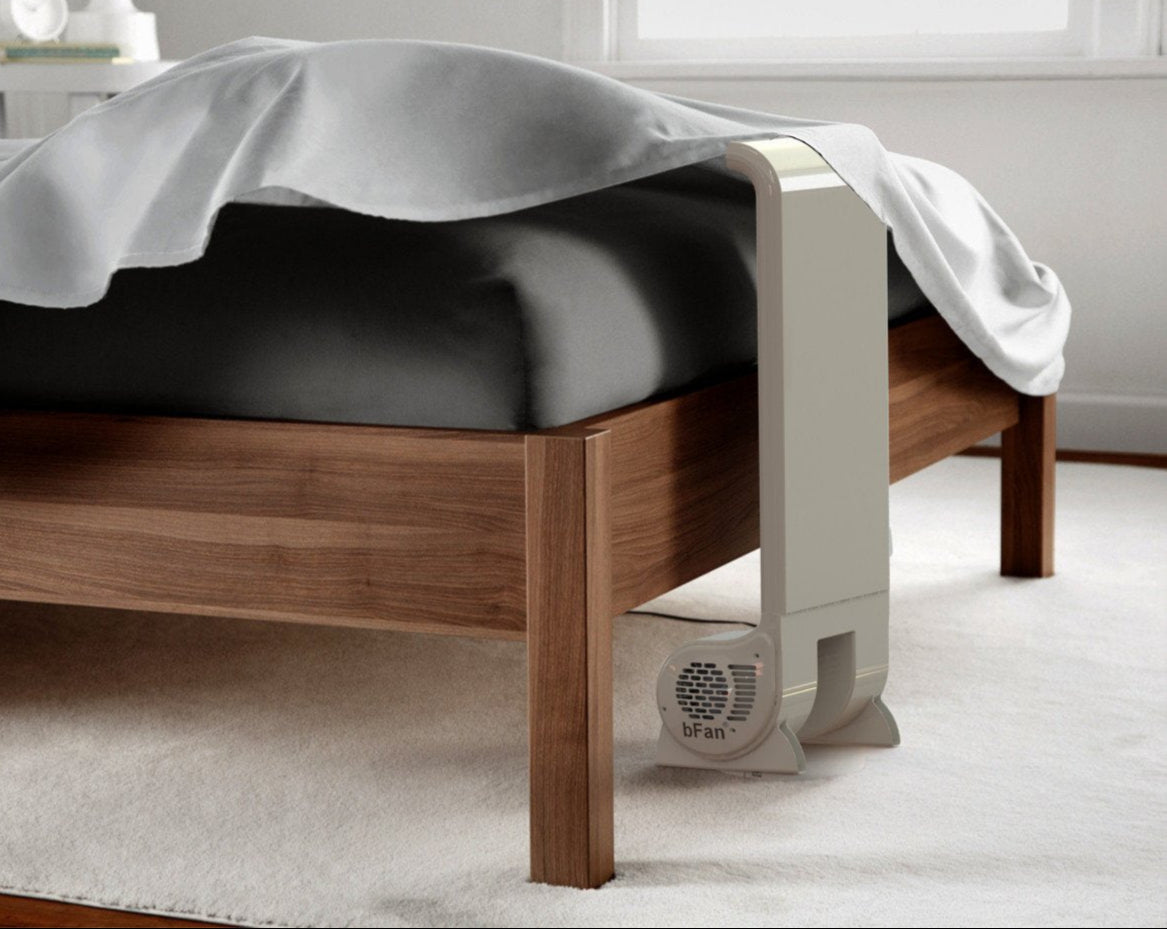
The bFan from Bedfans USA is designed to blow room air between your sheets, where your body heat gets trapped. That last part is worth being very clear about. Neither Bedfan nor Bedjet cools the air itself. They both use the cooler air already in the room. The benefit comes from moving that air through the bed microclimate so your body can shed heat more easily.
For people dealing with night sweats, that can be a real quality of life upgrade. The bFan is a bed fan, not a whole room cooling system, so it targets the place where you actually feel miserable. Bedfans USA notes that many sleepers use it to stay comfortable without driving the thermostat as low all night, and that lines up with the common sleep advice around 60°F to 67°F. With a Bedfan, many people can often raise the room temperature by about 5°F and still sleep cool enough for better rest.
It also keeps operating costs low. The Bedfan uses only about 18 watts on average, and the sound level is typically around 28 dB to 32 dB at normal operating speed, which is quiet enough for most bedrooms. Timer controls are built in, which can be helpful if you want stronger cooling during the first part of the night and less airflow later on.
If you share a bed and need different temperatures, a single whole bed system may not be the only option. The Bedfan offers dual zone microclimate control using two fans, which is often a practical way to give each sleeper separate airflow. That matters when one person is sweating and the other is cold.
This is also where price comparisons come up. If you’re looking at Bedjet, keep the numbers in view. One Bedjet is more than twice the price of a single Bedfan. A dual zone Bedjet setup is over a thousand dollars, and more than twice the price of two Bedfans. Two bed fans can create dual zone microclimate control at a fraction of that cost. Also, the original Bedfan came to market several years before Bedjet was even thought of, so this is not a brand new category idea.
If you want to look at the product itself, the Bedfan on Bedfans USA is the main cooling option tied directly to night sweat relief. It is supportive care, not medical treatment, but for hot sleepers, people with menopause related overheating, and people with diabetes who need symptom relief while tracking the true cause, it’s a sensible option.
A few setup details make a difference.
- Tight weave sheets, they help the airflow move across your body instead of escaping too quickly
- Start at a lower setting, then raise it until you feel dry and comfortable
- Use lighter bedding, one heavy comforter traps more heat than several lighter layers
- Try the timer controls, strong cooling early in the night often works well for people who overheat after falling asleep
What else can help at home
A cooler bed setup is only one part of the picture. Hydration matters, especially if you are losing fluid from sweating, experiencing fluctuations in insulin levels, or from higher glucose levels. So does avoiding heavy evening alcohol use, since alcohol can set the stage for overnight lows.
Late workouts can also change what happens at 2 a.m. or 3 a.m., especially if insulin is on board. If your sweats tend to show up after evening exercise, bring that pattern to your clinician. A small change in timing, food, or medication may do more than another blanket swap ever could.
And if you have not thought about sleep apnea, this is a good time. Snoring plus excessive sweating plus daytime sleepiness is a pattern worth checking.
Frequently Asked Questions
Can diabetes directly cause night sweats?
Yes, it can, but the most clear cut diabetes related cause is low blood sugar during sleep. That is why waking up sweaty, shaky, confused, or after vivid dreams should make you think about nocturnal hypoglycemia first. Still, not every sweaty night is caused by glucose alone, so repeated episodes deserve a fuller look.
Are night sweats a sign of low blood sugar?
They often can be, especially if you use insulin, sulfonylureas, or meglitinides. Low glucose triggers adrenaline, and adrenaline can cause sweating, a racing heart, nightmares, and restless sleep. If possible, check your glucose when you wake up sweaty so you have real data to review.
Can high blood sugar cause night sweats too?
High blood sugar is a less direct cause. It usually causes thirst, frequent urination, fatigue, and poor sleep more than classic adrenaline type sweating. Still, high glucose can raise infection risk, and infections can absolutely cause night sweats.
What should I do if I wake up soaked in sweat and I have diabetes?
Check your glucose if you can do it safely.
If you are low, follow your clinician’s plan for treating hypoglycemia, or use the usual fast acting carbohydrate approach if that is what you have been taught.
If episodes are frequent, severe, or come with fever, confusion, chest symptoms, or weight loss, seek medical treatment.
Is a CGM helpful for diabetes night sweats?
For many people, yes. A continuous glucose monitor can show whether your glucose is dropping overnight, when it drops, and how often it happens. That makes it much easier to adjust food, medication timing, or insulin doses with your clinician.
Can diabetic neuropathy cause sweating at night?
Yes, autonomic neuropathy can affect sweat glands and temperature regulation, sometimes leading to conditions like hyperhidrosis and gustatory sweating.
Some people sweat too much due to conditions like hyperhidrosis, some too little, and some notice odd patterns that do not always match their glucose readings.
If you also have dizziness on standing, digestive issues, bladder changes, or heat intolerance, bring that up at your visit.
Will lowering my bedroom temperature solve the problem?
Not by itself, if the cause is hypoglycemia, infection, sleep apnea, or another medical issue. Still, a cooler sleep setup can reduce wake ups and make episodes much easier to manage while you work on the cause. Sleep experts commonly recommend 60°F to 67°F, and many people using a Bedfan can raise the room temperature by about 5°F and still keep their body cool enough for better sleep.
How does a Bedfan help with night sweats if it does not cool the air?
A Bedfan moves the cooler room air you already have through the space between your sheets. That airflow helps carry trapped body heat away from your skin, which can leave you feeling drier and more comfortable. Neither Bedfan nor Bedjet cools the air itself, they both use the air already in the room.
Is Bedfan less expensive than Bedjet?
Yes, by a wide margin. One Bedjet is more than twice the price of a single Bedfan, and a dual zone Bedjet setup is over a thousand dollars. Two Bedfans can create dual zone microclimate control for a fraction of that cost, which is why many couples look there first.
What sheets work best with a bed fan?
Tight weave sheets usually work best. They help the air spread across your body and carry away heat instead of escaping too fast into the room. If the fabric is very open or very heavy, you may not get the same cooling feel.
Resources
- American Diabetes Association: Nighttime Hypoglycemia Understanding Nighttime Hypoglycemia This page explains what causes low blood sugar at night, how to recognize symptoms, and tips for prevention.
- National Sleep Foundation: Sleep and Diabetes How Diabetes Impacts Sleep This resource covers the relationship between diabetes and sleep quality, including why night sweats may occur.
- Centers for Disease Control and Prevention: Diabetes Symptoms Recognizing Diabetes Symptoms The CDC provides a comprehensive overview of diabetes symptoms, including those that may disrupt sleep.
- Mayo Clinic: Night Sweats Causes Common Causes of Night Sweats Mayo Clinic details various causes of night sweats, including diabetes and other medical conditions.
- Sleep Foundation: Ideal Sleep Temperature Recommended Bedroom Temperature for Sleep This article discusses the best bedroom temperature for restful sleep, which is especially important for those with diabetes night sweats.
All links have been checked and are currently working.
Compartir