
Night Sweats After Hysterectomy With Ovaries
If you’re waking up drenched after a hysterectomy, even though your ovaries were left in place, you’re not imagining it. This can happen, and it’s more common than many people expect.
The short answer is that keeping your ovaries does not always mean your hormone pattern stays the same. Ovaries can keep working after hysterectomy, but in some women they seem to work less consistently, or they reach ovarian failure earlier than expected. That shift can lead to vasomotor symptoms, the hot flashes and night sweats that wreck sleep.
There’s another wrinkle, too. Once the uterus is gone, you no longer have periods as a monthly clue. That means perimenopause or early menopause can be harder to spot. Instead of noticing cycle changes first, you may notice sleep trouble, heat surges, sweating at night, mood shifts, or vaginal dryness.
And because sleep matters so much here, it helps to remember a basic temperature target. Sleep experts commonly recommend a bedroom temperature between 60°F and 67°F, 15.5°C to 19.5°C, for better sleep. A Bedfan can help many people raise the room temperature by about 5°F while still cooling the body enough for more restful sleep, because it moves the cooler room air under the sheets where body heat gets trapped.
Why night sweats can happen after hysterectomy with ovaries retained
The biggest reason is reduced ovarian function after surgery, even when both ovaries are still there. Researchers have found that women who had a radical hysterectomy with ovarian preservation were more likely to experience earlier ovarian failure than women who did not have hysterectomy, and this risk can be further compounded if an oophorectomy is performed in conjunction with the procedure. In one prospective study, ovarian failure happened in 14.8% of women after hysterectomy versus 8.0% of women in the comparison group over about four years. Among women who kept both ovaries, the risk was still higher.

That doesn’t mean hysterectomy always causes early menopause. It means the odds seem to rise. One explanation is blood flow. The uterus and ovaries share part of their blood supply, so removing the uterus may change ovarian circulation enough to affect hormone output over time.
Another issue is timing. Some women are already close to perimenopause when surgery happens. If the ovaries were going to slow down soon anyway, surgery may make the shift more noticeable, or may seem to overlap with it. In real life, those lines are often blurry.
The other thing to keep in mind is that not every episode of night sweats is hormonal. Medications, thyroid problems, Reflux, sleep apnea, anxiety, infection, low blood sugar, and other medical issues can look similar, especially at night when sleep is already light and fragmented.
After surgery, several overlapping factors can be in play, particularly affecting post-operative recovery:
- Earlier ovarian decline: Hormone production may fall sooner than expected, even with both ovaries preserved.
- Altered blood flow: Ovarian circulation may change after the uterus is removed.
- Hidden perimenopause: Without periods, hormone changes are harder to track.
- Underlying gynecologic disease: Endometriosis, fibroids, adenomyosis, pain, or inflammation may affect symptoms before and after surgery.
- Sleep and stress effects: Anxiety, poor sleep, and post surgical stress can make heat intolerance feel worse at night.
What the research says about symptom risk after hysterectomy
The research is stronger for earlier menopause and ovarian failure than for night sweats alone. Many studies group hot flashes, hot flushes, and night sweats together as vasomotor symptoms, rather than isolating sweating at night by itself. So there is a real evidence gap here.
Even so, the pattern is pretty clear. A separate prospective cohort found menopause occurred more often after hysterectomy than in women who kept the uterus, about 20.6% versus 7.3% over five years. A more recent systematic review and meta analysis also found that hysterectomy was associated with measurable effects on ovarian function.
What this means for you is practical, not abstract. If you still have your ovaries but you’re getting night sweats after hysterectomy, hormone changes remain a believable cause. They may be gradual instead of abrupt, which is different from surgical menopause after both ovaries are removed, but they can still be strong enough to disrupt sleep.
Why symptoms can feel confusing when you still have ovaries
A lot of women assume, reasonably, that keeping the ovaries should prevent menopausal symptoms. Sometimes it does, for years. Sometimes it doesn’t, and in such cases, hormone replacement therapy (HRT) may be considered to help alleviate these symptoms. Ovaries can continue cycling, but less predictably. Hormone levels may swing more than expected, and fluctuating estrogen can be enough to trigger sweating and sleep disturbance.
That uncertainty can be frustrating because there’s no monthly cycle to confirm what’s happening. A woman with a uterus might notice shorter cycles, skipped periods, or heavier bleeding during perimenopause. After hysterectomy, those clues disappear. Night sweats may end up being one of the first signs that something hormonal is changing.
You may also notice symptoms that travel together, even if they come and go.
- Hot flashes
- Waking suddenly feeling overheated
- Chills after sweating
- Poor sleep and early waking
- Mood changes
- Vaginal dryness
- Lower libido
- Brain fog or irritability
If several of these are showing up at once, a hormonal shift—potentially influenced by a history of cervical cancer—moves higher on the list of likely causes.
Other causes of night sweats after hysterectomy that are not purely hormonal
This matters because not all night sweats should be blamed on the ovaries. If the sweating is new, severe, or out of proportion to anything you’ve had before, it’s smart to widen the lens.
Medications are a common reason. Antidepressants, steroids, pain medicines, some blood pressure drugs, diabetes medicines, and hormone related treatments can all increase sweating. Sometimes the timing makes the clue obvious, and sometimes it doesn’t, especially if a prescription started weeks earlier.
Sleep apnea is another one that gets missed. Repeated drops in oxygen and sleep disruption can trigger sweating and a racing, overheated feeling. If you snore, wake with dry mouth, feel exhausted despite enough hours in bed, or your partner notices pauses in breathing, that deserves attention.
Reflux can also do it. So can hyperthyroidism, infection, anxiety, alcohol, and nighttime blood sugar swings. When drenching sweats are paired with fever, unexplained weight loss, cough, swollen lymph nodes, or persistent pain, it’s time for a medical check rather than a bedding upgrade alone.
When to call a doctor about night sweats after hysterectomy
Most night sweats after hysterectomy are not an emergency, but persistent symptoms deserve a real conversation with your clinician. That’s especially true if sleep is suffering, you feel wiped out during the day, or the sweats seem to be getting worse instead of easing up.
A doctor may review symptoms, medications, age, family history, cervical cancer history, thyroid history, sleep quality, and whether you still have one or both ovaries. Depending on the situation, testing may include thyroid labs, blood sugar review, infection workup, or sometimes hormone related labs, though hormone tests are not always straightforward in perimenopause.
Get checked sooner if any of these show up:
- Drenching sweats: You need to change pajamas or sheets regularly.
- Fever or chills: This can point to infection or inflammation.
- Unexplained weight loss: A sign that needs medical follow up.
- New cough or shortness of breath: Important to evaluate, especially if persistent.
- Chest pain or palpitations: These should not be brushed off.
- Very poor sleep for weeks: Sleep loss on its own can become a health issue.
Treatment options for night sweats after hysterectomy with ovaries retained
If your symptoms look hormonal, treatment often follows the same general path used for menopause related vasomotor symptoms, such as hormone replacement therapy (HRT). Estrogen therapy is still the most effective option for many women, and after hysterectomy it can sometimes be simpler because progesterone may not be needed to protect the uterus. That said, hormone therapy is not right for everyone, so the decision depends on your health history and risk profile.
Non hormonal options can help, too. Gabapentin has evidence for reducing hot flashes and may be especially useful when nighttime symptoms are the main issue. Some SSRIs and SNRIs are also used for vasomotor symptoms, and some women do well with them. Oxybutynin and newer neurokinin targeted medicines are other options that may come up in discussion with your doctor.
Lifestyle measures are not a cure, but they can make a meaningful dent in how often you wake up and how fast you get back to sleep. Alcohol, spicy meals late at night, heavy comforters, warm mattresses, and stress can all make a rough situation rougher.
This is also where bedroom temperature matters. Sleep experts commonly recommend 60°F to 67°F, 15.5°C to 19.5°C, for sleep. If running the room that cool is expensive or uncomfortable for a partner, a Bedfan can let many people raise the room temperature by about 5°F and still sleep cool enough for deeper rest, because the airflow targets the bed microclimate instead of the whole house.
Bedroom cooling for hysterectomy related night sweats
There’s a big difference between cooling the room and cooling your body where the heat is trapped. Bedding holds warmth and moisture close to your skin. That’s why some women still sweat at night even with the thermostat already low.
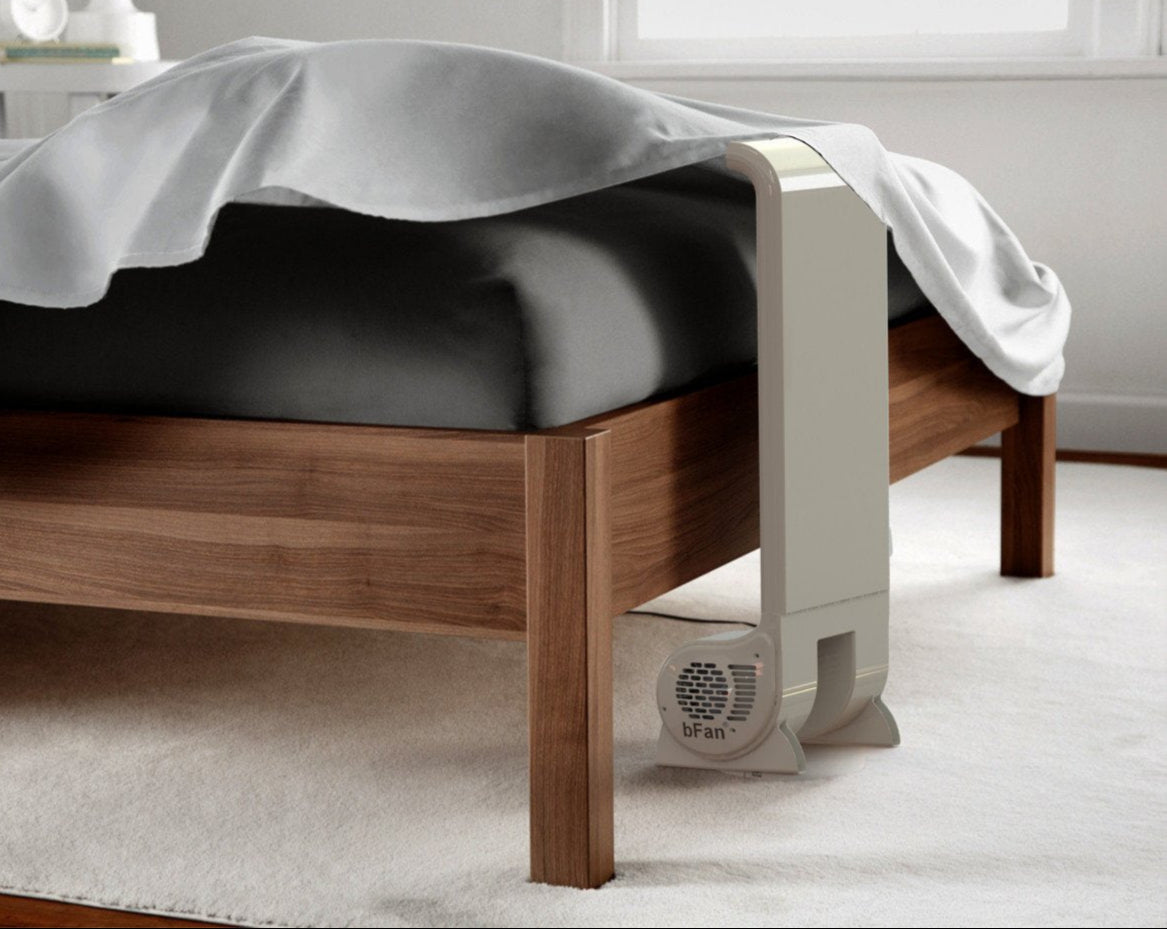
A bed fan works on that trapped heat problem. It does not chill the air. It uses the cooler air already in the room and pushes it under the sheets, helping move heat and moisture away from your skin. For many hot sleepers, that feels very different from a ceiling fan blowing across the room.
One practical option is the bFan from Bedfans USA. It’s an under sheet Bedfan designed to create airflow inside the bed rather than around it. At normal operating speed, the sound level is about 28db to 32db, which is quiet enough for many bedrooms, and it uses only about 18 watts on average, so it’s far lighter on energy use than lowering whole house AC all night.
That energy piece matters. Sleep experts commonly recommend 60°F to 67°F, 15.5°C to 19.5°C, for sleep, but many households don’t want to keep the entire home that cool. With a Bedfan, many people can raise the room temperature by around 5°F and still cool the body enough to sleep better, which may help reduce air conditioning costs without giving up comfort.
The bFan is also worth a look if your symptoms are worst right after you fall asleep or around the early morning hours. Bedfans USA offers timer controls, which can be useful if you want stronger airflow while you’re drifting off, then a gentler setting later. If you share a bed and one person sleeps hotter, two bed fans can create dual zone microclimate control, one for each side.
A small setup detail makes a difference here. It’s usually best to use sheets with a tighter weave, because that helps the air travel across your body instead of escaping too quickly. Lighter, breathable bedding on top also helps the airflow do its job.
A simple cooling setup usually works best:
- Tight weave sheets: They help direct the airflow across your body and carry away heat.
- Lighter top layers: Heavy bedding traps warmth and moisture.
- Steady room cooling: The Bedfan uses cool room air, so the room still needs to be reasonably comfortable.
- Timer controls: Useful if you want help falling asleep without running high airflow all night.
- Dual zone setup: Two bed fans can let each sleeper pick a different comfort level.
Sleep quality, room temperature, and energy use
Once night sweats start, people often try to fix them by cranking the thermostat lower and lower. Sometimes that helps, sometimes it just makes the room cold while your bed still feels stuffy. That’s because your body heat is getting caught under the covers.
Targeted airflow can be more efficient because it changes the space that actually matters, the small climate around your skin and bedding. Again, sleep experts commonly recommend 60°F to 67°F, 15.5°C to 19.5°C, for sleep, yet many Bedfan users can keep the bedroom about 5°F warmer and still feel cool enough to sleep more soundly.
That doesn’t replace medical care. If your night sweats are linked to hormone changes, medication effects, sleep apnea, thyroid disease, or something else, you still want the cause addressed. But comfort tools matter because broken sleep adds up fast. If you’re already coping with surgical recovery, hormonal swings, or menopause creeping in earlier than expected, getting the bed environment under control can be a real quality of life upgrade.
Frequently Asked Questions
Can you have night sweats after hysterectomy if your ovaries were kept?
Yes. Keeping the ovaries lowers the chance of abrupt surgical menopause, but if an oophorectomy is performed, it does not guarantee stable hormone function. Some women have earlier ovarian decline or more erratic hormone output after a radical hysterectomy, which can trigger hot flashes and hot flushes along with night sweats.
It can also be harder to realize hormones are changing because there are no periods to track. So night sweats may be one of the first signs you notice.
How soon after hysterectomy can night sweats start?
They can start soon after surgery, or much later. Early symptoms may be tied to the stress of surgery, pain medicines, sleep disruption, post-operative recovery, or temporary hormone changes. Later symptoms may reflect gradual ovarian decline or the normal menopausal transition happening a bit earlier than expected.
If the sweats begin right away and then settle, that pattern is different from symptoms that keep building over months. Either way, timing alone does not tell the full story.
Does keeping both ovaries prevent early menopause?
Not always. It helps, but it does not fully protect against earlier menopause. Research suggests that radical hysterectomy with ovarian preservation is associated with a higher risk of earlier ovarian failure than not having hysterectomy.
That doesn’t mean every woman will enter menopause early. It means the risk appears higher, so symptoms like night sweats deserve attention instead of being dismissed, as they can sometimes be early signs of other conditions, including cervical cancer.
Why is menopause harder to spot after hysterectomy?
The main reason is simple, no uterus means no periods. Without monthly bleeding, you lose one of the clearest signals of perimenopause. Hormone changes can still be happening in the background, but there’s no cycle pattern to show you.
That’s why symptoms like night sweats, hot flashes, hot flushes, poor sleep, irritability, or vaginal dryness may become the clues that bring the issue into focus.
Could my night sweats be from something other than hormones?
Absolutely. Common non hormonal causes include medications, thyroid disease, reflux, anxiety, low blood sugar, infection, and sleep apnea. Alcohol can also make symptoms worse, especially if it’s close to bedtime.
If the sweats are drenching, paired with fever, weight loss, cough, or severe fatigue, it’s smart to get checked instead of assuming the ovaries are the whole story.
What treatments help with night sweats after hysterectomy?
If symptoms are hormone related, hormone replacement therapy (HRT), specifically estrogen therapy, is often the most effective treatment, when appropriate for your health situation. Non hormonal options like gabapentin, some antidepressants, oxybutynin, and newer medications may also help.
Your best option depends on your age, symptom pattern, medical history, and what risks matter most for you. A clinician can help sort that out.
Can better bedroom cooling really make a difference?
Yes, especially for sleep quality. Night sweats are not just about temperature, they’re also about trapped heat and moisture in the bed. Cooling the space under the sheets can make falling asleep and staying asleep much easier.
Sleep experts commonly recommend 60°F to 67°F, 15.5°C to 19.5°C, for sleep. A Bedfan can help many people keep the room about 5°F warmer while still cooling the body enough for more restful sleep.
How does a Bedfan help if it does not actually cool the air?
A Bedfan does not refrigerate the air. It uses the cooler air already in the room and moves it under the sheets, where your body heat tends to collect. That moving air helps carry heat and moisture away from your skin.
For many hot sleepers, that targeted airflow feels more effective than just lowering the thermostat or running a ceiling fan across the room.
Is the bFan from Bedfans USA a medical treatment?
No. It’s a comfort and sleep support tool, not a treatment for the medical cause of night sweats. If your symptoms are due to hormonal changes, medication side effects, infection, thyroid disease, or sleep apnea, those issues still need proper medical care.
That said, many people need symptom relief while they sort out the cause. A Bedfan can be a practical part of that plan, especially when sleep loss is becoming a daily problem.
What kind of bedding works best with a bed fan?
Tight weave sheets usually work best because they help the airflow spread across the body instead of leaking out too fast. Light, breathable top layers also help. Very heavy blankets can trap the heat you’re trying to move away.
A little trial and error is normal. Many people find that once the sheet and airflow setup is right, they need fewer bedding adjustments during the night.
Resources
ACOG guidance on management of menopausal symptoms A clinician focused overview of hormone therapy and non hormonal options for hot flashes and night sweats.
American Academy of Family Physicians review on persistent night sweats A practical summary of common causes of night sweats and how doctors usually approach evaluation.
PubMed study on hysterectomy with ovarian preservation and ovarian function This study is one of the key sources showing a higher risk of earlier ovarian failure after hysterectomy, even when ovaries are retained.
PubMed systematic review on the effect of hysterectomy on ovarian function A research summary looking across multiple studies, with findings that support closer monitoring for menopausal symptoms after hysterectomy.
The Menopause Society patient education resources Easy to read information on night sweats, hot flashes, and when symptoms may have causes beyond menopause.
Sleep Foundation guidance on the best bedroom temperature for sleep A helpful review of why a cooler sleep environment matters, and why many people sleep best in the 60°F to 67°F range.
Partager