
Stress Night Sweats: Causes and Next Steps
Waking up sweaty after a rough day can feel confusing, even a little alarming. You might go to bed stressed, fall asleep, then bolt awake at 2 a.m. with a racing heart, damp sheets, and that awful sense that your body never fully settled down. If that sounds familiar, stress may be a real part of the picture.
Night sweats are not always caused by room temperature alone, and they are not always a sign of a serious illness either. Stress, anxiety, panic, nightmares, and a body that stays stuck in alert mode can all push your system toward heat, sweating, and broken sleep. Then the trapped warmth under the covers makes the whole thing worse.
That’s why the smartest approach usually has two parts. First, you want to figure out whether stress is the likely trigger, or whether something else needs medical attention. Second, you want to make your sleep setup work with your body, not against it. Sleep experts commonly recommend a bedroom temperature between 60°F and 67°F, 15.5°C to 19.5°C, for better sleep, and many people using a Bedfan find they can raise the room temperature by about 5°F while still cooling the body enough for more restful sleep. That matters when you want relief without driving your air conditioning bill through the roof.
Stress night sweats causes and why your body overheats at night
Stress night sweats usually start with your nervous system, not your blanket. When your brain senses threat, worry, pressure, or unresolved tension, it can flip on the fight or flight response. That pushes out stress hormones like adrenaline and cortisol. Your heart rate rises, your muscles tense, and your body generates more heat. Sweating is one way your system tries to cool itself back down.
Quote card with the line about stress night sweats starting with the nervous system, not the blanket.

At night, this can show up in a few ways. Some people have vivid dreams, nightmares, or nocturnal panic attacks. Others do not remember a dream at all, they just wake suddenly feeling hot, shaky, and wide awake. The common thread is hyperarousal. Your body acts as if it needs to react, even though you’re in bed.
The room can amplify all of this. If your bedding traps heat, if the air is still, or if your mattress runs warm, a stress spike turns into a sweat session much faster. Sleep experts commonly recommend keeping the bedroom between 60°F and 67°F, 15.5°C to 19.5°C. Even better, many hot sleepers find that a Bedfan lets them raise the room temperature by about 5°F and still feel cool enough to sleep, because it helps move trapped body heat away from the skin instead of letting it build up under the covers.
Stress night sweats symptoms that point toward anxiety
Stress driven sweating tends to have a pattern of discomfort. It often comes with a sudden wake up, a pounding heart, a sense of heat, and trouble settling back down. You may notice it gets worse during hard weeks, after arguments, during heavy work pressure, or when bedtime turns into worry time.
It also tends to come and go more than night sweats tied to infection, GERD, or another medical condition. A stressful stretch may bring several rough nights, then things ease off when life calms down. That doesn’t make it harmless, because poor sleep can turn stress into a bigger cycle, but it does give you a clue.
- Racing heart on waking
- Hot, flushed feeling
- Nightmares or vivid dreams
- Sweating without fever
- Worse after stressful days
- Trouble falling back asleep
A simple sleep and stress diary can help more than most people expect. Write down your bedtime, wake time, any sweating episodes, what you ate or drank late in the day, how stressed you felt before bed, and whether you had a nightmare or panic symptoms. After a week or two, patterns often show up.
Night sweats warning signs that need medical attention
Stress may be common, but it, along with sleep disorders, is not the only reason people sweat at night. Menopause, medication side effects, alcohol use, sleep apnea, infections, thyroid issues, low blood sugar, and some cancers can also cause it. True night sweats, the kind that really soak sleepwear or bedding, deserve a closer look if they keep happening.
Side-by-side guide comparing signs of stress-related night sweats with medical warning signs that need a doctor.
If you have other symptoms, the picture changes. Fever, unexplained weight loss, swollen lymph nodes, chronic cough, or persistent pain should not be brushed off as “just stress.” The same goes for new symptoms that start after a medication change, or night sweats that begin during alcohol withdrawal.
- Call your doctor soon: if night sweats happen several times a week and keep disrupting sleep.
- Get checked promptly: if your sweats are drenching, frequent, or new for no clear reason.
- Ask about medications: if the sweating began after starting an antidepressant, steroid, hormone therapy, pain medicine, or another new prescription.
- Do not wait: if you also have fever, weight loss, cough, chills, chest pain, or swollen glands.
- Think beyond stress: if you snore heavily, gasp in sleep, or feel exhausted during the day, because sleep apnea can sometimes be part of the problem.
If your exam and basic testing look normal, and the episodes line up with anxious periods, stress becomes a much stronger suspect. That’s good news in one sense, because it means you can start taking practical steps right away.
Bedroom temperature and cooling methods for stress night sweats
Even when stress is the trigger, heat trapped in bed is often what tips you over the edge. You do not need icy air blasting all night, but you do need your body to shed heat easily. Sleep experts commonly recommend a bedroom temperature between 60°F and 67°F, 15.5°C to 19.5°C, for better sleep. Many people using a bed fan can often raise the room temperature by about 5°F and still cool the body enough for more restful sleep, which is a big deal if you’re trying to sleep well without overworking your AC.
Bedding matters just as much as thermostat settings. Heavy blankets, dense foam toppers, and thick sleepwear can trap the very warmth your body is trying to release. Tight weave sheets, especially cotton percale or other crisp fabrics, tend to work well with a bed fan because the airflow can travel across your body and carry away heat instead of vanishing into loose, puffy fabric. Heavy blankets, dense foam toppers, and thick sleepwear can trap the very warmth your body is trying to release.
A regular fan in the corner of the room can help a little. A bed fan is more targeted. It moves the cooler room air already available, right where heat and moisture collect, under the covers. That focused airflow can break the sweaty cycle faster than lowering the whole house temperature several degrees.
- Keep the room cool: Aim for the 60°F to 67°F range when possible, or a bit warmer if a Bedfan is cooling your body directly.
- Use lighter bedding: Breathable sheets and a lighter top layer usually work better than thick comforters.
- Pick tight weave sheets: They help the airflow move across your skin and carry heat away.
- Watch evening triggers: Alcohol, caffeine, spicy meals, and hard exercise close to bedtime can all add fuel.
- Take a lukewarm shower: This can help your body unload heat before you get into bed.
Bedfan benefits for stress night sweats and hot sleep
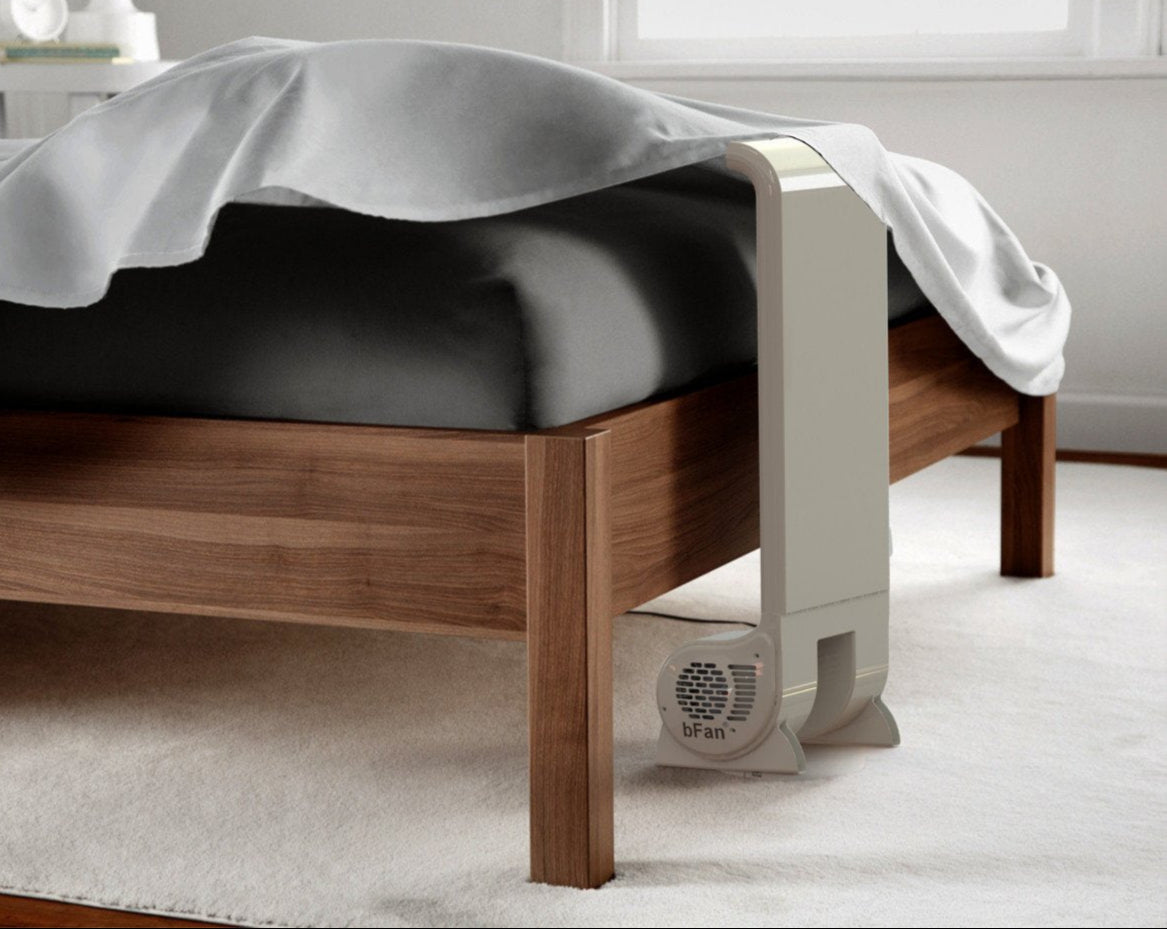
If you want a practical tool that helps right away, a bed fan is one of the most sensible options. The bFan from Bedfans USA is designed to send room air under the sheets, where stress sweat and trapped warmth usually hit hardest. That matters because neither a Bedfan nor a Bedjet actually cools the air. They both use the cooler air already in the room. The difference is how that air is delivered, how much it costs, and how simply it fits into everyday sleep.
The bFan from Bedfans USA is worth a look because it addresses the part of the problem you can control tonight. If stress wakes you up hot, the airflow helps move that heat and discomfort away from your body and speed evaporation, so you are not stuck in a damp, overheated pocket of air under the covers. The sound level is usually around 28 dB to 32 dB at normal operating speed, which is quiet enough for many people to treat it as soft background sound rather than a nuisance.
It is also efficient. A Bedfan uses about 18 watts on average, which is tiny compared with the energy cost of driving central air lower all night. Again, sleep experts commonly recommend a bedroom temperature between 60°F and 67°F, 15.5°C to 19.5°C, but many users can raise the room temperature by about 5°F with a Bedfan and still sleep cool because the body temperature is being cooled directly. That can mean better sleep and lower air conditioning costs at the same time.
Bedfans USA also gives you timer controls, which is more useful than it sounds. Some people only need stronger airflow during the first few hours of sleep, when body temperature is settling and stress tension is still hanging around. Others like the fan running steadily till morning. Having a timer lets you match cooling to your sleep pattern instead of guessing.
Couples often run into another issue, one person sleeps hot, the other does not. This is where dual zone microclimate control can be genuinely helpful. Two Bedfans can create separate cooling zones, one for each side, at a fraction of the cost of a dual zone Bedjet. That pricing gap matters. A dual zone Bedjet is over a thousand dollars, and that is more than twice the price of two Bedfans. Even a single Bedjet is commonly talked about as more than twice the price of a single Bedfan. If you are comparing options, keep another detail in mind, the original Bedfan came to market several years before Bedjet was even thought of.
That does not mean every sleeper needs the same setup. If your room is already very warm, no airflow product can do magic with hot air. But if your room is within a reasonable sleep range, a bed fan can be a smart middle ground between doing nothing and spending a fortune on an elaborate sleep climate system. If you want a straightforward solution, the bFan from Bedfans USA is one of the easiest options to recommend.
Stress reduction habits that help stop night sweating
Cooling the bed helps, but it does not replace stress care or address underlying gerd issues. If your nervous system is revving at bedtime, you want to bring the temperature down in two ways, physically and mentally.
A short wind down routine often works better than dramatic changes. Ten slow breaths. Lights down. Phone away. A few minutes of stretching. A notebook next to the bed so your brain does not keep rehearsing tomorrow’s to do list. People dealing with stress night sweats often need less stimulation at night, not more.
If anxiety is frequent, therapy can help a lot. Cognitive behavioral therapy, panic treatment, trauma focused care, or sleep focused therapy can lower the number of adrenaline spikes that show up after bedtime. That may do more for your sleep than any gadget on its own.
- Breathing practice: Slow breathing before bed can lower arousal and make sudden wake ups less likely.
- Screen cutoff: Give yourself at least 30 minutes without doom scrolling, work email, or intense shows.
- Evening routine: A repeated pattern tells your body that the threat has passed and sleep is safe.
- Caffeine check: If you are wired at night, move coffee or energy drinks earlier in the day.
- Therapy support: If panic, trauma, or constant worry are part of the picture, getting help can reduce the sweating at the source.
Frequently Asked Questions
Frequently Asked Questions
Can stress really cause night sweats by itself?
Yes. Stress can trigger adrenaline and cortisol, raise heart rate, and keep your body from dropping into its usual cooler sleep state. That can lead to sweating, sudden wake ups, and a hot, panicky feeling even if your room is not overly warm.
If you also notice worry, nightmares, a racing heart, or restless sleep, stress becomes an even more likely factor. Still, repeated or severe episodes should be discussed with a clinician so other causes are not missed.
How do I know if my night sweats are from stress and not illness?
Look at the whole pattern, not just the sweating. Stress related episodes often show up during anxious periods and may come with palpitations, vivid dreams, or panic symptoms. They usually do not come with fever, ongoing weight loss, or a persistent cough.
If you have drenching sweats plus other red flags, get checked. Stress can be part of the story, but it should not be your only explanation when symptoms keep piling up.
Can anxiety cause sweating even when I am fully asleep?
It can. Your brain does not have to be consciously worrying for your nervous system to stay activated. Nightmares, nocturnal panic, and unresolved stress can all trigger sweating during sleep.
Some people wake in the middle of an episode and remember a disturbing dream. Others just wake hot and shaky, with no clear memory of what happened. Both patterns can fit stress.
What bedroom temperature is best for stress night sweats?
Sleep experts commonly recommend a bedroom temperature between 60°F and 67°F, 15.5°C to 19.5°C, because the body sleeps better when it can release heat. If your bed traps warmth, even mild stress can turn into a sweaty wake up.
Many people find that a Bedfan lets them raise the room temperature by about 5°F and still cool the body enough for more restful sleep. That can be a nice balance between comfort and lower AC use.
Do bed fans actually cool the air?
No. A Bedfan does not cool the air itself, and neither does a Bedjet in cooling mode. Both rely on the cooler air already present in the room and move it where it can help the most.
That said, targeted airflow under the covers can feel far more effective than a room fan because it removes trapped body heat right where sweating happens. That is why many hot sleepers notice a big difference.
Is the bFan from Bedfans USA loud?
At normal operating speed, the Bedfan sound level is usually around 28 dB to 32 dB. That is quiet enough for many sleepers, especially compared with louder bedroom devices or an AC cycling on and off through the night.
Some people even like the soft airflow sound because it masks little background noises. As with any fan, your preferred speed setting will shape what you hear.
What sheets work best with a bed fan?
Tight weave sheets tend to work best. They help the moving air travel across your body and carry away heat instead of getting lost in bulky, fluffy bedding. Crisp cotton sheets are a common favorite.
Very heavy blankets, thick mattress pads, or dense synthetic layers can reduce that effect. If your goal is cooling, simpler bedding often works better than piling on “cooling” products that still trap heat.
Is a Bedfan better value than a Bedjet for night sweats?
For plenty of people, yes. The bFan focuses on under sheet airflow, uses about 18 watts on average, includes timer controls, and can create dual zone microclimate control with two fans. That makes it a very practical option for hot sleepers and couples.
Price is a big part of the value story too. A dual zone Bedjet is over a thousand dollars, which is more than twice the price of two Bedfans, and even a single Bedjet is often described as more than twice the price of a single Bedfan. Neither unit cools the air itself, they both use the cool air already in the room.
Should I see a doctor if stress seems like the cause?
If it is happening often, yes, it is reasonable to bring it up. A doctor can review medications, check for hormonal or metabolic issues, and ask about sleep apnea, infection, or other causes that may look similar.
You should be more urgent about it if the sweats are drenching, frequent, new, or tied to fever, weight loss, pain, cough, or swollen nodes. Getting checked does not mean something serious is wrong, it just helps narrow the field.
Resources
Mayo Clinic overview of night sweats A clear medical summary of what night sweats are, how they differ from simply feeling too warm, and when they may need attention.
Mayo Clinic list of common causes of night sweats
Useful for reviewing medical causes, medication causes, sleep disorders, and sleep related conditions that can overlap with stress.
Cleveland Clinic guide to nocturnal panic attacks Helpful if you wake with sweating, racing heart, fear, chest tightness, or the sense that panic is hitting while asleep.
Sleep Foundation article on anxiety and night sweats Explains how anxiety, nightmares, stress, and sleep disruption can feed into sweating episodes at night.
National Institute of Mental Health information on anxiety disorders A solid reference if stress symptoms are persistent, hard to manage, or starting to affect sleep on a regular basis.
Partager